

You’re cruising down the highway when you notice it: a low humming sound coming from somewhere behind you. At first, you think maybe it’s the road surface or wind noise. But as you speed up, the humming gets louder and more aggressive. By the time you hit 60 mph, it sounds like you’re piloting a small aircraft.
This isn’t something you can ignore. A humming noise from the rear that increases with speed almost always points to a rotating component that’s on its way out. Most commonly, you’re dealing with a bad wheel bearing, though differentials and axle bearings can cause similar symptoms. The faster you go, the faster these parts spin, and the louder they get.
I’ve diagnosed this exact issue dozens of times, and the good news is that you can pinpoint the problem yourself with some basic tools and about 30 minutes of your time. Let’s figure out what’s going on back there before something fails completely.
Common Causes
Worn Rear Wheel Bearing
This is the culprit about 80% of the time. Wheel bearings allow your wheels to spin freely while supporting the weight of your car. They’re packed with grease and sealed to keep contamination out. Over time, the seals can leak or deteriorate, letting moisture and dirt inside. Once that happens, the bearing surfaces start to pit and wear.
A failing wheel bearing creates a humming or growling noise that changes pitch with vehicle speed. If the bearing is really far gone, you might also feel a vibration through the seat or floor. The noise usually comes from one side more than the other, though it can be hard to tell while you’re driving. Most wheel bearings last 75,000 to 150,000 miles, but driving through deep water, hitting potholes hard, or never replacing your brakes can shorten their lifespan significantly.
Differential Problems
Your rear differential contains gears that allow your rear wheels to rotate at different speeds during turns. These gears run in oil, and if that oil gets low or contaminated, the gears start wearing. A worn differential typically makes a whining or howling noise that changes with speed. Sometimes you’ll hear it more during acceleration or deceleration.
Differential noise is usually louder than a wheel bearing and comes from the center of the rear axle rather than one side. If you’ve got an older truck or rear-wheel-drive car that’s never had its differential fluid changed, this becomes more likely.
Axle Shaft Bearing (Trucks and SUVs)
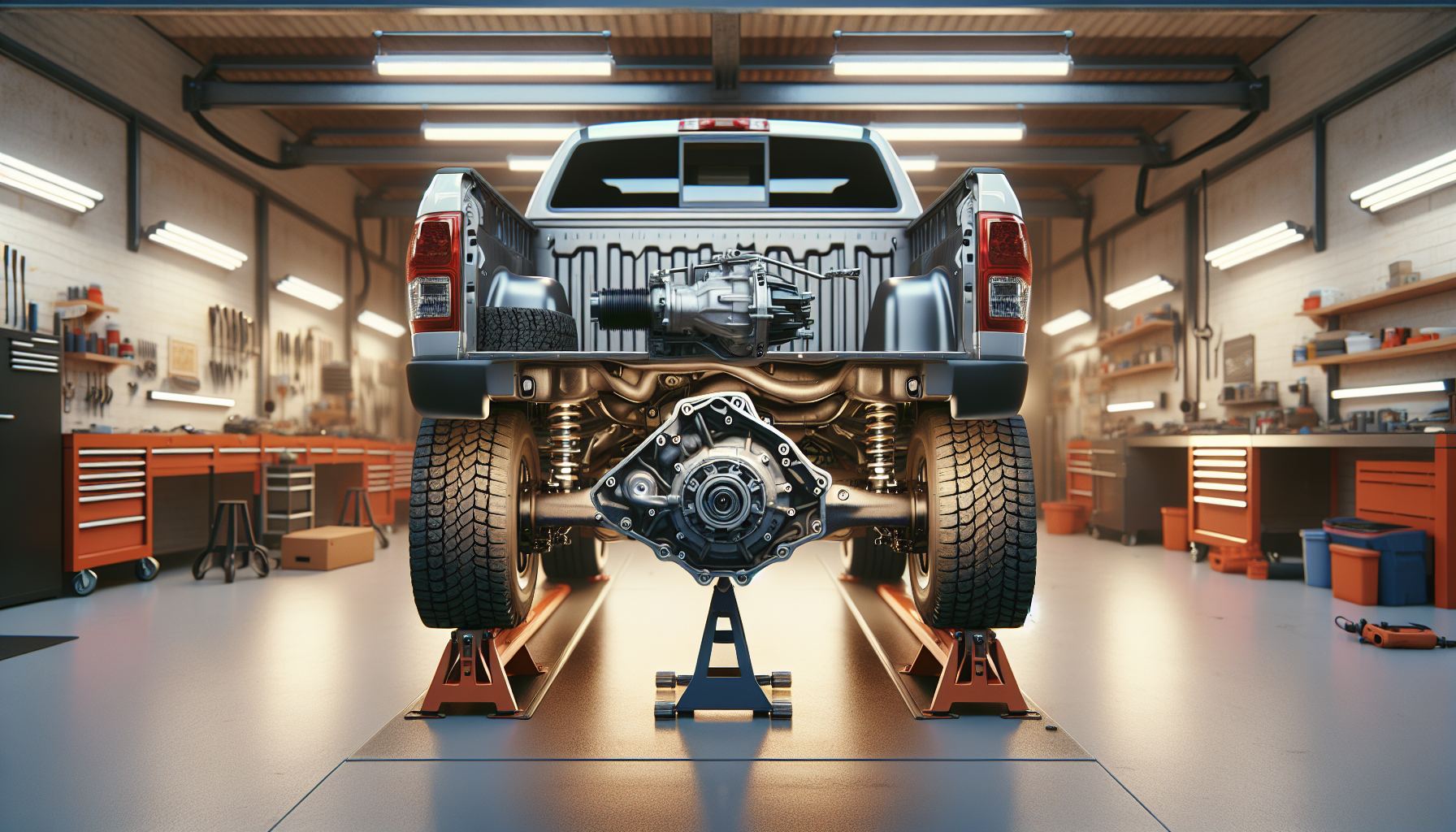
Trucks with solid rear axles have bearings that support the axle shafts inside the differential housing. These can fail independently of the wheel bearings. The symptoms are nearly identical to a bad wheel bearing: humming that gets louder with speed. The difference is where the bearing is located. Axle shaft bearings are inside the differential, while wheel bearings are at the hub.
Tire Issues
Sometimes what sounds like a mechanical problem is actually tire noise. Aggressive tread patterns, uneven tire wear, or a defective tire can all create humming sounds. Tire noise usually has a different character though. It’s more of a drone than a growl, and it often changes with road surface. If your humming is speed-dependent but doesn’t change when you swerve slightly, tires might be worth checking.
How to Diagnose the Problem
Start with the simplest checks first. Walk around your car and inspect the rear tires. Look for cupping, scalloping, or uneven wear patterns across the tread. Run your hand over the tread surface. If it feels like a washboard with alternating high and low spots, that’s tire wear that can cause noise.
Check your tire pressures too. A significantly underinflated tire can sound odd at highway speeds.
The Swerve Test
Find an empty road or parking lot where you can safely reach 30-40 mph. Drive straight and listen to the noise. Then gently swerve left and right, just enough to shift the vehicle’s weight from side to side. You’re not making hard lane changes, just easy curves.
If the noise gets louder when you swerve right, the left rear bearing is likely bad (weight shifts to the left, loading that bearing more). If it gets louder turning left, suspect the right rear bearing. This works because loading a bad bearing increases the noise it makes.
Wheel Bearing Check
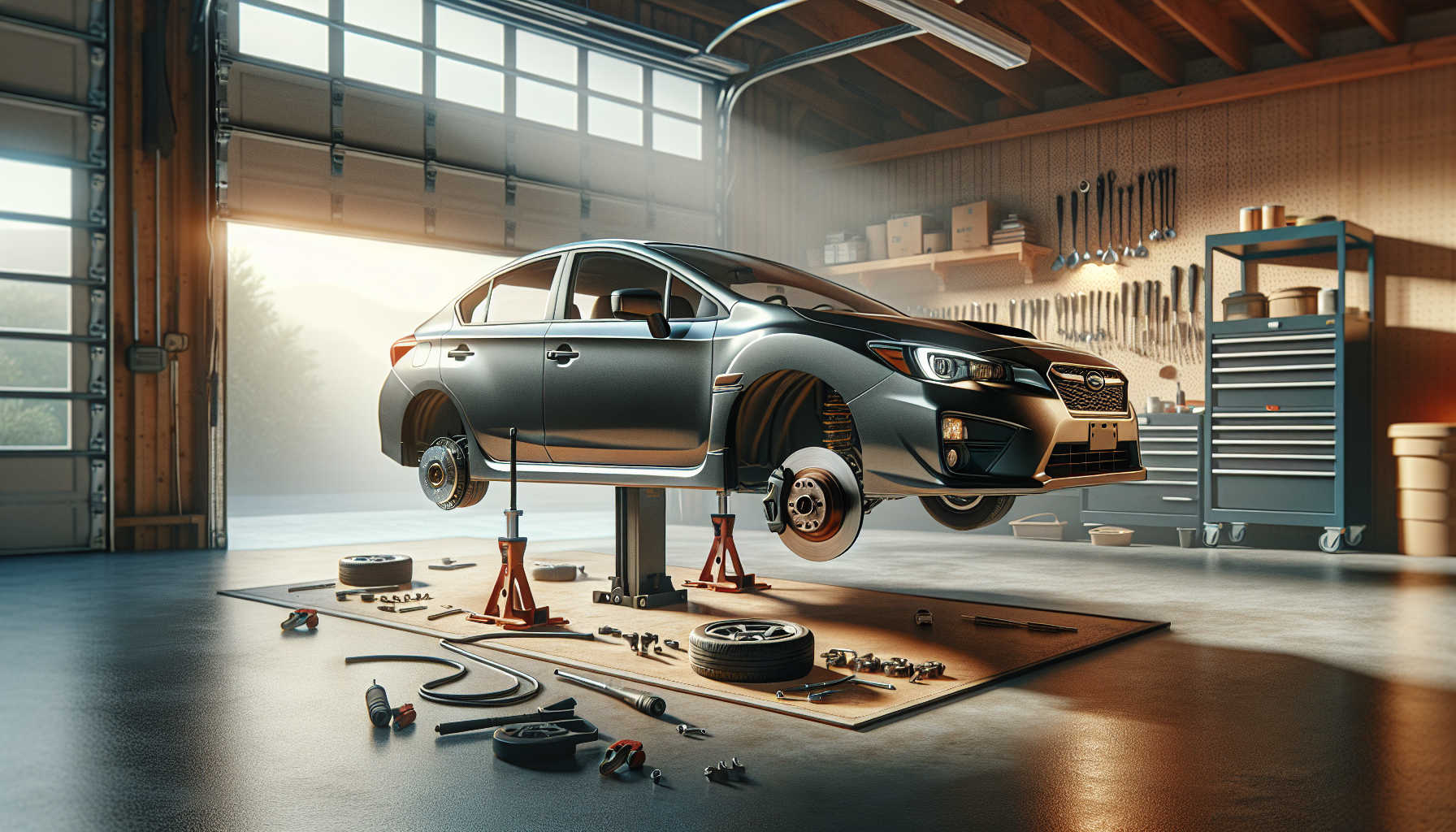
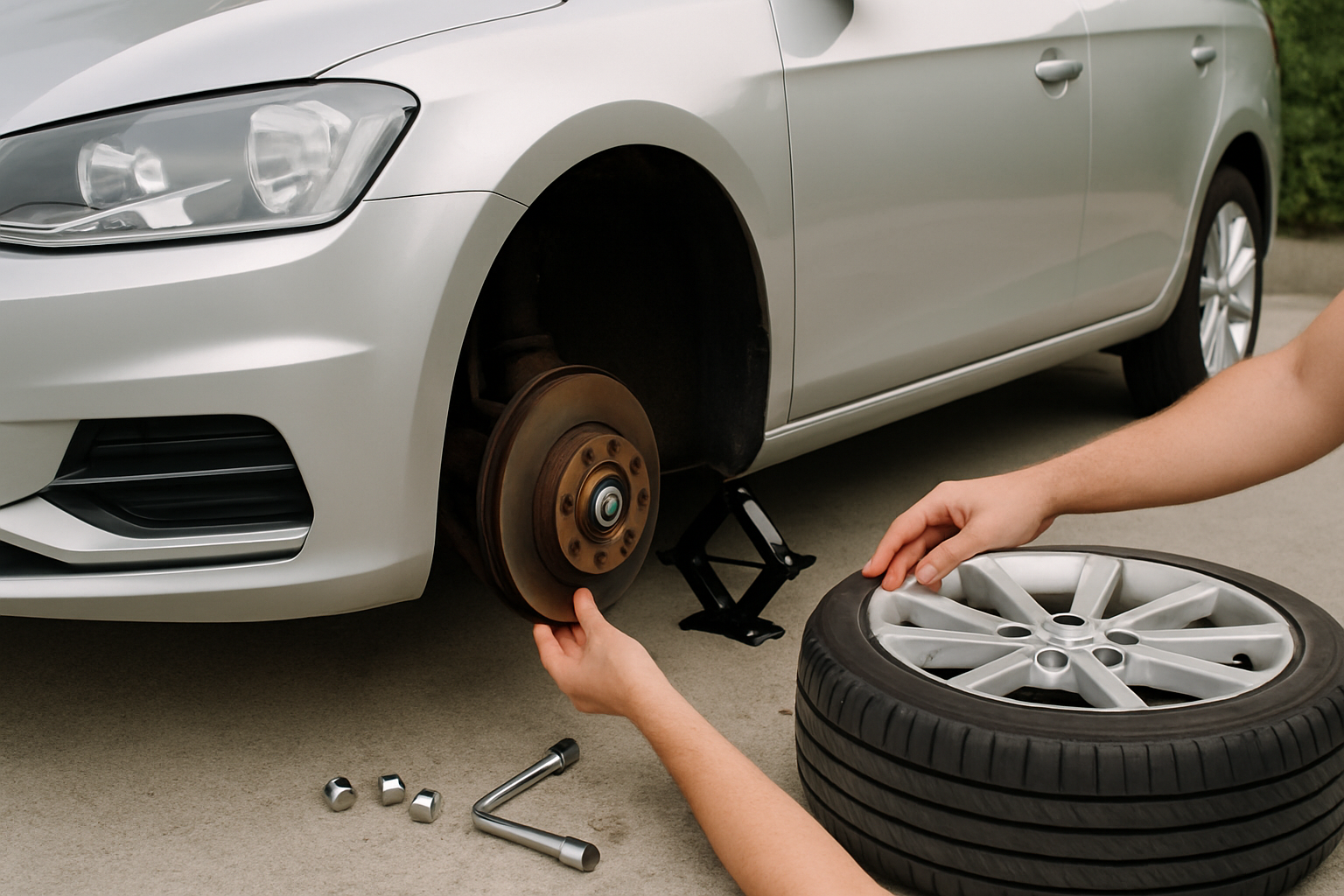
Park on level ground and safely lift one rear wheel at a time using a jack and jack stands. Never work under a car supported only by a jack. Grab the tire at 12 and 6 o’clock and try to rock it in and out. Then grab it at 3 and 9 o’clock and do the same thing. Any clunking or play indicates a problem, though wheel bearings can be noisy without having visible play.
Now spin the wheel by hand. A good bearing should spin smoothly and quietly, maybe with a slight whooshing sound from the brake pads. A bad bearing often feels rough or notchy, and you might hear grinding or rumbling as it rotates.
This video walks through the diagnostic process clearly:
Differential Fluid Check
Locate the differential cover under the center of your rear axle. There should be a fill plug on the front or side of the housing. Remove it (you’ll need a 3/8″ ratchet or Allen key, depending on your vehicle). Stick your finger inside. The fluid level should be right at the bottom of the fill hole.
If you can’t reach fluid, your differential is low. Pull some out on your finger and look at it. Clean gear oil is amber or brown and somewhat transparent. If it’s black, has metal flakes in it, or smells burnt, you’ve got internal wear happening.
How to Fix It
Replacing a Rear Wheel Bearing
Rear wheel bearing replacement varies significantly by vehicle. On many cars, the bearing is pressed into the hub and requires special tools to remove. On trucks and some SUVs, you might be able to replace the bearing more easily.
For DIY-friendly vehicles (older trucks, some Hondas and Toyotas with serviceable bearings), you’ll need a bearing race and seal driver set, a torque wrench, and basic hand tools. The process involves removing the brake drum or rotor, pulling out the old bearing, driving in the new one, packing it with grease, and reassembling everything to proper torque specs.
Many modern cars use sealed hub assemblies that bolt on. These are actually easier to replace if you’re comfortable with basic brake work. You remove the wheel, brake caliper, and rotor, then unbolt the old hub assembly and bolt in a new one. Three to four hours for a first-timer is realistic.
Changing Differential Fluid
If your diagnosis points to the differential and the fluid is old or contaminated, start with a fluid change. You’ll need a fluid pump, the correct gear oil for your vehicle (usually 75W-90 or 75W-140), and a limited-slip additive if your differential has limited-slip capability.
Place a drain pan under the differential, remove the cover bolts, and let it drain. Clean the cover and housing mating surface completely. Install a new gasket or apply RTV silicone (check your service manual for which to use). Reinstall the cover with bolts torqued to spec in a crisscross pattern. Fill through the fill hole until fluid starts to drip out, then reinstall the fill plug.
Test drive the vehicle. If the noise is gone or significantly reduced, you caught it early. If the noise persists, you’ve got worn gears that need professional attention.
Replacing Axle Shaft Bearings
Axle shaft bearing replacement is intermediate-level work that requires removing the axle shaft from the differential. You’ll need to drain the differential fluid, remove the differential cover, pull the C-clips or retainer bolts that hold the axle shafts in place, and slide the shaft out.
Once the shaft is out, you’ll need a slide hammer or press to remove the old bearing and seal from inside the axle housing. The new bearing gets pressed or driven into place, followed by a new seal. Reassemble with fresh fluid and a new gasket.
For trucks with this issue, this video demonstrates the repair:
When to See a Mechanic
If you don’t have the tools or space to safely lift your vehicle and remove wheels, take it to a shop. Wheel bearing diagnosis requires getting the vehicle in the air, and doing this safely is non-negotiable.
Pressed-in wheel bearings often require a hydraulic press and special adapters. Unless you have access to this equipment, you’re better off paying someone to do it right. I’ve seen people try to hammer bearings in with sockets and end up damaging the hub or installing the bearing crooked. Not worth it.
Differential work beyond a fluid change should go to a professional. If you’ve got worn gears, incorrect backlash, or damaged pinion bearings, these require specialized knowledge and tools to set up correctly. A poorly rebuilt differential will be noisy and won’t last.
Any time you hear grinding, feel significant vibration, or notice the noise has gotten dramatically worse in a short period, get the car to a shop immediately. A wheel bearing that completely fails can cause the wheel to lock up or even separate from the vehicle. That’s not something you want happening at highway speed.
Estimated Repair Costs
| Repair | Parts Cost | Labor Cost | Total |
|---|---|---|---|
| Rear Wheel Bearing (one side) | Parts vary | $80-$150 | Contact shop for quote |
| Rear Hub Assembly (bolt-on type) | Parts vary | $100-$200 | Contact shop for quote |
| Differential Fluid Change | Parts vary | $80-$120 | Contact shop for quote |
| Differential Rebuild | Parts vary | $400-$800 | Contact shop for quote |
| Axle Shaft Bearing | Parts vary | $150-$250 | Contact shop for quote |
Costs vary significantly based on vehicle type and regional labor rates. Luxury vehicles and trucks with complex four-wheel-drive systems cost more. Independent shops typically charge less than dealerships for this type of work, and the quality is usually just as good.
Prevention Tips
Avoid driving through deep water when possible. Submerging your wheel bearings can force water past the seals, contaminating the grease inside. If you do drive through standing water, tap your brakes gently afterward to help dry them out.
Replace your differential fluid according to your manufacturer’s schedule. Many people ignore this because it’s not mentioned in basic maintenance schedules, but severe service (towing, frequent highway driving, off-roading) breaks down gear oil faster. Every 30,000 to 50,000 miles is reasonable for trucks and performance cars.
Keep your tires properly inflated and rotated. Underinflated tires create more heat and stress on wheel bearings. Regular rotation helps you spot uneven wear early.
Don’t ignore small noises. A wheel bearing that’s just starting to make noise might last another 10,000 miles if you address it soon. Wait too long, and it could damage the hub, spindle, or ABS sensor ring, turning a moderate repair into an expensive one.
When replacing bearings, do both sides if the vehicle has high mileage. If one bearing failed at 120,000 miles, the other side has the same wear and will likely fail soon. Doing both at once saves labor costs compared to doing them separately six months apart.
Moving Forward
A humming noise from the rear that increases with speed deserves your attention, but it’s not usually an emergency if you catch it early. Take an hour to diagnose which component is making noise, then decide whether it’s within your skill level to fix or if a shop is the better choice.
Most people can successfully diagnose the problem with the tests I’ve outlined. The actual repair might be beyond what you want to tackle, and that’s fine. Knowing what’s wrong means you can get accurate quotes and avoid unnecessary repairs. You’re also less likely to get upsold on work you don’t need.
Drive safely, pay attention to how your car sounds and feels, and don’t put off weird noises. Your car is trying to tell you something. Listen to it before that humming turns into grinding and you’re stranded on the side of the road.
Leave a Reply