
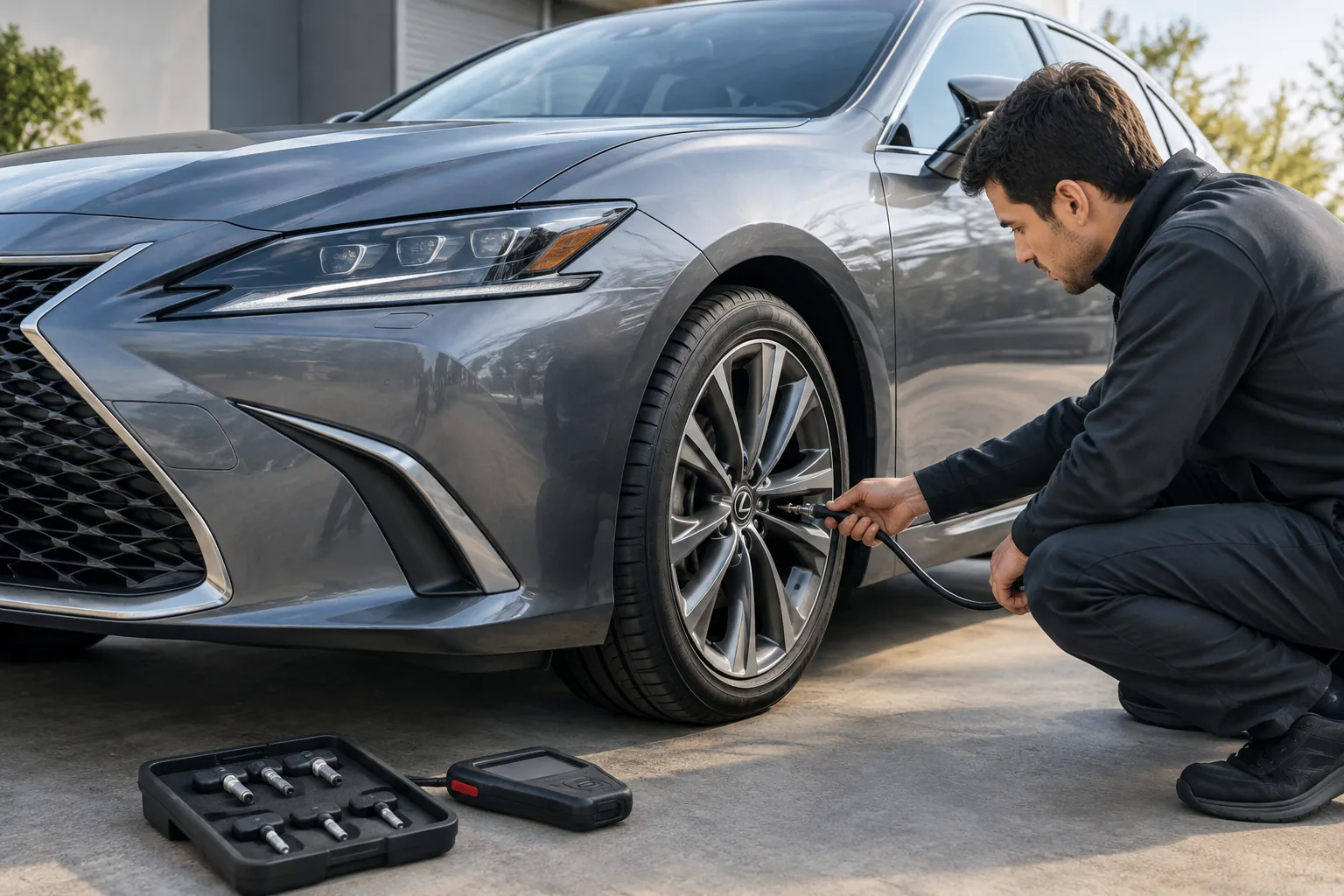
When the tire pressure light comes on in your Lexus ES, the fix is usually air, not a reset. Check all four tires cold against the placard, find out why one was low, and correct it. The light often goes out on its own after that, though how and when it clears depends on your model year, so confirm in your manual.
If it stays on or flashes, you’re dealing with something different: a sensor, a registration issue, or a system fault. Here’s how to tell those apart.
Start With Cold Pressures and a Leak Check
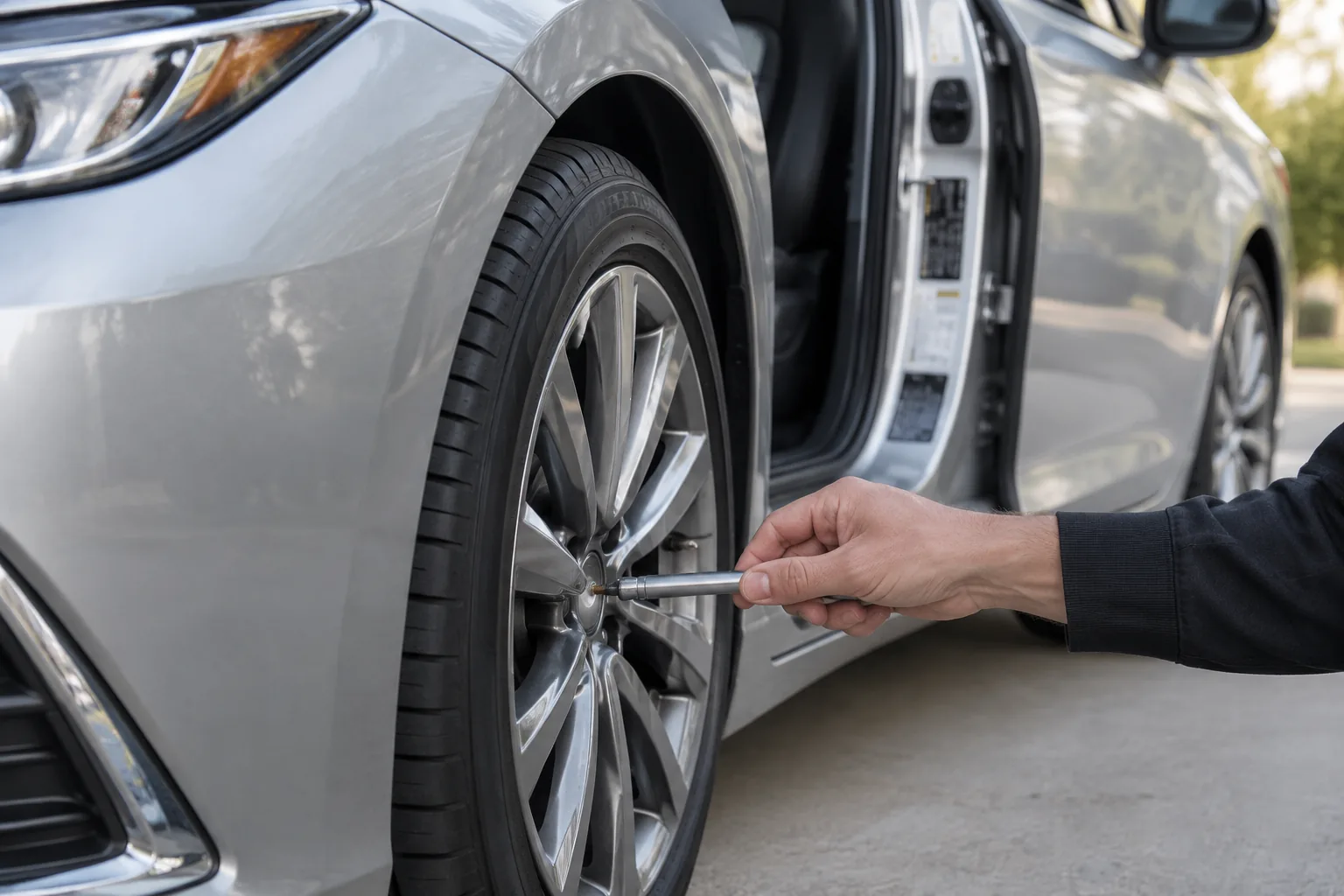
Don’t try to clear the light first. A warning that goes away without fixing the cause will just come back, and you’ll be driving on a tire that really is low.
- Find the placard. It’s on the driver’s door jamb. Use that pressure, not the number molded into the tire sidewall, which is the tire’s maximum.
- Check when the tires are cold. That means the car has sat for a few hours or you’ve driven only a short distance. Warm tires read higher and can hide a low tire.
- Check all four, not just the one you suspect. Your manual will say whether the spare is covered.
- Look for the cause. Check for nails or screws in the tread, a damaged valve stem or cap, and wheel-edge corrosion. Wipe soapy water on the valve stem and tread, and bubbles will show a slow leak.
A cold snap is a common reason for a light that appears overnight, since pressure drops as the air cools. Topping up to the placard value is the correct fix in that case.
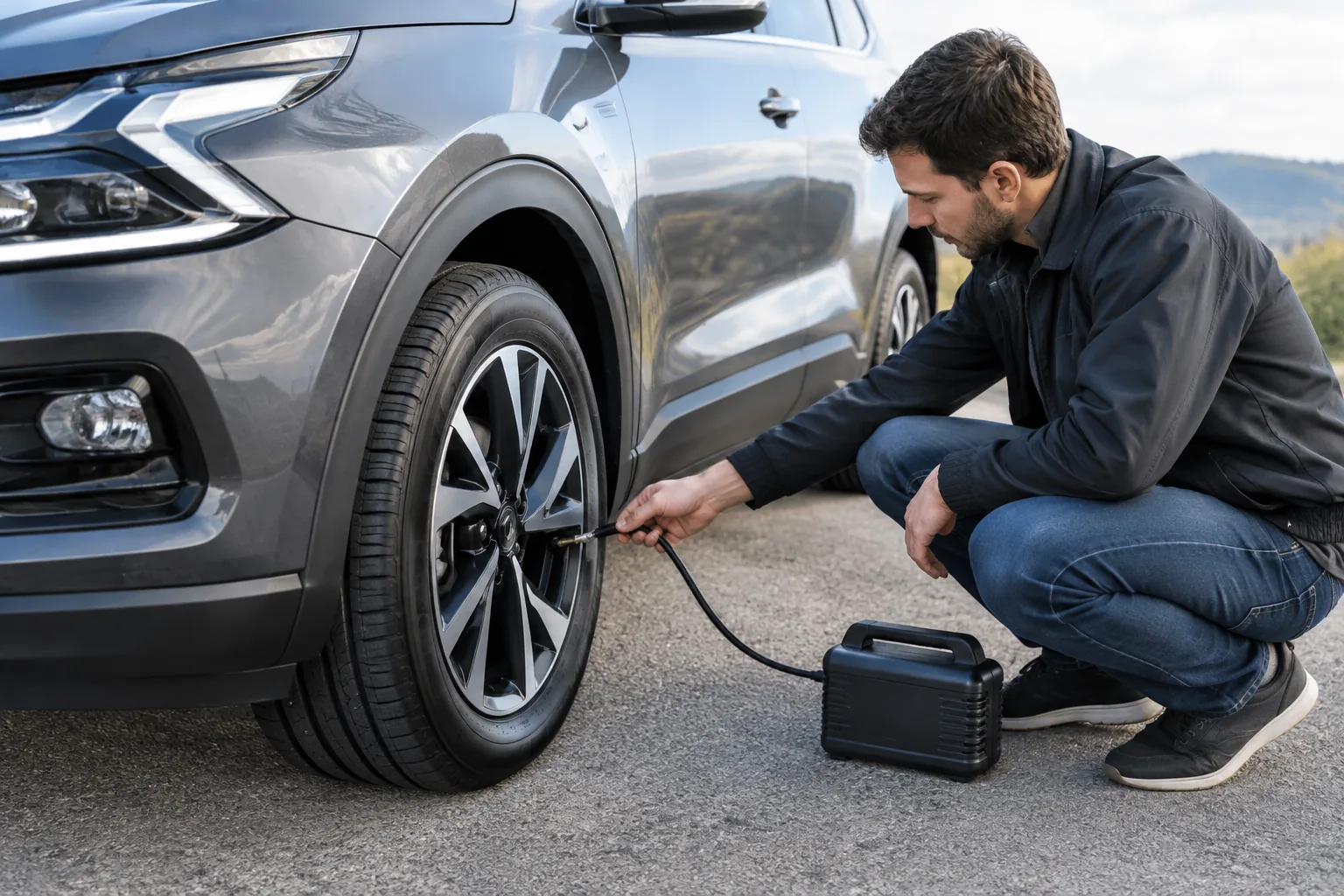
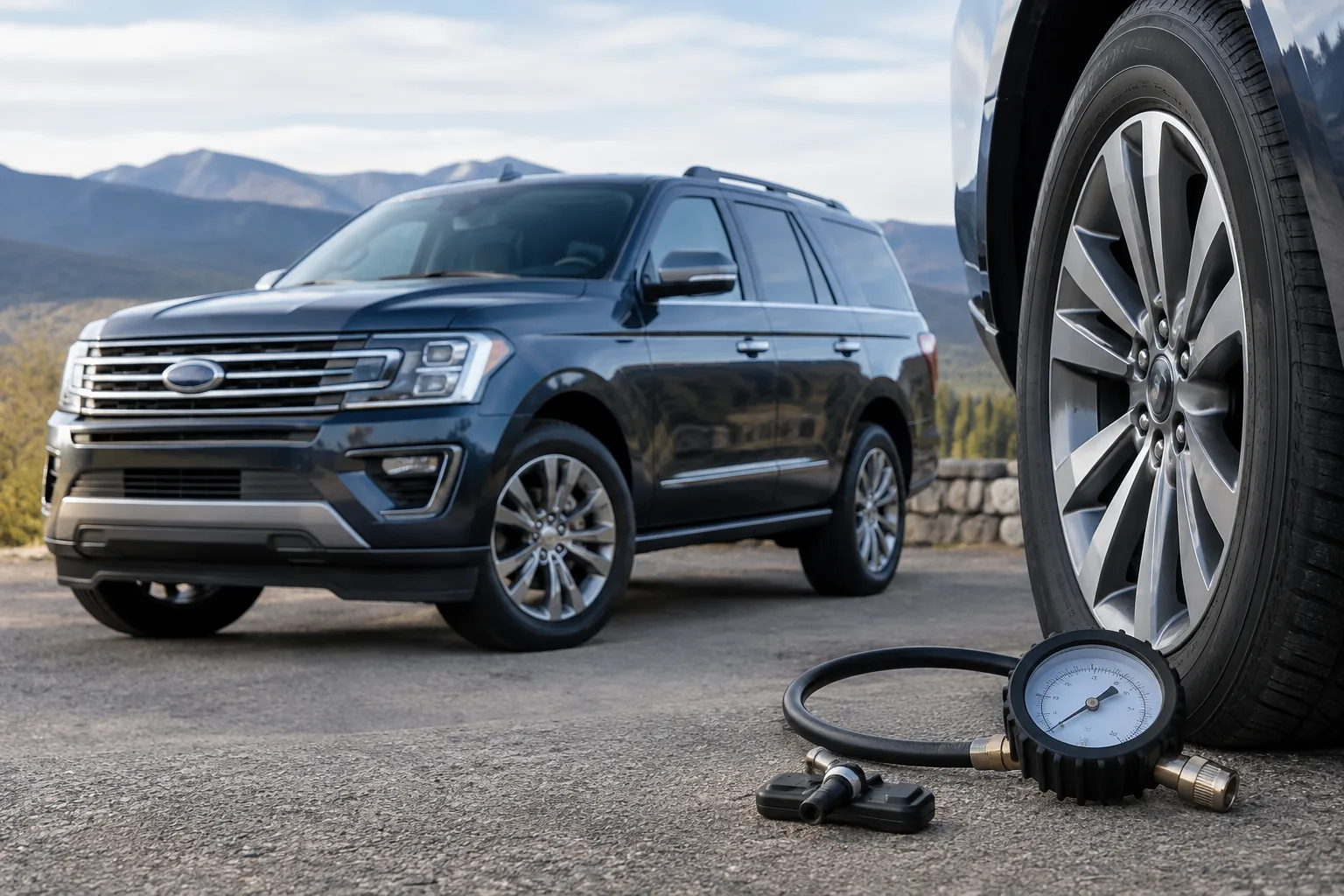
An accurate gauge matters here. If you don’t have an air source at home, a portable tire inflator with a digital pressure gauge makes it easy to set each tire to the placard number. It’s only for inflating and measuring. It won’t reset, relearn or program anything. Other basics are covered in our list of must-have tools for DIY car owners.

Portable Tire Inflator with Digital Pressure Gauge
Handy for setting cold pressures to the door-jamb placard value at home, but it plays no role in resetting or programming the TPMS.
Low Pressure Warning vs. System Malfunction
These are two different problems, and your owner’s manual explains how your car shows each one. Look in the section on the tire pressure warning system or the warning lights index.
- Low pressure warning: the system sees a tire below its threshold. The fix is inflating and finding the leak.
- Malfunction indication: the system can’t do its job. On many Toyota-family vehicles this shows as the light blinking for a period at startup before staying lit, but confirm the exact behavior for your year in your manual.
Inflating tires won’t clear a malfunction. Common causes include a dead sensor battery, a damaged sensor, a sensor ID the car doesn’t recognize, or a sensor that was just replaced. Sensor batteries aren’t serviceable on most designs, so a weak one usually means replacing the sensor.
Reset, Relearn and Sensor Work: Know Which Is Which

“TPMS reset” gets used for several different jobs. Sorting them out saves time.
Direct or indirect system
US-market Lexus ES models have used sensors mounted in the wheels, which is a direct system. Confirm that for your model year in the manual, because the procedure depends on it. An indirect system infers pressure from wheel speed and has no sensors to relearn.
Pressure initialization
This tells the car that the current pressures are the new baseline. Some Lexus models have a button for this, some use an instrument cluster menu, and some may not need it at all. Don’t assume a button exists. Your manual will name the exact control and the exact steps for your car. Only do this after every tire is at the placard pressure.
Sensor activation, ID relearn and programming
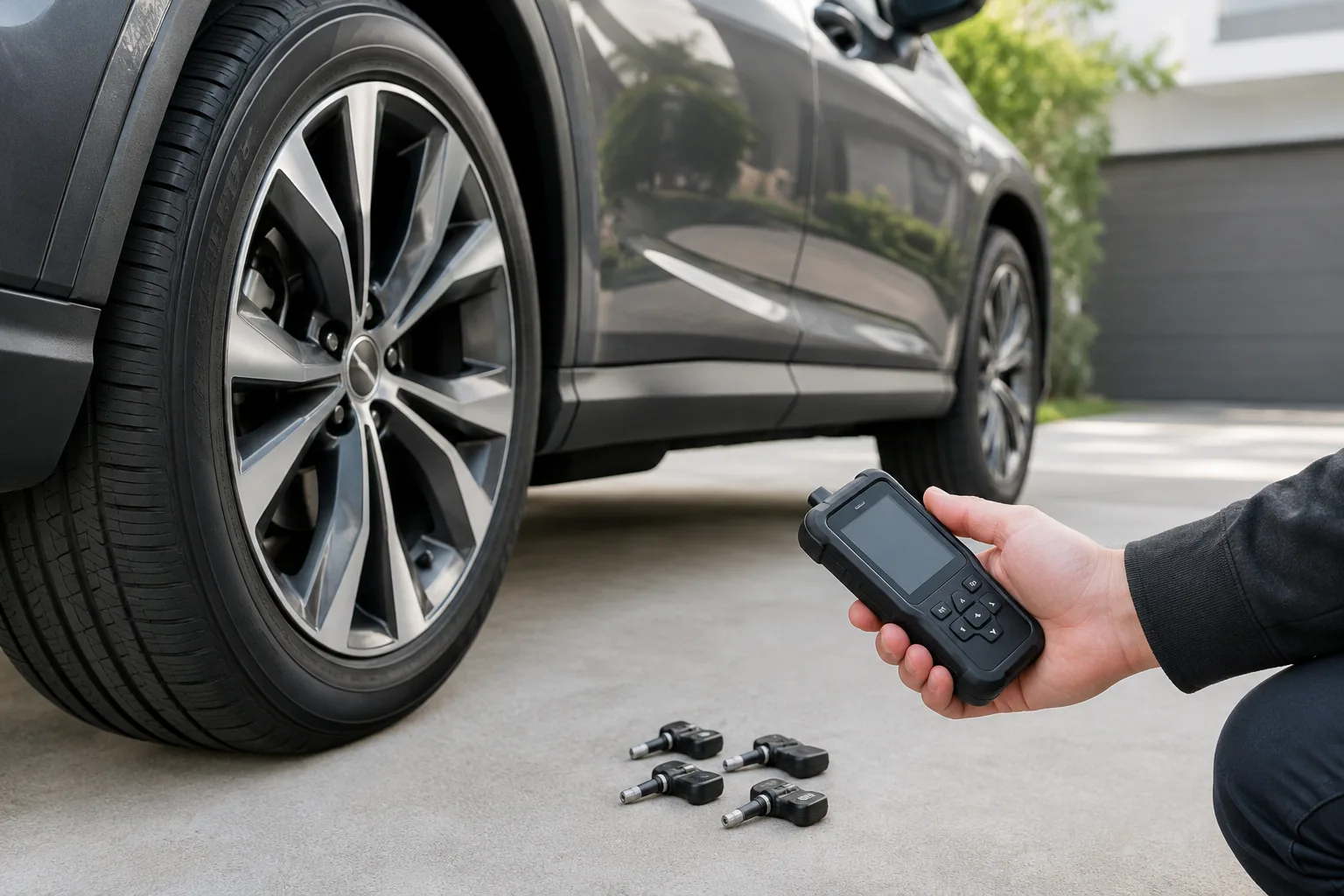
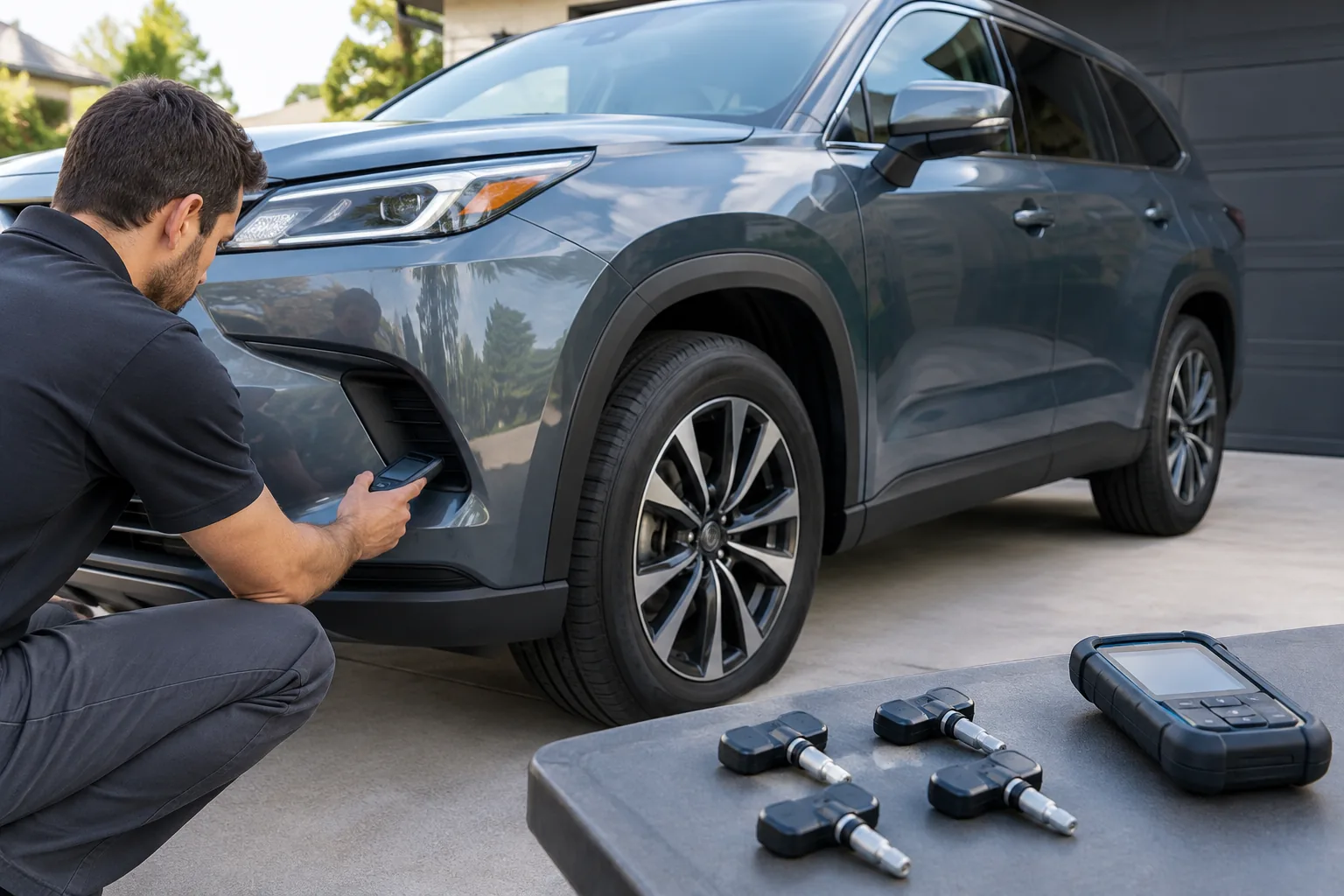
These are separate jobs that need compatible equipment, so they mostly belong to a tire shop or dealer:
- Activation: a TPMS tool triggers a sensor so it transmits.
- ID registration (relearn): the car is told which sensor IDs belong to it. This is typically needed after replacing a sensor or installing a second wheel set, such as winter wheels with their own sensors.
- Programming: some replacement sensors are blank and must be written with the right data.
A basic OBD2 code reader can’t do any of this. It might show a stored code, but it can’t register or program TPMS sensors. A shop will use a dedicated TPMS tool that supports your car.
Tire rotation and replacement
Whether rotation requires any TPMS step depends on the generation. Some systems work out wheel positions on their own, and others may need a procedure. Check the tire rotation section of your owner’s manual. For new tires or new sensors, tell the shop you have a direct TPMS before they start. They should reuse your sensors carefully or register new ones.
FAQ
Why is my Lexus ES tire pressure light on when the tires look fine?
Tires can be several pounds low without looking flat. Check them with a gauge when cold. If the pressures match the placard and the light is still on, or it blinks and stays lit, suspect a sensor or system fault and have a shop scan it with a TPMS tool.
Can I reset the light myself after filling the tires?
Sometimes the light clears by itself, and some models have an initialization step you can do. Your manual will list the control and steps for your year. If the light returns, comes on after a sensor swap, or signals a malfunction, you likely need a shop with a compatible tool.
Leave a Reply