
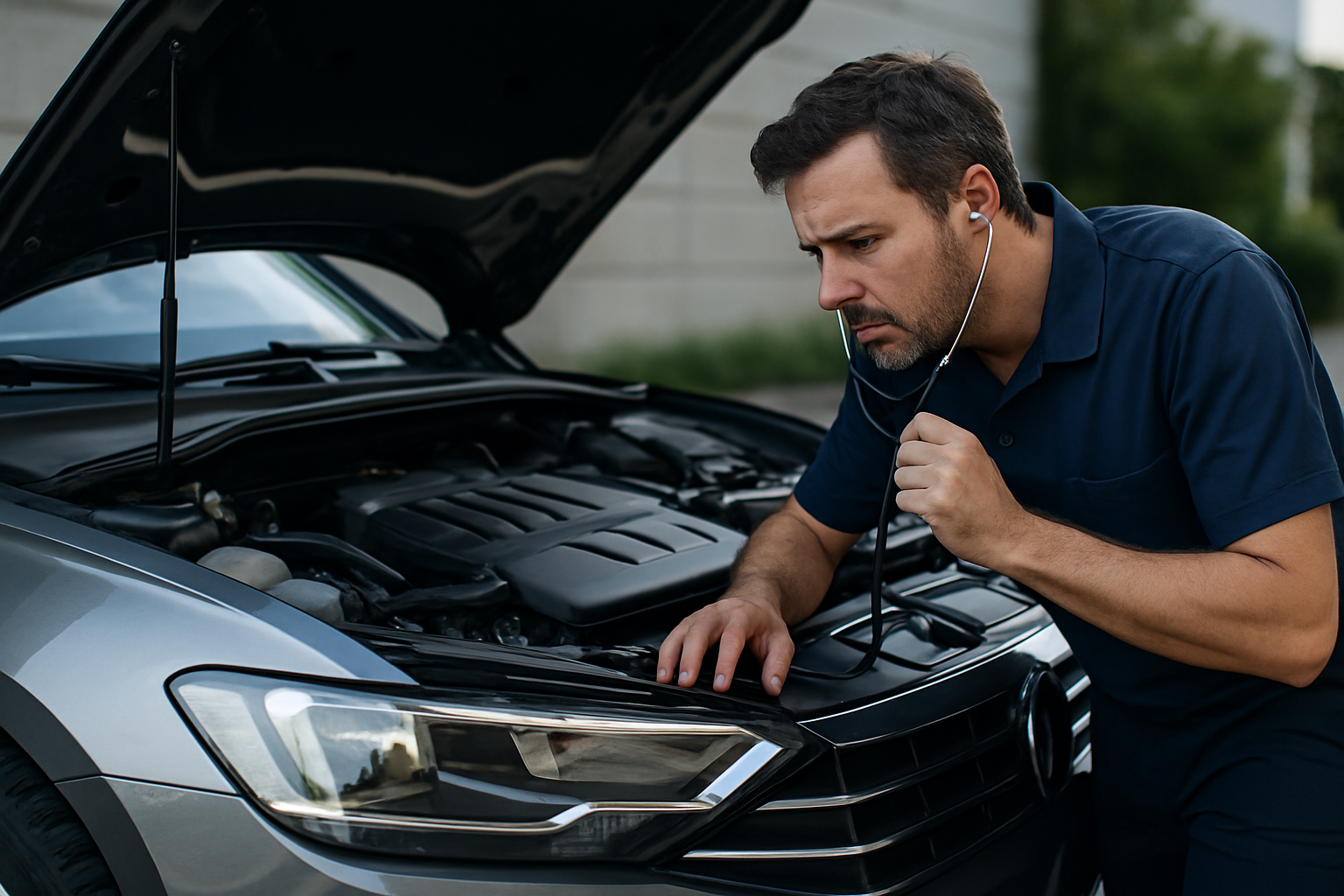
That rhythmic knocking sound coming from your engine isn’t something you should ignore. Different types of engine knock can signal everything from a simple fuel issue to catastrophic internal damage that could cost thousands to repair.
Understanding what your engine is trying to tell you can save you money and prevent a roadside breakdown. Each type of knock has its own distinct sound, timing, and severity level.
Understanding Engine Knock: The Basics
Engine knock occurs when the air-fuel mixture in your cylinders doesn’t burn smoothly. Instead of a controlled explosion that pushes the piston down at the right time, you get uncontrolled combustion that creates that distinctive knocking or pinging sound.
Your engine relies on precise timing for everything to work properly. When combustion happens at the wrong time or in the wrong way, it creates shock waves that you hear as knocking sounds. These shock waves can also damage engine components over time.
There are three main types of engine knock, and each one tells a different story about what’s happening inside your engine. Learning to identify them can help you determine whether you need to stop driving immediately or if you can safely make it to a repair shop.
Pre-Ignition Knock: The Fuel Problem
Pre-ignition knock is the most common type you’ll encounter, and it’s often the easiest to fix. This happens when your fuel ignites before the spark plug fires, usually because you’re using the wrong octane rating for your engine.
What Pre-Ignition Sounds Like
You’ll hear a light pinging or tapping sound that’s most noticeable during acceleration or when climbing hills. The sound typically occurs when the engine is under load, like when you’re accelerating from a stop or passing another vehicle.
This knock often sounds metallic and rhythmic, matching your engine’s RPM. It might be subtle at first but becomes more pronounced as you press the accelerator harder.
Common Causes of Pre-Ignition
Using regular unleaded gas in an engine designed for premium fuel is the most frequent culprit. High-performance engines and many turbocharged engines require 91 or 93 octane fuel to prevent knock.
Carbon deposits on pistons and combustion chamber walls can also create hot spots that ignite fuel prematurely. These deposits build up over time, especially if you frequently drive short distances or use lower-quality fuel.
Overheating can contribute to pre-ignition as well. When engine temperatures run too high, the fuel mixture becomes more likely to ignite before the spark plug fires.
How to Fix Pre-Ignition Knock
Try switching to a higher octane fuel first. If your owner’s manual recommends premium fuel and you’ve been using regular, this simple change often eliminates the knock completely.
For carbon buildup issues, consider using a quality fuel system cleaner like Chevron Techron or running a few tanks of Top Tier gasoline. Some mechanics recommend occasional highway driving to help burn off deposits naturally.
If the knock persists after addressing fuel quality, have your cooling system checked. A faulty thermostat, clogged radiator, or failing water pump can cause overheating that leads to knock.
Rod Bearing Knock: The Serious Problem
Rod bearing knock represents a much more serious issue that requires immediate attention. This occurs when the bearings between your connecting rods and crankshaft wear out, allowing metal-on-metal contact.
Identifying Rod Bearing Knock
Rod knock produces a deep, heavy knocking sound that’s quite different from pre-ignition ping. It sounds more like someone hitting the engine block with a hammer, and it typically gets louder as engine RPM increases.
This knock is present at idle and becomes more pronounced under acceleration. Unlike pre-ignition knock, which only occurs under load, rod knock happens whenever the engine is running.
You might also notice the oil pressure warning light flickering or staying on, especially at idle. Low oil pressure often accompanies rod bearing failure.
What Causes Rod Bearing Failure
Insufficient oil changes are the primary cause of rod bearing knock. When oil breaks down or becomes contaminated, it can’t properly lubricate the bearings, leading to excessive wear.
Running the engine low on oil or losing oil pressure due to a failed oil pump can destroy rod bearings quickly. Even brief periods without proper lubrication can cause irreversible damage.
High mileage engines naturally experience more bearing wear, but proper maintenance can prevent premature failure in most cases.
Dealing with Rod Bearing Knock
Stop driving immediately if you suspect rod bearing knock. Continuing to run the engine can cause the connecting rod to break completely, potentially destroying the entire engine block.
Rod bearing replacement requires complete engine disassembly and typically costs $3,000 to $5,000 or more. In many cases, especially with high-mileage engines, replacing or rebuilding the entire engine makes more economic sense.
Check your oil level and condition immediately. If the oil is black, metallic, or extremely low, this supports a rod bearing diagnosis.
Piston Slap: The Cold Weather Knock
Piston slap creates a distinctive knocking sound that’s most noticeable when the engine is cold and typically diminishes as it warms up. This occurs when pistons rock back and forth in their cylinders due to excessive clearance.
Recognizing Piston Slap
Piston slap sounds like a hollow knocking or slapping noise that’s most prominent during cold starts. The sound often disappears or becomes much quieter once the engine reaches normal operating temperature.
You’ll typically hear it most clearly for the first few minutes after starting a cold engine. The knock might be rhythmic and match the engine’s idle speed.
Unlike rod knock, piston slap usually doesn’t get dramatically worse with RPM increases, and it doesn’t indicate immediate catastrophic failure.
Why Piston Slap Occurs
Worn cylinder walls or pistons create excess clearance that allows the piston to rock side to side. When cold, this clearance is at its maximum because the metal components haven’t expanded from heat yet.
As the engine warms up, thermal expansion reduces the clearance between pistons and cylinder walls, which reduces or eliminates the slapping sound.
High-mileage engines commonly develop piston slap, but it can also occur in newer engines with manufacturing tolerances that are too loose.
Managing Piston Slap
Piston slap isn’t an emergency like rod knock, but it does indicate internal engine wear. You can continue driving, but be aware that the condition will likely worsen over time.
Using a slightly thicker oil viscosity can sometimes reduce piston slap noise. Switching from 5W-30 to 10W-30, for example, might provide better clearance control when warm.
Allow your engine to warm up gently rather than revving it hard when cold. This reduces stress on worn components and can slow the progression of wear.
Diagnostic Steps for Engine Knock
Start by noting when the knock occurs. Does it happen only during acceleration, constantly while running, or just when the engine is cold? This timing gives you valuable clues about the underlying cause.
Check your fuel receipt to confirm what octane you last purchased. If you’ve been using regular gas in a car that requires premium, try a tank of the recommended octane before assuming mechanical problems.
Monitor your oil level and condition closely. Low oil or oil that looks metallic or contaminated suggests internal engine problems rather than fuel-related knock.
Pay attention to other symptoms like oil pressure warning lights, overheating, or changes in engine performance. These additional clues help differentiate between the various types of knock.
When to Stop Driving Immediately
Deep, heavy knocking sounds that persist at idle indicate serious internal damage. This type of knock typically means rod bearings or other critical components are failing.
If you see oil pressure warning lights along with knocking sounds, stop driving immediately. Low oil pressure combined with knock almost always indicates severe internal engine damage.
Metallic particles in your oil or oil that looks like chocolate milk suggest internal component failure. Check your oil by pulling the dipstick and examining it closely.
When in doubt, it’s better to call for a tow than risk destroying your entire engine. The cost of towing is minimal compared to engine replacement costs.
Prevention and Maintenance Tips
Use the octane rating specified in your owner’s manual. Don’t try to save money by using regular gas in an engine designed for premium fuel, as the resulting knock can cause expensive damage over time.
Change your oil regularly using the intervals specified by your manufacturer. Clean oil with proper viscosity is crucial for protecting bearings and other internal components.
Address cooling system issues promptly. Overheating contributes to pre-ignition and can accelerate internal engine wear. Replace thermostats, radiator caps, and coolant according to your maintenance schedule.
Consider using Top Tier gasoline brands that include better detergent packages. These fuels help prevent carbon deposits that can contribute to pre-ignition knock.
Cost Considerations for Engine Knock Repairs
Pre-ignition knock fixes range from free (switching to proper octane fuel) to a few hundred dollars for carbon cleaning services or cooling system repairs. These repairs typically pay for themselves by preventing more serious damage.
Rod bearing replacement costs vary widely but typically range from $3,000 to $6,000 depending on your vehicle and local labor rates. Many high-mileage vehicles aren’t worth this level of repair investment.
Piston slap repairs require complete engine disassembly and often cost nearly as much as rod bearing work. Many owners choose to live with the noise until other engine problems develop.
Engine replacement or rebuilding typically costs $4,000 to $8,000 or more, making prevention through proper maintenance much more economical than repairs.
Frequently Asked Questions
Can I damage my engine by continuing to drive with knock?
It depends on the type of knock. Light pre-ignition knock from wrong fuel octane can cause gradual damage over time, while rod bearing knock can destroy your engine in minutes. Heavy, persistent knocking requires immediate attention.
Will thicker oil stop engine knock?
Thicker oil might reduce piston slap noise temporarily, but it won’t fix the underlying wear causing the problem. For rod bearing knock or severe internal damage, thicker oil provides little protection and isn’t a real solution.
How can I tell the difference between rod knock and piston slap?
Rod knock is typically deeper, more metallic, and present at all engine temperatures. Piston slap is usually most noticeable when cold and diminishes significantly as the engine warms up. Rod knock also often comes with oil pressure problems.
Is it safe to use octane booster instead of premium gas?
Quality octane boosters can work for occasional use, but they’re more expensive than premium fuel over time. Most over-the-counter boosters only raise octane by 2-3 points, which might not be enough for severe knock problems.

Leave a Reply