
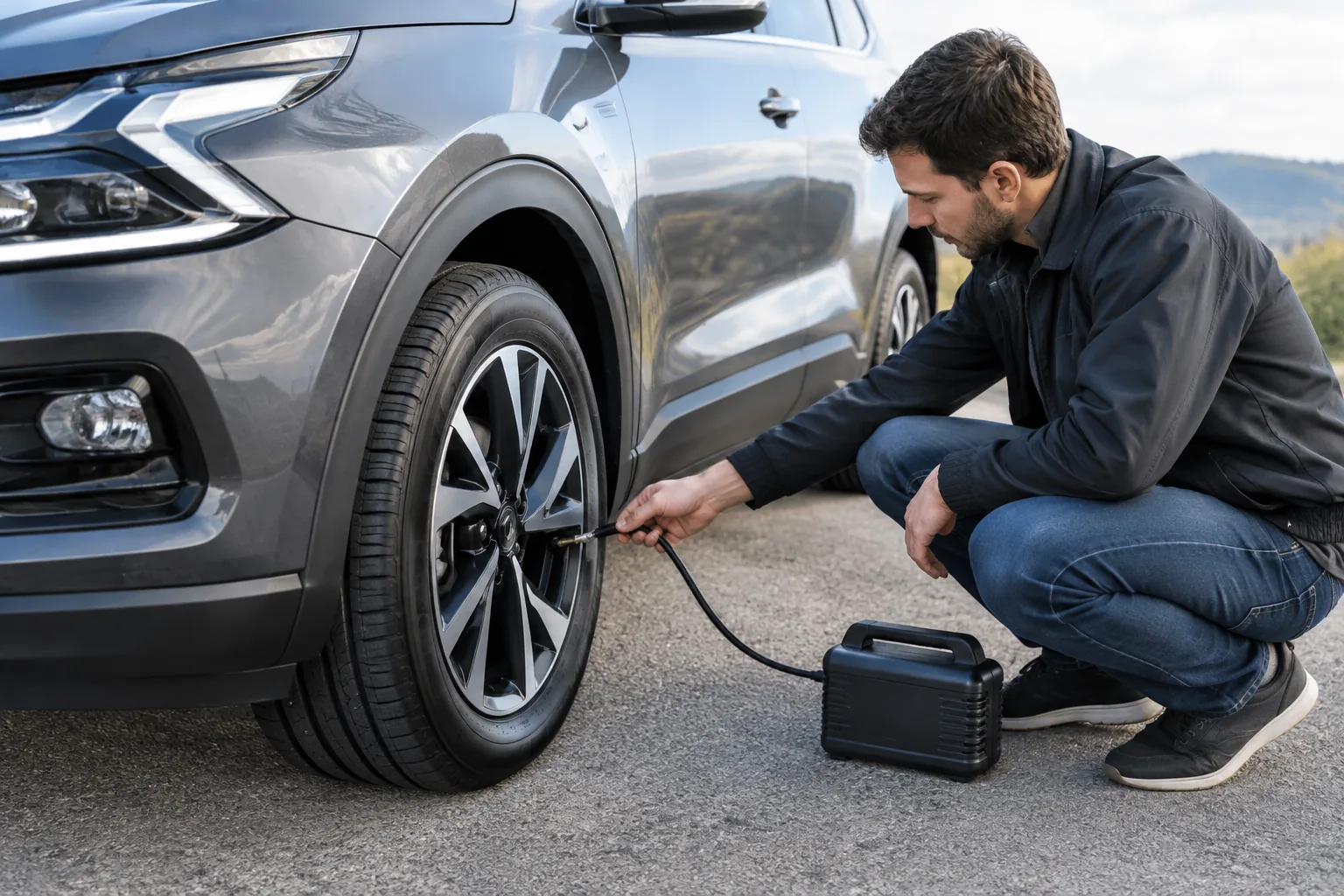
If the tire pressure light on your Kia Sportage stays on after you added air, the most likely explanation is that one or more tires are still below the pressure on the placard, or that the system is reporting a sensor malfunction instead of low pressure. Those are two different problems with two different fixes. Topping off a tire only solves the first.
The sections below cover how to check pressures properly, how to rule out a slow leak, and how to tell a low-pressure warning from a fault. They also explain which jobs you can handle yourself and which need a tire shop. Model year, trim, and wheel setup change some details, so use your owner’s manual for the exact behavior of your Sportage.
Start With Cold Pressures and the Placard
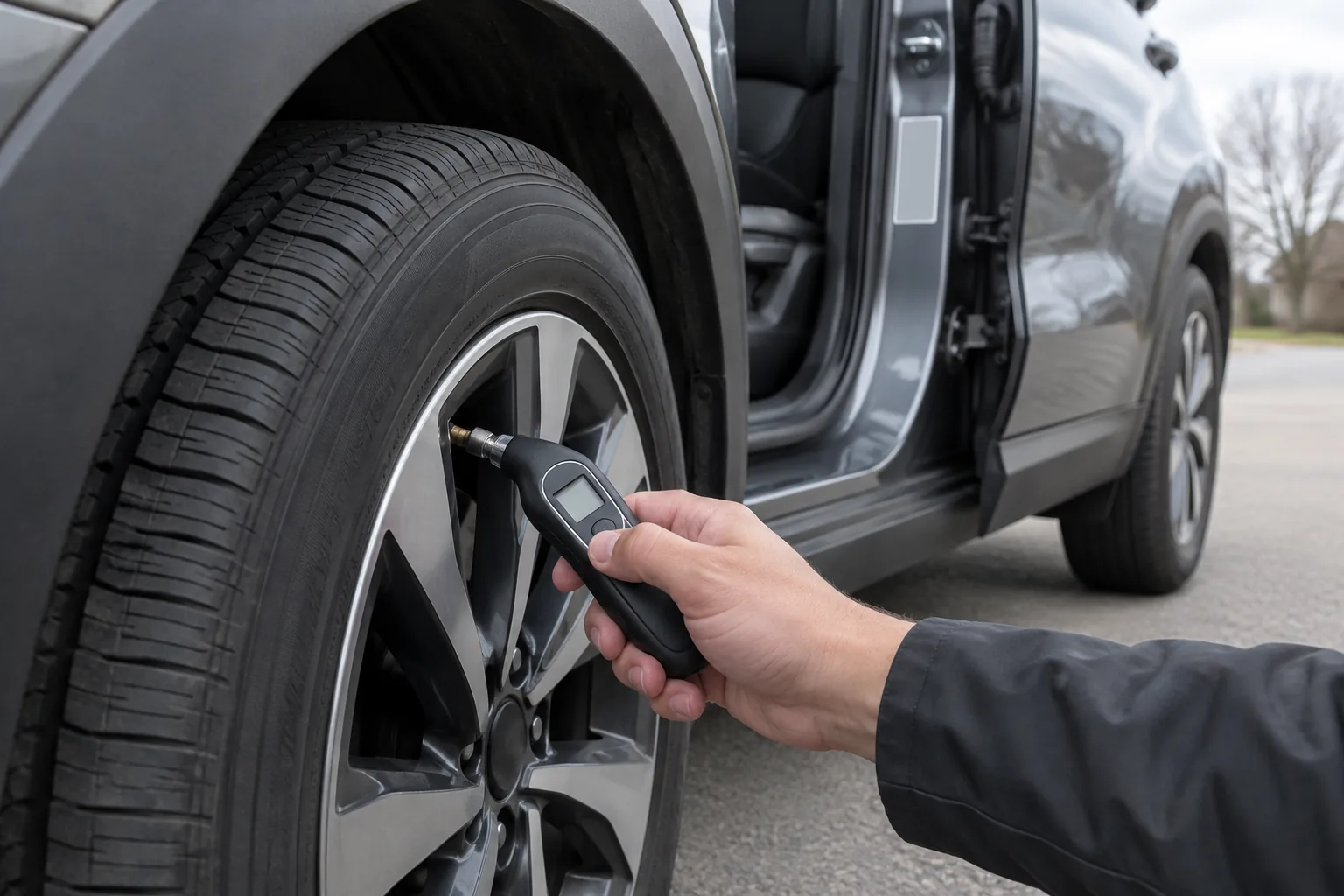
Before you assume the system is broken, confirm that every tire is actually at the right pressure. The correct number is on the tire and loading placard, usually on the driver’s door jamb. It is not the number molded into the tire sidewall, which is the tire’s maximum, not your target.
Check all four tires, not just the one that looked low. Do it when the tires are cold, meaning the vehicle has sat for a few hours or you’ve driven only a short distance. Pressure rises as tires warm up, so a tire you filled right after a drive can read fine at the pump and then drop below spec once it cools overnight. Cold weather does the same thing. As a rough rule, tire pressure falls about 1 psi for every 10°F drop in temperature.
A few things commonly cause a light to stay on after you add air:
- You filled to a number that was still under the placard value.
- The tires were warm when you filled them, so they ended up under-inflated once cooled.
- A different tire than the one you filled is the low one.
- The system hasn’t updated yet. Some vehicles need a short period of driving before the light goes out, and your manual describes how yours behaves.
A gauge you trust matters here. Gas station gauges and the built-in ones on inflators can be off. If you already own a good gauge, use it. If you don’t, a digital tire pressure gauge is an inexpensive way to get consistent readings. It also belongs on any list of must-have tools for DIY car owners.
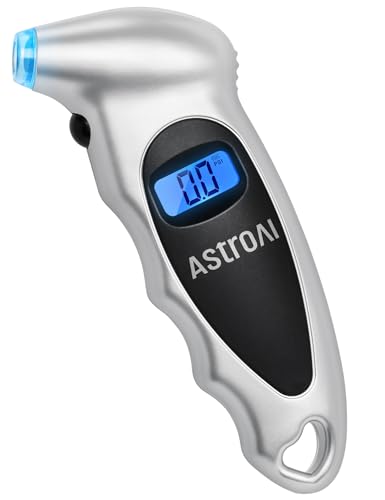
Digital Tire Pressure Gauge
An easy-to-read digital gauge helps you set each tire to the placard number instead of trusting a worn gas station gauge.
Look for a Slow Leak
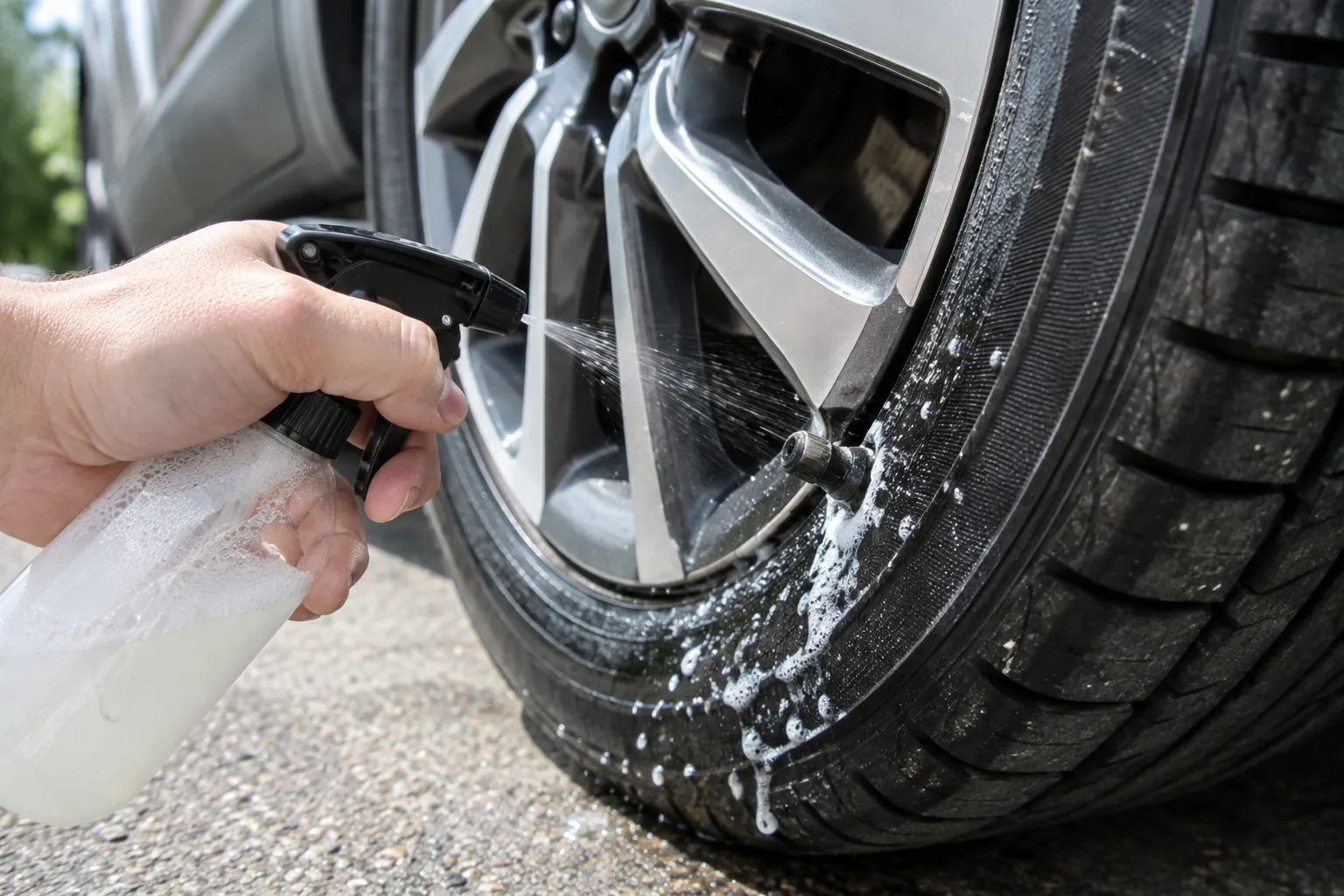
If you had to add air in the first place, something made the pressure drop. Seasonal temperature swings explain a lot of cases, but a tire that keeps losing air needs a closer look.
Check these before anything else:
- Tread and sidewalls: Look for nails, screws, or embedded debris.
- Valve stems and caps: A missing cap or a leaking valve core can bleed air slowly.
- Wheel edges: Corrosion where the tire meets the rim can cause a slow leak, especially on older wheels.
A spray bottle of soapy water on the tread, valve, and bead area will show bubbles where air is escaping. If you find a puncture or can’t locate the source but the tire keeps dropping over a few days, take it to a tire shop. Repair eligibility depends on where the damage is, and a shop can judge that properly.
Low-Pressure Warning vs. Sensor Malfunction
This is the distinction that explains most “it won’t go off” complaints. The tire pressure telltale can mean two different things on a Sportage, and your owner’s manual is the authority on how each one looks.
Low pressure: The light comes on and stays on while one or more tires are under-inflated. Depending on year and instrument cluster, the display may also show which tire is low. Once the pressure is corrected, this warning should clear, though it may take some driving.
Malfunction: Many manuals describe a system fault as a light that flashes for a period when you start the vehicle and then stays on. If that matches what you’re seeing, adding air won’t help, because the system isn’t telling you about pressure. It’s telling you it can’t read one or more sensors reliably. Look up the exact wording and behavior in the tire pressure monitoring section of your manual.
Most recent Sportage models use a direct system, with a sensor at each wheel that reports actual pressure. That is different from an indirect system, which estimates pressure from wheel speed data. Confirm which one your model year uses in the manual, because it determines what a fault means and what the repair involves.
Common causes of a malfunction indication
- A sensor with a depleted battery. These batteries are sealed, and they wear out over years of service.
- A damaged sensor after a tire change or wheel service.
- Wheels or tires swapped in without working sensors, such as a seasonal wheel set.
- A sensor that isn’t registered to the vehicle after replacement or wheel changes.
What You Can Do vs. What Needs a Shop
TPMS work uses several terms that people lump together, and they aren’t the same thing. Knowing the difference keeps you from chasing the wrong fix.
- Pressure initialization: Telling the system what the correct pressures are after you set them. Whether your Sportage needs or offers this step depends on the vehicle, so check the manual instead of assuming a button exists.
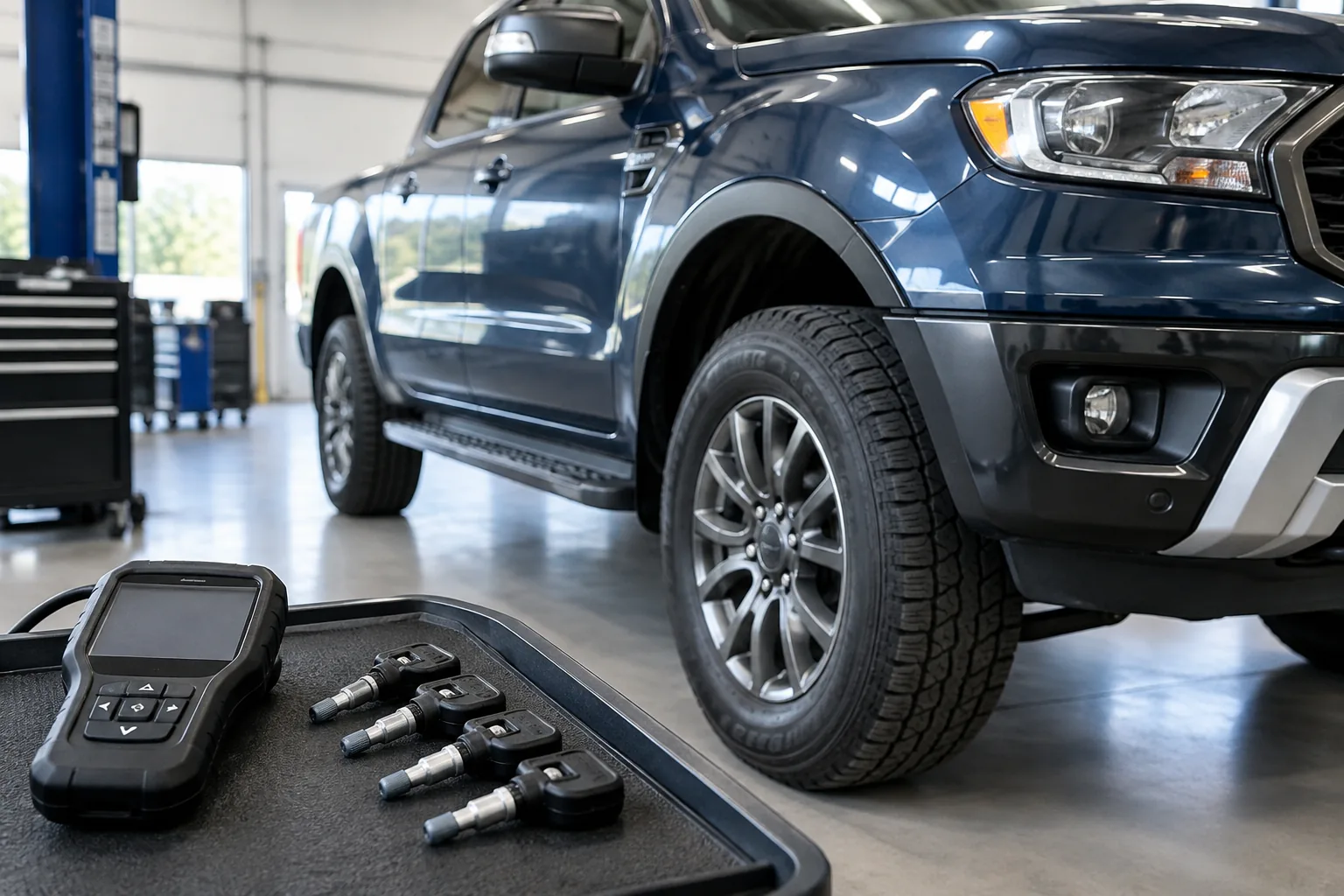
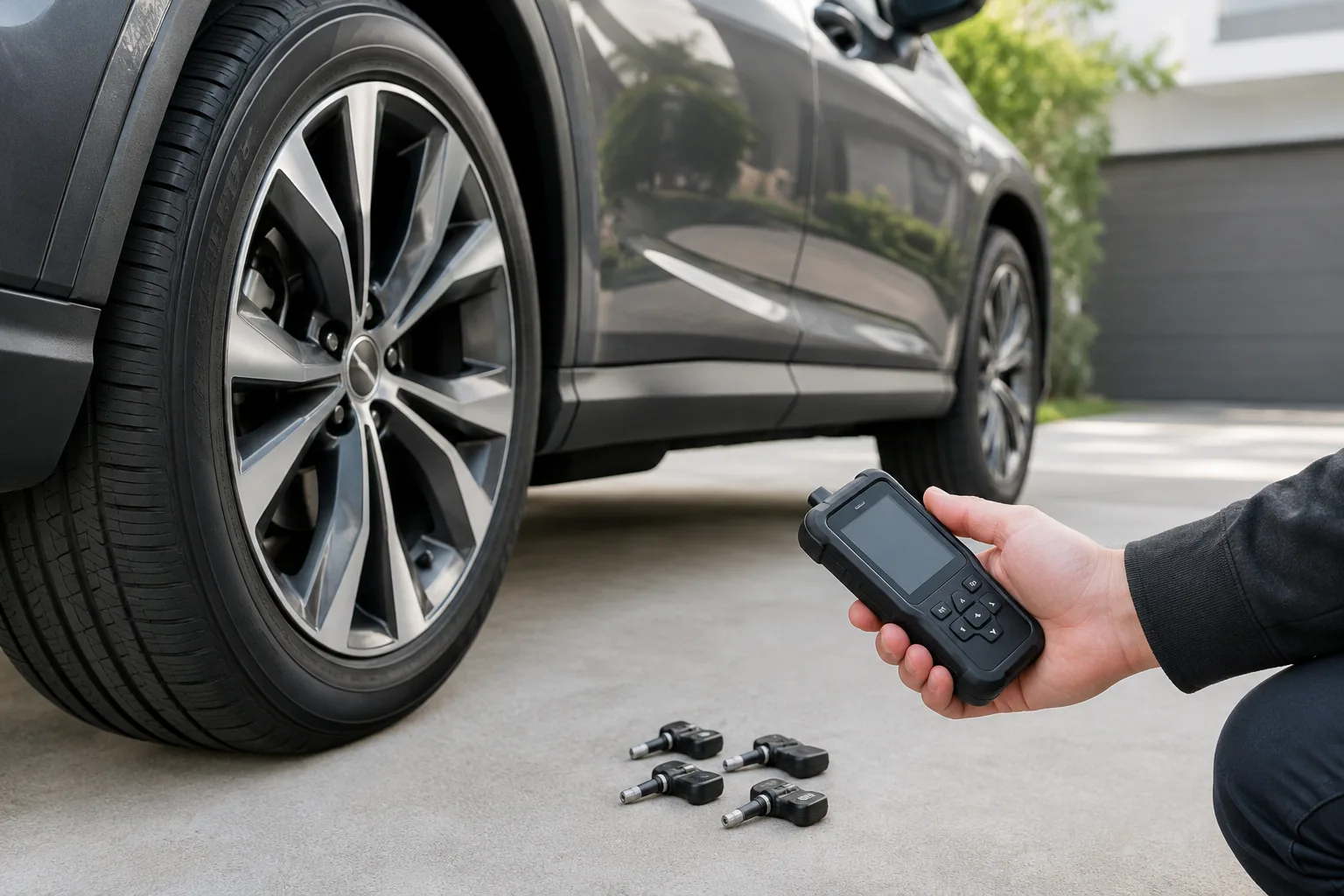
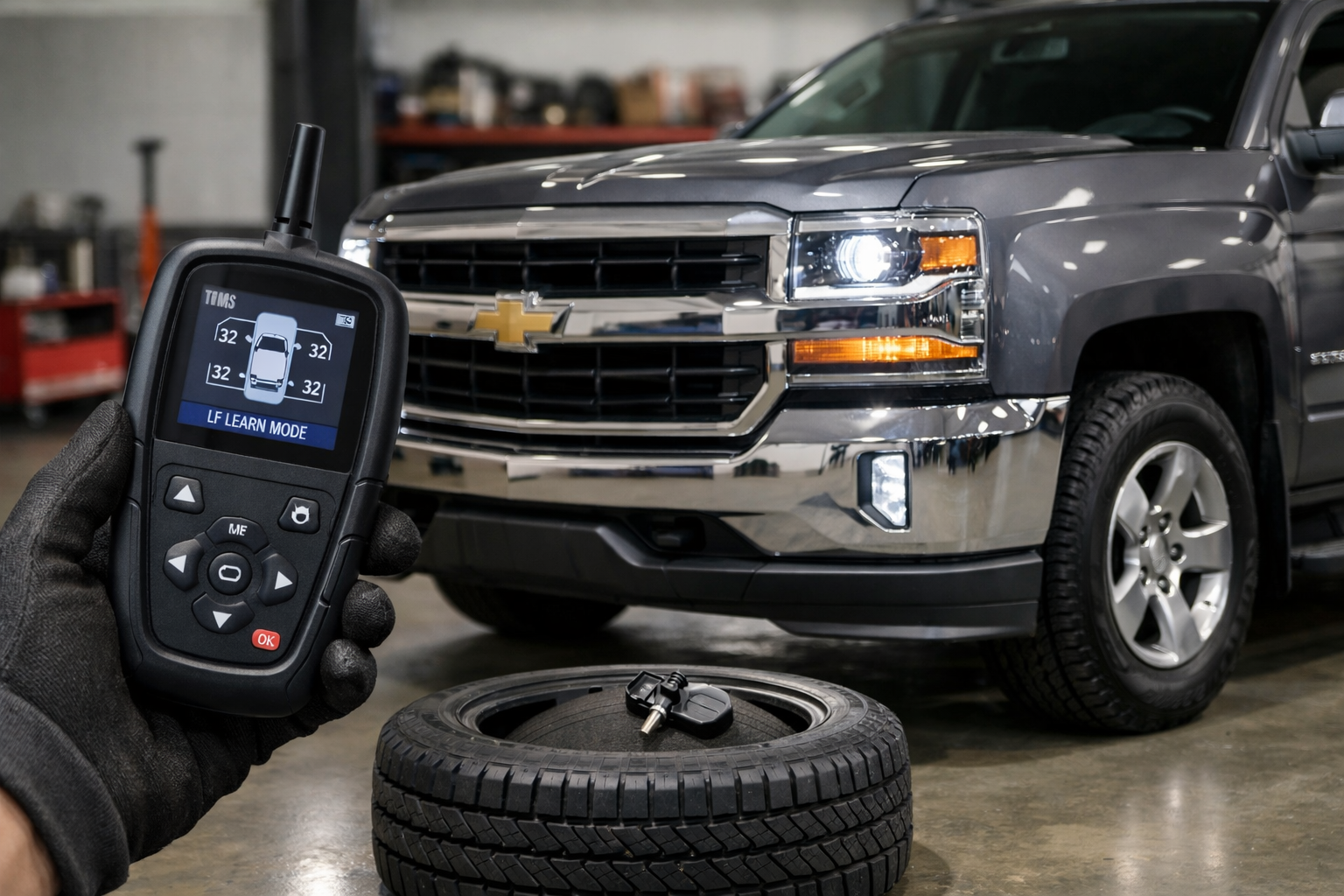
- Sensor activation: Waking a sensor with a TPMS tool so it transmits, typically to check it.
- Sensor ID relearn: Having the vehicle learn which sensor ID belongs to which wheel position, which can matter after rotation or replacement on some systems.
- Sensor programming: Writing information to a programmable replacement sensor, which requires compatible equipment.
- Fault diagnosis: Finding out which sensor or component is causing a malfunction indication.
As an owner, your job is the first part: correct cold pressures, a leak check, and reading the manual to identify which warning you have. Whether your Sportage generation requires a relearn after a tire rotation is a manual question, so don’t assume either way.
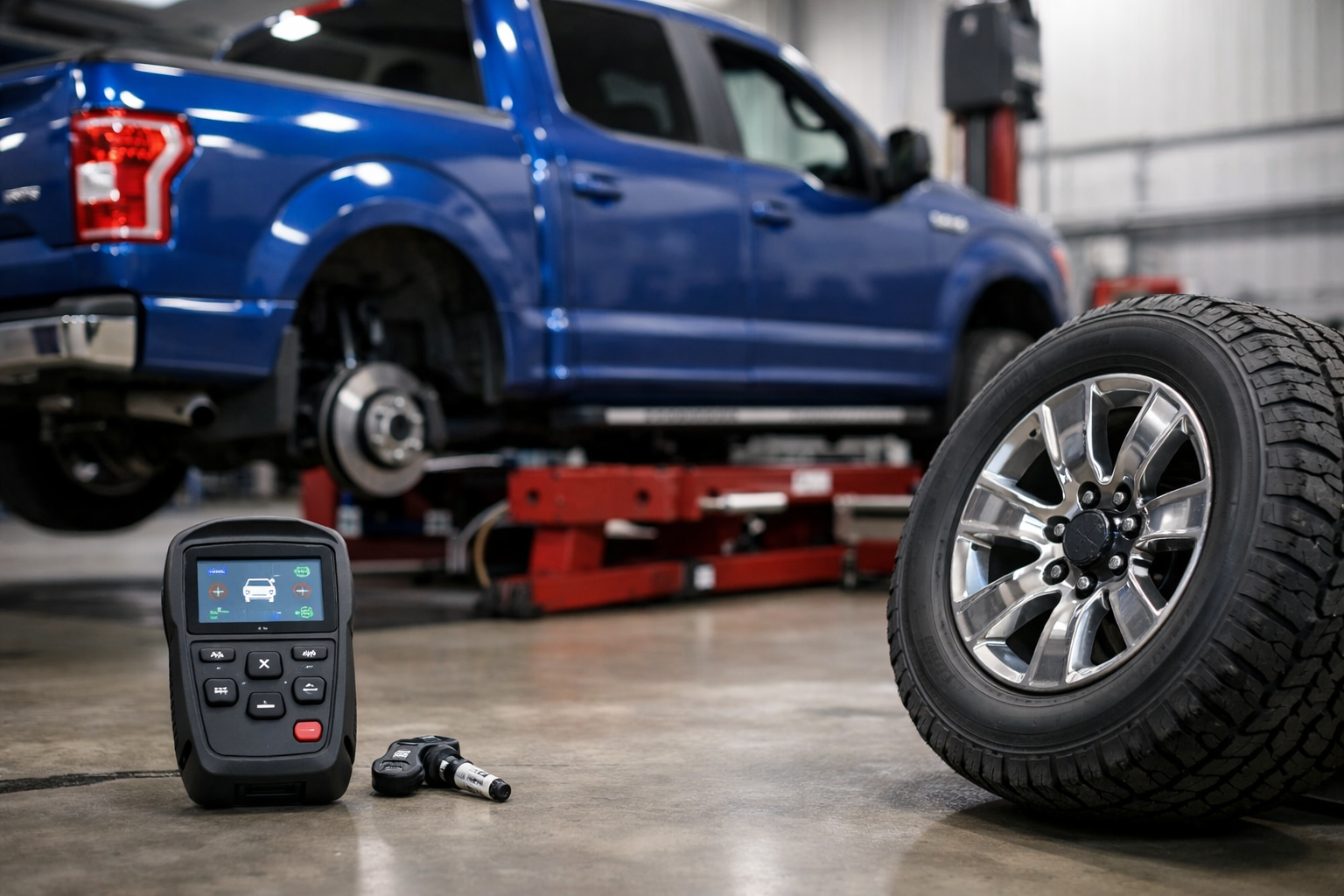
A malfunction indication is shop territory. A technician with a TPMS-capable scan tool can read each sensor, see which one isn’t responding, and register or program replacements properly. A basic OBD2 code reader generally isn’t a TPMS tool, and it can’t program sensors, so don’t count on one to fix this. Because compatibility varies by model year and sensor type, a shop that works with your specific vehicle is a safer bet than guessing at a parts search.
If a different warning is also showing on your cluster, such as a driver-assist message, treat it as a separate issue. Our guide to Kia Sportage blind spot monitoring problems covers that system.
FAQHow long does the tire pressure light take to turn off after adding air?
It depends on the system and the vehicle. Some need a short stretch of driving before the light clears. Your owner’s manual explains the behavior for your model year. If the light is still on after correcting all four tires to the placard pressure when cold, and especially if it flashed at startup, suspect a sensor issue.
Is there a reset button for the Sportage tire pressure light?
Don’t assume one exists. The fix for a low-pressure warning is to bring the tires to the correct cold pressure. The fix for a malfunction is to identify and repair the faulty sensor or related problem. Check your manual’s TPMS section for any owner procedure that applies to your model year.
Can I keep driving with the light on?
A low-pressure warning means a tire may be under-inflated, which affects handling, tire wear, and safety, so correct it promptly. A malfunction indication means the system may not warn you about low pressure, so keep checking your tires manually with a gauge until it’s repaired.
Leave a Reply