
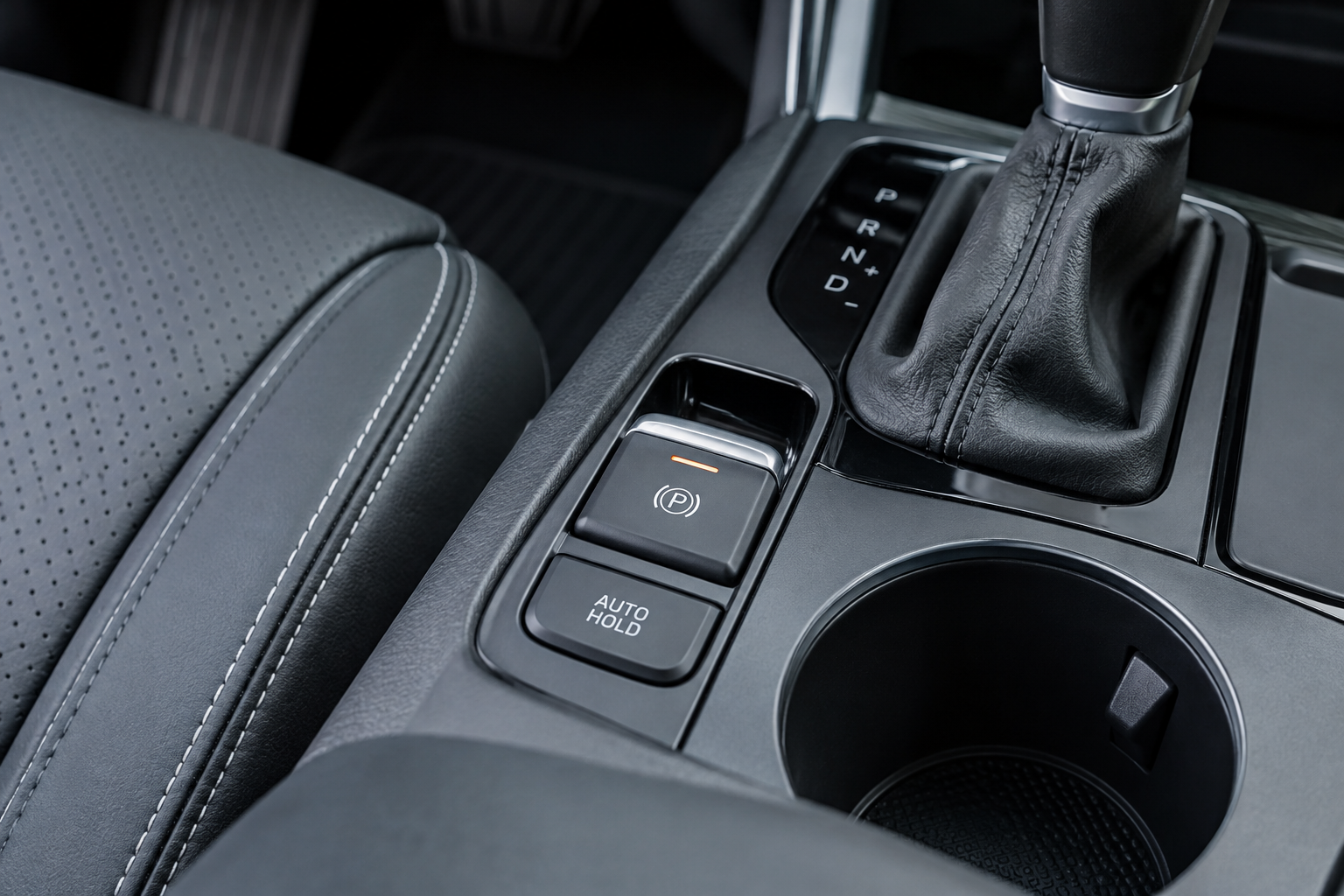
You put the Kia Sportage in park, hit the button to release the electronic parking brake, and nothing happens. Maybe you get a warning light on the dash, a chime, or the brake just stays locked no matter how many times you press the switch. It’s an unsettling feeling, especially if you’re in a parking lot or driveway and need to get moving.
The good news is that most electronic parking brake (EPB) faults on the Sportage come down to a handful of common causes, and many of them you can check yourself before calling a tow truck or heading to the dealer. This guide walks through the safe diagnostic steps in order, starting with the simplest checks and working toward the issues that need a shop’s attention.
Start With the Basics: Pedal, Power, and Position
Before you assume the worst, run through a few quick checks. The Sportage’s EPB system relies on several conditions being met before it will release, and if any one of them isn’t satisfied, the brake simply won’t let go.
- Brake pedal input: Most Sportage model years require you to press the brake pedal firmly while pulling up on the EPB switch to release it. A light tap won’t register. Push the pedal down all the way and hold it while you try the switch.
- Ignition state: The EPB won’t release unless the ignition is on (or the vehicle is in Ready mode on hybrid models). If you’re trying to release it with the key out or in ACC mode only, it won’t work.
- Gear position: On some model years, the transmission needs to be in a specific position, usually anything other than Park, or Park itself depending on the logic. Check your owner’s manual for the exact sequence, since it varies slightly between the 2017 to 2022 and 2023-plus Sportage generations.
- Seat belt and door status: A few Kia models tie EPB release logic to the driver’s seat belt being buckled or the driver’s door being closed. It sounds minor, but it trips people up more often than you’d expect.
If you’ve confirmed all of the above and the brake still won’t release, move on to checking the electrical side of things.
Low Battery Voltage Is the Most Common Culprit
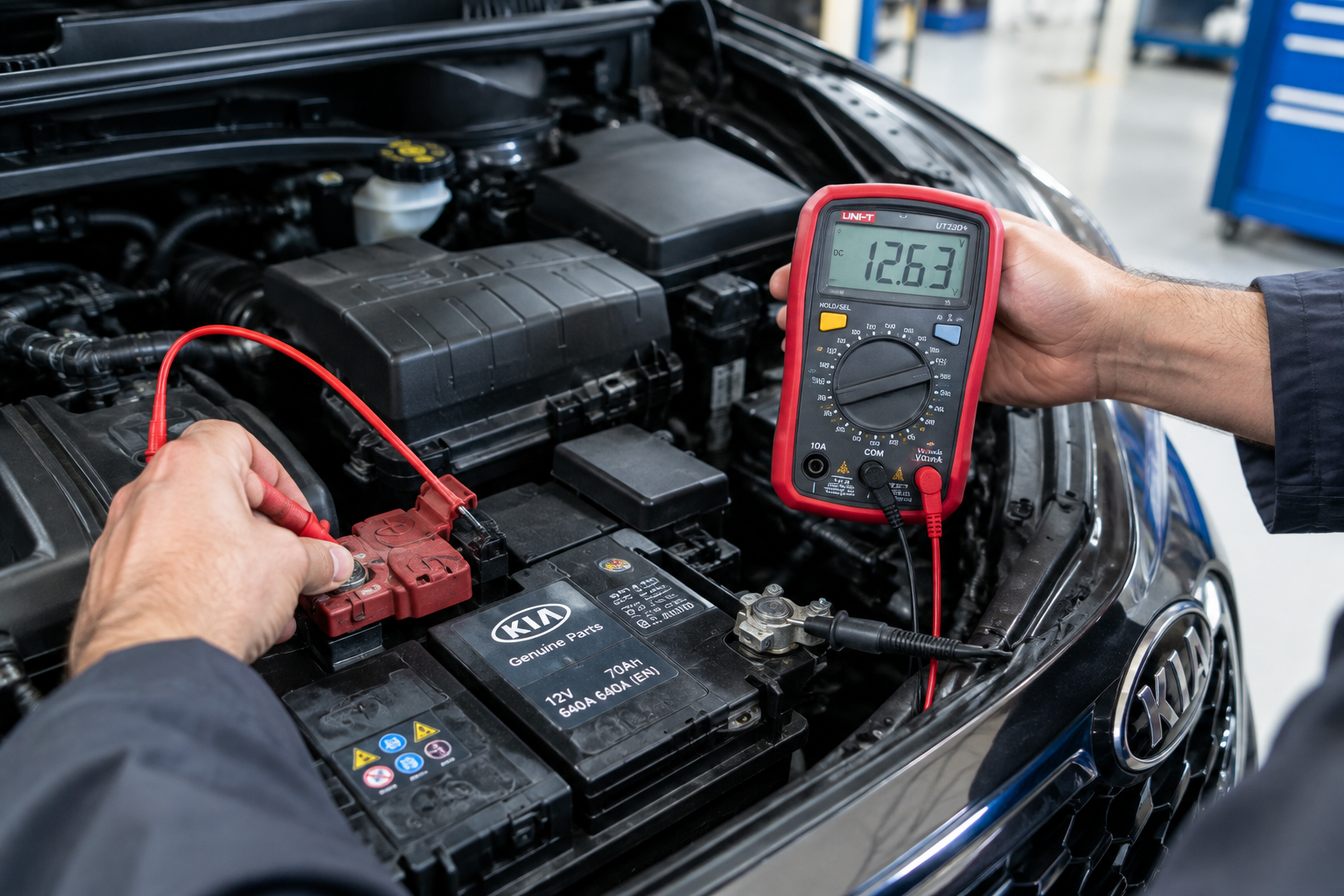
The EPB actuators on the Sportage need a solid, steady voltage supply to drive the motors that clamp and release the rear calipers. If your battery is weak, corroded at the terminals, or simply old, the system may sense insufficient voltage and refuse to release the brake as a protective measure.
This is especially common after the car has sat for a while, in cold weather, or if you’ve got a battery that’s several years old and losing capacity. A voltage drop during cranking can also trigger a temporary EPB fault that clears itself once the alternator is charging properly.
Check your battery terminals for corrosion and make sure the connections are tight. If you have a multimeter, a healthy resting voltage should read close to 12.6 volts, and it should climb to somewhere in the 13.5 to 14.5 volt range with the engine running. Anything noticeably lower is a sign your battery or charging system needs attention.
If the parking brake released after a jump start or after letting the car run for a few minutes, weak battery voltage was very likely your issue. It’s worth replacing the battery proactively rather than waiting for it to strand you somewhere less convenient.
Switch, Wiring, and Actuator Faults
If voltage checks out fine and the basic release sequence isn’t working, the problem may be in the switch itself or further down the line in the wiring and actuators.
EPB Switch Problems
The physical switch on the console can fail from wear, moisture intrusion, or a sticking mechanism. If pressing it doesn’t produce a chime, dash light change, or any response at all, the switch or its connector is a reasonable suspect. Some owners have found success by cleaning around the switch or gently working it a few times, but a switch that’s truly failed will need replacement.
Actuator or Caliper Faults
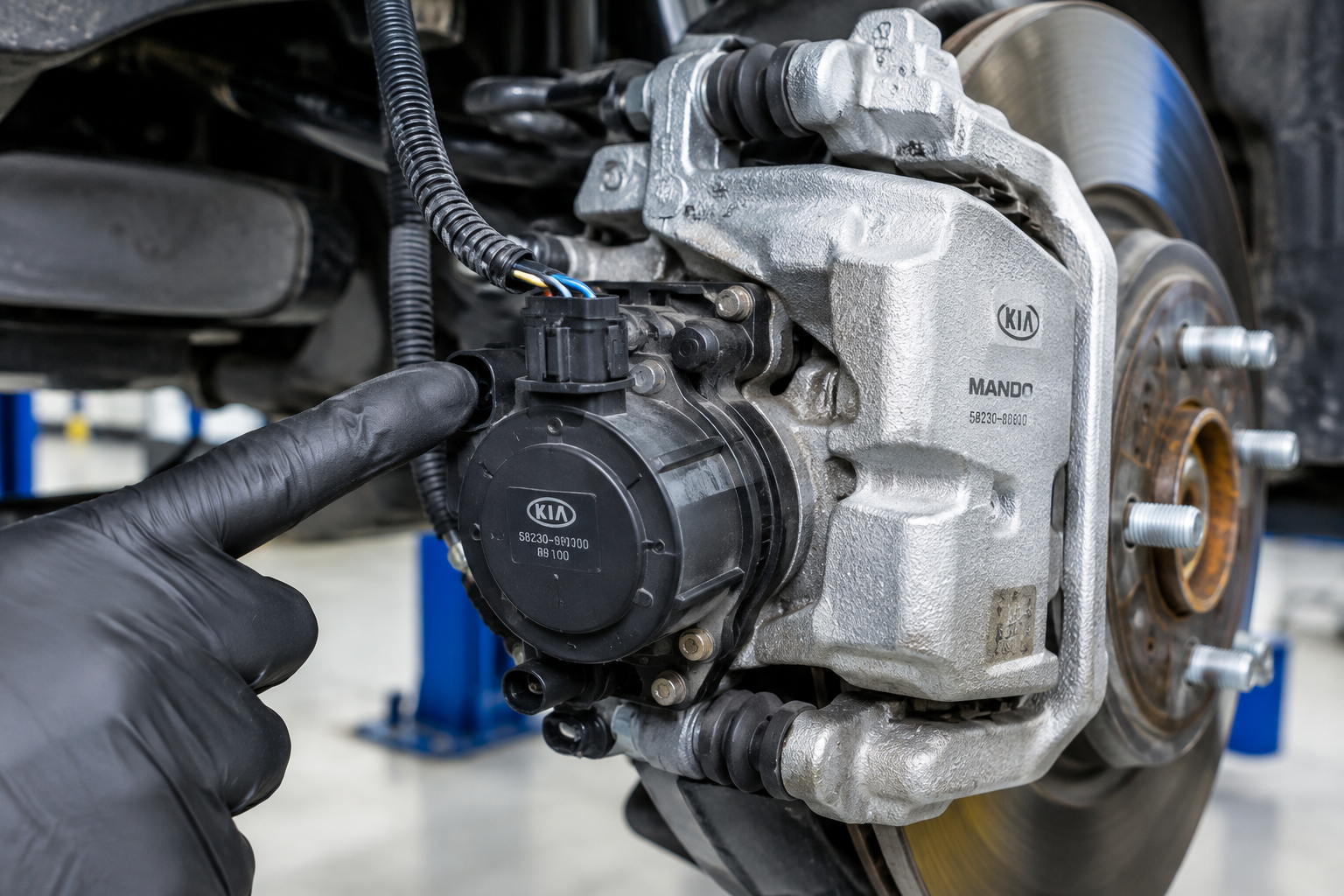
Each rear caliper on EPB-equipped Sportages has a small electric motor that drives the parking brake mechanism. Over time, these actuators can seize from corrosion, especially in climates with road salt, or they can fail electrically. When one side fails, you’ll often see an EPB warning light along with a message urging you to have the vehicle serviced.
This is not a repair most owners can safely tackle without proper tools, since releasing a seized actuator sometimes requires putting the system into service mode first, which brings us to the next section.
A basic OBD2 scanner that supports Kia-specific EPB functions can help you pull the actual fault code instead of guessing. Something like a Kia Sportage OBD2 scanner can tell you whether the fault is on the left or right actuator, whether it’s a voltage-related code, or a communication fault with the EPB module.
FOXWELL Bidirectional OBD2 Scanner
Supports bidirectional EPB service functions on many Kia and Hyundai models, letting you retract calipers safely for pad service or diagnosis.
A bidirectional scanner is genuinely useful here because a basic code reader will only tell you a fault exists. A bidirectional tool can actually command the actuator to retract, which is often necessary before any brake pad replacement or deeper inspection can happen safely.
Service Mode and Model-Year Differences
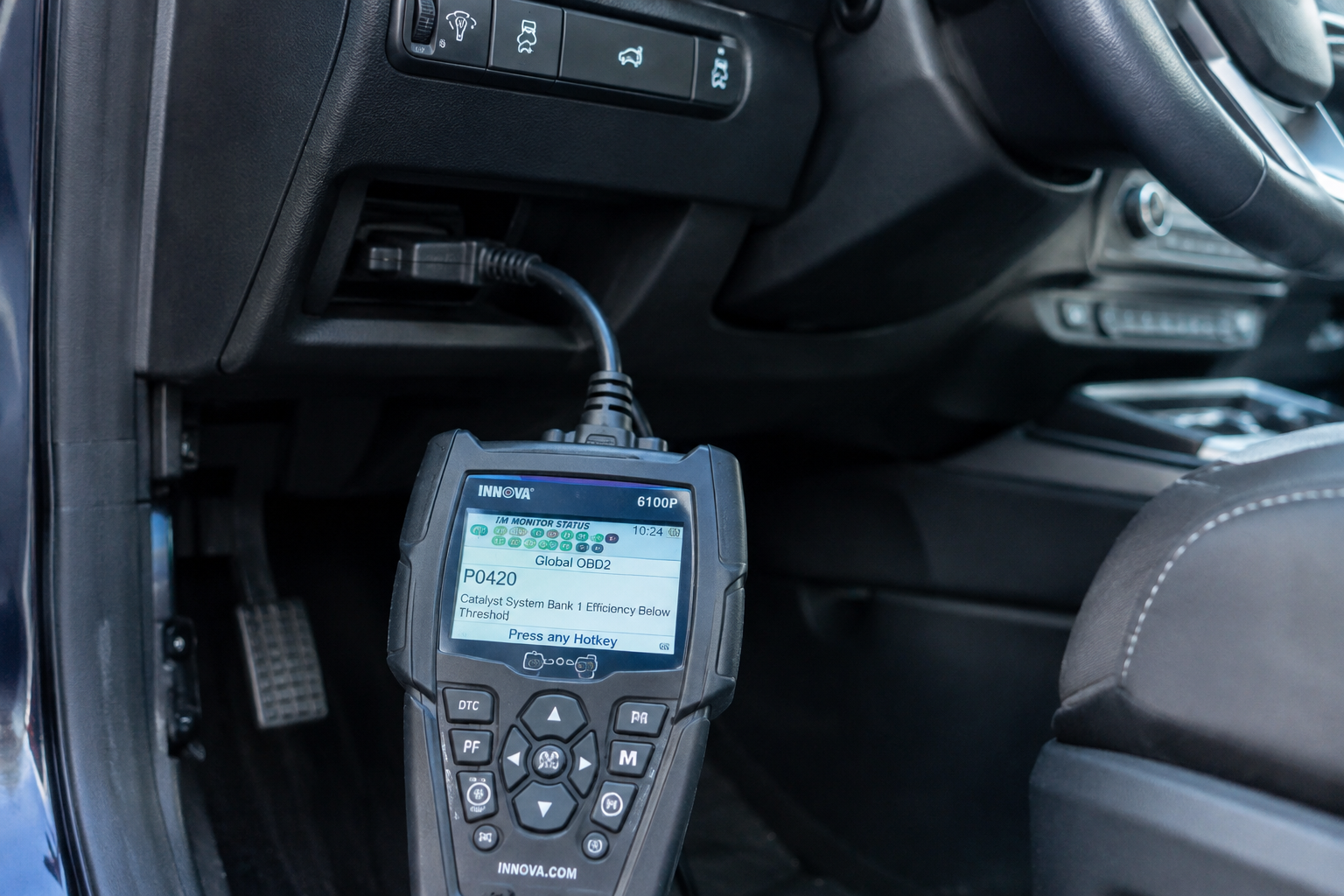
Kia builds a “service mode” or maintenance mode into the EPB system specifically so technicians can retract the calipers fully for brake pad replacement or actuator diagnosis. This isn’t something you want to guess your way through, because the exact button sequence, hold times, and menu navigation differ between Sportage generations.
The fourth-generation Sportage (2017 to 2022) uses a different release and service procedure than the fifth-generation model (2023 and newer), which added more digital cluster menus and slightly different switch logic. Using the wrong sequence, or one intended for a different Kia model like the Sorento or Telluride, can leave the system in an unexpected state or trigger additional fault codes.
Always check your specific model year’s owner’s manual for the correct emergency release and service mode steps. If you don’t have a physical copy, Kia’s owner portal has downloadable manuals by VIN, and that’s the safest reference since it accounts for your exact trim and production date.
Never attempt to drive the vehicle with the parking brake still engaged, even if it seems to be releasing partially or you’re only moving a short distance. Forcing the vehicle to move with the brake applied can damage the actuators, warp the rotors, or cause the calipers to overheat, turning a fixable electrical issue into an expensive mechanical one.
If the manual release procedure in your owner’s manual doesn’t restore normal function, or if you’re getting persistent fault codes after following it correctly, that’s your signal to stop troubleshooting and get the vehicle to a shop or dealer. This is one of those cases where being cautious costs you far less than being wrong.
When to Call a Professional
Some EPB issues are simple enough to sort out from your driveway, but others point to failing hardware that needs replacement parts and specialized tools. Call for professional help if you notice any of the following:
- The EPB warning light stays on continuously, even after a full drive cycle and multiple ignition cycles.
- You hear grinding, clicking, or repeated motor-whirring sounds from one or both rear wheels when trying to release the brake.
- The dash displays a specific EPB fault message rather than a general brake warning.
- The brake released once but has since failed again, suggesting an intermittent electrical fault rather than a one-time voltage dip.
A shop with access to Kia’s diagnostic software can pull detailed actuator data, check individual caliper motor current draw, and confirm whether you’re looking at a wiring problem, a failed actuator, or a module issue. Trying to force a mechanical fix on an electronic system usually just adds new problems on top of the original one.
If you’re also noticing unrelated brake symptoms, like a pedal that feels soft or sinks slowly after the car has been parked, it’s worth reading through what to check when the brake pedal goes to the floor after sitting overnight, since a separate hydraulic issue can sometimes coincide with EPB complaints and confuse the diagnosis.
Frequently Asked Questions
Can I release the Kia Sportage parking brake manually if the electronics fail completely?
Most Sportage model years include a manual release mechanism, often a cable or lever accessible after removing a trunk panel or trim piece, meant strictly for emergencies like a dead battery in an unsafe location. It is not intended for routine use and should only get you enough mobility to reach a shop safely. Check your specific model year’s manual for the exact location and steps, since access points differ across trims.
Will a dead or disconnected battery cause the EPB to stay engaged?
Yes. Without adequate voltage, the EPB module can’t safely command the actuators to retract, so it defaults to keeping the brake applied. This is actually a safety feature rather than a flaw, since releasing the brake without confirmed power could leave the vehicle unsecured.
Is it safe to drive with the EPB warning light on if the brake did eventually release?
It’s not something you want to make a habit of. An intermittent EPB fault that clears itself once can point to a marginal battery, a failing actuator, or a wiring connection that’s about to get worse. Get it scanned for stored codes as soon as possible, even if the brake seems to be working normally again.
Related posts:
 Honda CR-V Electronic Parking Brake Won’t Release: Causes and Safe Checks
  Honda Pilot Electronic Parking Brake Won’t Release: Causes and Safe Checks
  Toyota RAV4 Electronic Parking Brake Won’t Release: Causes and Safe Checks
  Toyota Highlander Electronic Parking Brake Won’t Release: Causes and Safe Checks
Leave a Reply