
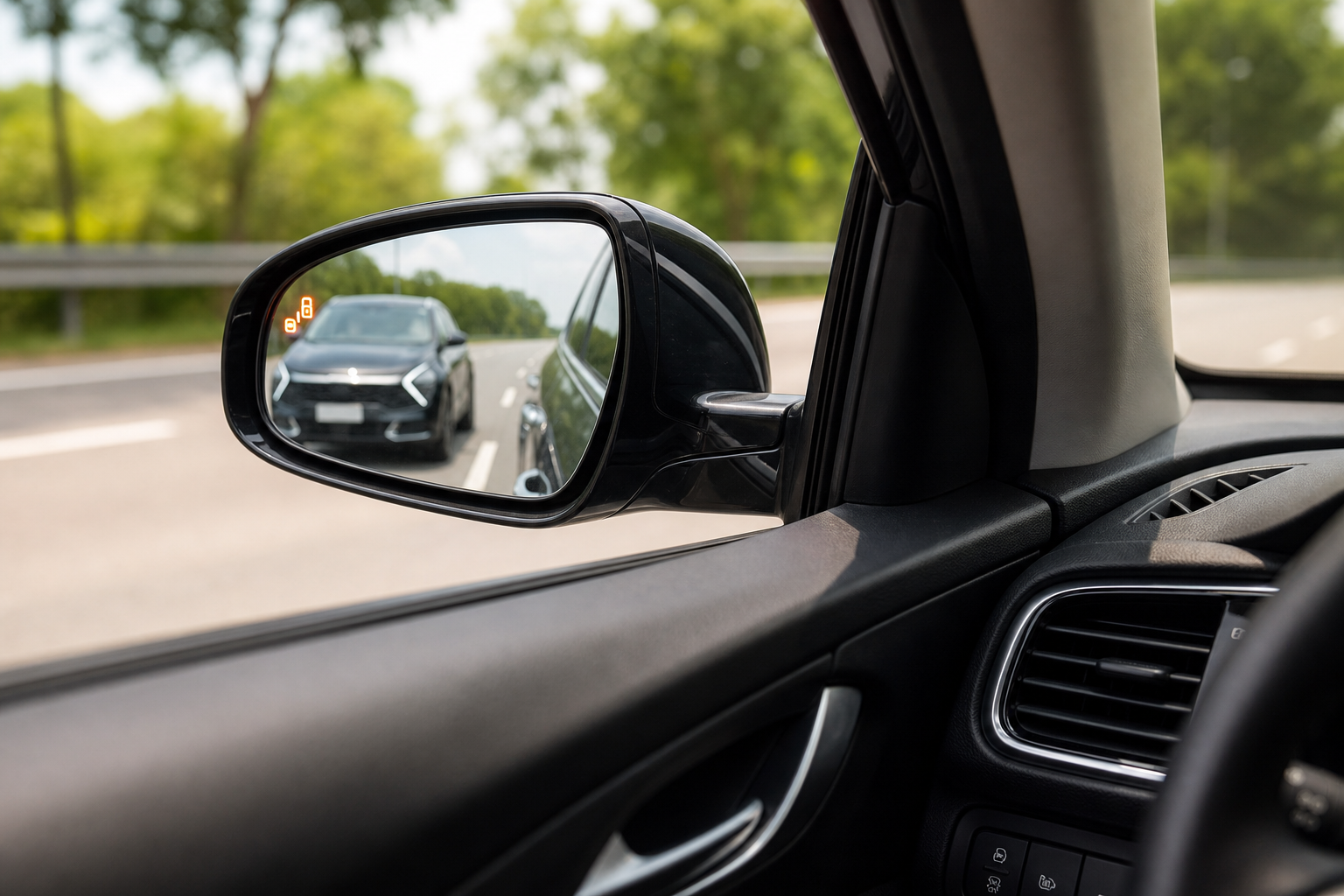
If the blind-spot warning light on your Kia Sportage’s side mirror suddenly goes dark, or you get a message saying the system is “unavailable,” it’s easy to assume the worst. Most of the time, though, the fix is something simple like a dirty bumper sensor, a low battery, or a menu setting that got switched off by accident. Before you book a shop visit, it’s worth running through the basic checks that solve this problem more often than you’d think.
What Kia Actually Calls This System
Kia doesn’t market a feature simply labeled “blind spot monitoring.” Depending on your Sportage’s model year and trim, you’ll see it referred to as Blind-Spot Collision Warning (BCW) or the more advanced Blind-Spot Collision-Avoidance Assist (BCA). BCW just alerts you with a light and a chime, while BCA can actually apply gentle braking to help avoid a side collision if you start merging into an occupied lane.
Both systems rely on small radar sensors tucked into the rear bumper cover, usually one behind each rear corner. When the radar detects a vehicle in your blind spot, it lights up a small amber icon on the corresponding side mirror and adds an audible warning if you signal into that lane.
On the fourth-generation Sportage (2017 to 2022, chassis code QL), BCW became standard or available on mid-to-upper trims like the LX with the Advanced Technology Package, EX, and SX. On the redesigned fifth-generation Sportage (2023 and newer, chassis code NQ5), the feature is bundled with Rear Cross-Traffic Collision-Avoidance Assist and is standard on most trims above the base LX, with BCA specifically tied to higher trims like the X-Line and SX Prestige.
Owner-Safe Checks Before You Assume It’s Broken
Most blind-spot faults trace back to something you can fix in your driveway in a few minutes. Work through these before worrying about sensor failure.
Dirt, Snow, Ice, and Road Grime
The rear radar sensors sit low on the bumper, right where mud, road salt, and slush collect. A thick layer of grime or a chunk of ice over the sensor housing can block the radar signal completely, triggering a temporary “system unavailable” message. Wash the rear bumper corners with soap and water and dry them off, then take a short drive to see if the warning light returns to normal.
Bumper Damage or Aftermarket Bumper Guards
Even a minor parking lot bump can shift a bumper cover just enough to misalign the radar sensor behind it. If you’ve had recent bodywork, a new bumper cover, or added an aftermarket bumper guard or trailer hitch step, that’s a strong suspect. Metal accessories and thick rubber bumper protectors can physically block the radar’s field of view even when everything looks fine from the outside.
Trailer Hitches and Towing Accessories
A bike rack, cargo carrier, or trailer wiring harness mounted near the rear corners can reflect radar signals back at the sensor or block them outright. If the warning started right after you installed a hitch-mounted accessory, try removing it and see if the system comes back online. Kia’s own manual notes that towing accessories can interfere with BCW performance, which is why many owners are told to disable the feature manually while towing.
Low Battery Voltage
Radar modules are sensitive to voltage drops, and a weak or aging 12-volt battery can cause the blind-spot system to throw a fault or temporarily disable itself, especially on cold mornings. If you’re also noticing slow cranking, dim interior lights, or other electrical quirks, check out our guide on why a car battery dies overnight even with a good alternator for a deeper look at diagnosing weak battery symptoms before they cascade into ADAS warnings.
Settings Menu
It’s more common than you’d expect for BCW or BCA to get switched off accidentally through the infotainment settings, especially if someone else drove the car or a passenger was fiddling with the touchscreen. Go to Settings, then Driver Assistance (sometimes labeled Vehicle or ADAS depending on your software version), and confirm both Blind-Spot Collision Warning and Blind-Spot Collision-Avoidance Assist are toggled on.
Temporary Weather and Sensor Blockage
Heavy rain, dense fog, and driving through a car wash can all cause a momentary blind-spot warning light or dashboard message. This usually clears on its own once conditions improve and the sensor dries out. If the warning disappears after a few minutes of normal driving, there’s nothing wrong with the hardware.
If you’re also dealing with other driver-assist alerts acting up around the same time, it’s worth checking whether your Driver Attention Warning on the Kia Sportage is behaving normally too, since a shared electrical or software issue can sometimes affect multiple systems at once. It’s also a good idea to confirm your lane assist settings on the Sportage haven’t reset, since a software glitch that disables one ADAS feature sometimes disables others in the same update cycle.
Cleaning Up the Sensor Area the Right Way

Because the radar sensors sit behind the bumper cover rather than exposed on the surface, you can’t clean them directly. Instead, focus on keeping the exterior bumper skin free of buildup, especially in winter months when road salt cakes on fast. A soft microfiber towel and a gentle bumper-safe cleaner do the job without risking scratches to the paint or plastic trim around the sensor zone.
If you tow or haul cargo regularly and worry about sensor interference, it’s smart to keep a rear sensor area clear of stickers, wraps, or thick protective film, since anything that changes the surface density over the radar housing can distort its field.
Kia Sportage Blind Spot Radar Sensor
A direct-fit replacement option if your dealer or independent shop confirms a failed rear radar sensor.
If a shop diagnoses a genuinely failed sensor rather than a blockage or wiring issue, having a reference part on hand can speed up the repair conversation, even if you ultimately have the work done professionally.
When It’s a Real Sensor Fault or Wiring Problem

Once you’ve ruled out dirt, weather, accessories, and settings, a persistent warning light or an “unavailable” message that won’t clear points toward an actual fault. Common culprits at this stage include a corroded or loose wiring connector behind the bumper, physical sensor damage from a low-speed impact, or a cracked bumper cover that lets water intrude into the sensor housing.
A Kia dealer or an independent shop with the right diagnostic tool can pull actual fault codes from the vehicle’s body control module to confirm which sensor is at fault and whether it’s an electrical fault, a communication error, or a hardware failure. This is also where you’ll find out if the issue is isolated to blind-spot monitoring or tied into a broader recall. Kia has issued several recalls in recent years touching electrical and sensor systems, so it’s worth checking whether your VIN is affected; our recent roundup on recalls affecting Kia, Lucid, and Ford covers some of the more recent campaigns.
A basic OBD2 scanner won’t always read manufacturer-specific ADAS codes, but a scanner that supports Kia-specific modules can at least confirm whether a fault code is stored, which saves you a diagnostic fee at the shop.
OBD2 Bluetooth Scanner with Manufacturer-Specific Codes
Useful for confirming whether a fault code is stored in the body control module before paying for a shop diagnostic.
Calibration: Why This Isn’t a DIY Job
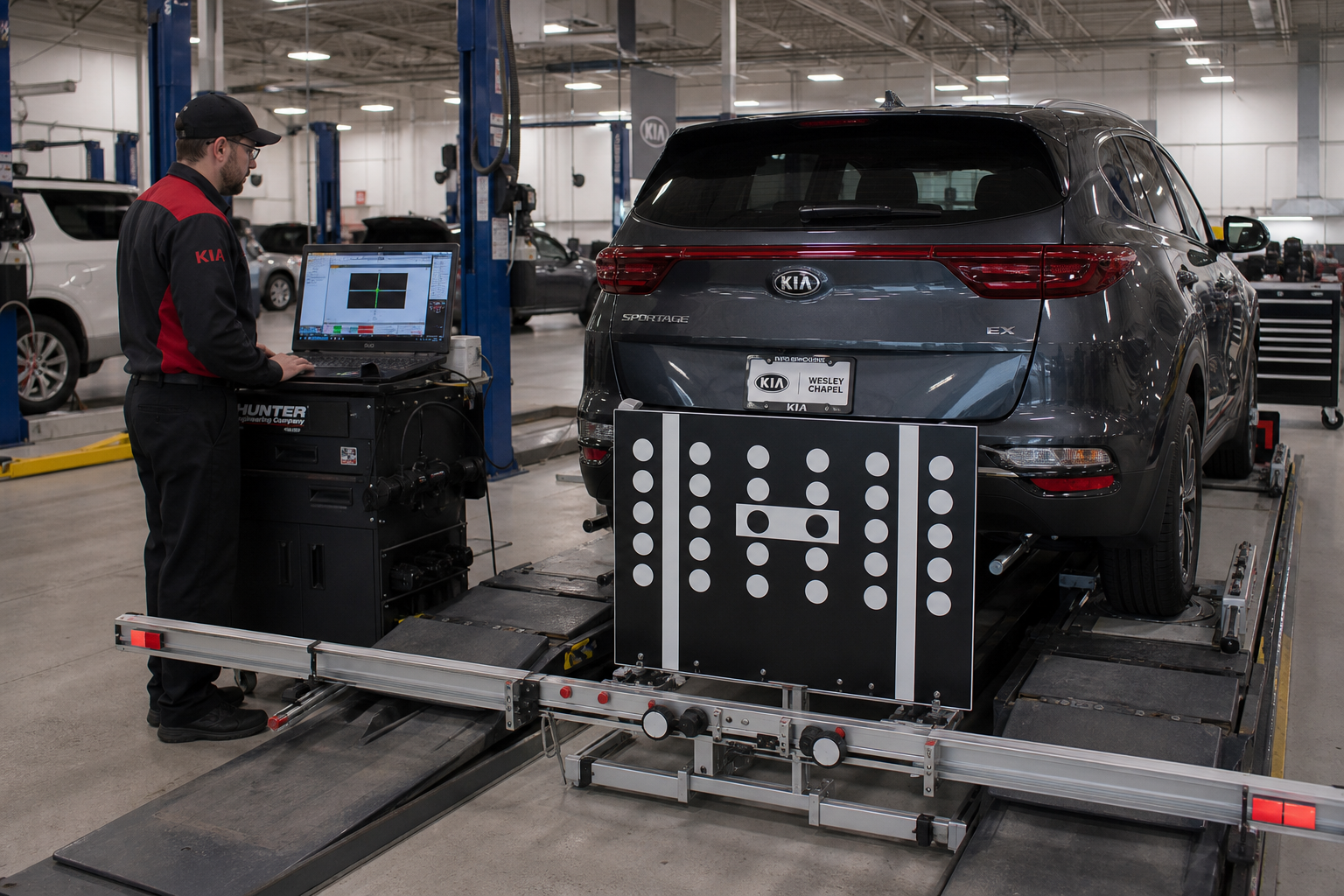
Blind-spot radar sensors need precise aiming to work correctly. Even a millimeter of misalignment can throw off detection range and accuracy enough to trigger false warnings or missed detections. This is why calibration is required any time the rear bumper is removed, replaced, or repaired, even for something as minor as a bumper cover respray after a fender bender.
Calibration on the Sportage typically requires Kia’s dedicated scan tool, a controlled environment with specific floor markings or calibration targets, and a technician trained on the exact procedure for your model year. This isn’t something you can eyeball with a tape measure in your garage. If your Sportage has had recent bodywork and the blind-spot system started acting up afterward, tell the shop specifically that the radar needs recalibration, not just a general alignment check.
Owners should also know that resetting a warning light without addressing the underlying cause rarely sticks. If the sensor is misaligned or damaged, the light will come back, sometimes within a single drive cycle.
Trim and Model Year Differences Worth Knowing
Base LX trims on both the QL and NQ5 generations often don’t include blind-spot monitoring at all, so if you’re troubleshooting a used Sportage and can’t find any setting for it, double check that your specific trim actually came with the feature from the factory. Kia’s window sticker and owner’s manual for your exact model year will confirm this, since equipment packages shifted several times across the Sportage’s production run.
On the 2023 and newer NQ5 Sportage, blind-spot features are tied more closely to the Highway Driving Assist and Forward Collision-Avoidance Assist suite, meaning a software glitch or a disconnected battery for service work can sometimes reset several ADAS features at once, not just blind-spot monitoring. If you notice multiple warning icons appear simultaneously after a battery disconnect, that’s a normal side effect and usually resolves after a calibration drive or a dealer reset, not a sign of multiple hardware failures.
Frequently Asked Questions
Can I clean the blind-spot sensors myself?
Yes. Washing the rear bumper corners with soap and water is safe and often fixes a temporary “unavailable” message caused by mud, snow, or road salt buildup. Just avoid pressure washers held too close to the bumper seams, since forcing water behind the cover can cause its own electrical problems.
Does a dead or weak battery affect blind-spot monitoring?
Yes. Radar-based ADAS features are sensitive to voltage, and a weak battery or failing alternator can cause the system to temporarily disable itself or throw a fault message, especially during cold starts. If you’re seeing other electrical symptoms alongside the blind-spot warning, get the battery and charging system tested first.
Will a trailer hitch always interfere with the blind-spot system?
Not always, but hitch-mounted accessories like bike racks, cargo carriers, and some trailer wiring kits sit close enough to the rear radar sensors to cause interference. Kia recommends disabling BCW manually while towing in many cases, since a trailer itself can trigger constant false warnings.
How much does blind-spot sensor calibration cost?
Pricing varies significantly by dealer, region, and whether the sensor itself also needs replacement versus just realignment after bumper work. It’s best to get a direct quote from a Kia dealer or a shop with Kia-specific calibration equipment rather than estimating, since labor time and required equipment differ by shop.
This article contains affiliate links. We may earn a small commission at no extra cost to you.


Leave a Reply