
You put the Sportage in park, hop out for coffee, and later notice the Auto Hold light never came back on. Or worse, you’re sitting at a red light, the car creeps forward slightly, and you realize the feature you thought was protecting you from rolling into the car ahead just wasn’t engaged. Auto Hold problems on the Kia Sportage are common enough that owners flood forums asking the same question: is this broken, or is this just how it works?
The short answer is that most “Auto Hold not working” complaints turn out to be normal behavior tied to how Kia designed the system, not an actual defect. But there are also real failure modes involving the parking brake module, brake switch, and ABS sensors that mimic the same symptoms. This guide breaks down both so you know which one you’re dealing with.
What Kia Actually Calls This Feature
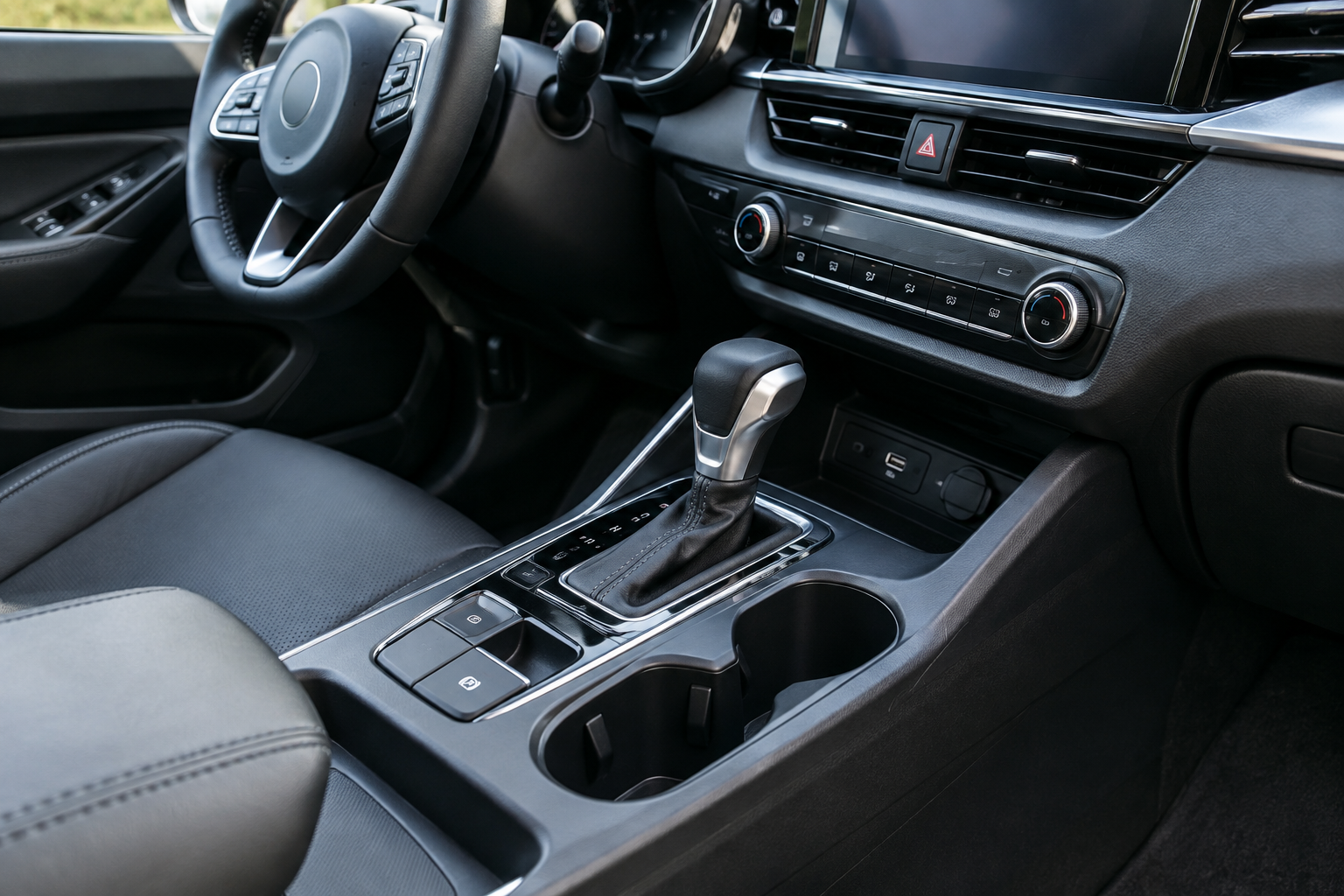
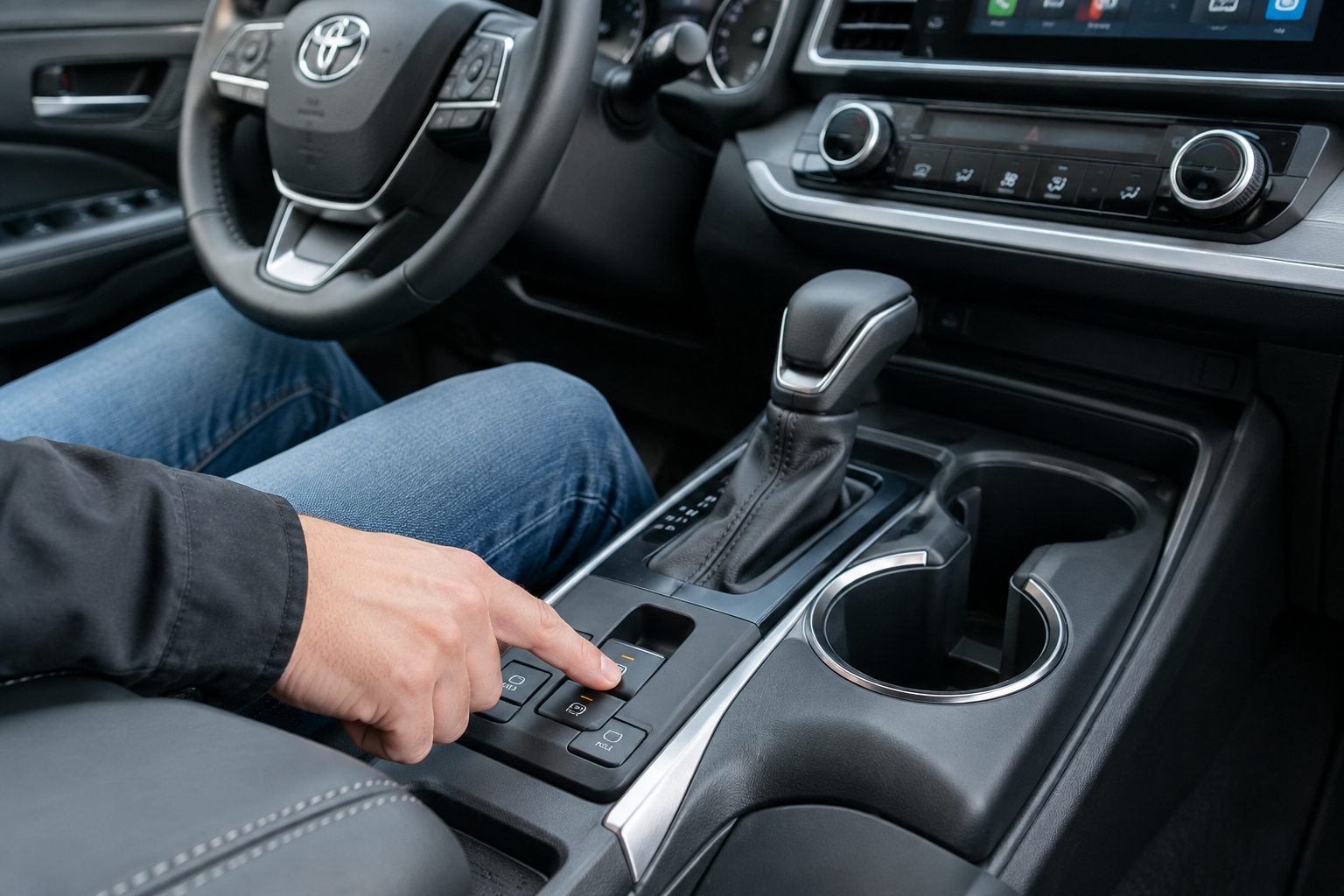
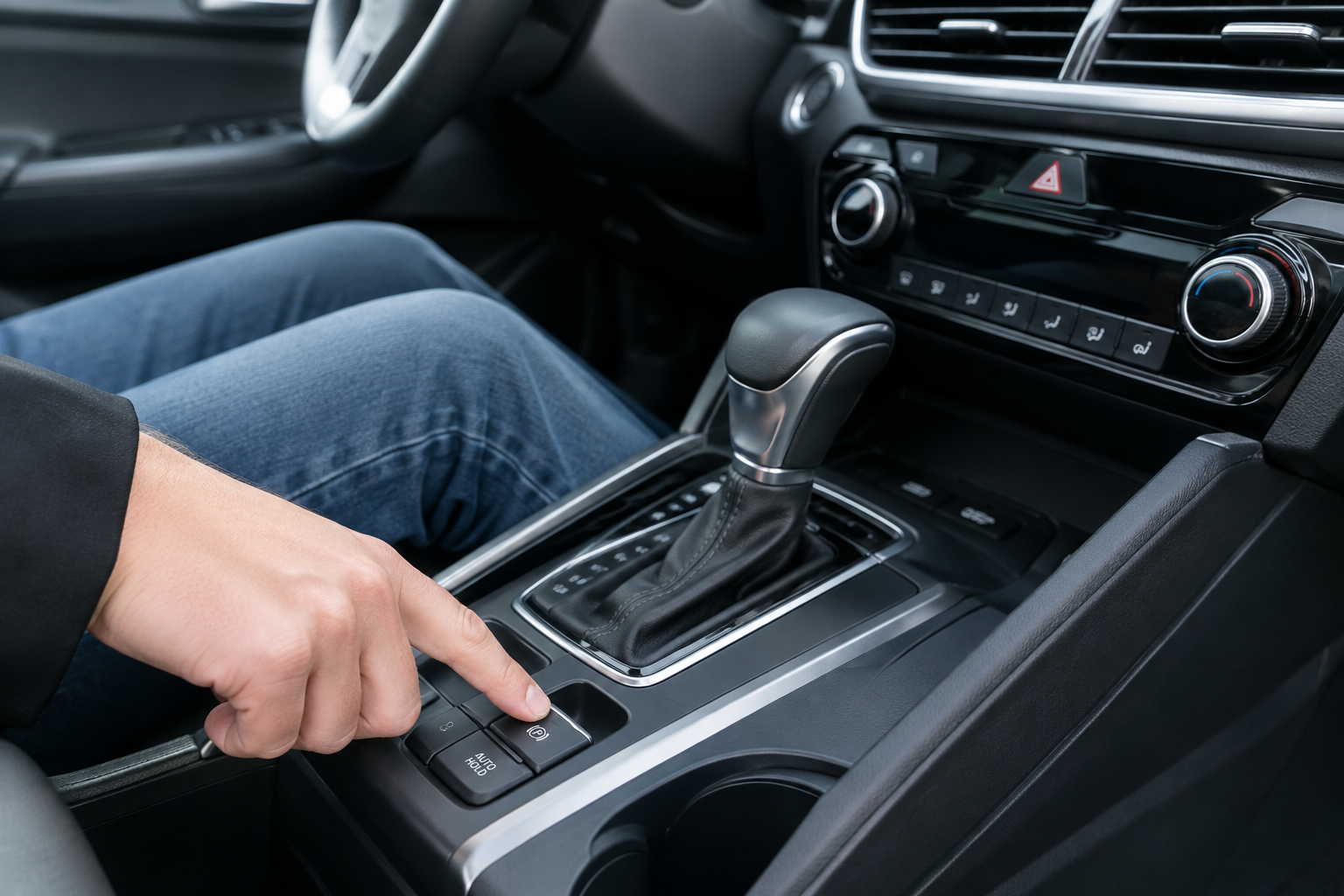
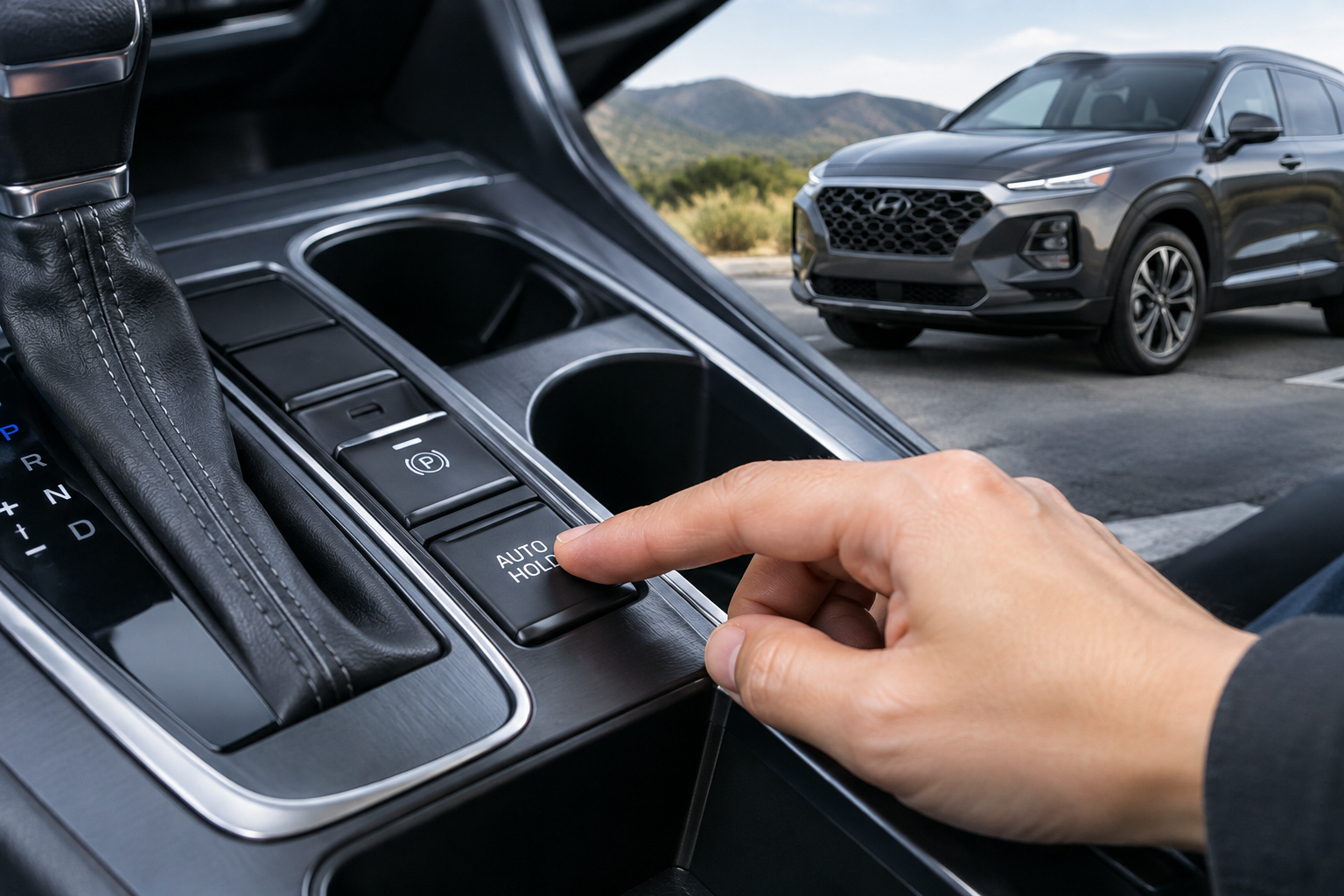
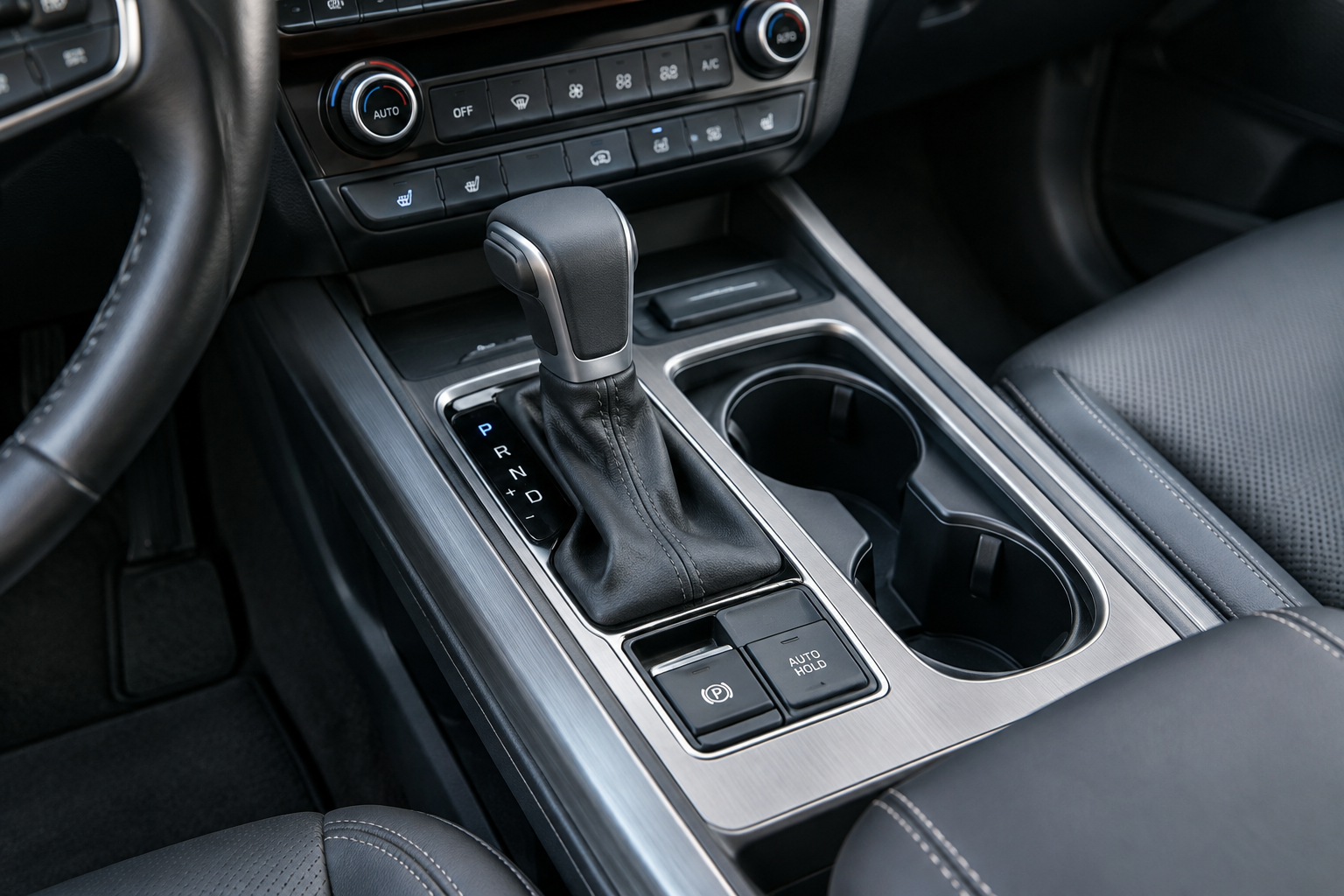
Kia’s official name for this button is “Auto Hold,” and it’s built directly into the Electronic Parking Brake (EPB) system. You’ll find it as a separate button, usually labeled “AUTO HOLD,” sitting right next to or below the EPB switch on the center console. Some owner’s manuals also refer to it as “Brake Auto Hold,” but it’s the same function.
This has been standard equipment on Sportage trims with EPB since the NQ5 generation launched for the 2023 model year, and it’s carried into the current 2024 and 2025 Sportage lineup on Sport, EX, X-Line, and X-Pro trims. Base LX trims that use a traditional foot-operated or lever parking brake do not get Auto Hold at all, since the feature depends entirely on the electronic parking brake motor to physically lock the rear calipers.
If your Sportage doesn’t have an EPB switch (a button with a circular “P” icon), you simply don’t have this feature, and no software fix will add it.
How Auto Hold Is Supposed to Work
When active, Auto Hold keeps your brakes applied after you come to a complete stop, even if you take your foot off the brake pedal. The car stays put on hills, at lights, and in traffic without you riding the brake. Once you press the accelerator again, it releases automatically.
It’s a convenience feature, not a parking brake replacement. Kia is explicit about this in the owner’s manual: Auto Hold is not designed to hold the vehicle for extended periods or on steep inclines with the engine off. For that, you still need to engage the actual EPB.
The Conditions That Must Be Met for Auto Hold to Engage
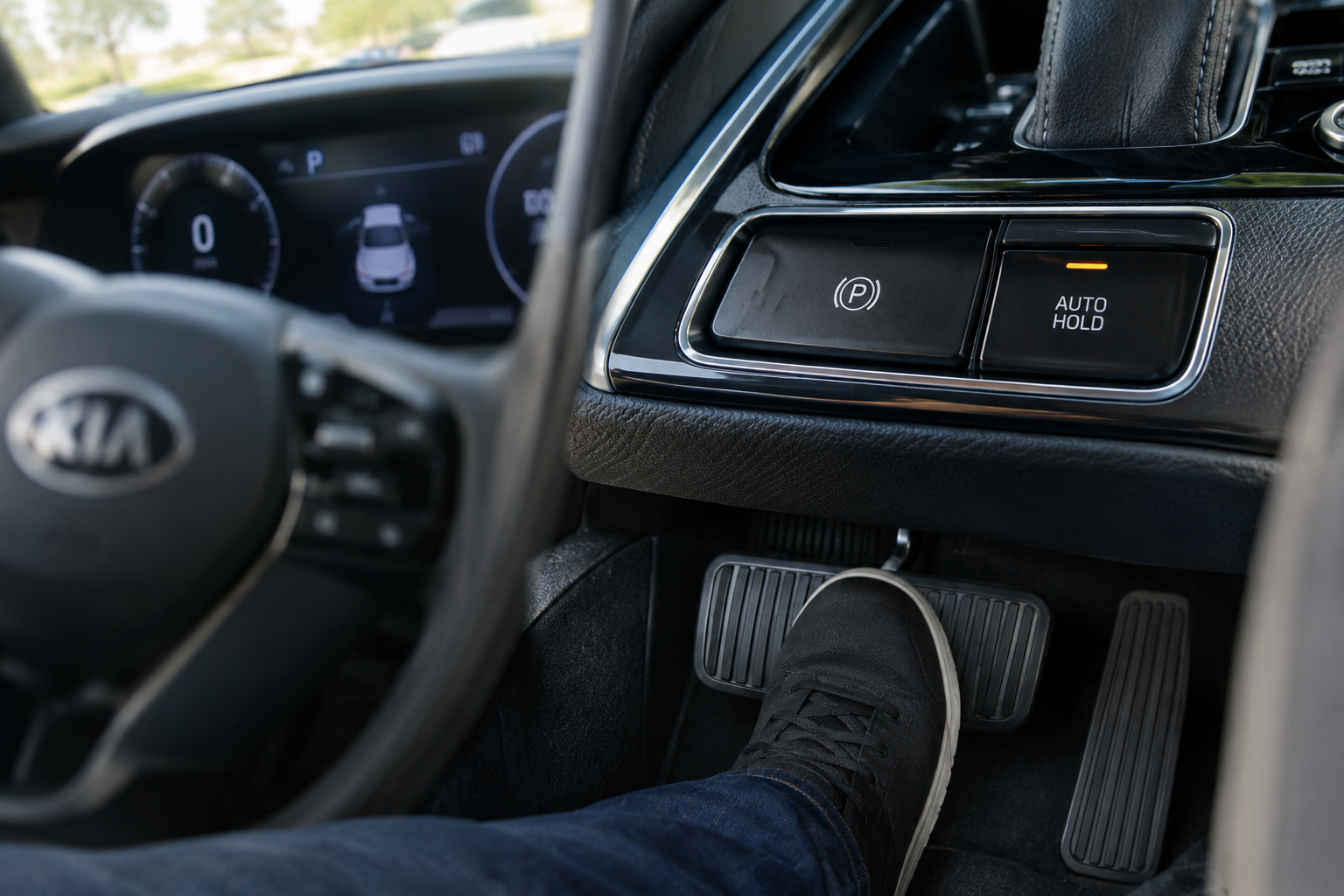
This is where most “it won’t turn on” complaints get resolved. Auto Hold has a strict checklist of conditions, and if even one isn’t satisfied, the system will refuse to activate or will disengage mid-drive. Here’s what the Sportage requires:
- Engine running: Auto Hold does nothing with the engine off, even if the button light is on.
- Driver’s seat belt fastened: An unbuckled belt blocks activation entirely on most trims.
- Driver’s door closed: An open door, even just ajar, will prevent or cancel Auto Hold.
- Transmission in Drive or Reverse: It won’t engage in Park or Neutral, and shifting to Park or Neutral while it’s active will cancel it.
- Brake pedal pressed firmly to a complete stop: A rolling stop or light tap usually isn’t enough to trigger it.
- EPB system functioning normally: Since Auto Hold uses the same rear caliper motors as the electronic parking brake, any EPB fault disables Auto Hold too.
- No active warning lights for ABS, brakes, or the parking brake system.
If you’re used to older cars with a manual parking brake, this interlock logic can feel overly cautious. But it’s intentional. Kia doesn’t want the system holding the car if there’s any chance the seat belt sensor, door latch, or brake circuit is giving bad data.
Why It Turns Itself Off After Every Restart (This Is Normal)
Here’s the part that catches almost every new Sportage owner off guard: Auto Hold does not remember its last setting after you turn off the engine. Every single time you start the car, it defaults back to off, and you have to press the button again if you want it active.
This is by design, not a glitch. Kia, along with Hyundai and Genesis on shared platforms, intentionally resets Auto Hold on every ignition cycle for safety reasons, similar to how many stop/start systems and some driver assist features also reset by default. Compare this to something like Lane Assist on the Kia Sportage, which behaves the same way: some settings stick, and some are engineered to require manual reactivation every trip.
If you’re finding yourself annoyed at tapping that button every morning, you’re not imagining a design flaw. That’s simply how the system was built, and no dealer software update is going to change it, because it’s tied to Kia’s safety logic, not a bug.
When Auto Hold Not Working Is a Real Problem
Now for the cases that aren’t normal. If Auto Hold used to work fine and suddenly stopped holding the car, releases on its own while stopped, or won’t activate even with every condition met, you’re likely looking at an actual fault.
Warning Lights Are the Biggest Clue
Check your instrument cluster for an amber or red parking brake light, an ABS warning light, or a brake system warning light. Any of these will block Auto Hold from working at all. The EPB and Auto Hold share circuitry with the ABS module, so a wheel speed sensor problem or a corroded ABS connector can knock out Auto Hold even though your regular brakes feel completely normal.
Common Failure Points on the Sportage
- EPB actuator motor wear: The rear caliper motors that physically apply the parking brake can wear out or stick, especially past 60,000 miles.
- Brake pedal position switch: If this switch is misaligned or failing, the car may not register a “complete stop” correctly.
- Seat belt buckle switch: A worn buckle sensor can falsely report the belt as unfastened even when it’s clicked in.
- Door latch switch: Similar story. If the switch thinks the door is open when it’s closed, Auto Hold won’t engage.
- Corroded or loose battery terminals: Voltage drops can cause modules like the EPB controller to throw false faults.
If you’ve recently had a battery replaced or jumped, that’s actually a common trigger. Low voltage during a jump start can cause the EPB module to enter a fault state that requires a full relearn procedure, sometimes only fixable at the dealer with Kia’s diagnostic software.
How to Diagnose It Yourself Before Booking a Dealer Visit
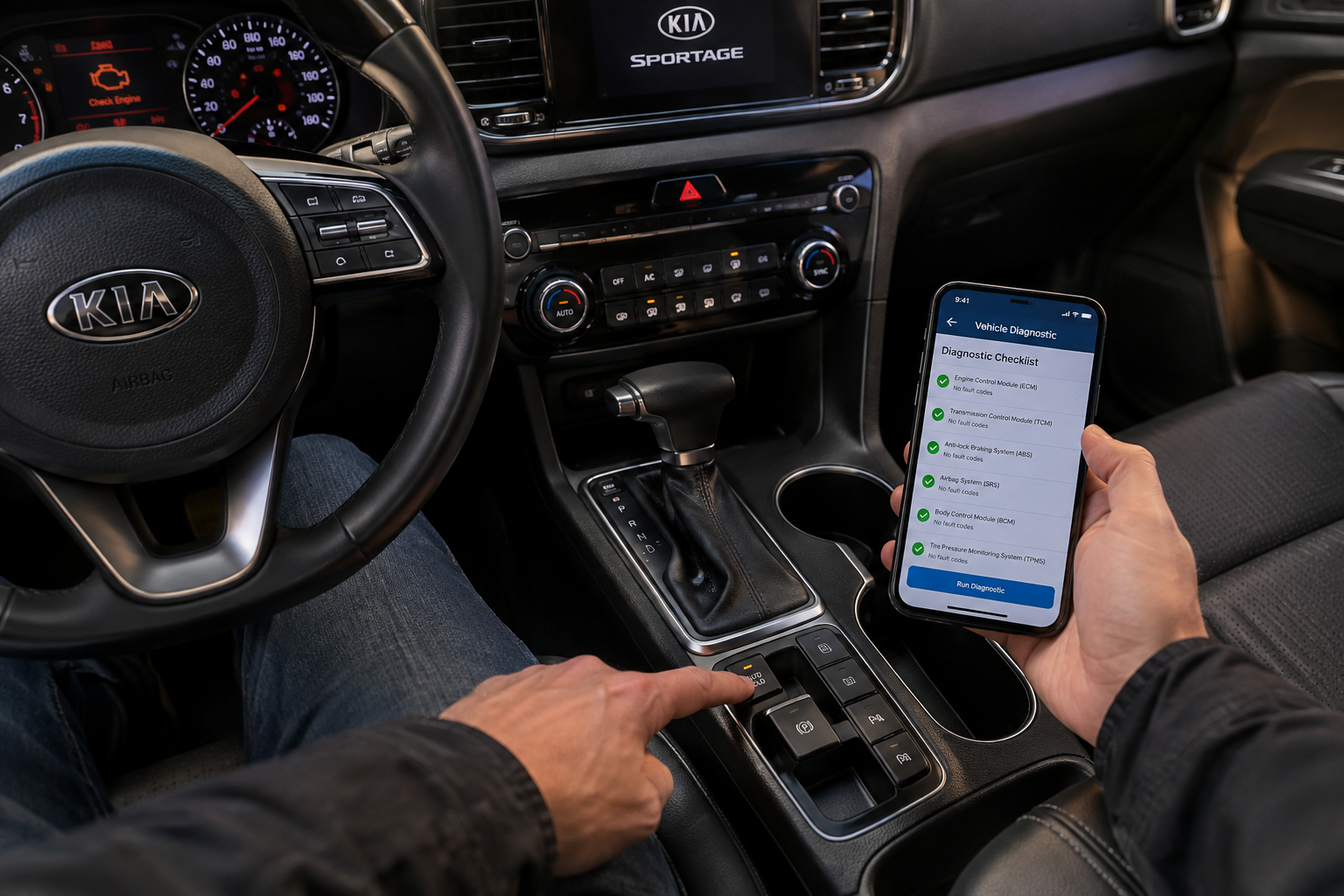
Before you pay for a diagnostic appointment, it’s worth pulling the actual fault codes yourself. A basic OBD2 scanner won’t always read EPB-specific modules, but a scanner with ABS and EPB coverage can pull the exact codes stored by the parking brake control unit.
Kia Sportage OBD2 Scanner ABS EPB
A scanner with ABS and EPB module coverage will pull the exact fault codes behind an Auto Hold failure, saving you a diagnostic fee at the dealer.
When you scan the car, pay attention to codes starting with C1 or U0, which typically point to chassis control modules like ABS and EPB, or communication faults between them. If you see a code related to the EPB actuator or brake switch, that’s your answer, and it’s a mechanical or electrical repair rather than a settings issue.
It’s also worth doing a basic visual check yourself. Look under the rear of the vehicle at the caliper motors for corrosion or damage, and check that the driver’s door latch clicks solidly closed. These free checks rule out the cheap fixes before you spend money diagnosing the expensive ones.
Auto Hold vs. the Electronic Parking Brake: Don’t Confuse the Two
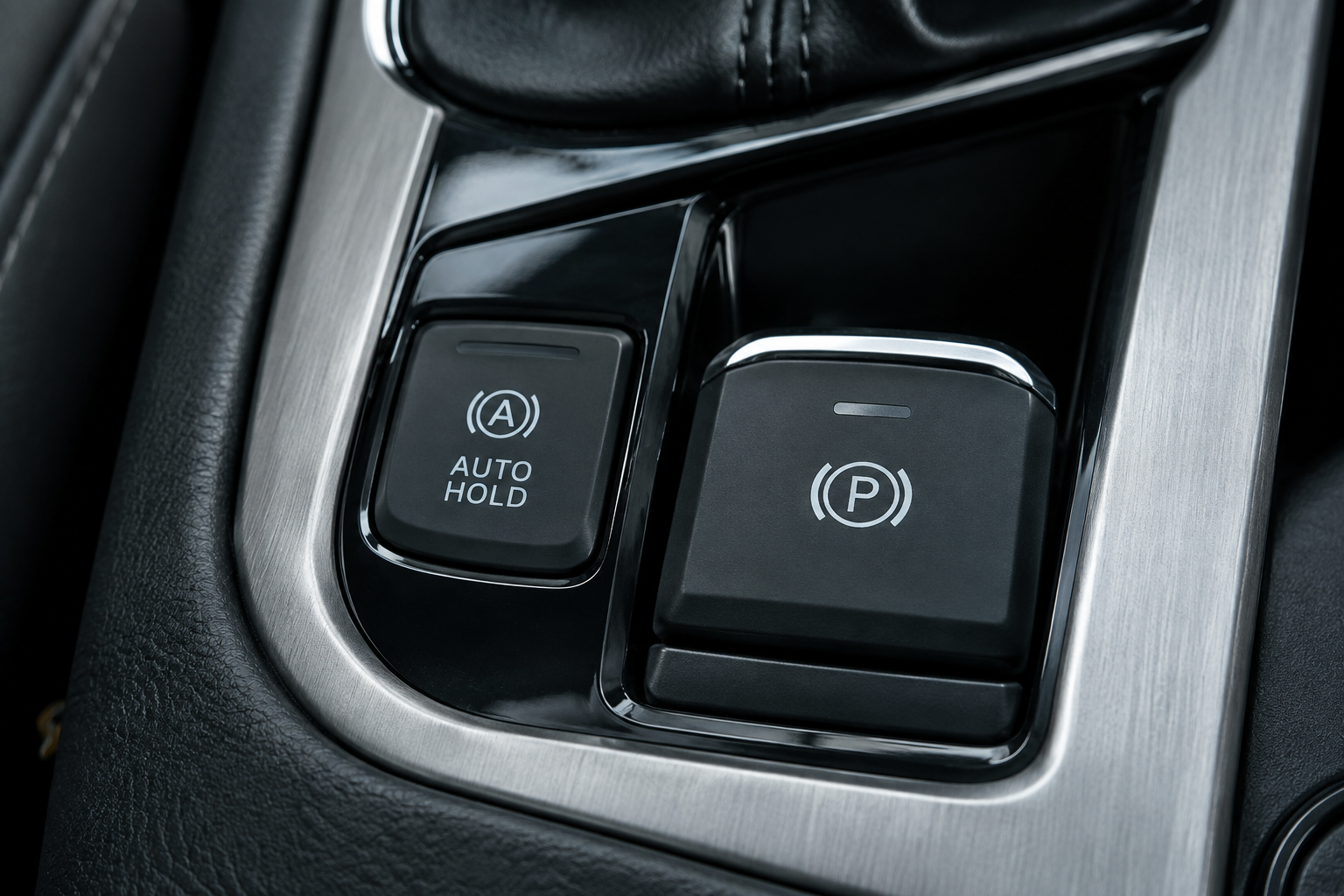
A lot of owners mix up Auto Hold problems with EPB problems, but they’re separate systems that happen to share hardware. If your EPB light stays on, or the parking brake won’t release when you press the switch, that’s a distinct issue from Auto Hold simply not activating.
If you’re dealing with EPB warnings specifically, or your brake pedal feels different than usual after sitting overnight, it’s worth reading through our guide on what to check when your brake pedal goes to the floor after sitting overnight, since some of the same components are involved.
Also keep in mind that Auto Hold sharing a warning system with other driver assist features means an unrelated fault, like one tied to Driver Attention Warning on the Kia Sportage, can sometimes trigger a cluster of warning lights at once, making it harder to isolate the actual cause without a scan tool.
FAQ: Kia Sportage Auto Hold Issues
Does Auto Hold stay on after I turn off the car?
No. Kia designed Auto Hold to reset to off every time you start the engine, regardless of model year. You have to press the button again each drive if you want it active. This is normal and not a malfunction.
Why does my Auto Hold light flash instead of staying solid?
A flashing Auto Hold indicator usually means one of the activation conditions isn’t met, most commonly an unfastened seat belt, an open door, or the vehicle not being in Drive or Reverse. Check those first before assuming it’s a fault.
Can a dead or weak battery cause Auto Hold to stop working?
Yes. Low voltage can put the EPB control module into a protective fault state, which disables Auto Hold along with the parking brake switch. Sometimes a full relearn at the dealer is required after a jump start or battery replacement to clear it.
Is it safe to drive if Auto Hold won’t activate at all?
Yes, Auto Hold is a convenience feature, not a required safety system for driving. You can still use your regular brake pedal and the EPB switch normally. Just don’t ignore an accompanying ABS or brake warning light, since that points to a real underlying issue worth having checked.
Leave a Reply