
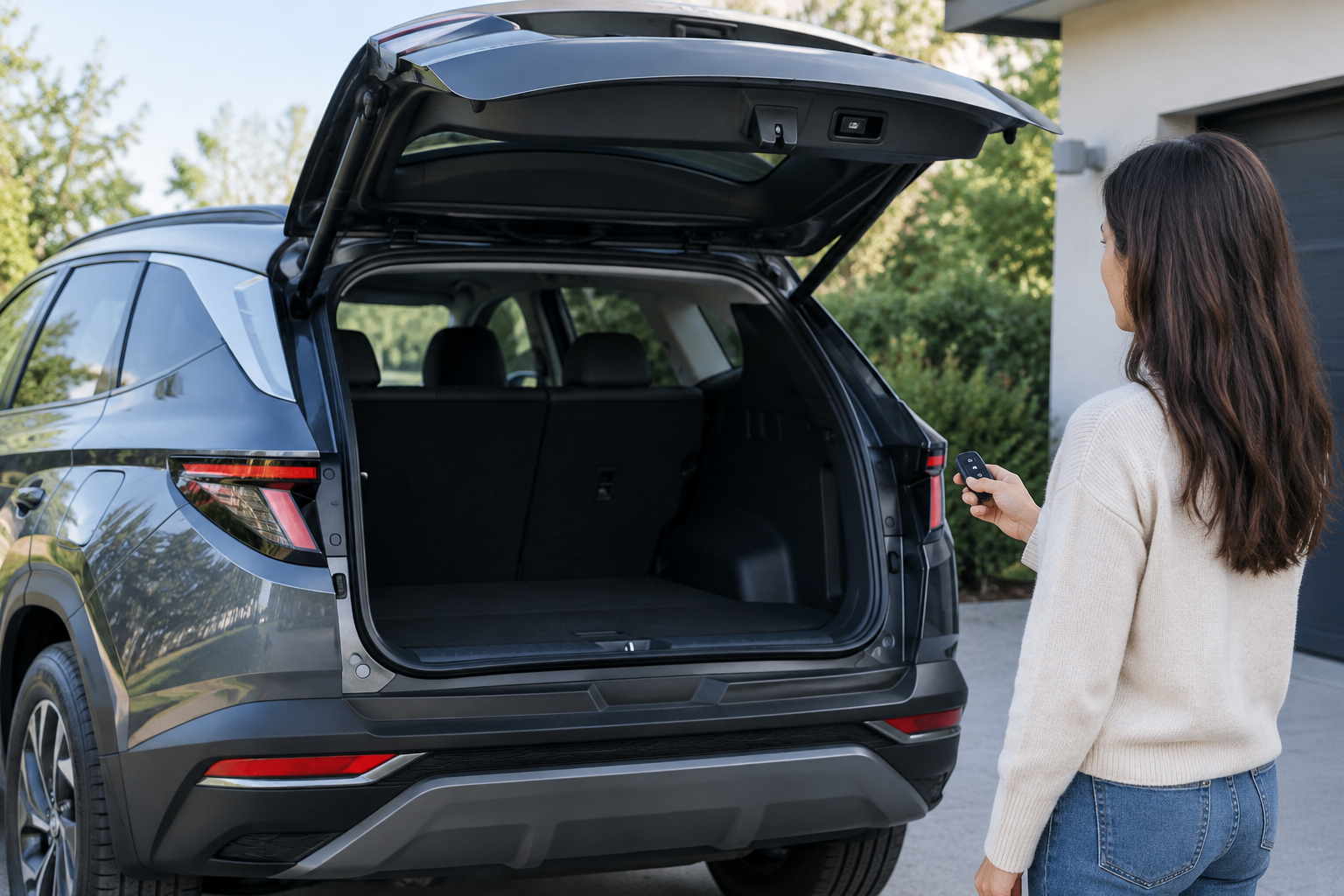
A power liftgate that suddenly refuses to open, won’t latch shut, or reverses itself halfway through the cycle is one of the more annoying quirks Tucson owners run into. Most of the time it’s not a dead motor or a wiring nightmare. It’s usually something simpler: a low battery, a dirty latch sensor, an obstruction the system thinks it detected, or a height setting that got knocked out of whack. Before you assume the worst, it helps to work through the common causes in order, since a lot of these fixes take five minutes and no tools.
Check the Basics First: Battery Voltage and Fuses
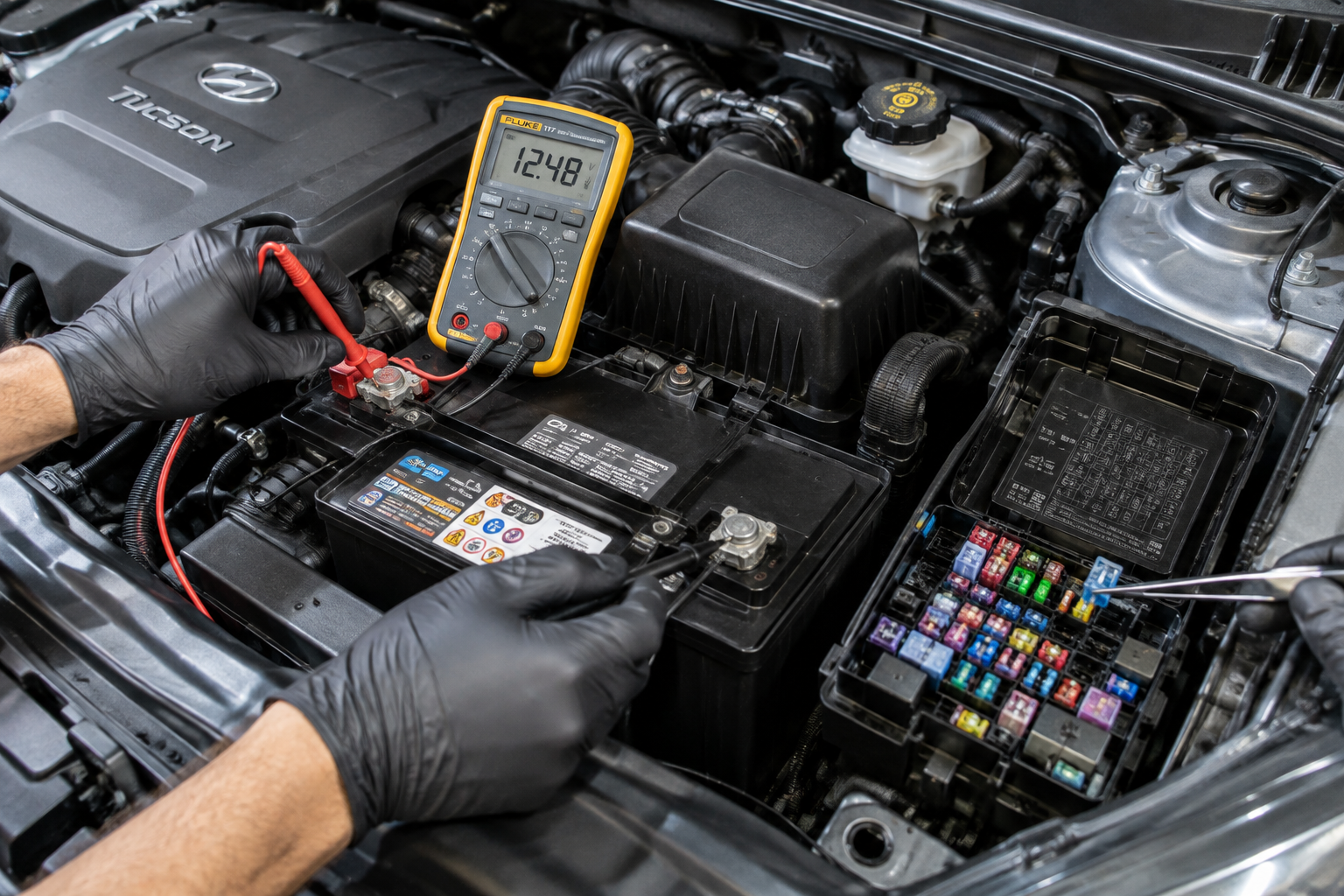
The power liftgate on the Tucson is one of the more electrically demanding accessories in the vehicle, and it’s surprisingly sensitive to low voltage. If your battery is weak, aging, or the terminals are corroded, the liftgate module may refuse to run the motor at all, or it might start the cycle and then stop partway because the system doesn’t have enough sustained voltage to finish the job.
If your Tucson has been sitting for a while, or you’ve noticed slow cranking, dim interior lights, or other electrical glitches, start there. A quick voltage check at the battery terminals (you want to see roughly 12.4 volts or higher at rest, and above 12.6 volts is ideal) will tell you a lot. If it’s marginal, charge it fully before you troubleshoot anything else.
Also check the fuse box. Hyundai typically routes the power liftgate/tailgate circuit through a labeled fuse in the engine bay fuse panel, and a blown fuse will kill the liftgate function entirely while leaving everything else in the car working normally. Pull the fuse and inspect it visually, or test it with a multimeter if you’re not sure. This is the same kind of low-effort diagnostic step that applies to a lot of electrical gremlins, similar to how a weak charging system can cause issues elsewhere in the car, like the symptoms covered in our guide on brake pedal problems after sitting overnight, where a simple check rules out bigger repairs.
Obstruction and Pinch Detection Is Overly Cautious
Hyundai’s power liftgate uses a pinch-protection system that monitors motor current and resistance as the gate travels. If it senses anything unusual, ice buildup, a stuck weatherstrip, a bit of debris in the track, or even strong wind pushing against the gate, it will stop and reverse direction rather than keep closing. This is a safety feature working exactly as designed, but it gets triggered by things that aren’t actually dangerous.
Cold weather is a frequent culprit. If the liftgate seals or hinges have any ice or frozen moisture on them, the extra resistance can look like an obstruction to the sensor. Wipe down the rubber seals around the liftgate opening, clear any visible ice, and try again. Wind is another common trigger, especially on Tucsons parked in open areas, since a strong gust pushing on the gate as it closes can read as resistance.
Inspect the latch striker and the rubber bumpers around the liftgate opening for dirt, road grime, or a loose piece of trim rubbing against the body. Even a small amount of buildup on the striker pin can be enough to throw off the alignment and cause a false reversal every single time.
Height Memory Settings Can Cause Partial Openings
Most Tucson trims with a power liftgate let you set a maximum opening height, which is handy if you park in a garage with a low ceiling. If that height setting got changed (sometimes accidentally, sometimes by another driver), the liftgate might appear to “stop partway” when it’s actually just doing exactly what it was programmed to do.
To check or reset this, open the liftgate fully by hand or with the button, then hold the liftgate switch (usually the button on the inside of the gate itself) at the position you want as the new maximum, and hold it for several seconds until you hear a chime or the system beeps to confirm the new height is saved. The exact button and hold time varies slightly between the first-generation Tucson (2016 to 2021) and the redesigned model that launched for 2022, so check your owner’s manual if the chime doesn’t happen the first try.
If you’re not sure whether this is the issue, try opening the gate manually all the way and see if it operates normally at full height. If it does, the height memory setting is almost certainly your answer, not a mechanical fault.
Failing Liftgate Struts or Motor Components
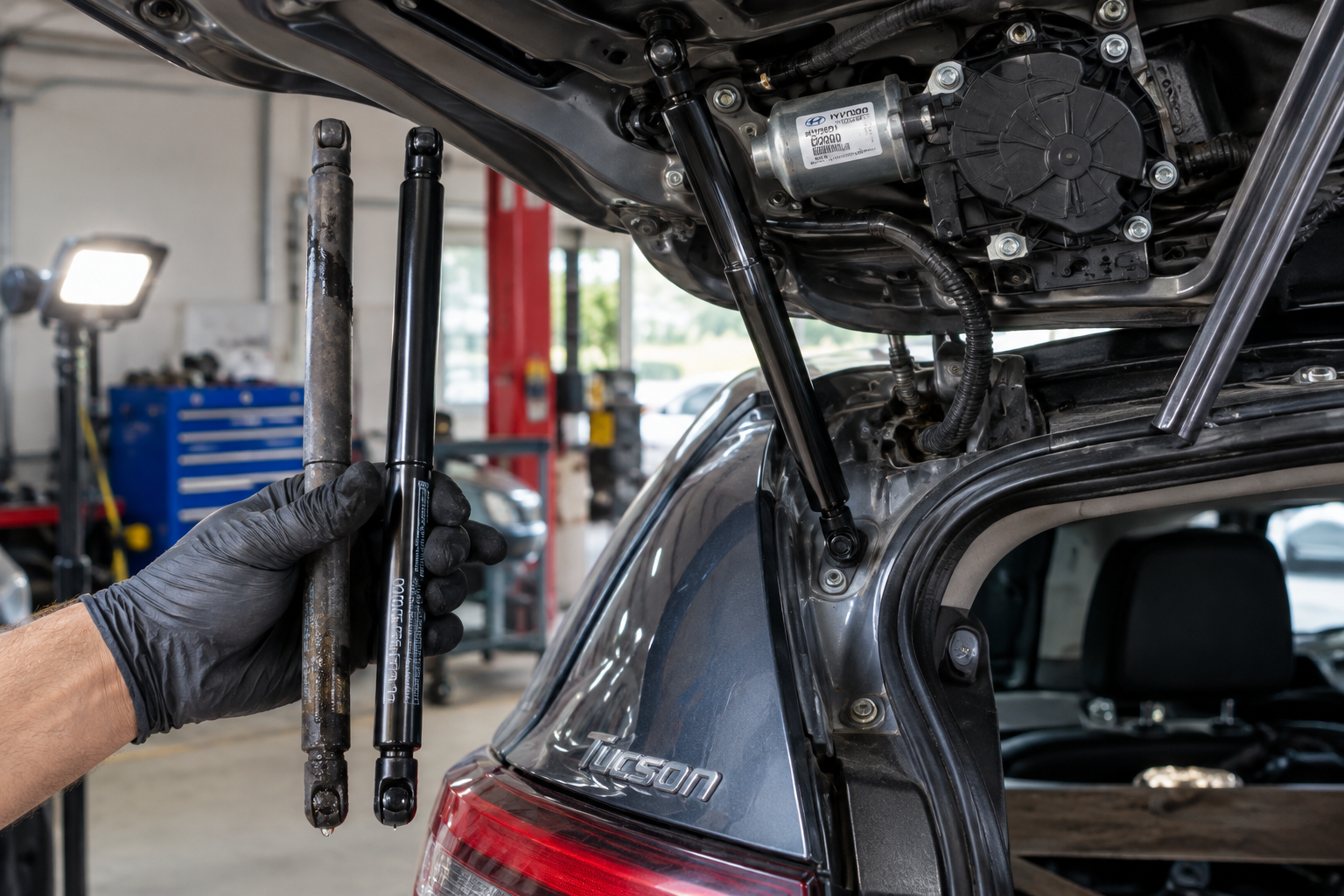
If the liftgate opens or closes slowly, sags partway when it should hold position, or the motor sounds like it’s straining, worn liftgate struts (also called gas struts or lift supports) are a strong possibility, especially on Tucsons that are several years old or have logged a lot of miles in hot climates where the gas charge in the struts degrades faster.
These struts do double duty on power liftgate models: they support the weight of the gate mechanically while the electric motor and cables handle the actuation. When the struts weaken, the motor has to work harder to lift the same weight, which can trip the pinch-detection system, cause slow operation, or make the gate stop before reaching full height.
Hyundai Tucson Power Liftgate Strut
A direct-fit replacement strut is often the fix when the liftgate feels weak, slow, or won’t hold itself open.
Replacing struts is a job most people can do in the driveway with basic hand tools, and doing both sides at once is worth it since if one has weakened, the other is usually not far behind. If you’re also dealing with electrical noise or vibration issues elsewhere in the vehicle while you’re under the hood, it’s worth reading through our piece on diagnosing a loud humming noise from the rear of your car, since some rear-end noises get mistakenly blamed on the liftgate when the actual source is a wheel bearing or driveline component.
Key Fob, Interior Button, and Hands-Free Sensor Behavior
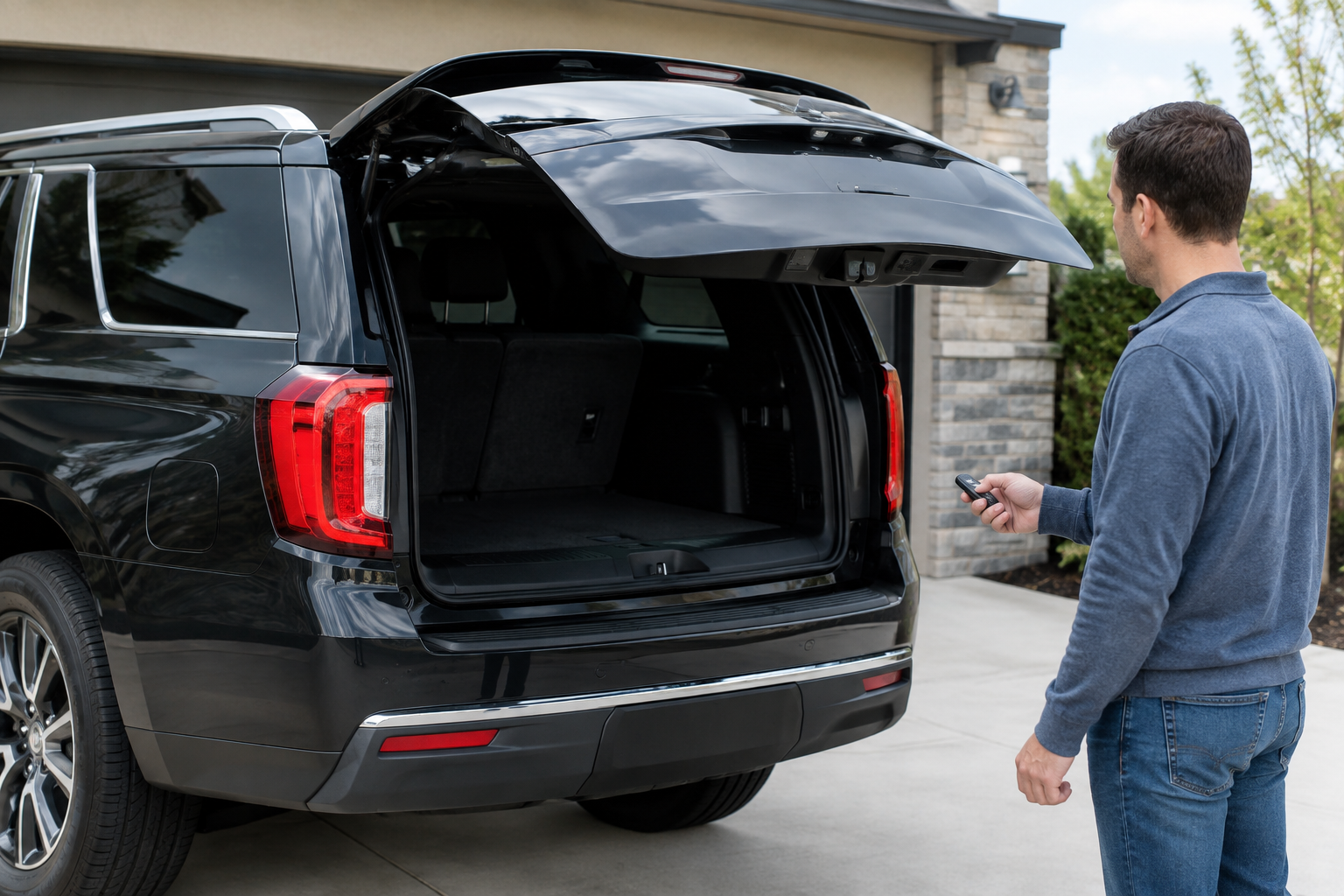
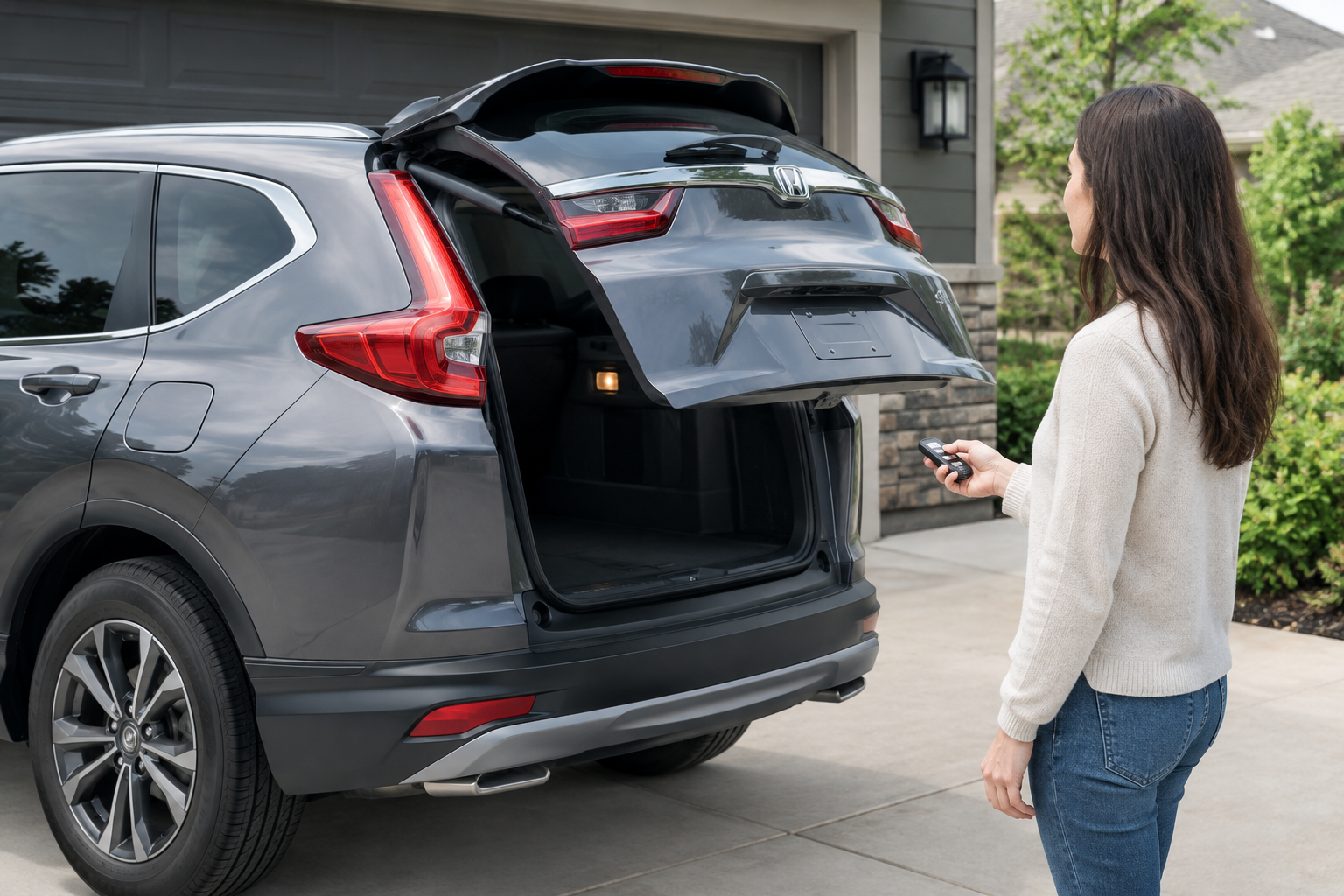
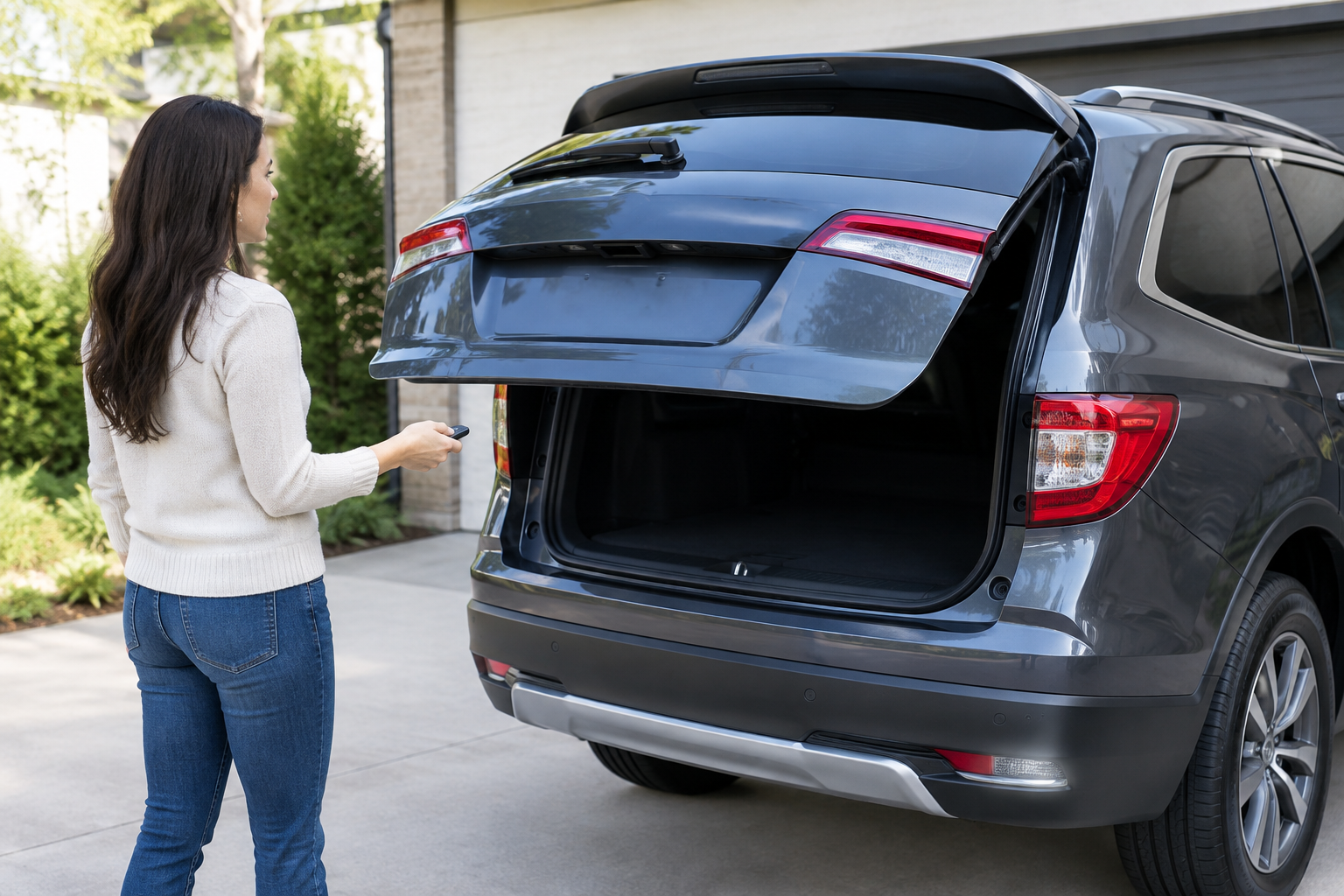
The Tucson’s power liftgate can typically be triggered three ways depending on trim: the button on the gate itself, the button on the key fob, and, on higher trims, the hands-free foot-sensor kick feature that opens the gate when you wave your foot under the rear bumper with the key nearby.
If only one of these methods stops working while the others still function, that narrows the problem considerably. A fob that won’t trigger the liftgate but still unlocks the doors points to a weak fob battery or a fob that’s out of range, not a liftgate fault. Try standing closer to the vehicle and pressing firmly, and if that doesn’t help, swap the fob battery (a simple CR2032 in most cases) before assuming anything bigger is wrong.
The hands-free foot sensor is more finicky by nature. It relies on an ultrasonic or capacitive sensor mounted near the rear bumper, and it’s easily confused by mud, road salt, snow, or even a thick winter mat covering the sensor area. Wipe down the lower bumper area with a clean cloth and try again. If the sensor still won’t respond, it may need to be recalibrated, which typically involves a dealer scan tool, though some owners have success with a battery disconnect and reconnect to force a reset of the body control module.
If you’re weighing whether hands-free access features across different brands are reliable enough to matter when shopping, it’s a similar conversation to convenience tech like power running boards on the Ford F-150 and Expedition, where the feature is genuinely useful but depends on sensors staying clean and unobstructed to work consistently.
Manual Operation and Resetting the System
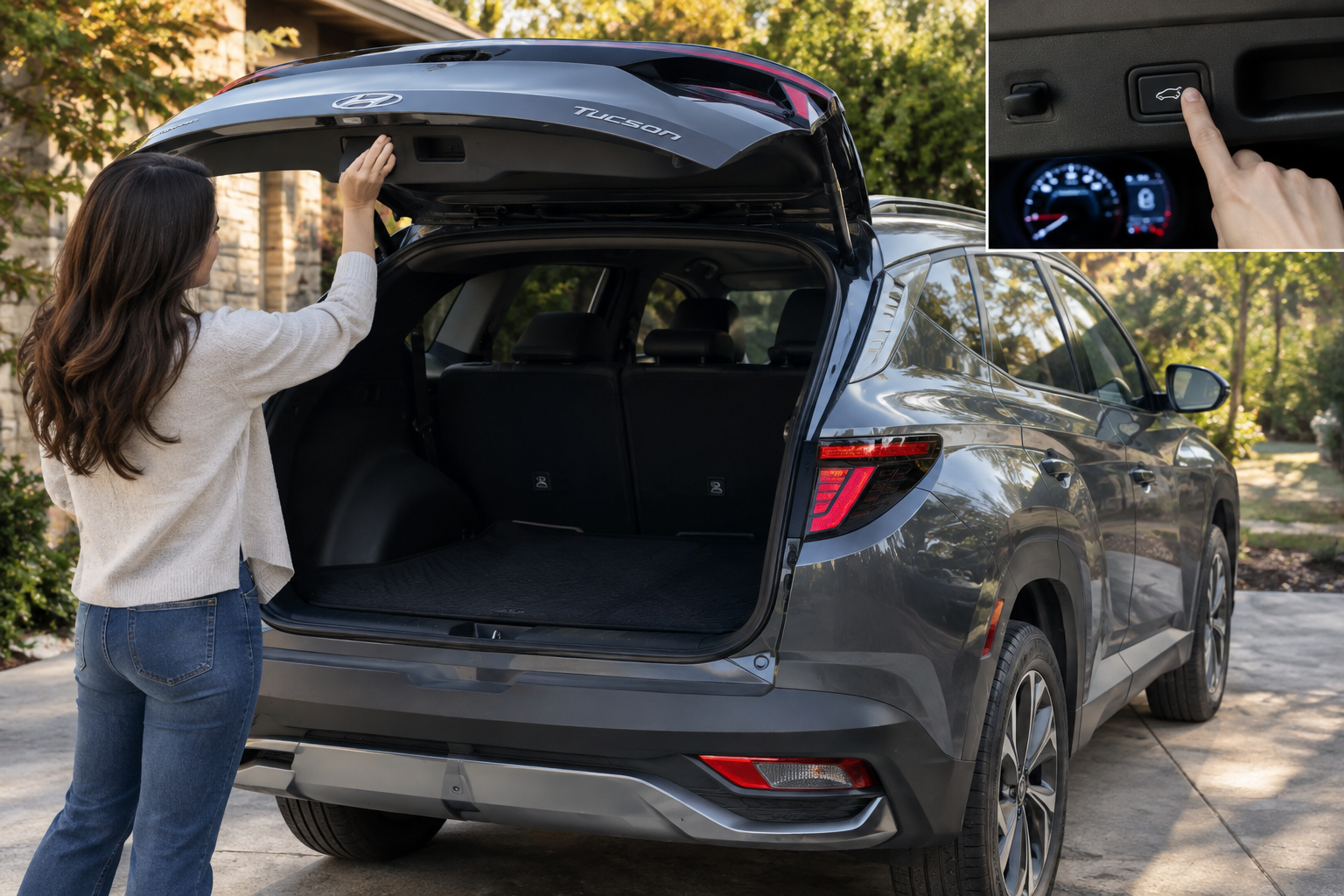
If the power liftgate won’t operate electronically at all, you can still open and close it by hand on every Tucson generation, since the power liftgate motor is designed to disengage under manual force rather than lock the gate in place. Push or pull the gate firmly and it should move, though you’ll feel more resistance than a fully manual liftgate because you’re working against the motor and cable system.
A full electrical reset often resolves persistent glitches, especially reversing or stopping mid-cycle without an obvious obstruction. With the vehicle off, disconnect the negative battery terminal for about one to two minutes, then reconnect it. This forces the liftgate control module to reinitialize, and you may need to reset the height memory setting afterward since a full reset sometimes clears it back to factory default.
After any reset, cycle the liftgate a few times using the interior button before relying on the fob or foot sensor, since the module sometimes needs one or two manual cycles to relearn the gate’s full travel range and reset its force calibration.
Frequently Asked Questions
Why does my Tucson liftgate open partway and then stop?
This is almost always either a height memory setting that’s lower than you expect, or the pinch-detection system sensing resistance from a weak strut, debris, or cold weather stiffness. Try opening it fully by hand first to rule out a height limit, then inspect the seals and struts if it still won’t go all the way up on its own.
Can I still use the liftgate if the power feature completely stops working?
Yes. On every Tucson model year with a power liftgate, you can push or pull the gate manually. It won’t move as freely as a non-powered liftgate because you’re overcoming the motor and cable resistance, but it will open and close and the latch will still work normally.
Does resetting the battery fix the power liftgate, or do I need a dealer scan tool?
A simple battery disconnect for a minute or two often clears minor glitches like unexpected reversing or a stuck height setting, since it forces the control module to reinitialize. Persistent hands-free sensor problems or a liftgate that won’t respond to any input at all sometimes require dealer-level recalibration, especially if a fault code has been stored.
Leave a Reply