
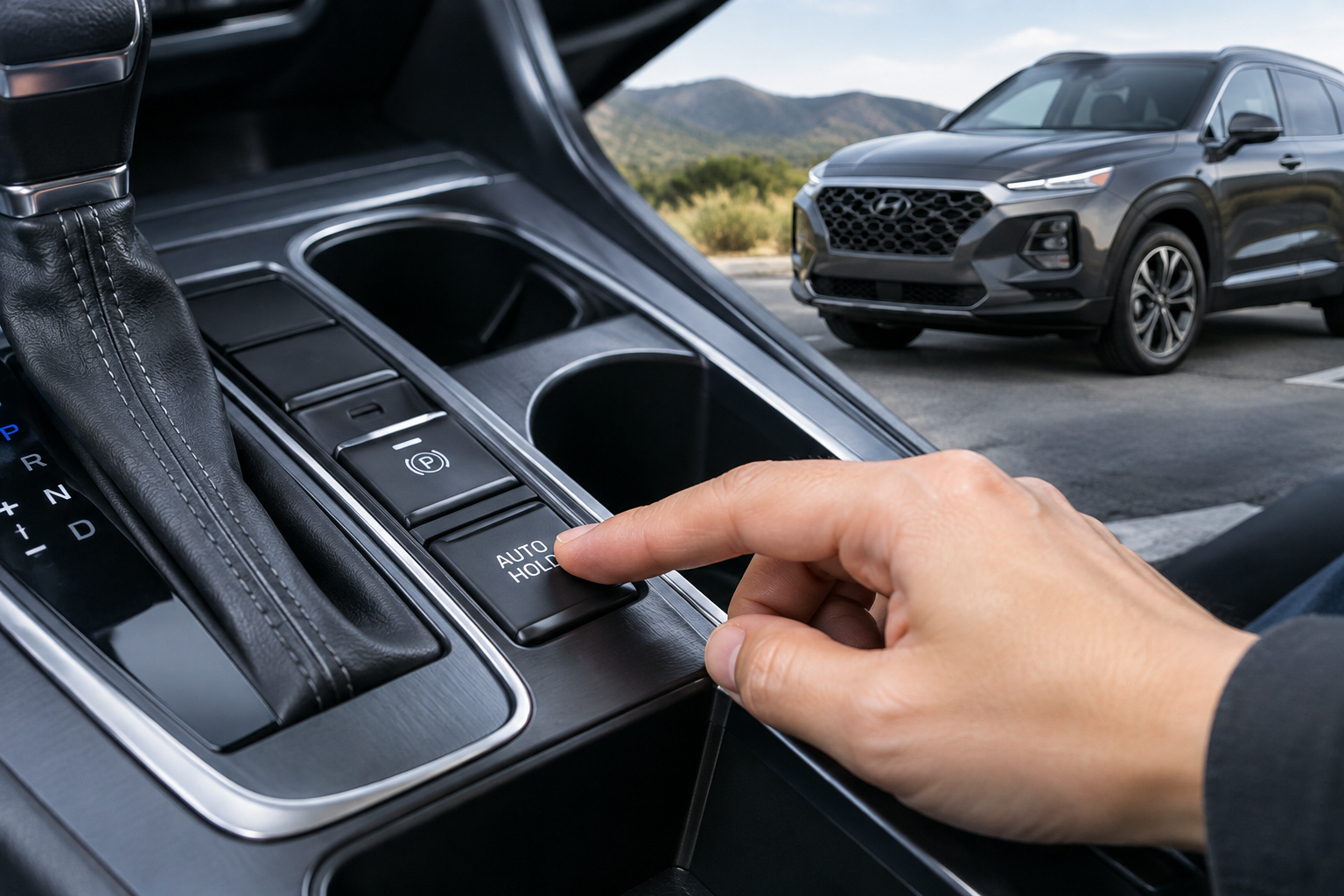
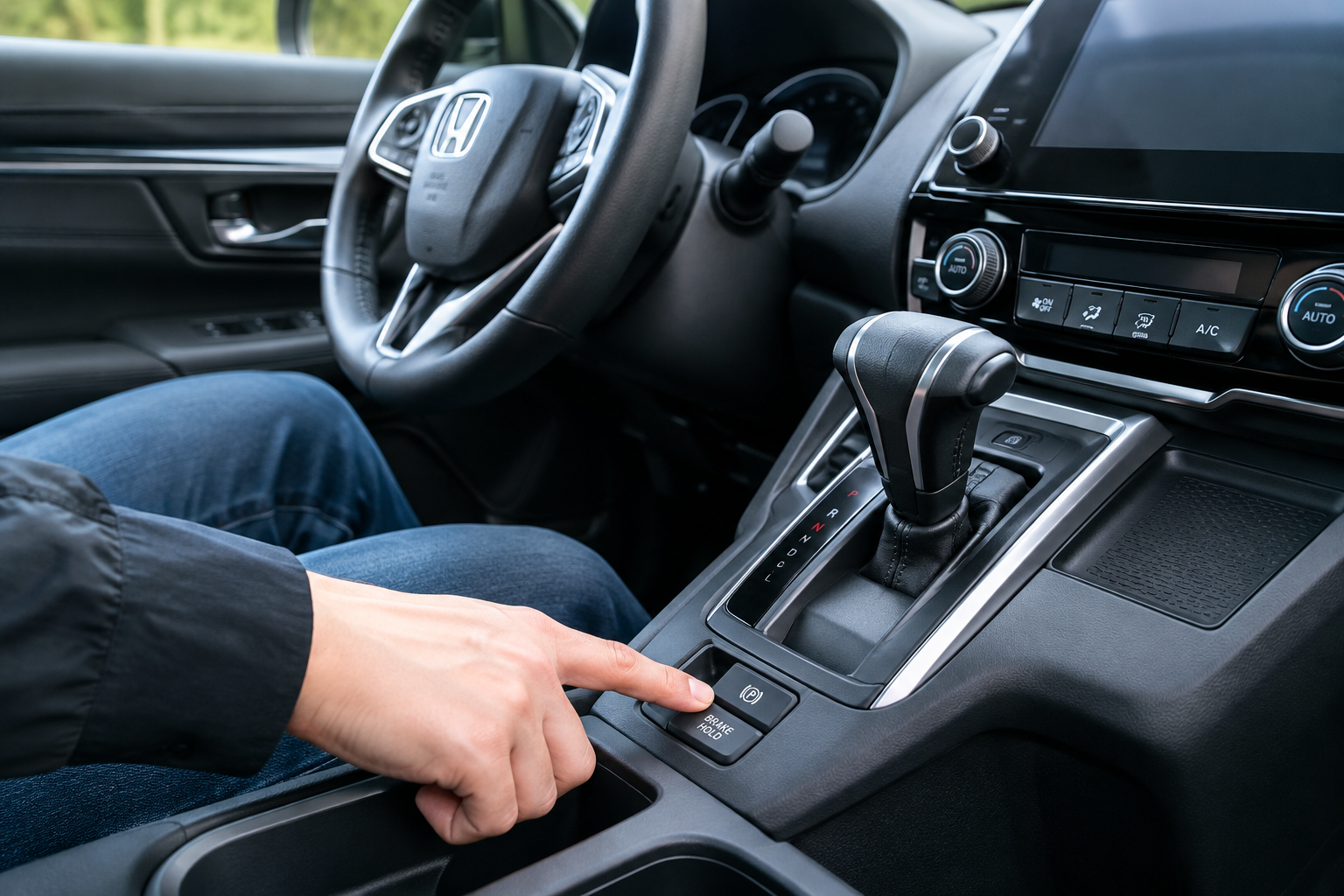
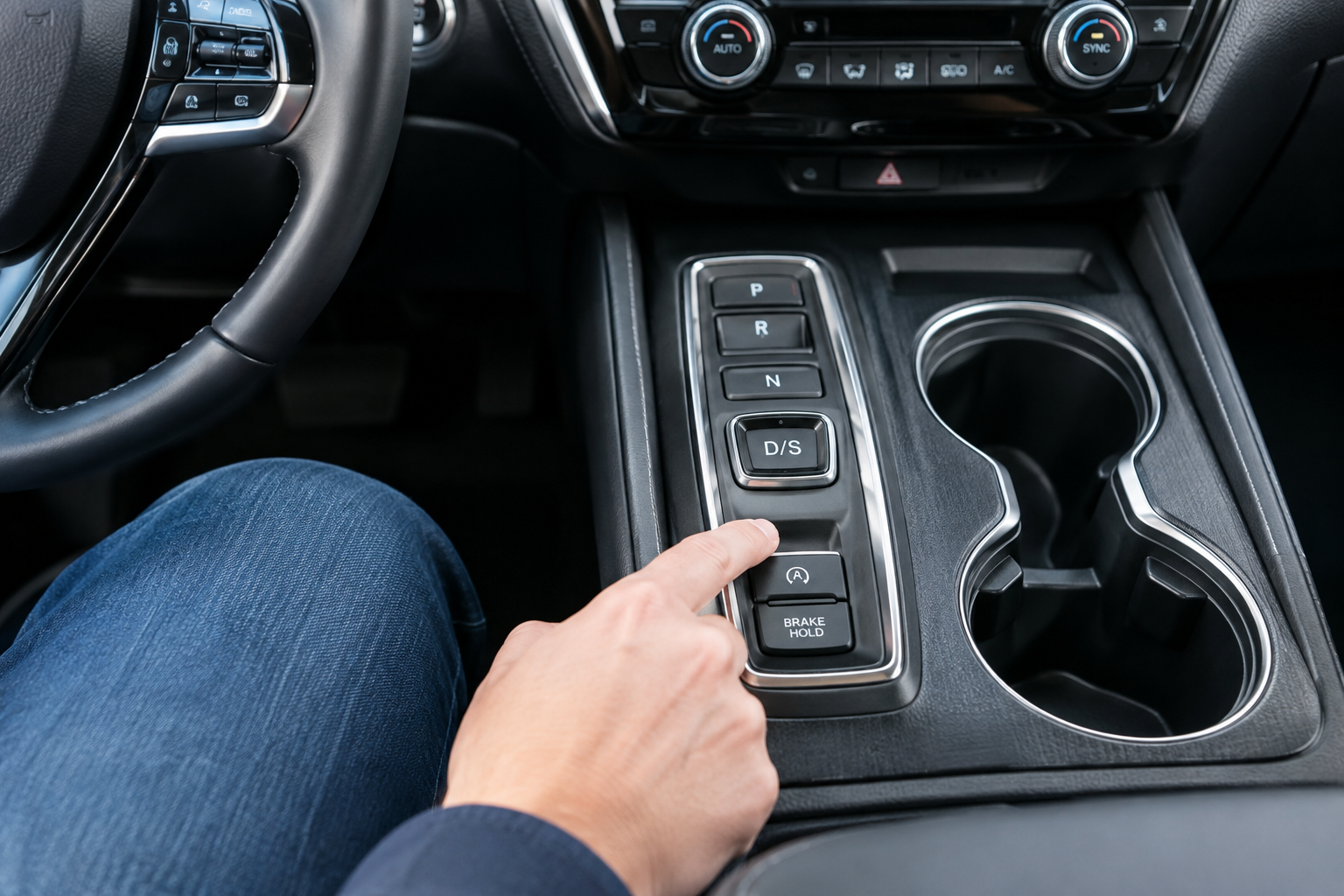
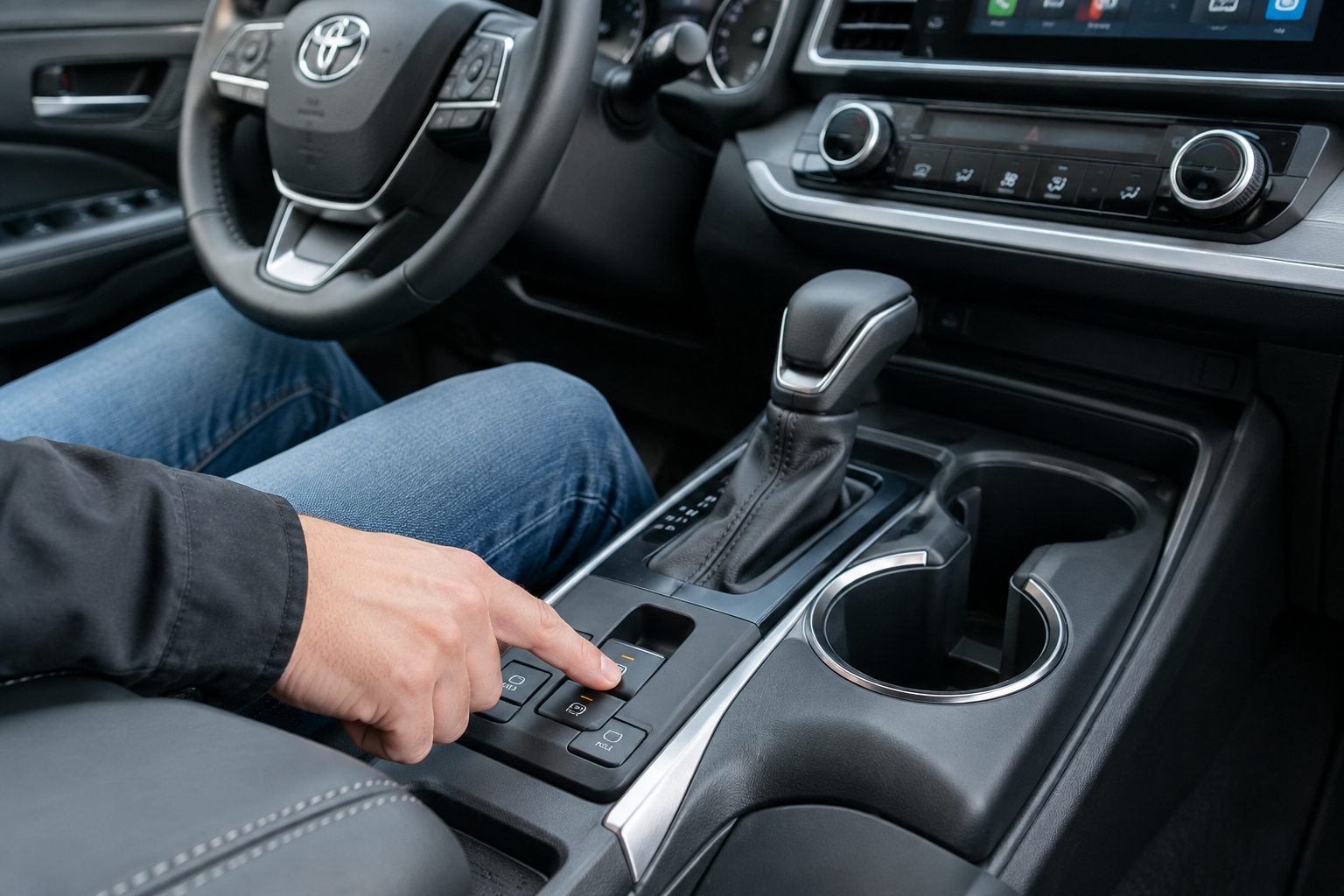
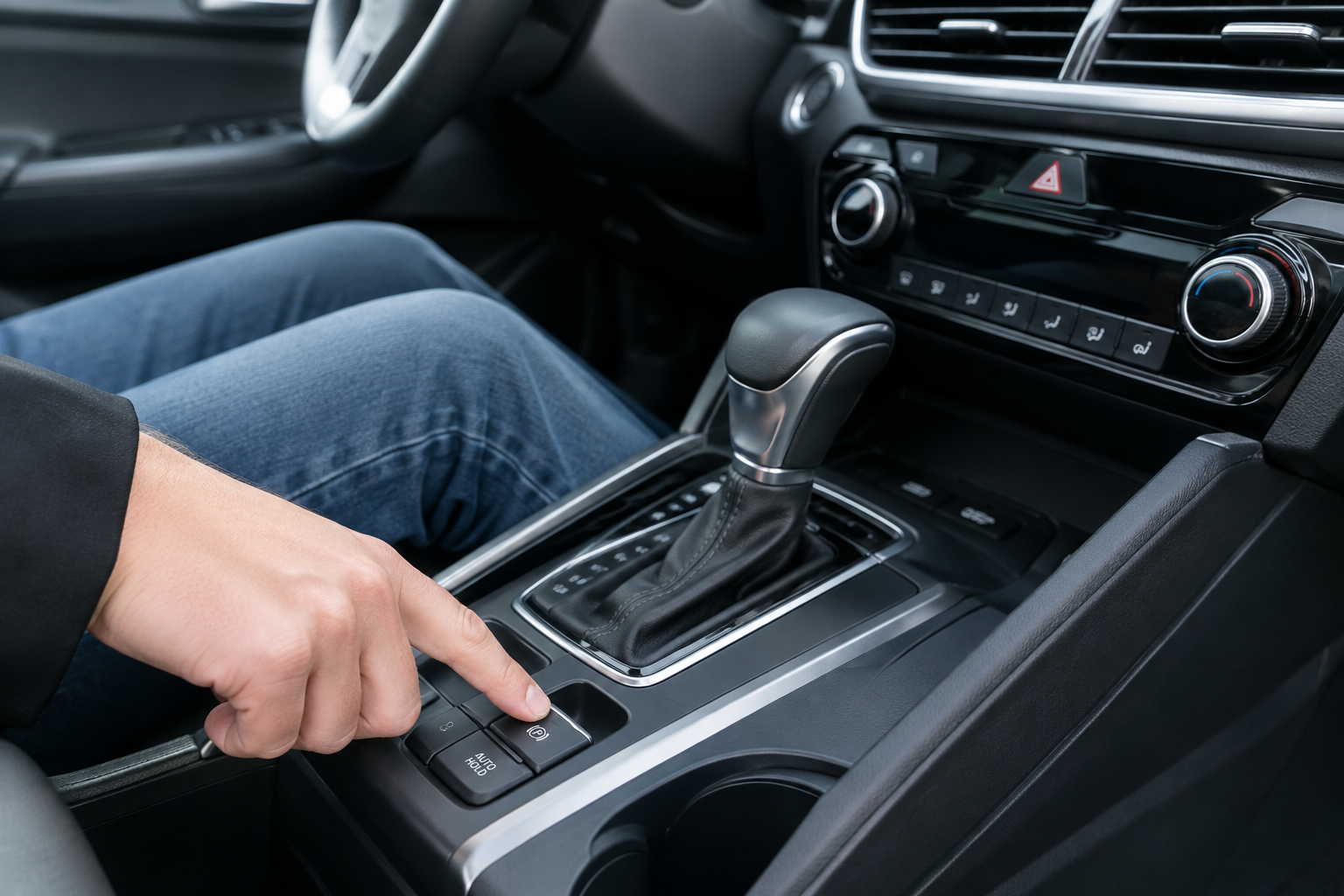
You climb into your Santa Fe, come to a stop at a light, and reach up to tap Auto Hold like you always do, only this time the light won’t turn on, or it turns on and then quietly shuts itself off a few seconds later. It’s a small thing, but once you’ve gotten used to not riding the brake pedal at every stop sign, losing that feature feels like a genuine downgrade. Before you assume something is broken, it helps to understand how picky this system actually is about the conditions it needs to work.
Hyundai calls this feature Auto Hold on most Santa Fe trims, and it’s tied closely to the Electronic Parking Brake (EPB) system rather than being a standalone gadget. That relationship explains a lot of the weird behavior owners report, including why it sometimes won’t engage at all and why it never remembers your last setting after you restart the car.
What Auto Hold Actually Does on the Santa Fe
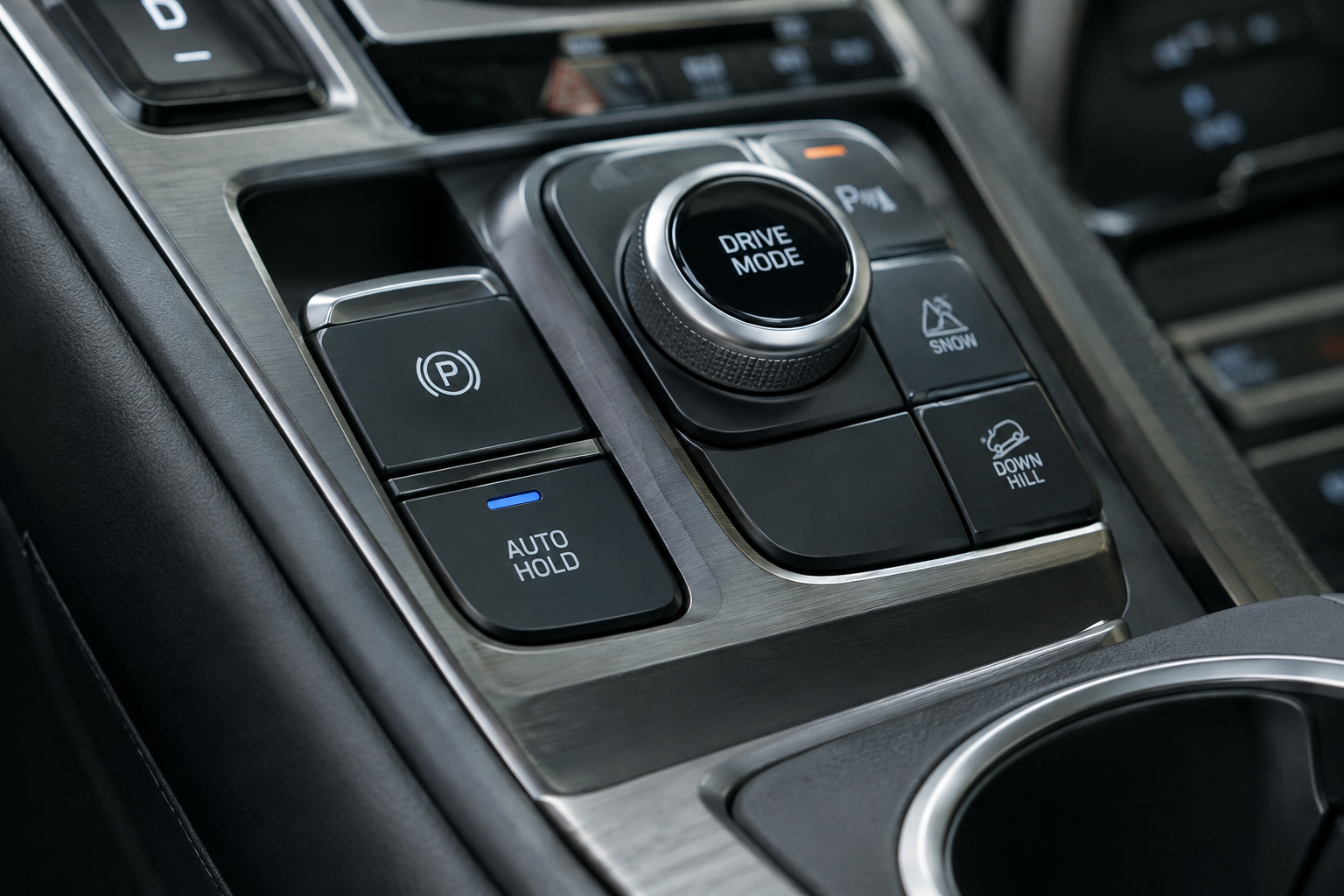
Auto Hold keeps the brakes applied after you come to a complete stop, even if you take your foot off the pedal. It releases automatically once you press the accelerator to move again. Hyundai builds this on top of the electronic parking brake hardware, using the same caliper motors that engage when you pull the parking brake switch.
This is different from a simple brake-hold hydraulic accumulator system used by some other brands. Because it shares hardware with the EPB, any fault in the parking brake system, including a weak battery, a tripped module, or a wiring issue, can knock Auto Hold offline even though the two features feel unrelated to a driver.
Why Auto Hold Won’t Turn On
Most of the time when Auto Hold refuses to activate, it’s not a malfunction at all. The system has a checklist it needs satisfied before the button will even respond, and missing just one item is enough to keep it dark.
Seat Belt and Door Conditions
The driver’s seat belt has to be buckled for Auto Hold to engage on most Santa Fe model years. If you’re doing a quick test with the belt unbuckled, don’t be surprised when nothing happens. The driver’s door also needs to be closed, and on some trims all doors need to be shut before the system will arm itself.
Transmission and Brake Pedal Position
You need to be in Drive, Reverse, or a manual shift gear, not Park or Neutral, with your foot firmly on the brake pedal when you press the Auto Hold switch. Pressing the button while coasting or while the transmission is between gears usually gets ignored. The vehicle also generally needs to be stationary, not just slowing down, before Auto Hold will latch on.
Parking Brake and Warning Lights
If the electronic parking brake has an active fault, you’ll typically see an EPB warning light or a message in the cluster, and Auto Hold will be locked out until that’s resolved. The same goes for ABS warning lights or brake system warnings. These systems are all cross-checked, so a fault in one disables the other as a safety measure rather than letting you drive with half-working brakes.
Why Auto Hold Turns Off By Itself
Sometimes Auto Hold engages fine but then disengages on its own mid-drive, which understandably freaks people out. In most cases this is the system protecting itself or you, not a random glitch.
- Opening the driver’s door while Auto Hold is active will cancel it immediately, since the car assumes you might be getting out.
- Unbuckling your seat belt while stopped will also release it on many model years.
- Shifting into Park automatically hands braking duty over to the parking pawl and transmission, so Auto Hold turns off because it’s no longer needed.
- A low 12V battery voltage can cause the EPB module to drop out temporarily, taking Auto Hold with it until voltage stabilizes.
- An extended stop on a steep grade combined with a weak battery or aging brake calipers can occasionally trigger the system to disengage as a precaution.
None of these are defects. They’re the system doing exactly what Hyundai designed it to do, even if the timing feels random from the driver’s seat.
Does Auto Hold Stay On After You Restart the Car?
This is the question that generates the most confusion, and the answer across Santa Fe model years is consistently no. Auto Hold is not a persistent setting like your climate control memory or seat position. It resets to off every single time you start the vehicle, regardless of trim level or model year from the current generation back through the previous one.
This is intentional on Hyundai’s part, not a bug. The idea is that the driver should consciously choose to activate hold assistance each drive cycle rather than have it silently active without their awareness. It’s the same design philosophy Hyundai and Kia use for their driver attention systems, which is why you’ll notice similar reset behavior if you’ve ever looked into how to turn off driver attention warnings on the Santa Fe.
If you find yourself tapping that Auto Hold button every single morning and wishing it would just stick, you’re not missing a hidden menu setting. There isn’t one. This is standard behavior industry-wide for similar hold-assist features, not something unique to Hyundai.
When It’s a Real Malfunction
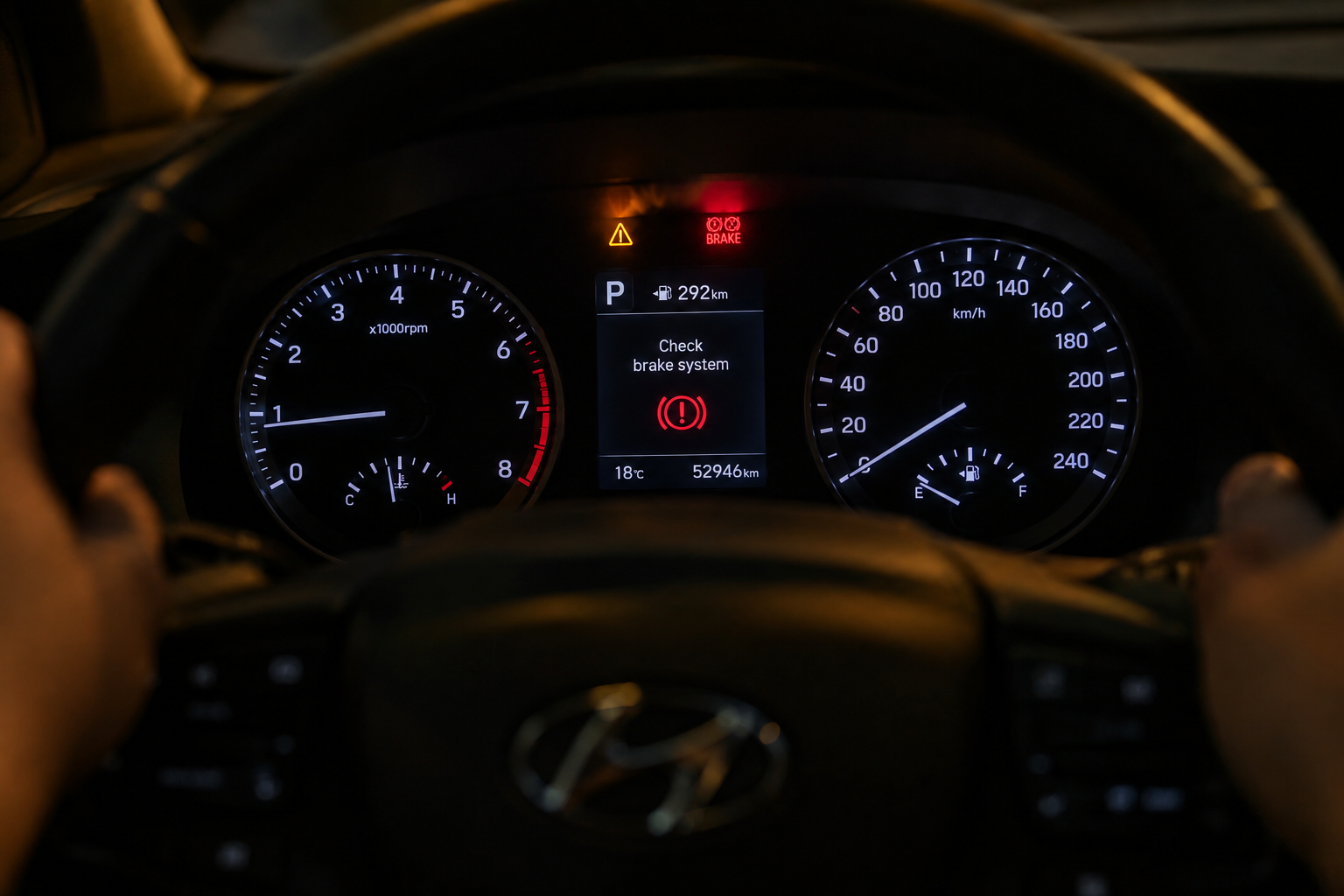
Normal quirks aside, there are genuine failure patterns worth watching for. If Auto Hold refuses to work even when every condition above is satisfied, seat belt buckled, doors closed, brake pressed firmly, transmission in gear, no warning lights, then you’re likely dealing with an actual fault rather than a usage issue.
Common culprits include a failing brake pedal position sensor, a faulty EPB actuator motor on one of the rear calipers, corroded connectors at the parking brake switch, or a software fault in the integrated brake control module that needs a dealer reflash. A car that sets an EPB or ABS warning light every time you try to use Auto Hold is telling you the same thing: something upstream needs diagnosis, not just a reset.
Grinding, clicking, or motor noise from the rear wheels when you press the parking brake switch is another red flag. That points toward the actual EPB caliper motors rather than a software or sensor issue, and it’s not something to ignore since it affects your regular parking brake too.
Diagnosing It Yourself
A basic code reader will tell you if there’s a stored fault, but Auto Hold and EPB issues often need a scanner capable of reading ABS and brake module codes specifically, not just generic engine codes. A general OBD2 reader from the parts store frequently can’t see into these systems at all.
Hyundai Santa Fe OBD2 Scanner ABS EPB
A bidirectional scanner that reads ABS and EPB modules gives you a real diagnosis instead of guessing at Auto Hold problems.
If you go this route, look for a scanner that specifically lists ABS, EPB, and body control module coverage for Hyundai, not just generic OBD2 code reading. Cheaper readers will often show “no codes found” simply because they can’t communicate with those modules in the first place.
While you’re checking brake related systems, it’s also worth reading up on why a brake pedal might go soft after sitting overnight, since a slow leak in the hydraulic system can sometimes produce symptoms that overlap with EPB faults, even though the root cause is completely different.
Battery Health Matters More Than You’d Think
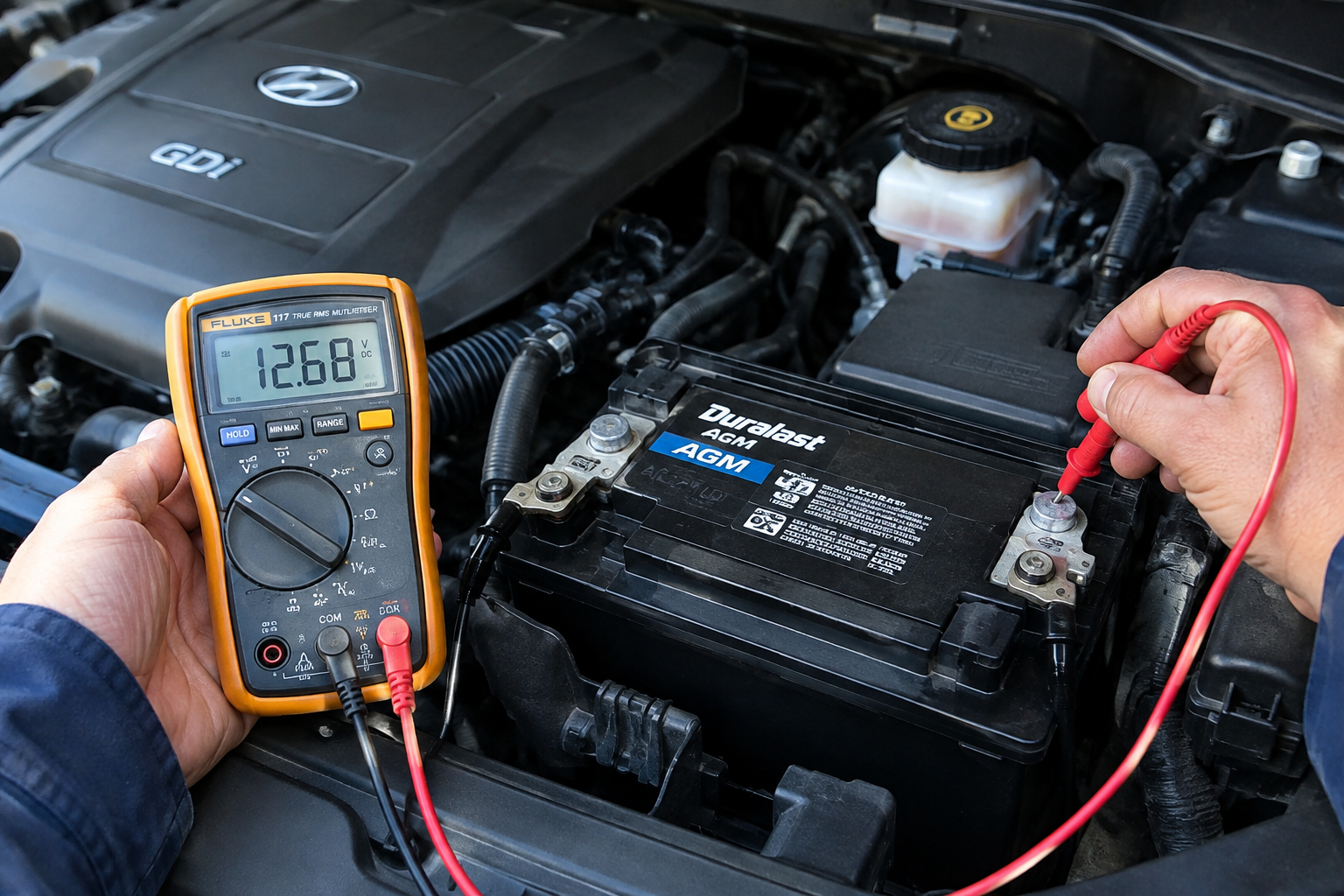
A surprising number of Auto Hold complaints trace back to a tired 12V battery rather than the brake system itself. The EPB motors draw a real current spike when they clamp or release, and a battery that’s marginal will sometimes cause the module to fault out defensively rather than risk an incomplete clamp.
If your Santa Fe is a few years old and you’re seeing Auto Hold act up along with slower engine cranking or dimming interior lights, get the battery load tested before you spend money chasing sensors. A cheap, reliable battery is a lot less expensive than a diagnostic session at the dealer.
NOCO Boost Plus Jump Starter
Handy for confirming a weak battery is causing electronic module faults before you pay for a full diagnostic.
Frequently Asked Questions
Does Hyundai call it Auto Hold or Brake Hold?
Hyundai’s official term across the Santa Fe lineup is Auto Hold, printed directly on the dashboard switch and in the owner’s manual. Some owners and third party sites use “Brake Hold” interchangeably, but you won’t find that wording in Hyundai’s own documentation.
Can I make Auto Hold turn on automatically every time I start the car?
No. There’s no hidden menu setting, dealer configuration, or software update that makes Auto Hold persist through an ignition cycle on the Santa Fe. It resets to off by design every time you start the vehicle, so you’ll always need to press the button after starting the engine if you want it active.
Is it safe to drive with Auto Hold not working?
Yes, Auto Hold is a convenience feature, not a required safety system, so your regular hydraulic brakes work independently of it. That said, if Auto Hold is malfunctioning alongside an EPB or ABS warning light, get it checked soon since those lights can indicate a broader brake system issue rather than just the hold feature.
Leave a Reply