
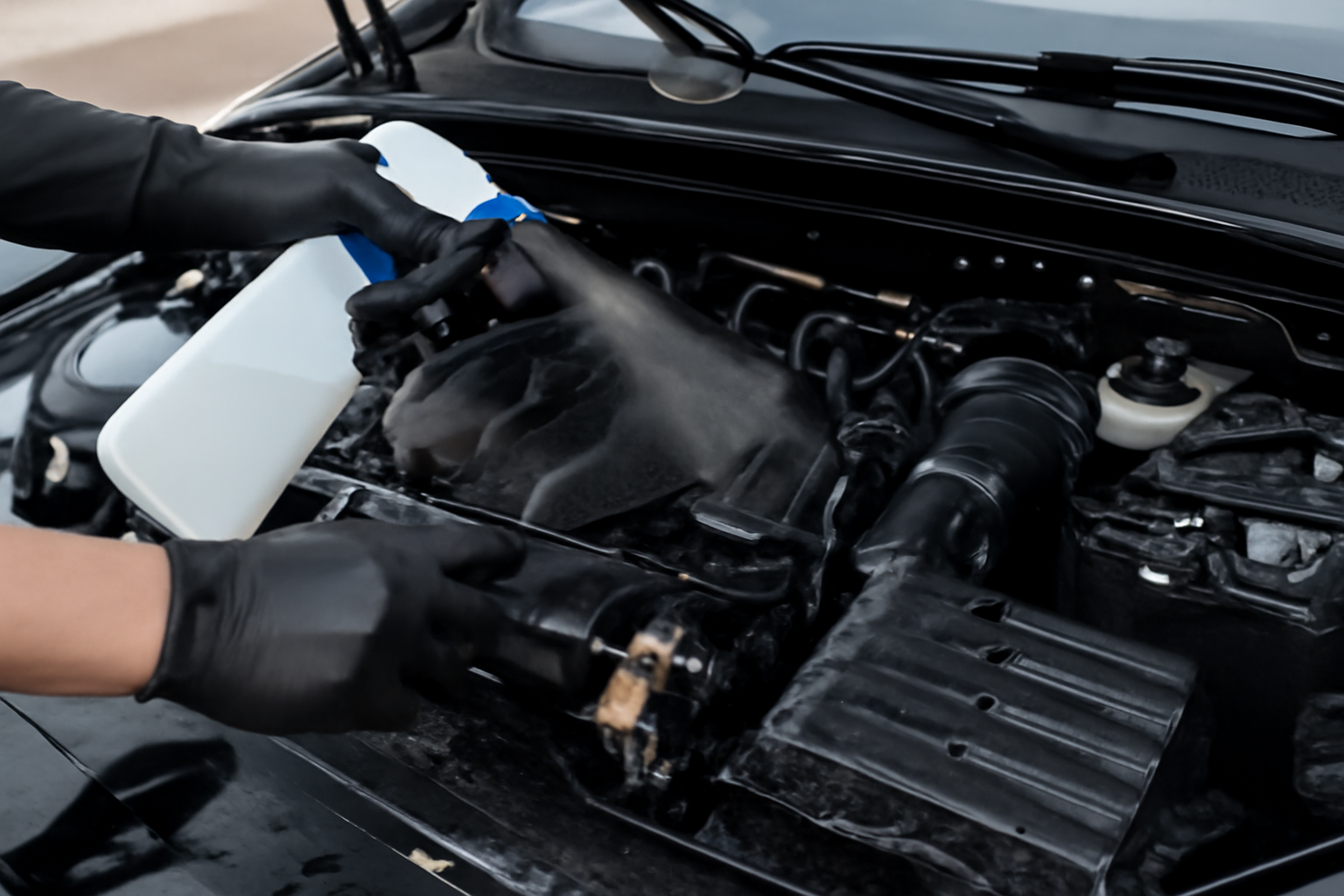
A clean engine bay makes spotting leaks, worn belts, and cracked hoses much easier during routine inspections. It also prevents the buildup of flammable oil residue and makes working on your car more pleasant.
Many car owners avoid this task because they’re worried about damaging electronics, but with the right approach, it’s completely safe.
Preparation
Let the engine cool until it’s warm but not hot (about 15 to 20 minutes after driving). A warm engine helps loosen grease, but a hot engine can cause cleaning products to dry too fast and leave streaks.
Cover sensitive electronics with plastic bags and rubber bands. Focus on the alternator, fuse box, exposed air intake opening, and any aftermarket components that aren’t sealed. Modern engine bays are designed to handle moisture, but concentrated water streams on electrical connectors can cause issues.
Disconnect the negative battery terminal for extra precaution. This eliminates any risk of short circuits during the cleaning process.
Step-by-Step Cleaning
Apply Degreaser
Spray a quality engine degreaser liberally over every surface, starting from the bottom and working up. Focus extra attention on areas with visible oil or grease buildup around the valve cover, oil filler cap, and power steering pump.

Engine Degreaser Spray
Water-based formulas are safe for all engine bay materials while still providing excellent cleaning power
Let the degreaser sit for 3 to 5 minutes to break down grime. Don’t let it dry on the surface, especially on painted or plastic components.
Scrub Stubborn Areas
Use a stiff detailing brush on heavily soiled areas. A parts cleaning brush works well for tight spaces around brackets and hoses.
An old toothbrush handles small crevices around bolt heads and sensor connectors.
Rinse Thoroughly
Use a garden hose with moderate pressure, not a pressure washer. High-pressure water can force moisture into electrical connectors and push past seals. Work from back to front, letting the water carry the dissolved grime away from the engine.
Avoid spraying directly into the alternator, fuse box, or coil packs even if they’re covered. A gentle rinse from above is sufficient for these areas.
Dry and Protect
Start the engine and let it run for 5 minutes to evaporate moisture from hot surfaces. Use compressed air or a leaf blower to chase water out of crevices. Wipe down accessible surfaces with microfiber towels.
Once dry, apply a plastic and rubber protectant to hoses, covers, and plastic components. This restores the factory appearance and protects against UV-induced cracking.

Microfiber Towels
Essential for wiping down accessible surfaces without scratching painted or plastic components
Products to Avoid
Skip petroleum-based solvents and brake cleaner for general engine bay cleaning. They’re too aggressive for rubber and plastic components and can damage paint. Water-based degreasers are effective enough for routine cleaning and much safer for all materials.
Avoid tire shine or silicone-based products on the serpentine belt. Any overspray can cause the belt to slip, resulting in squealing and loss of accessory drive function.
Regular maintenance like this helps you catch problems early. A clean engine bay is particularly valuable if you’re planning to keep your vehicle for the long haul, similar to the approach used with vehicles built to last 200,000 miles.
Frequently Asked Questions
Can I use a pressure washer on my engine?
It’s not recommended. The high pressure can force water past seals and into connectors. A regular garden hose with a spray nozzle provides plenty of rinsing power without the risk.
How often should I clean the engine bay?
Once or twice a year is sufficient for most vehicles. If you live in a dusty area or drive on dirt roads, cleaning every few months keeps things in check.
Will cleaning the engine void my warranty?
No. Engine cleaning with appropriate products and techniques won’t void any warranty. Use common sense, avoid pressure washers, and cover sensitive components.
What if water gets into electrical connectors?
If you accidentally spray water into a connector, use compressed air to blow it out immediately. Let the engine run for 10 to 15 minutes to help evaporate any remaining moisture. Most modern connectors have rubber seals that prevent water intrusion during normal cleaning.
This article contains affiliate links. We may earn a small commission at no extra cost to you.
Leave a Reply