
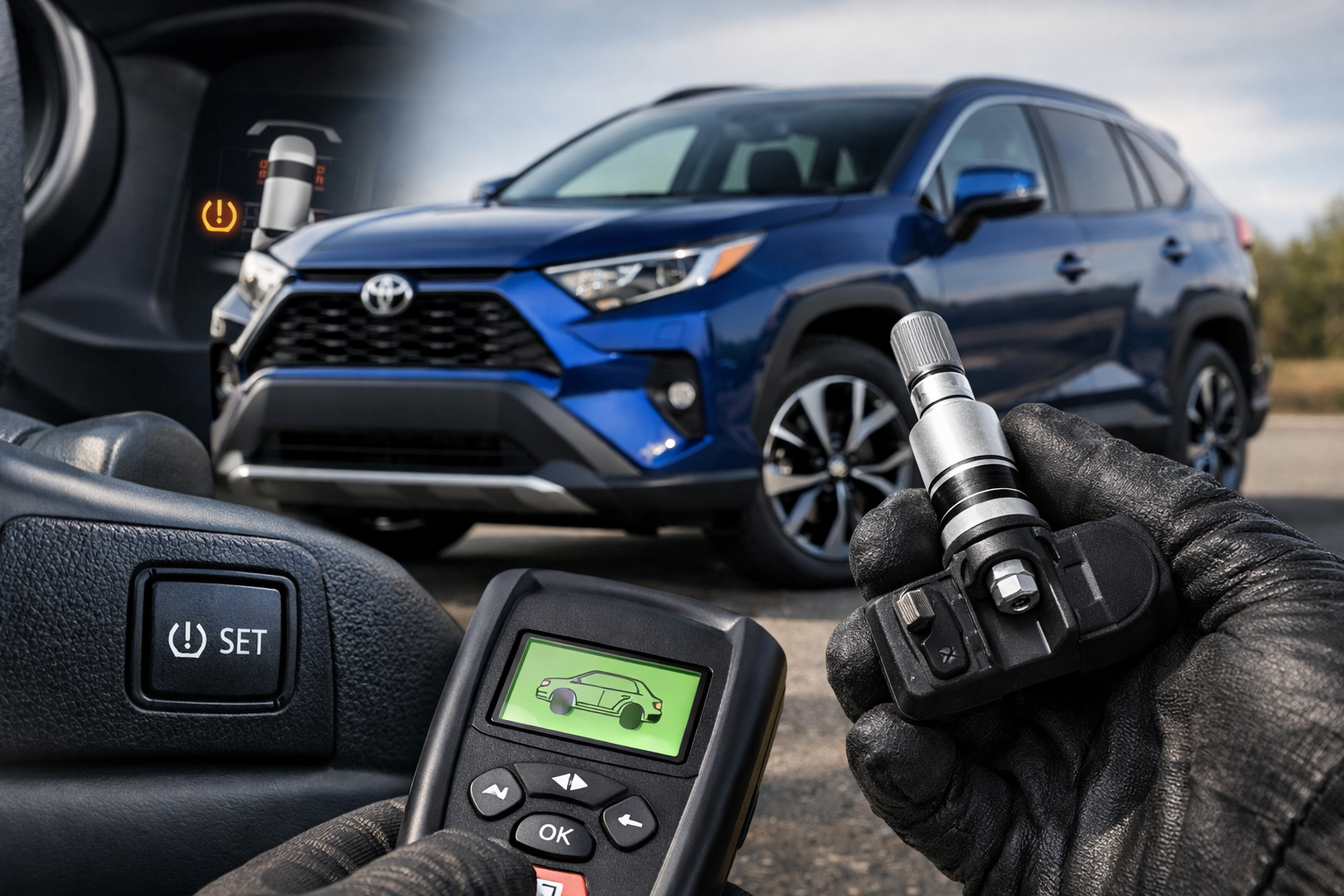
The Toyota RAV4 uses two different TPMS reset methods depending on your generation. The 4th gen (2013-2018) uses a physical reset button located below the steering column, while the 5th gen (2019+) handles it through the multi-information display or touchscreen. Both methods are simple once you know the steps, and the entire process takes less than 5 minutes plus a 15 to 20 minute drive to complete calibration.
5th Gen RAV4 (2019+): Infotainment/MID Method
Inflate all four tires to the correct pressure listed on the driver’s door jamb sticker. Navigate to the TPMS reset through one of two paths depending on your trim.
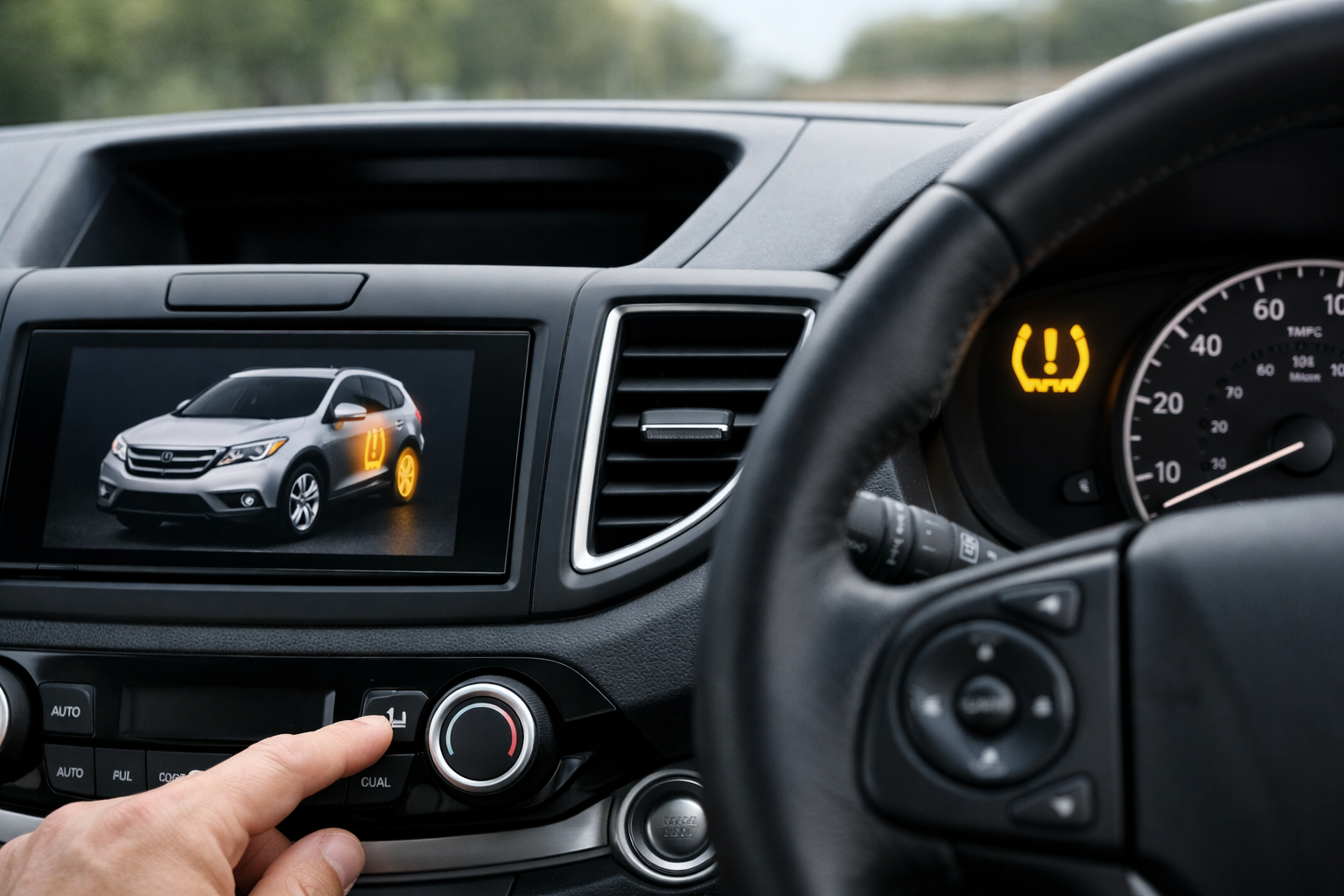
On models with the larger touchscreen, go to Settings > Vehicle > TPMS and select “Set” or “Reset.” On models where the touchscreen path isn’t available, use the steering wheel buttons to scroll through the multi-information display (MID) in the instrument cluster until you find the TPMS option, then select “Set” and confirm.
Drive for 10 to 20 minutes at speeds above 25 mph to complete the recalibration. The system needs this driving time to receive updated pressure readings from all four sensors and establish new baselines. The TPMS light should turn off once all sensors have reported and the system confirms pressures are within the acceptable range.
4th Gen RAV4 (2013-2018): Reset Button Method
Inflate all tires to the correct pressure. Turn the ignition to ON without starting the engine (press the start button twice without pressing the brake on push-button start models).
Locate the TPMS reset button below the steering column on the left side. It’s a small, sometimes recessed button that you may need a pen tip to press.
Press and hold the button until the tire pressure light blinks three times, then release. Start the engine and drive for 10 to 20 minutes at 25+ mph. The light should turn off once the system recalibrates successfully.
RAV4 Hybrid and RAV4 Prime: Same Procedure
The RAV4 Hybrid and RAV4 Prime (plug-in hybrid) use the same TPMS system and the same reset procedure as the standard RAV4. For push-button start hybrids, press the POWER button twice without pressing the brake to enter accessory mode, then follow the same button or menu-based reset procedure for your generation.
There’s no difference in the TPMS operation between hybrid and non-hybrid models. If you’re considering a plug-in hybrid versus full electric, the RAV4 Prime offers excellent versatility, and maintenance procedures like TPMS resets remain identical to the gas version.
TPMS Warning vs. TPMS Malfunction

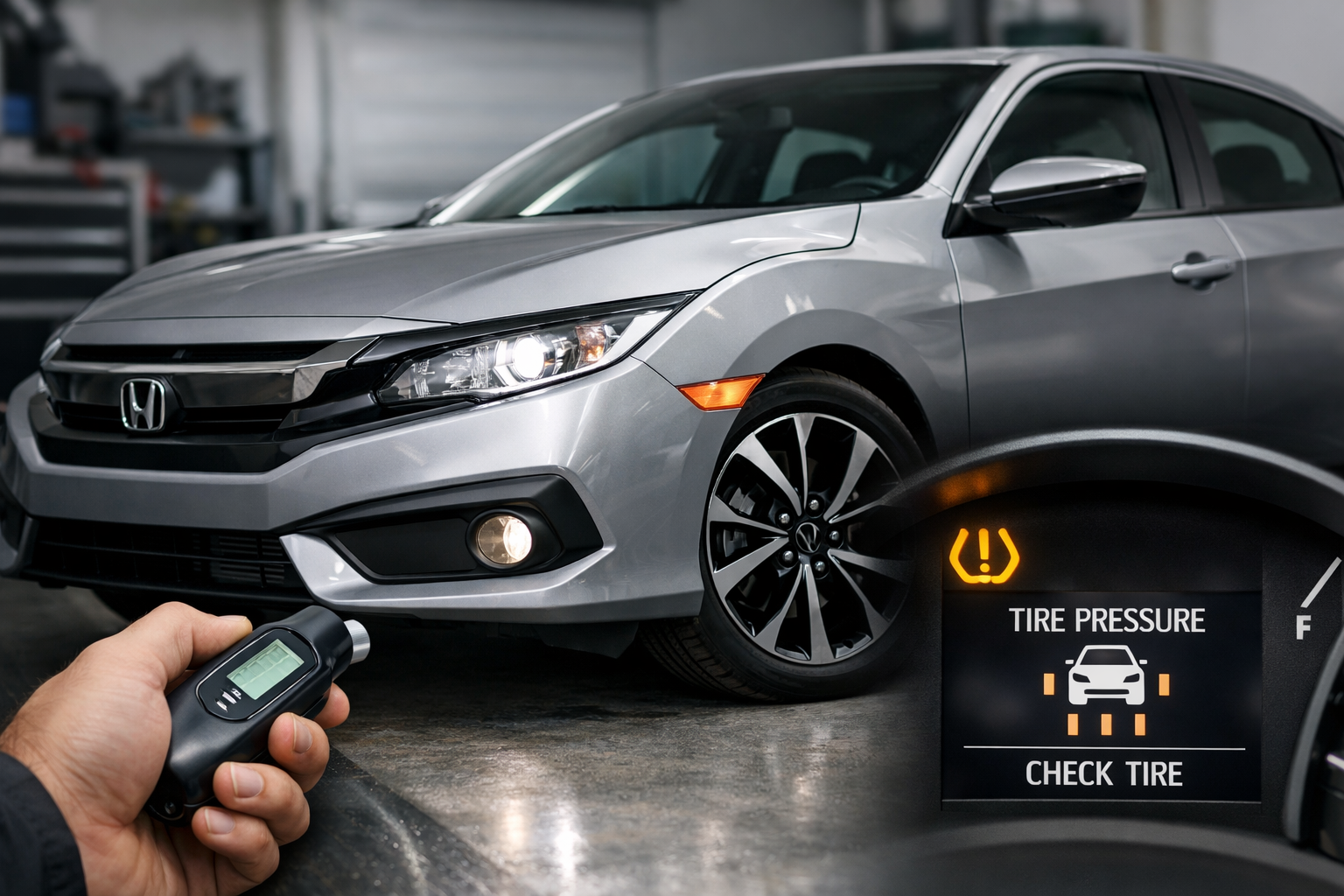
Understanding the difference between these two conditions saves confusion. A steady TPMS light means one or more tires are below the minimum pressure threshold (typically 25% below the placard value). This is the normal low-pressure warning, and inflating the tires plus resetting the system resolves it.
A TPMS light that flashes for about 60 to 90 seconds when you start the car and then stays solid indicates a system malfunction. This typically means a sensor has failed (dead battery) or isn’t communicating with the receiver.
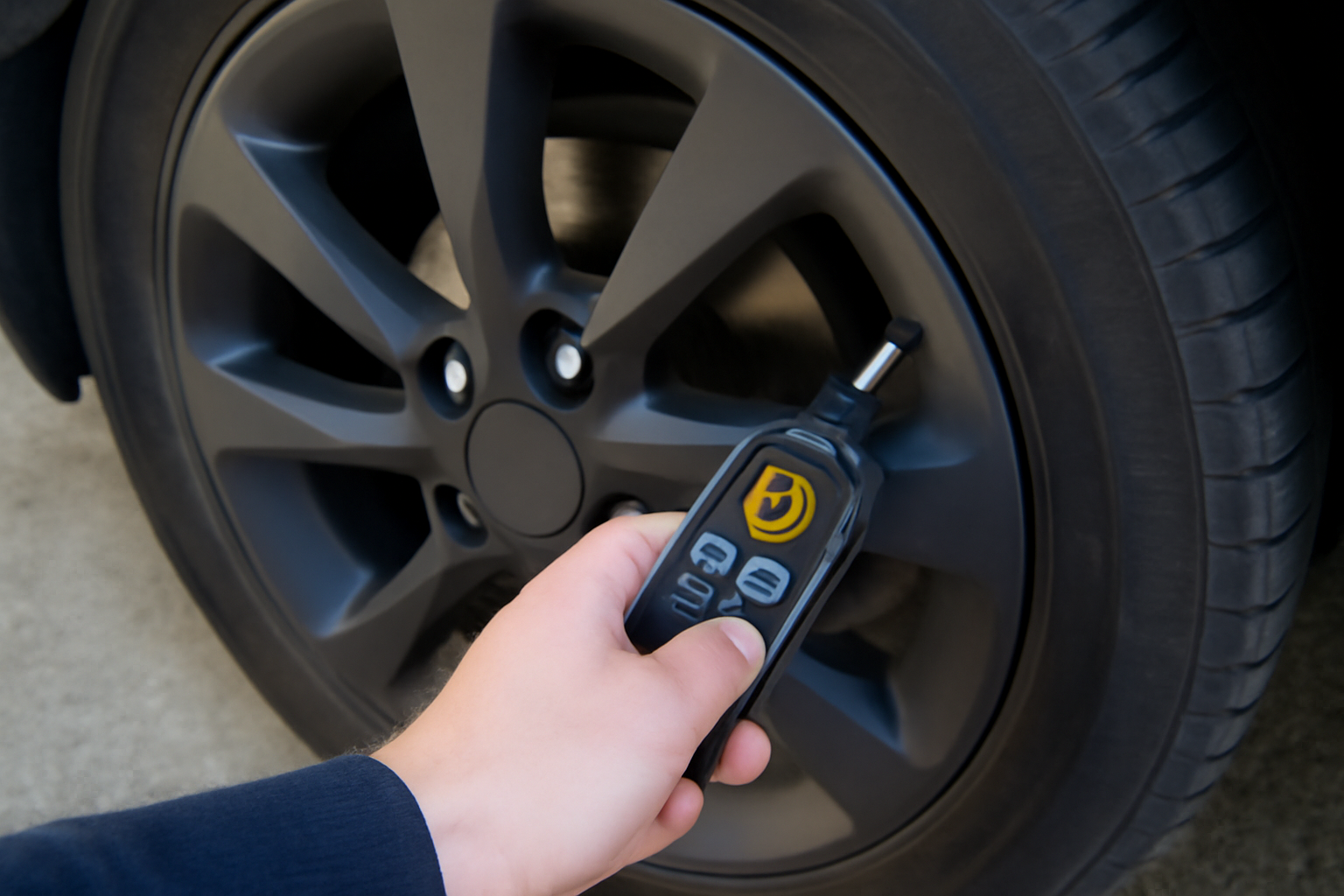
A TPMS reset tool can activate individual sensors to identify which one has failed. If you need to replace sensors, check current pricing for replacement TPMS sensors compatible with your RAV4’s year.

TPMS Reset Tool for Toyota
Identify failed sensors and speed up the reset process on your RAV4
Cold Weather False Alarms
The RAV4’s TPMS light frequently appears on cold mornings, especially during the transition from fall to winter. Tire pressure drops approximately 1 PSI per 10-degree Fahrenheit temperature decrease.
Tires inflated to 35 PSI on a 65-degree afternoon may read 31 PSI on a 25-degree morning, which can trigger the TPMS warning. Top off your tires during cold morning conditions and the light should clear after the reset drive.
Cold weather affects more than just tire pressure. If you’re comparing vehicles for winter use, check out our guide on Subaru Outback vs Toyota RAV4 for outdoor adventures, which covers winter capability differences.
When to Replace TPMS Sensors
TPMS sensors contain internal batteries that typically last 5 to 10 years. When the battery dies, you’ll need to replace the entire sensor unit. Most fourth-generation RAV4s from 2013-2014 are reaching this replacement window.
Replacement sensors are available as OEM Toyota parts or quality aftermarket alternatives. Installation requires dismounting the tire, so it’s best done during regular tire replacements or rotations to save on labor costs.

Replacement TPMS Sensors for Toyota RAV4
Quality replacement sensors that work with both 4th and 5th generation RAV4 models
Frequently Asked Questions
Do I need to reset TPMS after a tire rotation?
Most RAV4 models auto-relearn sensor positions during driving after a rotation. A manual reset speeds up the process and clears any lingering warnings more quickly. If you don’t manually reset, the system should recalibrate on its own within 15 to 20 minutes of mixed driving.
How long does the reset drive take?
The driving portion typically takes 10 to 20 minutes at speeds above 25 mph. Highway driving tends to complete the calibration faster than city driving because the consistent speed allows all four sensors to transmit without interruption.
Can I drive with the TPMS light on?
Check all four tires with a gauge first. If all pressures are correct, driving with the light on is safe. Initiate the reset and drive normally, and the light will clear once calibration completes. If a tire is genuinely low, inflate it before driving to avoid tire damage and reduced handling.
Will the TPMS light affect my vehicle inspection?
In most states, a malfunctioning TPMS system will cause your vehicle to fail inspection. A simple low-pressure warning that can be reset won’t fail you, but a flashing light indicating sensor failure will. Address sensor malfunctions before your inspection date to avoid issues.
This article contains affiliate links. We may earn a small commission at no extra cost to you.

Leave a Reply