
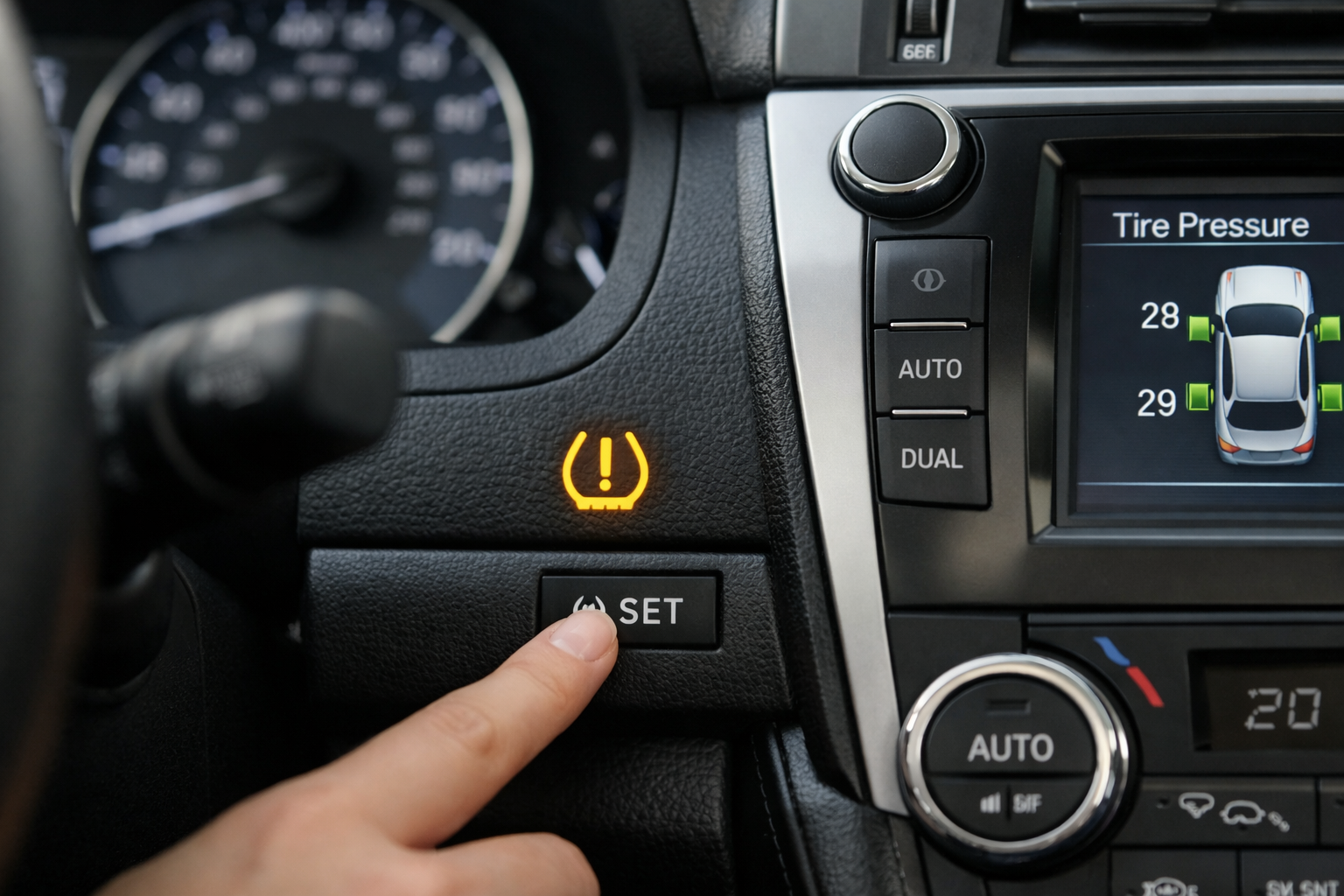
The tire pressure warning light on your Toyota Camry can stay illuminated even after you’ve inflated all four tires to the correct pressure. The TPMS system needs a manual reset to clear the warning, especially after tire rotations, seasonal tire swaps, or significant pressure adjustments. The exact reset procedure differs between Camry generations, so finding the right method for your specific year is important.
7th Gen Camry (2012-2017): Reset Button Method
Inflate all four tires to the pressure listed on the driver’s door jamb sticker. Turn the ignition to ON without starting the engine (on push-button start models, press the start button twice without touching the brake pedal). Locate the TPMS reset button below the steering column on the left side.
It’s a small rectangular button, sometimes recessed, that may require a pen or fingertip to press. Press and hold the button until the tire pressure warning light blinks three times, then release it.
Start the car and drive for 10 to 20 minutes at speeds above 25 mph. The system recalibrates during this driving period, and the light should turn off once all four sensors have transmitted their updated pressure readings to the receiver module.
8th Gen Camry (2018-2023) and 9th Gen (2024+): Infotainment or MID Method
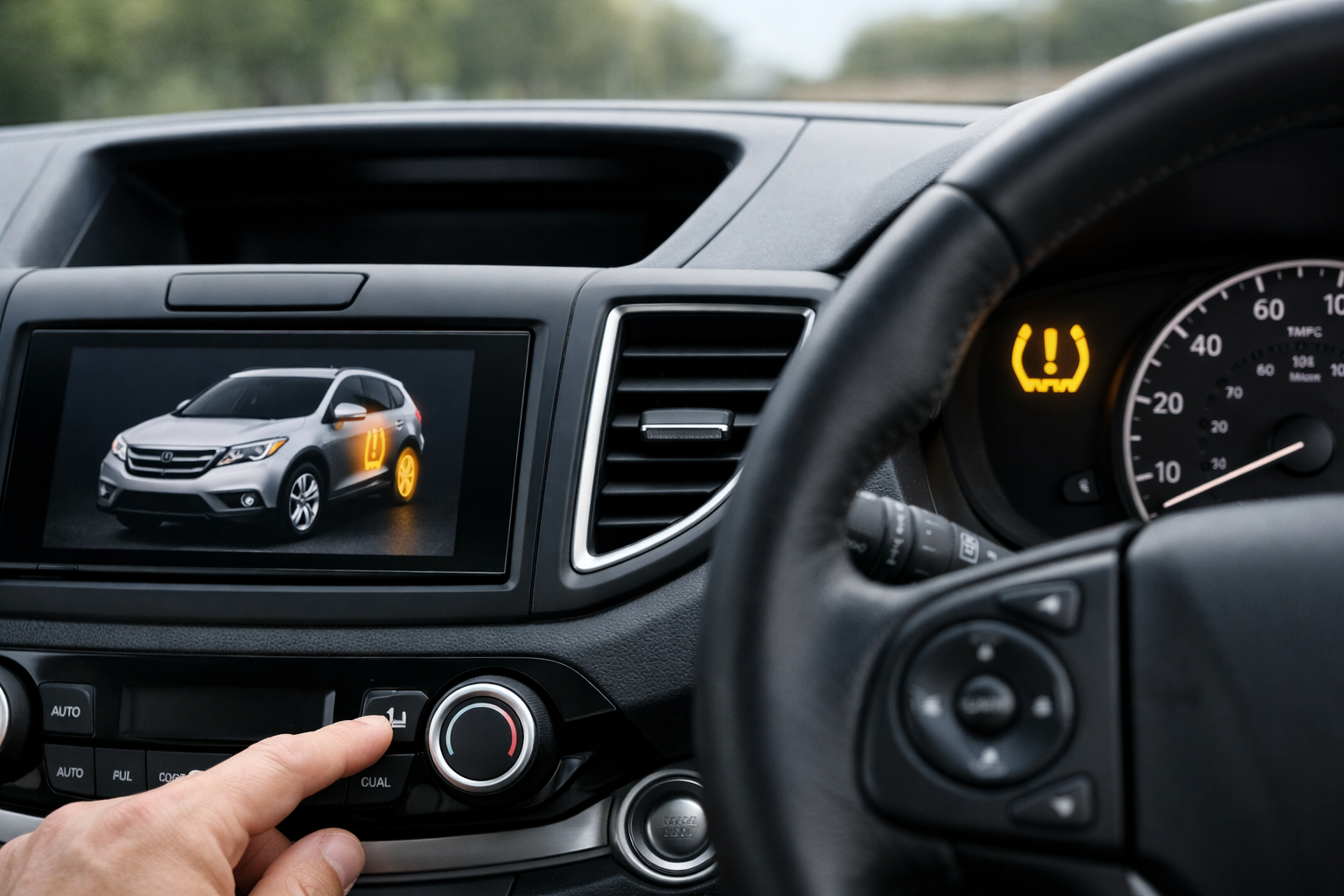
Inflate all tires to the correct pressure. From the home screen on the touchscreen, navigate to Settings > Vehicle Settings > TPMS. Select “Set” or “Reset” and confirm.
On some trims, you may need to use the steering wheel buttons to access the TPMS option through the multi-information display (MID) in the instrument cluster instead of the touchscreen. Drive for 10 to 20 minutes at speeds above 25 mph to complete the recalibration. The system needs time to receive readings from all four sensors and establish new baseline values.
When a Reset Won’t Clear the Light
If the TPMS light stays solid after a proper reset and confirmed correct tire pressures, there are a few possibilities. First, check the spare tire if your Camry has a full-size spare with a TPMS sensor. A spare tire that’s lost pressure over time can trigger the warning even when all four mounted tires are fine.
If the light flashes for approximately 60 to 90 seconds when you start the car and then stays solid, this indicates a TPMS system malfunction rather than a low-pressure warning. The most common cause is a dead sensor battery. TPMS sensor batteries last 5 to 10 years, and once a battery dies, the sensor stops transmitting and must be replaced.
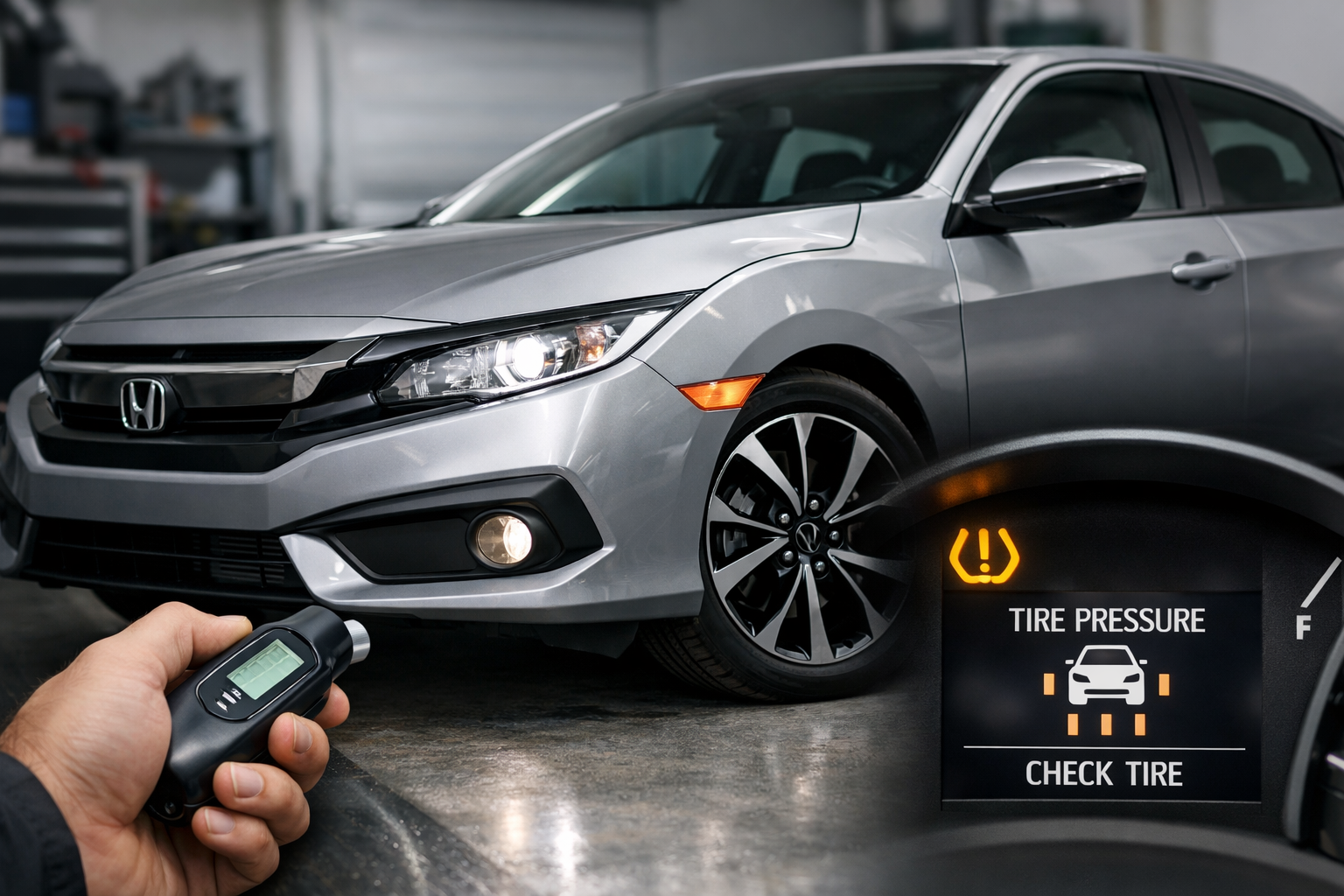
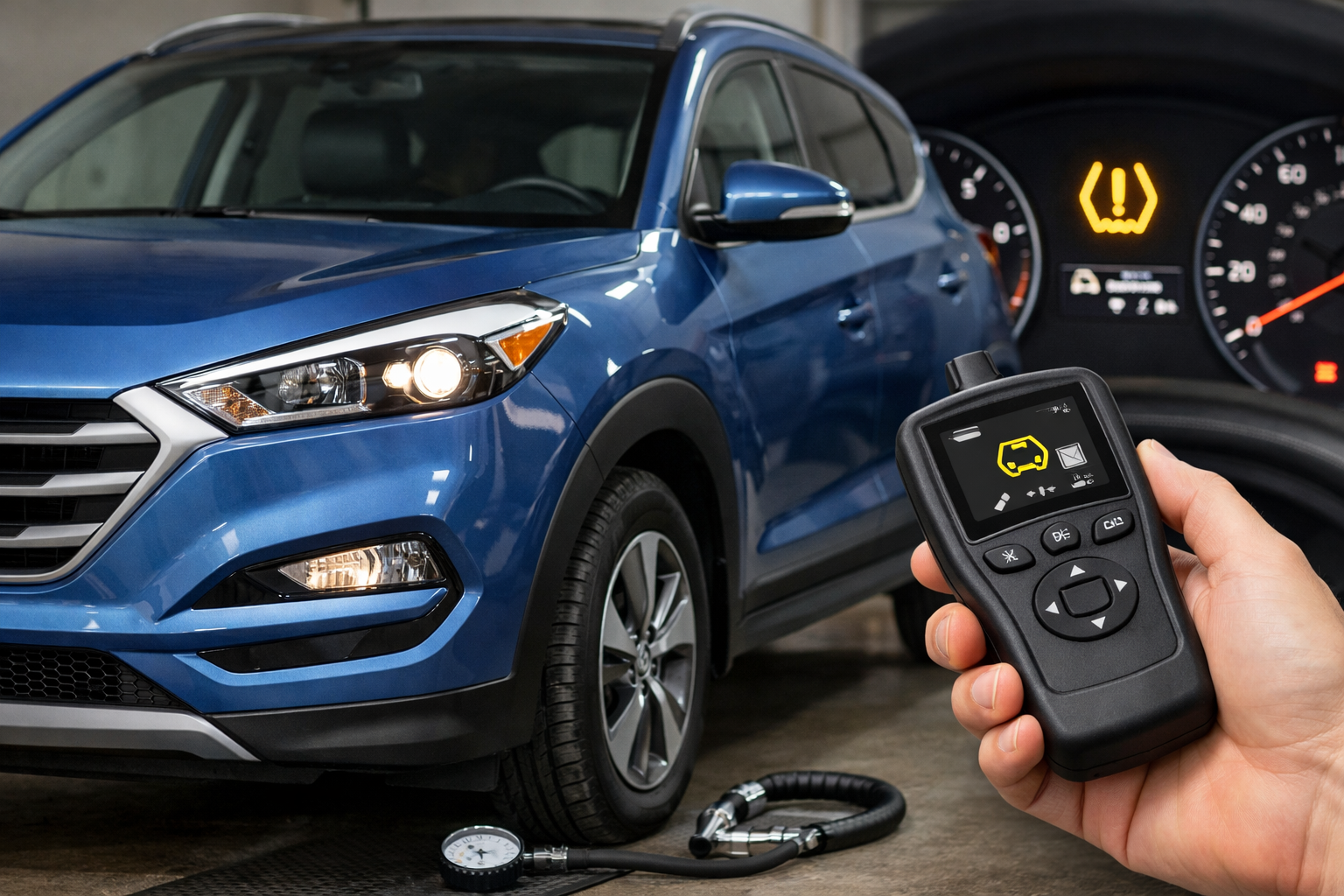
Replacement requires removing the tire from the wheel to access the sensor mounted on the valve stem. A TPMS activation tool can trigger individual sensors to identify which one has failed. You hold the tool against each tire’s valve stem, and it forces the sensor to transmit. If one sensor doesn’t respond, that’s the one with a dead battery.

TPMS Reset Tool for Toyota
Activates individual sensors to pinpoint failures and speed up the reset process
Cold Weather and the TPMS Light
Tire pressure drops approximately 1 PSI for every 10-degree Fahrenheit decrease in ambient temperature. This means tires inflated to 35 PSI on a 70-degree afternoon can read 31 PSI on a 30-degree morning, which is often enough to trigger the TPMS warning. This is one of the most common reasons for the light appearing seasonally.
The fix is simple: check and adjust tire pressure during cold morning conditions (before driving, when tires are at ambient temperature). Inflate to the door jamb spec during the coldest part of the day, and the light should stay off even as temperatures fluctuate. You may need to reset the TPMS after the pressure adjustment.
Cold weather affects more than just tire pressure. If you’re curious about temperature impacts on vehicle systems, you can learn more about how cold weather affects electric car range and what to expect during winter months.
Frequently Asked Questions
Do I need to reset TPMS after a tire rotation?
Most Camry models with direct TPMS auto-relearn sensor positions after 10 to 20 minutes of driving. A manual reset helps speed up the process and clears any lingering warnings more quickly than waiting for the auto-relearn to complete.
How much does a TPMS sensor replacement cost?
Individual sensors typically cost a moderate amount per wheel including the sensor itself and the labor for tire dismounting, sensor installation, and tire remounting. Many shops recommend replacing all four sensors simultaneously if the originals are over 7 years old, since the remaining sensors will likely fail soon after the first one does.
Can I drive with the TPMS light on?
If you’ve verified that all tire pressures are correct with a gauge, driving with the TPMS light on is safe. The light is a warning system, not a limiter. However, a persistent light means either a sensor has failed or a tire is genuinely underinflated, so investigate the cause rather than ignoring it long-term.
What’s the difference between a flashing TPMS light and a solid one?
A solid TPMS light indicates low tire pressure in one or more tires. A flashing light (usually for 60 to 90 seconds after startup, then staying solid) signals a system malfunction, typically a dead sensor battery or faulty sensor that needs replacement.
This article contains affiliate links. We may earn a small commission at no extra cost to you.

Leave a Reply