
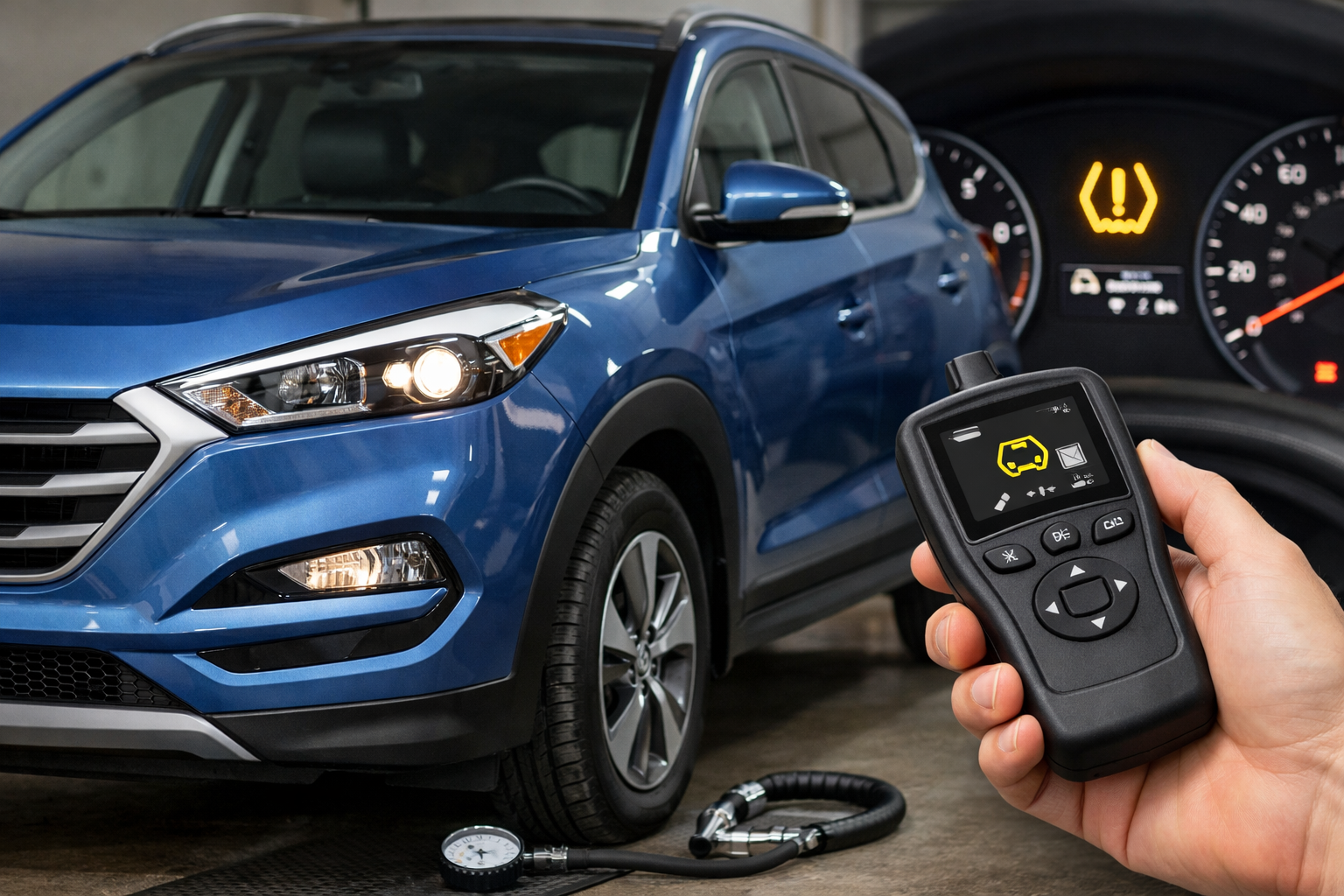
The Hyundai Tucson uses direct TPMS sensors that typically auto-relearn after 15 to 20 minutes of driving at 25+ mph. Most of the time, correctly inflating your tires and driving normally is all you need to clear the warning light. A manual reset through the infotainment system is available when the auto-relearn doesn’t clear the light quickly enough or when you want to force an immediate recalibration.
4th Gen Tucson (2022+): Infotainment Reset
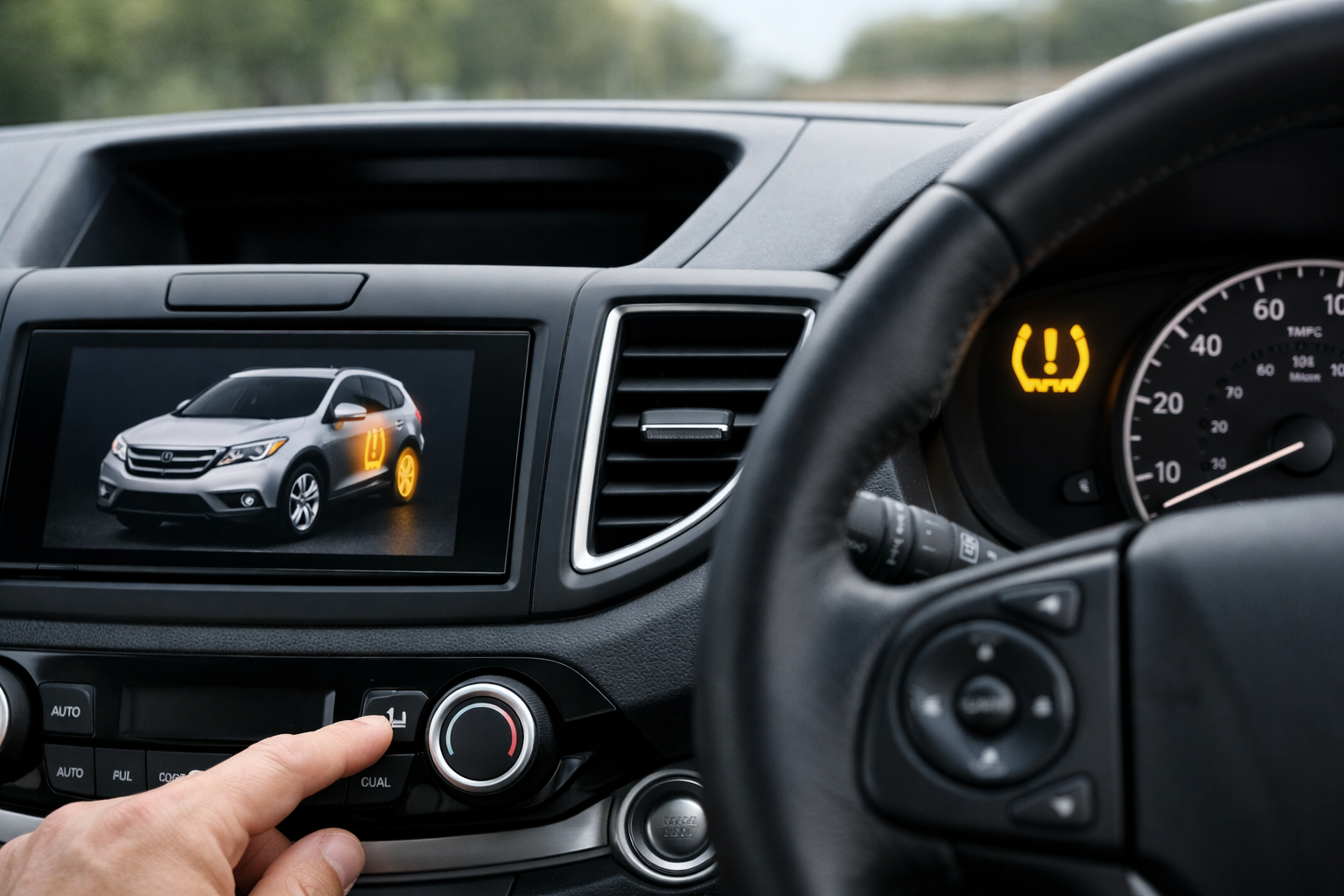
Inflate all four tires to the correct pressure listed on the driver’s door jamb sticker. On the infotainment touchscreen, navigate to Setup > Vehicle > Tire Pressure. Select “Reset” or “Initialize” and confirm.
Drive for 15 to 20 minutes at speeds above 25 mph. The direct pressure sensors communicate their readings wirelessly to the receiver module during this drive, and the system updates its position map and pressure baselines. The warning light should turn off once all four sensors have reported pressures within the acceptable range.
3rd Gen Tucson (2016-2021): Auto-Relearn with Manual Override
The 3rd gen Tucson’s TPMS auto-relearns sensor positions after driving. Inflate all tires to the correct pressure and drive for 15 to 20 minutes at 25+ mph. If the light persists, some trims have a TPMS reset option accessible through the instrument cluster settings using the steering wheel buttons.
Navigate through the display menu to find the TPMS option and select “Reset.” On trims without a menu-accessible reset, the auto-relearn during driving is the only method. If it fails after 20+ minutes, try a second drive of similar duration.
Persistent failure after two extended drives usually indicates a sensor malfunction rather than a calibration issue.
Cold Weather False Alarms
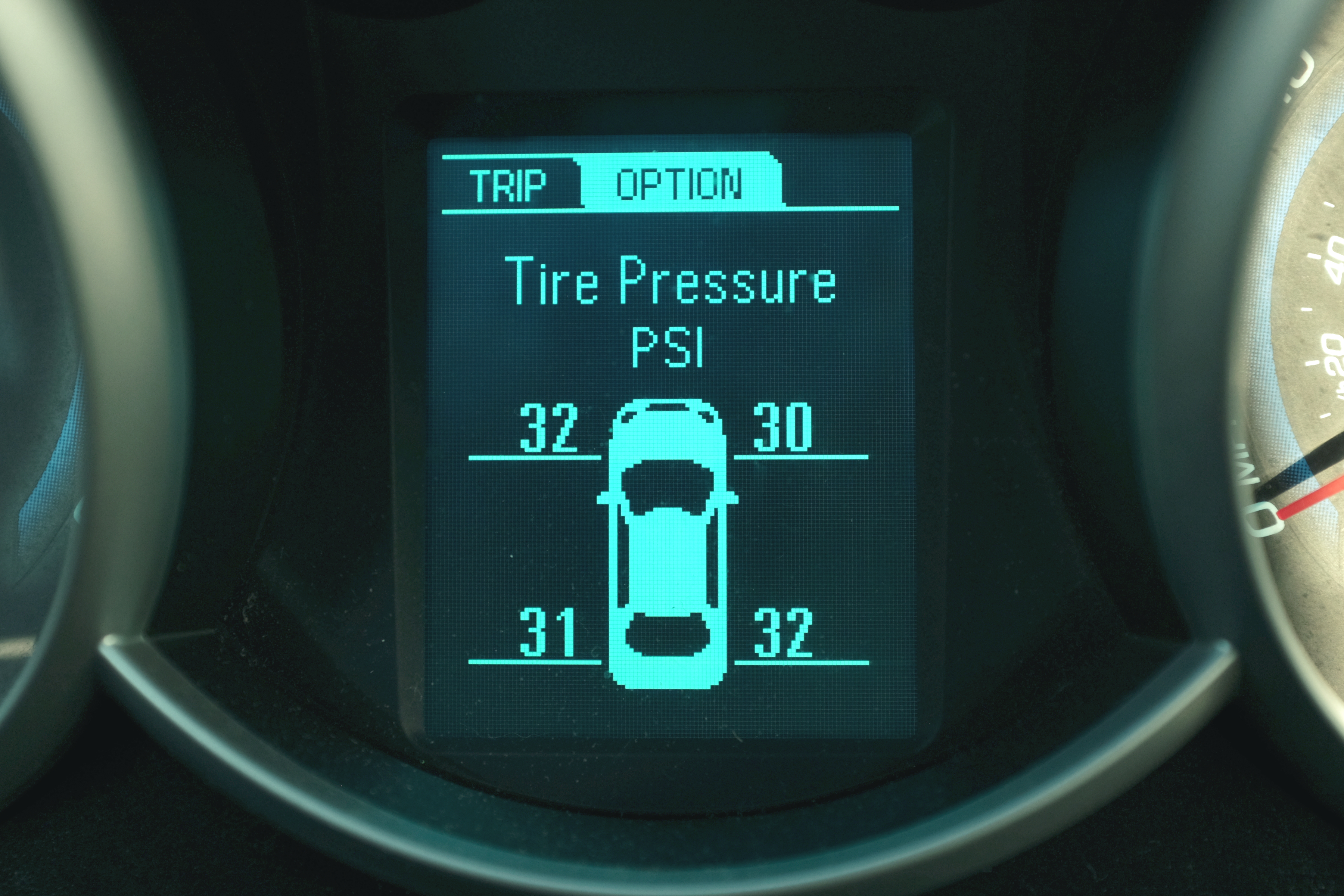
The Tucson’s TPMS system is particularly sensitive to temperature-induced pressure changes. A 20-degree overnight temperature drop can cause all four tires to lose 2 to 3 PSI, which may be enough to trigger the warning on one or more tires that were near the low threshold. This is the most common cause of TPMS warnings appearing seasonally during fall and spring temperature transitions.
The fix is simple: check and adjust tire pressure during cold morning conditions (before driving, when tires are at ambient temperature). Inflate to the door jamb specification during the coldest expected conditions, and the light should stay off even as temperatures fluctuate throughout the day. A manual reset after the pressure adjustment speeds up the light clearing process.
Similar to how cold weather affects electric car range, temperature changes have a measurable impact on tire pressure that many drivers overlook until the warning light appears.
Sensor Replacement
Direct TPMS sensors have internal batteries that last 5 to 10 years. When a battery dies, the sensor stops transmitting and the TPMS light illuminates as a malfunction warning (flashing then solid, rather than the steady glow of a low-pressure warning). Sensor replacement requires removing the tire from the wheel to access the sensor mounted on the valve stem.
Aftermarket replacement TPMS sensors for the Hyundai Tucson are available pre-programmed for Hyundai compatibility and provide identical functionality to OEM sensors. Check current pricing on Amazon for budget-friendly options.

TPMS Sensor for Hyundai Tucson
Direct replacement sensor with pre-programmed Hyundai compatibility
Winter/Summer Wheel Set Management
If you maintain two wheel sets for seasonal tire changes, install TPMS sensors in both sets to maintain monitoring year-round. The Tucson’s auto-relearn function recognizes the new sensors after 15 to 20 minutes of driving after each swap.
Many tire shops can clone your original sensor IDs to aftermarket sensors in the second set, which eliminates the relearn cycle entirely since the truck can’t distinguish between the original and cloned sensors. This is particularly useful if you frequently swap between winter and summer setups.
Frequently Asked Questions
Does the Tucson need a TPMS tool for relearn?
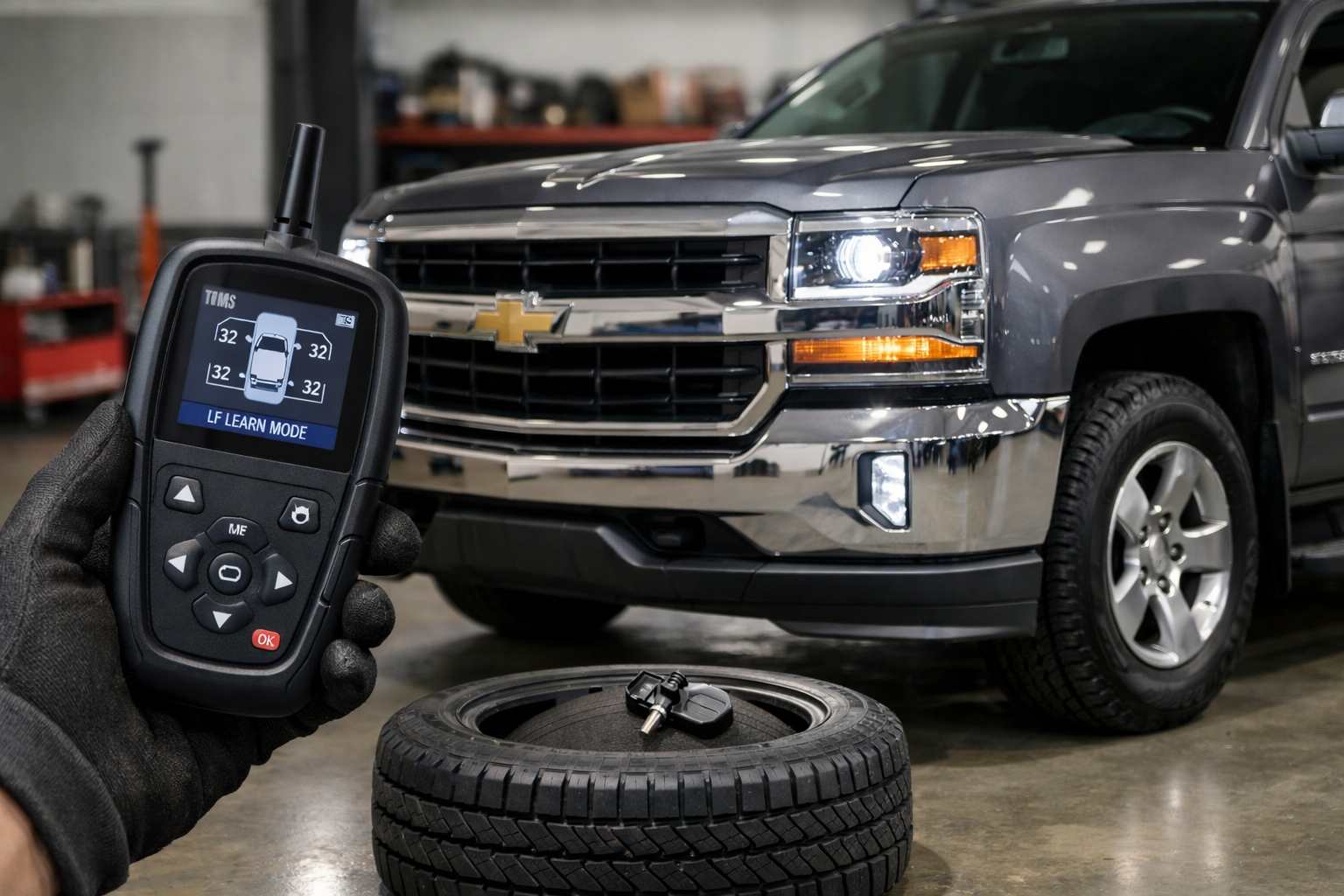
In most cases, no. The auto-relearn during driving handles sensor position mapping without a tool. A TPMS tool is only needed when replacing sensors and the new sensors need to be programmed, or when the auto-relearn repeatedly fails after extended driving.
Can I pair two sets of sensors for winter and summer wheels?
Yes. Install TPMS sensors in both wheel sets. The system recognizes the new set’s sensors after 15 to 20 minutes of driving each time you swap. This is the recommended approach for maintaining TPMS functionality year-round.
Why does my TPMS light flash then stay on?
A flashing light followed by a solid light specifically indicates a sensor malfunction (usually a dead battery) rather than a low-pressure condition. One or more sensors have failed and need replacement. A TPMS tool can identify which sensor isn’t transmitting.
How do I know if my TPMS warning is from low pressure or a sensor failure?
A steady TPMS light typically means low tire pressure. A flashing light that then stays solid indicates a sensor malfunction. Always check your tire pressures first, especially after temperature changes. If all pressures are correct and the light persists after driving for 20 minutes, you likely have a failed sensor.

Leave a Reply