
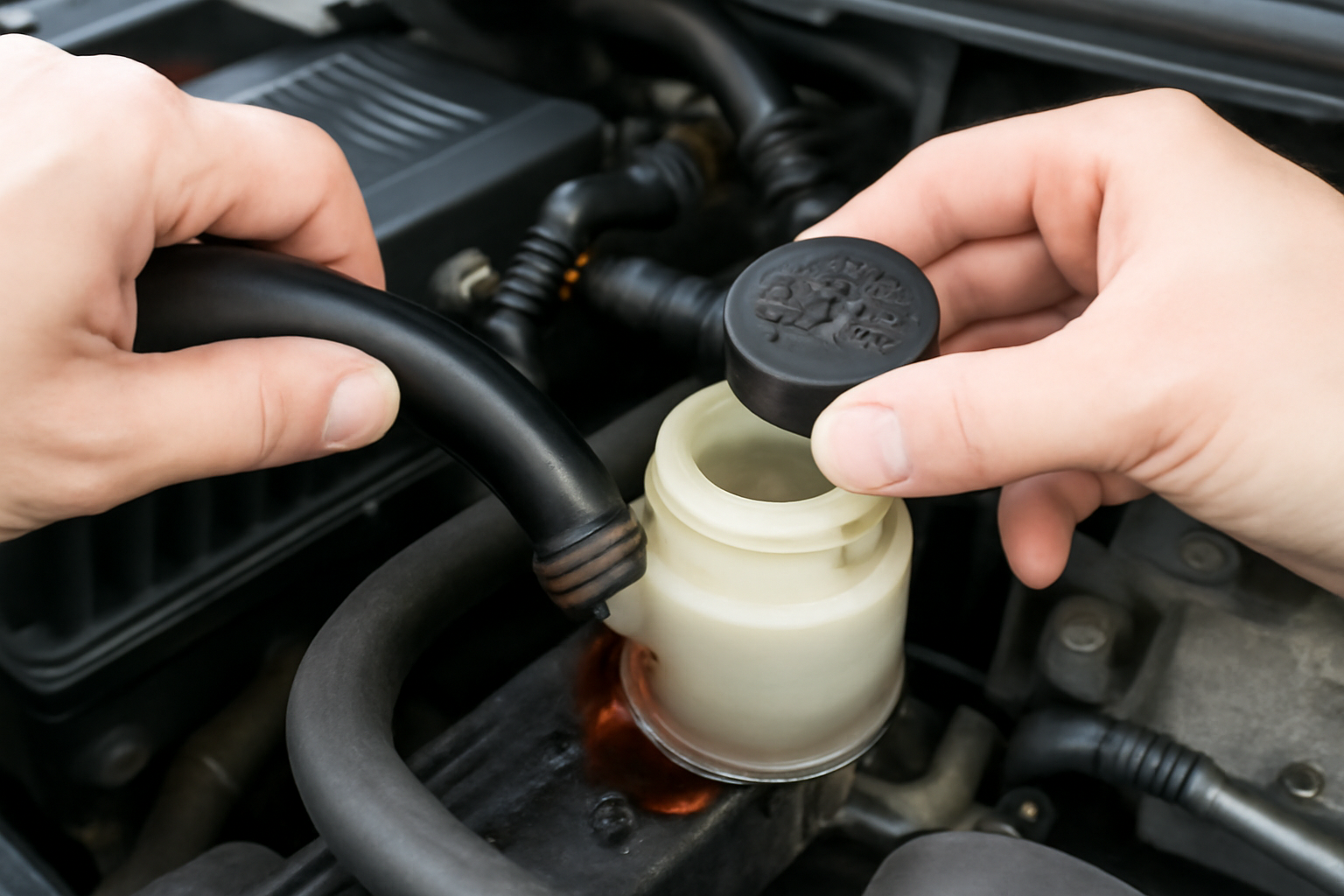
A power steering fluid leak makes itself known quickly. You’ll notice a whining noise when turning the wheel, increased steering effort, and reddish or light brown puddles under the front of your car. Ignoring it leads to pump damage, and eventually the steering becomes dangerously heavy.
Most power steering leaks come from a handful of common spots that you can identify and, in some cases, fix at home.
Finding the Leak
Start by checking the power steering fluid reservoir. It’s usually a small translucent tank near the engine with “MIN” and “MAX” markings, or a dipstick built into the cap. If the level is low, you have a leak somewhere.
Clean the area around the power steering pump, hoses, and steering rack with engine degreaser, then top off the fluid and drive normally for a day. Re-inspect the cleaned components. Fresh fluid on a clean surface makes the leak source obvious.
Common Leak Points
High-Pressure and Return Hoses
The hoses connecting the pump to the steering rack deteriorate over time. Cracks, swelling, or wetness at the hose fittings are easy to spot. Replacing a leaking hose is a moderate DIY job. You’ll need to drain the fluid, disconnect the old hose, install the new one, and refill the system.
Pump Shaft Seal
The seal around the pump’s input shaft can wear after 100,000 miles. You’ll see fluid weeping from behind the pump pulley. Pump seal replacement is possible but requires removing the pump and pressing in a new seal, which most DIYers find challenging. Replacing the entire pump is often more practical.
Steering Rack Seals
The rack and pinion unit has seals at both ends where the inner tie rods enter the housing. When these seals fail, fluid leaks into the rubber boots covering the tie rod ends. Squeeze the boots; if they’re swollen or full of fluid, the rack seals are gone. Rack replacement is the standard fix here, and it’s typically a shop job.
Topping Up Power Steering Fluid
Use the exact type of power steering fluid specified in your owner’s manual. Some vehicles require ATF (automatic transmission fluid), while others need manufacturer-specific fluid. Using the wrong type can damage seals and cause pump failure.
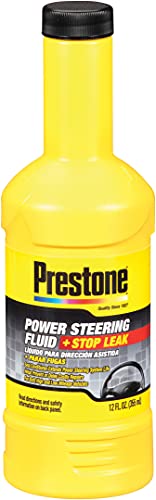
Power Steering Fluid
Use only the type specified in your owner’s manual to avoid seal and pump damage
Fill to the “MAX” line on a warm engine. If the level drops again within a week, the leak needs repair rather than continued top-offs.
Stop-Leak Products
Power steering stop-leak additives contain seal conditioners that swell aging seals to reduce minor seepage. They can buy you time on small leaks, but they’re not a permanent fix. If your leak is more than a slow drip, a stop-leak additive won’t solve it.

Power Steering Stop Leak
Effective for minor seepage from aging seals but follow dosage instructions exactly
Use stop-leak products sparingly. Some formulas can gum up the pump’s internal valves if overused. Follow the dosage instructions exactly and don’t add more than one treatment.
When to Replace the Pump or Rack
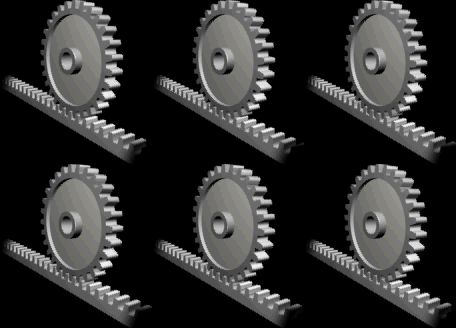
A whining pump that gets louder when turning indicates the pump is running low on fluid or the pump itself is failing. If the noise persists even with the fluid level correct, the pump’s internal components are worn and replacement is the right call.
Rack replacement is warranted when both boots are leaking or the steering feels loose and imprecise. A new rack restores tight, responsive steering and eliminates multiple leak points at once. This type of mechanical issue is one reason you should carefully inspect any vehicle before purchase, especially when considering high-mileage used cars where component wear becomes more common.
Frequently Asked Questions
Can I drive with a power steering leak?
You can drive short distances as long as the fluid level stays above the minimum mark. Running the pump dry causes rapid internal damage and can destroy the pump within minutes. Check the level frequently if you’re monitoring a known leak.
Why does my power steering whine when I turn?
The whine comes from the pump cavitating (sucking air) due to low fluid or from worn internal components. Top off the fluid first. If the noise continues, the pump likely needs replacement.
How much does power steering repair cost?
Hose replacement is the most affordable repair and is manageable for DIYers. Pump replacement is a mid-range repair. Steering rack replacement is the most expensive option and generally requires professional labor due to the alignment work needed afterward.
What type of power steering fluid should I use?
Always use the exact fluid type specified in your owner’s manual. Some vehicles require ATF (automatic transmission fluid), while others need manufacturer-specific formulas. Using the wrong fluid can damage seals and shorten pump life.
This article contains affiliate links. We may earn a small commission at no extra cost to you.
Leave a Reply