
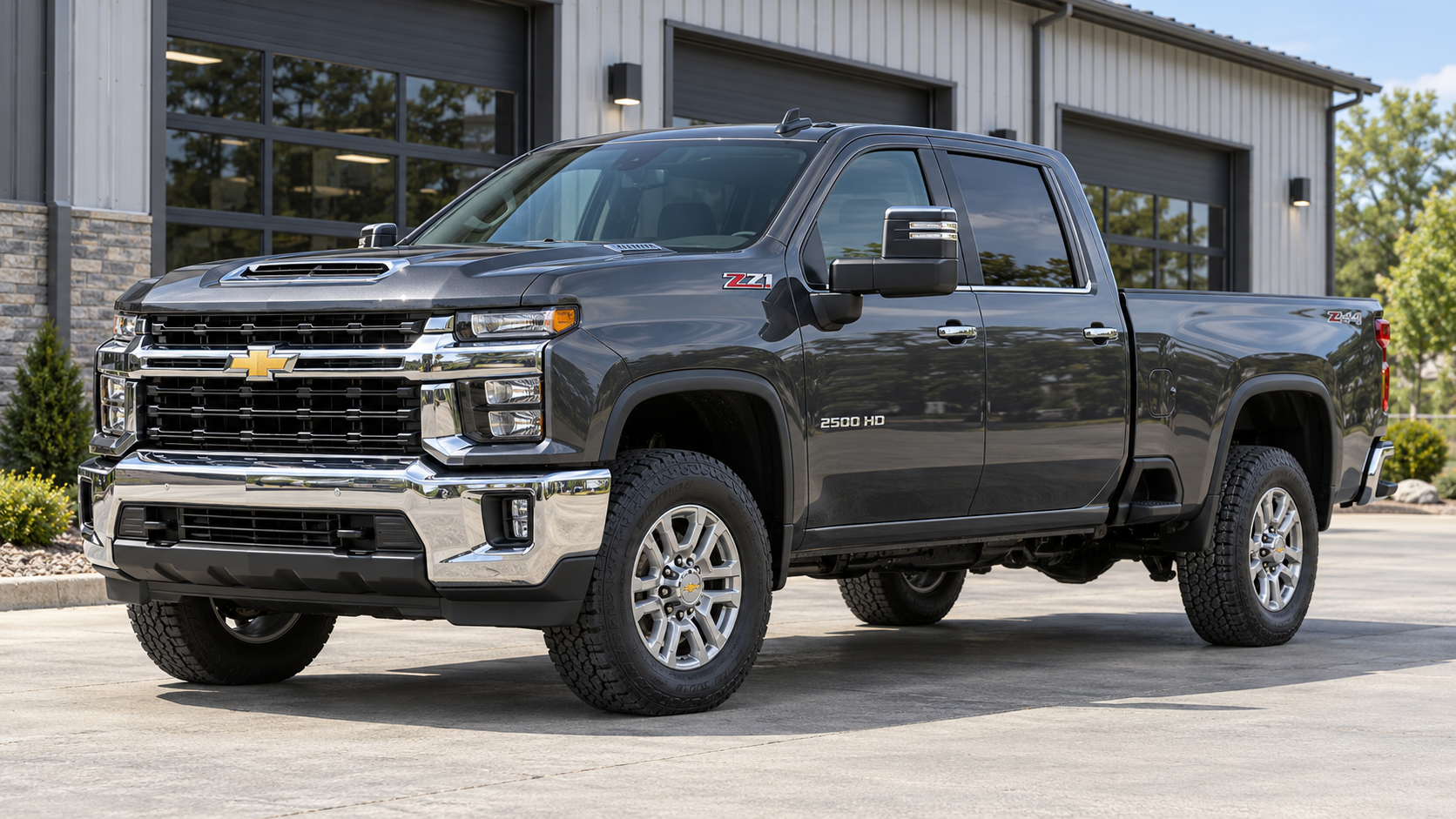
On a Chevy Silverado 2500HD with torsion-bar front suspension, turning the torsion-bar adjuster bolts clockwise raises the front ride height; turning them counterclockwise lowers it. The correct setting depends on the truck’s model year, suspension equipment, and specified trim height.
Do not use a fixed number of turns as a universal leveling recipe. Raising the front too far can reduce suspension down travel, worsen ride quality, and make proper alignment difficult.
What Are You Actually Adjusting?
The torsion bars act as the front springs. Each bar connects to an adjustment arm, commonly called a torsion key, near the rear of the bar. The adjuster bolt changes the arm’s position to set the front suspension’s resting height.
This adjustment does not add suspension travel. It changes where the suspension sits within its available range.
Before Turning the Bolts
First, identify the truck’s model year and any existing leveling kit. Factory keys and replacement keys may have different adjustment limits.
Inspect for worn or damaged suspension parts before trying to correct a lean. GM’s trim-height procedure calls for checking suspension condition before making adjustments. A damaged component should be repaired rather than hidden with a height change.
On level pavement, record the front height on both sides. Measuring from the wheel center to the fender opening provides a useful before-and-after comparison, but it does not replace GM’s specified suspension measurement, commonly called Z height.
Basic Adjustment Process
Use the service procedure for your exact truck, along with the instructions for any installed suspension kit. The general sequence is:
- Record the starting measurements. Note both sides and the current adjuster positions.
- Safely support the truck. For procedures requiring the front suspension to hang, lift at the approved frame points and use appropriately rated stands or a vehicle lift. Chock the rear wheels and never work beneath a truck supported only by a jack.
- Locate the two adjuster bolts. They are at the rear ends of the torsion bars in the crossmember area.
- Make small, controlled adjustments. Clockwise raises the front
Leave a Reply