
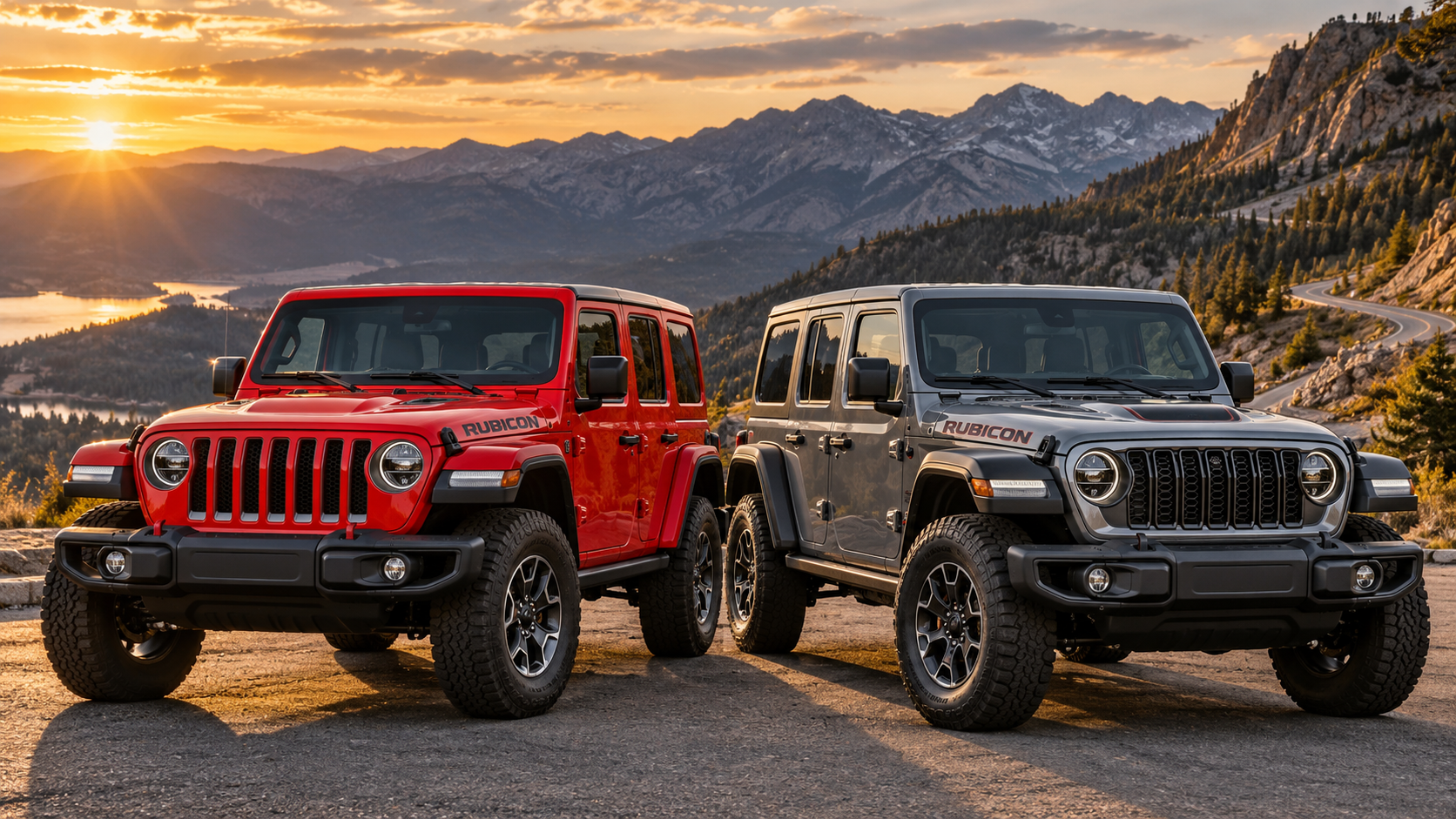
The Jeep Wrangler is one of the few vehicles that can tackle difficult off-road trails and still serve as everyday transportation. Its solid axles, removable doors, body-on-frame construction, and rugged four-wheel-drive systems give it capabilities that most SUVs cannot match.
But those strengths come with compromises. Highway steering can feel imprecise, wind noise is substantial, and the removable roof and body panels introduce opportunities for rattles and water leaks. Some shortcomings are unavoidable consequences of the Wrangler’s design. Others could be addressed through better engineering, stronger components, and stricter manufacturing standards.
The biggest improvements Jeep could make are more precise steering, more dependable electrical systems, better corrosion protection, improved cabin sealing, and stronger quality control. None would require abandoning the Wrangler’s defining off-road characteristics.
Here are ten manufacturer-level improvements that could make the Wrangler a substantially better vehicle, with particular attention to the JL generation introduced for 2018.
1. Improve Steering Precision and Highway Stability
One of the Wrangler’s most noticeable weaknesses is its steering behavior on pavement. Compared with a conventional crossover, the Wrangler can require more frequent steering corrections, especially at highway speeds or in crosswinds.
Its recirculating-ball steering system, solid front axle, and suspension geometry contribute to a driving experience that feels different from vehicles with independent front suspension and rack-and-pinion steering.
However, not every steering complaint is an unavoidable design compromise.
Jeep issued a technical service bulletin addressing steering wander, pulling, and excessive steering play on certain 2018–2020 Wrangler JL models. The repair involved steering-system changes, including an updated steering gear. Importantly, the bulletin distinguished these symptoms from sustained steering shake or vibration.
What Jeep Could Improve
- Use steering gear components with tighter manufacturing tolerances.
- Increase the rigidity of steering linkages and mounting points where necessary.
- Improve factory alignment consistency, particularly caster settings.
- Refine steering assistance to provide more predictable highway response.
- Validate steering performance across a wider range of tire sizes and operating conditions.
These changes could reduce wandering without sacrificing the articulation and durability that make a solid front axle desirable off-road.
Jeep should also continue addressing the underlying causes of severe steering oscillation, commonly called death wobble. Worn suspension joints, loose track-bar connections, tire issues, and other mechanical faults can contribute to this phenomenon. A steering damper may reduce oscillation, but it should not be treated as a substitute for correcting mechanical problems.
Reference: Jeep steering technical service bulletin 08-003-21 Rev. A.
2. Make the Electrical System More Reliable
Modern Wranglers have substantially more electrical equipment than their predecessors. Infotainment systems, driver-assistance features, engine-management computers, electronic differentials, and available hybrid components all increase the number of systems that must work together.
Additional technology can improve the driving experience, but it also creates more opportunities for faults.
One area deserving particular attention is the auxiliary battery arrangement used by certain JL models equipped with engine stop-start technology. Battery deterioration or problems with associated electrical components can create symptoms that are difficult for owners to diagnose.
What Jeep Could Improve
- Simplify the low-voltage battery architecture where technically feasible.
- Improve battery monitoring and provide clearer warnings before failure.
- Use more durable connectors and better moisture protection.
- Strengthen software testing before releasing infotainment or vehicle-control updates.
- Make electrical components easier to diagnose and replace.
A simpler electrical system would be particularly valuable in a vehicle marketed for remote travel. Owners should not have to worry about minor electrical faults preventing an otherwise mechanically sound Wrangler from operating.
The Wrangler 4xe plug-in hybrid has additional high-voltage components and a different electrical architecture. Improvements to its battery management, charging hardware, and hybrid controls would require a separate engineering approach from changes to conventional gasoline models.
3. Improve Paint Durability and Corrosion Protection
The Wrangler’s exposed hinges, removable doors, and numerous exterior joints create additional surfaces that require careful corrosion protection.
Some JL owners have reported paint bubbling and corrosion around door hinges and other aluminum body components. The potential interaction between dissimilar metals makes corrosion prevention especially important.
Corrosion is not merely a cosmetic concern. Repairing damaged paint around hinges can be expensive, and repeated problems can undermine confidence in the vehicle’s long-term durability.
What Jeep Could Improve
- Improve isolation between dissimilar metals at hinges and fasteners.
- Apply more consistent protective coatings to vulnerable surfaces.
- Improve paint adhesion and pretreatment processes.
- Increase corrosion testing under road-salt and coastal conditions.
- Introduce stricter factory inspections around door and hood hinges.
For a vehicle designed to encounter mud, water, road salt, and harsh environments, exterior corrosion resistance should be a major engineering priority.
4. Reduce Wind Noise Without Eliminating Removable Doors and Roofs
Wind noise is one of the Wrangler’s most recognizable characteristics. Its upright windshield, boxy body, removable roof, and detachable doors make it inherently less aerodynamic and more difficult to seal than a conventional SUV.
Nevertheless, Jeep has demonstrated that meaningful improvements are possible.
For the 2024 model year, certain premium Wrangler trims received acoustic front glass, thicker carpeting, and additional sound-deadening material around the windshield header, cowl, and B-pillars.
That was a useful step, but the approach could be expanded.
What Jeep Could Improve
- Offer upgraded acoustic insulation on more trims.
- Redesign removable roof seals for more consistent compression.
- Improve door-seal durability after repeated removal and installation.
- Reduce turbulence around mirrors, windshield edges, and roof joints.
- Improve hardtop alignment and attachment hardware.
Jeep could also offer a dedicated highway-comfort package combining improved seals, additional insulation, and quieter factory tires.
These changes would not make the Wrangler as quiet as a conventional unibody SUV, but they could make long-distance driving considerably more pleasant.
Reference: Stellantis: 2024 Wrangler introduction.
5. Improve Suspension Comfort Without Sacrificing Off-Road Capability
The Wrangler’s solid front and rear axles provide durability, articulation, and predictable axle behavior over difficult terrain. They also introduce more unsprung weight and allow disturbances at one wheel to influence the other wheel on the same axle.
Consequently, the Wrangler can feel less settled over uneven pavement than SUVs equipped with independent suspension.
Replacing the front solid axle with independent suspension would fundamentally change the Wrangler’s character. A more practical solution would be to refine the existing suspension and offer different factory calibrations for different buyers.
What Jeep Could Improve
- Use more sophisticated shock absorbers with improved low-speed damping.
- Refine spring rates and suspension bushings for daily driving.
- Offer road-focused suspension tuning on Sahara and other comfort-oriented trims.
- Reduce unnecessary unsprung weight without compromising axle strength.
- Better match factory tires, springs, and dampers to each trim’s intended use.
A Rubicon intended for demanding trails does not need the same suspension calibration as a Sahara primarily driven on highways.
Jeep already differentiates Wrangler trims through tires, suspension equipment, and off-road hardware. Greater attention to on-road ride quality would make that differentiation more useful.
6. Strengthen Interior Build Quality and Eliminate Rattles
The Wrangler’s interior needs to withstand dirt, vibration, moisture, and repeated roof removal. That makes durable, easy-to-clean materials more important than delicate luxury finishes.
However, rugged construction should not mean loose trim, persistent rattles, or inconsistent panel fit.
The 2024 interior refresh introduced improved materials and a larger 12.3-inch Uconnect touchscreen. While these changes modernized the cabin, long-term assembly quality remains just as important as appearance.
What Jeep Could Improve
- Use stronger clips and fasteners for interior trim.
- Improve dashboard and center-console assembly tolerances.
- Add vibration isolation at common contact points.
- Improve the durability of seat adjustment mechanisms and interior switches.
- Conduct more extensive rough-road durability testing for cabin components.
Jeep should prioritize materials that resist scratches, sunlight, and repeated cleaning rather than simply adding more soft-touch surfaces.
The ideal Wrangler interior would feel solid after 100,000 miles of use, even if it never feels particularly luxurious.
7. Make the Windshield More Resistant to Damage
The Wrangler’s nearly vertical windshield is a defining styling feature, but it is also vulnerable to road debris.
Unlike a more steeply raked windshield, its shape offers less opportunity for incoming debris to glance away at a shallow angle. Actual damage risk also depends on impact speed, stone size, glass construction, and other factors.
Jeep has already addressed this issue to some extent through the availability of Corning Gorilla Glass windshields on selected models and through Mopar replacement parts.
What Jeep Could Improve
- Expand the availability of strengthened windshield glass.
- Continue improving resistance to chips and impact damage.
- Reduce replacement costs through more service-friendly designs.
- Improve windshield sealing and installation consistency.
Stronger glass cannot prevent every crack, but reducing the frequency and cost of windshield repairs would be a meaningful ownership improvement.
Reference: Mopar Gorilla Glass windshield information.
8. Improve Crash Protection and Safety Engineering
The Wrangler’s traditional construction presents unique crash-safety challenges. Its high ground clearance, solid axles, removable body components, and relatively upright body shape complicate efforts to match the crash behavior of conventional SUVs.
Jeep has made measurable progress in this area.
Earlier JL Wranglers tipped onto their passenger side during certain Insurance Institute for Highway Safety small-overlap frontal crash tests. Following frame-rail modifications, the 2026 Wrangler four-door remained upright in the driver-side test.
According to IIHS, Wranglers manufactured after October 2025 earned an acceptable combined small-overlap front rating. The passenger-side test still indicated an elevated risk of injury to the front passenger’s right foot and leg.
This is an important distinction: Jeep improved a specific crash-test weakness, but further improvement remains possible.
What Jeep Could Improve
- Further strengthen passenger-side footwell protection.
- Continue refining frame structures to manage crash forces.
- Improve headlight performance and nighttime visibility.
- Expand effective collision-avoidance technology across trims.
- Improve occupant protection while preserving removable-door functionality.
Safety improvements should focus on measured crash performance rather than simply making the vehicle heavier or adding more electronic features.
Reference: IIHS: Jeep Wrangler modifications solve crash-test tipping issue, March 2026.
9. Improve Powertrain Durability and Serviceability
The JL Wrangler has been offered with several different powertrains, including the 3.6-liter Pentastar V6, turbocharged 2.0-liter four-cylinder, 3.0-liter EcoDiesel V6, 6.4-liter Hemi V8, and 4xe plug-in hybrid system.
These engines differ considerably in complexity, operating characteristics, maintenance requirements, and potential failure points.
There is no single powertrain change that would address every Wrangler reliability concern.
Instead, Jeep should concentrate on durability validation and repairability for each engine family.
What Jeep Could Improve
- Increase durability testing of cooling-system components and seals.
- Improve access to commonly serviced engine components.
- Strengthen diagnostic systems so faults can be identified more accurately.
- Refine transmission calibration where drivability problems are documented.
- Reduce unnecessary component complexity in future powertrain designs.
Jeep should also consider the cost of long-term ownership when selecting powertrain technology. An engine that performs well when new but requires expensive repairs later can undermine the Wrangler’s reputation for ruggedness.
For the 4xe, the same principle applies to high-voltage components, battery cooling, charging systems, and hybrid control software.
Importantly, the widely used eight-speed automatic transmission should not automatically be considered a fundamental weakness. It is generally a capable design, and specific complaints should be investigated rather than assuming every Wrangler needs a redesigned transmission.
10. Improve Factory Quality Control and Long-Term Durability Testing
Perhaps the most important opportunity is not a new component at all. It is improving how consistently each Wrangler is manufactured.
A well-designed part can still fail prematurely if assembly tolerances, sealing procedures, corrosion protection, or supplier quality are inconsistent.
Wranglers are also exposed to unusual operating conditions. Owners may remove their doors repeatedly, drive through water and mud, operate on heavily corrugated roads, or install larger tires and suspension modifications.
Jeep cannot engineer around every aftermarket modification, but it can validate factory vehicles against demanding real-world use.
What Jeep Could Improve
- Conduct more extensive durability testing before launching revised components.
- Increase water-intrusion testing for removable roofs and doors.
- Apply stricter inspection standards to steering and suspension assembly.
- Improve supplier quality monitoring for electrical components.
- Use warranty and field-failure data to identify recurring problems earlier.
- Make repairs easier through better parts availability and service documentation.
These improvements are less visible than a redesigned grille or larger touchscreen, but they could have a greater effect on customer satisfaction over the life of the vehicle.
Which Improvements Would Make the Biggest Difference?
Not every proposed improvement would provide the same benefit. The following table ranks the opportunities by their likely value to owners, considering everyday usability, durability, and the difficulty of implementation.
| Improvement | Owner Benefit | Engineering Difficulty |
|---|---|---|
| Steering precision | Very high | Moderate |
| Electrical reliability | Very high | Moderate to high |
| Corrosion protection | High | Moderate |
| Factory quality control | Very high | Moderate to high |
| Cabin noise reduction | High | Low to moderate |
| Suspension refinement | High | Moderate |
| Crash protection | Very high | High |
| Interior fit and finish | Moderate | Low to moderate |
| Windshield durability | Moderate | Moderate |
| Powertrain serviceability | High | High |
These rankings are editorial assessments, not manufacturer test results or quantified reliability statistics.
Should Jeep Build a More Comfortable Wrangler?
One possibility would be to create two more clearly differentiated versions of the Wrangler.
The first would preserve the traditional off-road formula: solid axles, aggressive tires, high ground clearance, heavy-duty drivetrain components, and maximum trail capability.
The second would emphasize daily driving, with quieter tires, refined suspension tuning, additional sound insulation, improved seats, and more precise steering calibration.
Jeep already moves in this direction through trims such as the Sahara and Rubicon. However, a more comprehensive comfort package could make the distinction more meaningful.
The important point is that Jeep would not need to eliminate the solid axles or removable roof to create a more comfortable Wrangler.
Some characteristics would remain. A tall, boxy SUV with removable body panels will never match the aerodynamic efficiency, quietness, or handling precision of a low-riding crossover.
But there is a substantial difference between accepting unavoidable compromises and tolerating preventable quality problems.
What Jeep Has Already Improved on the JL Wrangler
It is worth recognizing that Jeep has addressed several shortcomings during the JL generation.
- 2018–2020: Certain early JL models were covered by steering-related technical service guidance addressing wander, pull, and excessive play.
- 2024: The Wrangler received a refreshed interior, standard 12.3-inch Uconnect touchscreen, and expanded comfort and safety equipment. Certain premium trims gained additional sound insulation.
- 2024: Side-curtain airbags became standard, representing an important occupant-protection improvement.
- 2026: Frame-rail changes improved small-overlap crash-test behavior on four-door Wranglers built after October 2025, eliminating the tipping behavior observed in earlier driver-side tests.
These changes show that the Wrangler’s traditional design does not prevent meaningful engineering improvements.
However, equipment and mechanical specifications can differ by model year, market, trim, and production date. Buyers should verify the configuration and service history of an individual vehicle rather than assuming every Wrangler from a particular year has identical hardware.
Final Verdict: Jeep Can Make the Wrangler Better Without Changing What It Is
The Wrangler does not need to become a conventional SUV to improve its quality.
Its solid axles, removable roof, rugged drivetrain, and distinctive shape are fundamental to its appeal. Replacing those characteristics in pursuit of perfect highway manners would risk eliminating much of what makes the Wrangler desirable.
But steering wander, premature corrosion, electrical faults, inconsistent assembly, and unnecessary interior rattles are not essential parts of the Jeep experience.
Jeep’s greatest opportunity is to make the Wrangler feel more thoroughly engineered, not less adventurous.
Better steering components, improved corrosion protection, more dependable electronics, and stronger factory quality control could substantially improve long-term ownership without compromising the vehicle’s off-road identity.
For many buyers, those improvements would matter far more than another styling refresh or a larger infotainment screen.
Leave a Reply