
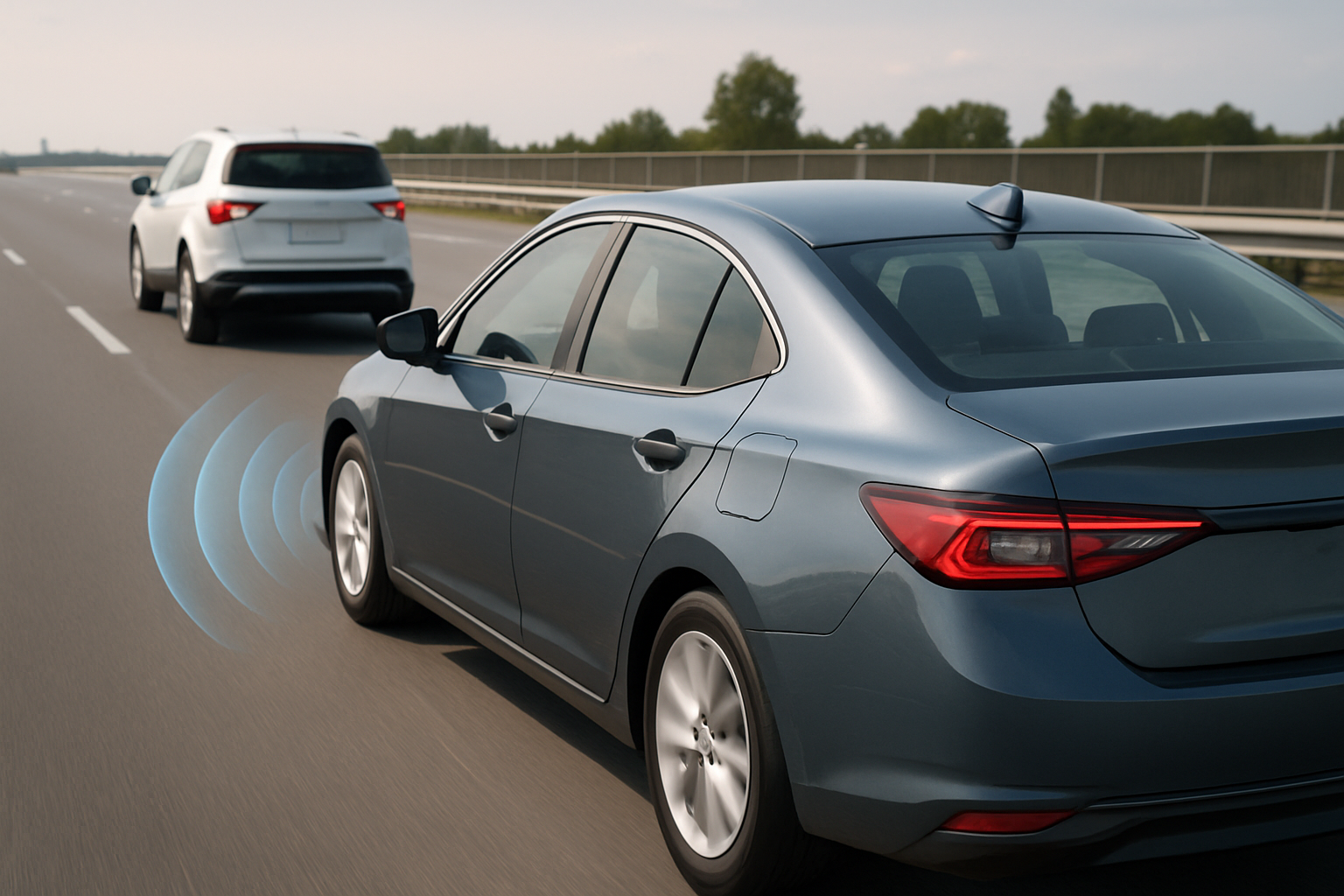
Modern cars come packed with safety technology designed to prevent accidents, and blind spot monitoring systems rank among the most useful features for everyday driving. These systems use advanced sensors to detect vehicles in your blind spots and alert you before you make a dangerous lane change.
Understanding how these systems work and which brands offer the most reliable performance can help you make smarter decisions when buying your next vehicle or upgrading your current ride.
How Blind Spot Monitoring Technology Works
Blind spot monitoring relies primarily on radar sensors mounted in your vehicle’s rear bumper or side mirrors. These sensors continuously emit radio waves that bounce off nearby objects and return to the vehicle, creating a digital map of your surroundings.
Most systems monitor the zones alongside and slightly behind your vehicle, typically covering areas from about 10 feet behind your rear axle to 10 feet ahead of your front bumper. The sensors can detect vehicles traveling at similar speeds in adjacent lanes, as well as faster-moving vehicles approaching from behind.
When the system detects a vehicle in your blind spot, it triggers warning indicators in your side mirrors, A-pillar, or dashboard. Many newer systems also provide audible alerts or steering wheel vibrations if you activate your turn signal while another vehicle occupies your blind spot.
Types of Sensors Used
While radar sensors handle the heavy lifting in most systems, some manufacturers incorporate additional technologies for improved accuracy. Ultrasonic sensors work well at lower speeds, making them useful for parking situations and slow-moving traffic.
Camera-based systems use image processing to identify vehicles, but they struggle in poor weather conditions or low light. Most automakers stick with radar as the primary detection method because radio waves penetrate rain, snow, and darkness more effectively than cameras.
High-end systems combine multiple sensor types to create redundancy and improve overall reliability. Mercedes-Benz and BMW often use this approach in their flagship models.
Visual and Audible Alert Systems
The effectiveness of blind spot monitoring depends heavily on how well the system communicates with drivers. Different manufacturers take varying approaches to alert design and placement.
Mirror-Mounted Indicators
Most systems place LED warning lights in the outer edges of your side mirrors. These lights typically glow amber or red when vehicles enter your blind spots. The mirror location works well because drivers naturally check mirrors before changing lanes.
Ford, Toyota, and Honda use this approach across most of their lineups. The lights are bright enough to see in daylight but not so intense that they become distracting during night driving.
A-Pillar and Dashboard Alerts
Some manufacturers mount warning lights on the A-pillars or dashboard areas. Volvo pioneered this placement in their older systems, though they’ve since moved to mirror-mounted indicators in newer models.
Dashboard-mounted alerts can get lost among other warning lights and gauges. A-pillar placement works better because it’s closer to your natural sight line when checking mirrors.
Audible Warning Systems
Chimes, beeps, or voice alerts activate when you signal to change lanes while another vehicle occupies your blind spot. These audible warnings provide an extra layer of safety for drivers who might miss visual indicators.
You can usually adjust the volume or disable audio alerts entirely through your vehicle’s settings menu. Many drivers find the sounds helpful initially but turn them off once they become familiar with the visual cues.
Blind Spot Intervention Technology
Advanced blind spot systems go beyond simple warnings to actively help prevent accidents. These intervention systems can apply steering corrections or brake individual wheels to keep you safely in your lane.
Steering Assistance
When you begin drifting toward a vehicle in your blind spot, the system applies gentle steering input to guide you back into your lane. The correction feels subtle, similar to driving on a slightly crowned road surface.
You can override the steering assistance by maintaining firm pressure on the wheel. This prevents the system from interfering when you intentionally need to change lanes despite a close vehicle.
Differential Braking
Some systems apply brake pressure to specific wheels to create a yaw moment that helps steer you away from danger. This technology works particularly well at highway speeds where small corrections have significant effects.
Mercedes-Benz Active Blind Spot Assist and BMW’s Side Collision Protection both use differential braking as part of their intervention strategies.
Comparing Blind Spot Systems by Brand
Not all blind spot monitoring systems perform equally well. Detection accuracy, alert timing, and false alarm rates vary significantly between manufacturers and model years.
Most Accurate Systems
Mercedes-Benz Active Blind Spot Assist consistently ranks among the most reliable systems available. The radar sensors provide excellent detection range and rarely trigger false alarms. The system works effectively at speeds from 20 mph up to highway speeds.
BMW Blind Spot Detection offers similar accuracy with slightly more aggressive intervention characteristics. The system integrates well with BMW’s other driver assistance features and provides clear, consistent alerts.
Volvo Blind Spot Information System (BLIS) pioneered many blind spot monitoring technologies and continues to deliver excellent performance. Volvo’s system covers a wider area than most competitors, including zones further behind the vehicle.
Solid Mid-Range Performers
Toyota Blind Spot Monitor provides reliable detection with occasional false alarms in heavy rain or when passing large trucks. The system comes standard on most Toyota models and works well for everyday driving situations.
Ford Blind Spot Information System (BLIS) borrowed technology from Volvo after Ford’s ownership period. Current Ford systems perform well but sometimes struggle with motorcycles and smaller vehicles.
Honda Blind Spot Monitoring offers decent performance across their lineup, though the system can be overly sensitive to vehicles in adjacent lanes during curves. The alerts are clear and well-positioned in the mirrors.
Systems with Room for Improvement
Nissan Blind Spot Warning tends to produce more false alarms than premium systems, particularly around construction zones or when passing concrete barriers. The detection accuracy improves in newer model years.
Hyundai/Kia Blind Spot Collision Warning provides basic functionality but sometimes misses motorcycles or vehicles approaching rapidly from behind. The visual alerts could be brighter and more noticeable.
Chevrolet Side Blind Zone Alert works adequately for most situations but lacks the refinement of German or Japanese systems. False alarms occur more frequently, especially in parking lots or tight spaces.
Factors That Affect System Accuracy
Several environmental and vehicle-related factors can impact how well your blind spot monitoring system performs. Understanding these limitations helps you use the technology more effectively.
Weather Conditions
Heavy rain, snow, or ice buildup on sensors can reduce detection accuracy or temporarily disable the system entirely. Most vehicles display warning messages when sensors become blocked or dirty.
Regular cleaning of sensor areas during winter months keeps the system functioning properly. The sensors are usually located in the rear bumper corners where road spray and salt accumulate.
Speed and Traffic Situations
Most systems work best at steady highway speeds between 35-80 mph. Stop-and-go traffic or very low speeds can cause some systems to reduce sensitivity or shut down completely.
Curved roads present challenges because the sensors might detect vehicles in lanes you’re not actually merging into. More advanced systems use steering angle data to compensate for curves.
Vehicle Size and Type
Motorcycles, bicycles, and very small cars can sometimes avoid detection, especially if they’re positioned at the edge of the sensor’s coverage area. Larger vehicles like trucks and SUVs are detected more reliably.
Vehicles with unusual shapes or low profiles may not reflect radar signals effectively enough for consistent detection.
Aftermarket Blind Spot Monitoring Options
If your vehicle doesn’t have factory blind spot monitoring, several aftermarket solutions can add this safety feature. These systems typically cost less than factory options but may not integrate as seamlessly.
Popular aftermarket systems include radar-based units that mount to your rear bumper and connect to mirror-mounted indicators. Installation usually requires running wiring through your vehicle’s interior and mounting sensors in precise locations.
For drivers looking to enhance their existing safety setup, blind spot mirrors and detection aids provide additional visibility improvements. These accessories work alongside electronic systems to give you better awareness of surrounding traffic.
Maintenance and Troubleshooting
Blind spot monitoring systems require minimal maintenance but benefit from regular attention to sensor cleanliness and proper operation. Most issues stem from blocked sensors or electrical problems.
Clean sensor areas monthly with soap and water, avoiding pressure washers that might damage sensitive components. Check your owner’s manual for exact sensor locations, as they vary between models.
If your system starts producing frequent false alarms or stops working entirely, have it diagnosed by a qualified technician. Sensor replacement typically costs $200-400 per side, depending on your vehicle’s make and model.
Frequently Asked Questions
Can blind spot monitoring detect motorcycles reliably?
Detection of motorcycles varies by system quality and positioning. Premium systems from Mercedes-Benz, BMW, and Volvo detect motorcycles more consistently than budget systems. Motorcycles positioned directly alongside your vehicle are detected better than those at the edges of coverage zones.
Do blind spot systems work in all weather conditions?
Radar-based systems work in most weather conditions, including light rain and snow. Heavy precipitation or ice buildup on sensors can reduce accuracy or temporarily disable the system. Camera-based systems struggle more in poor weather conditions.
How much does it cost to repair a blind spot monitoring system?
Sensor replacement typically costs $200-400 per side for parts and labor. Control module replacement can cost $500-800. Many issues are related to dirty or misaligned sensors, which can be cleaned or adjusted for under $100.
Can I disable blind spot monitoring if I find it annoying?
Most vehicles allow you to disable blind spot monitoring through the infotainment system or dashboard settings. However, the system usually reactivates when you restart the vehicle. Check your owner’s manual for specific instructions on your model.
This article contains affiliate links. If you purchase through these links, we may earn a small commission at no extra cost to you.


Leave a Reply