
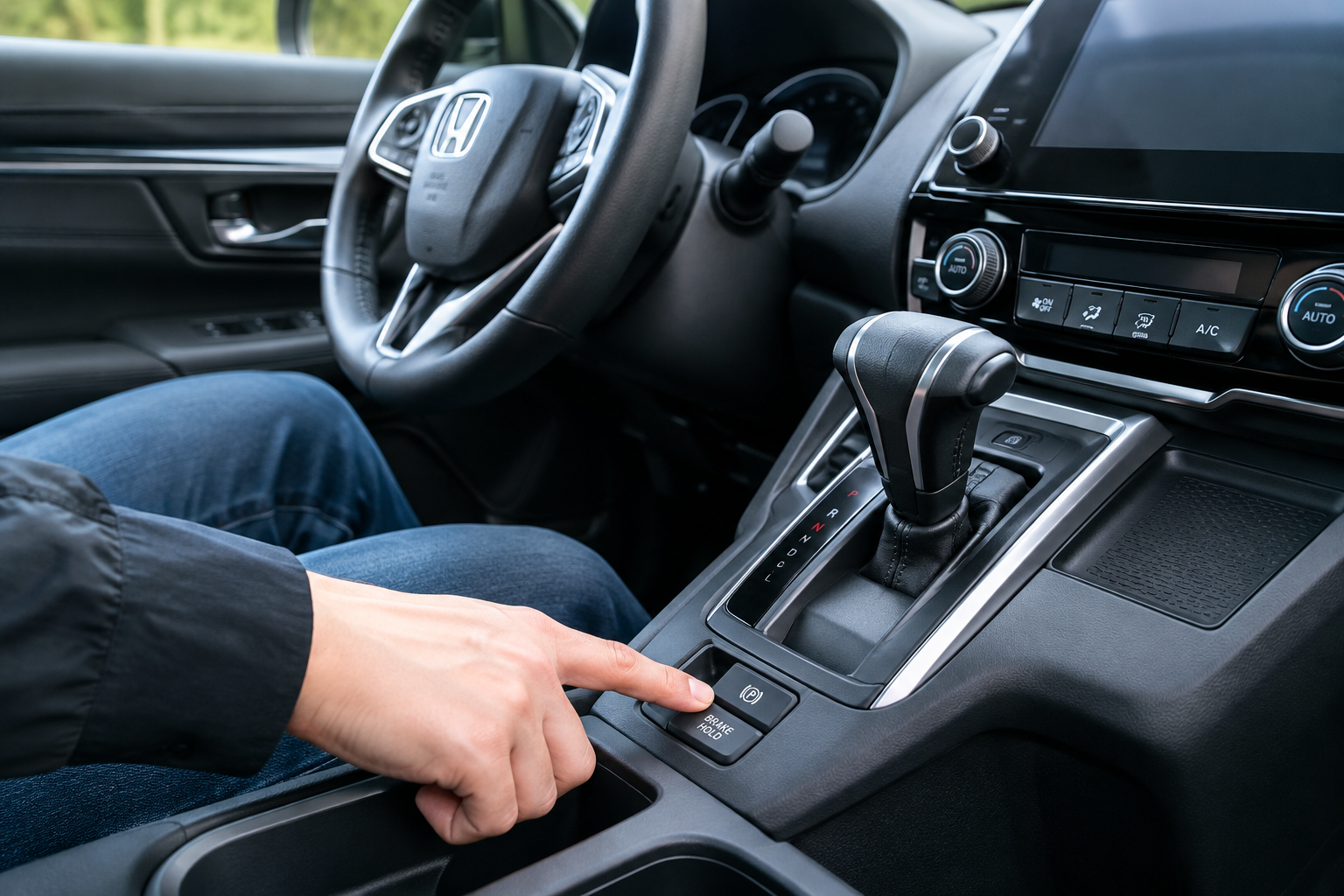
If your Honda CR-V’s Auto Hold light keeps blinking off, refuses to engage, or seems to reset itself every time you start the car, you’re not imagining things. This is one of the most common complaints CR-V owners bring up in forums and at the dealership, and in most cases it comes down to a handful of specific conditions the system needs before it will work. Sometimes it really is a sensor or switch problem, but far more often the car is just doing exactly what Honda designed it to do.
What Auto Hold Actually Does on the CR-V
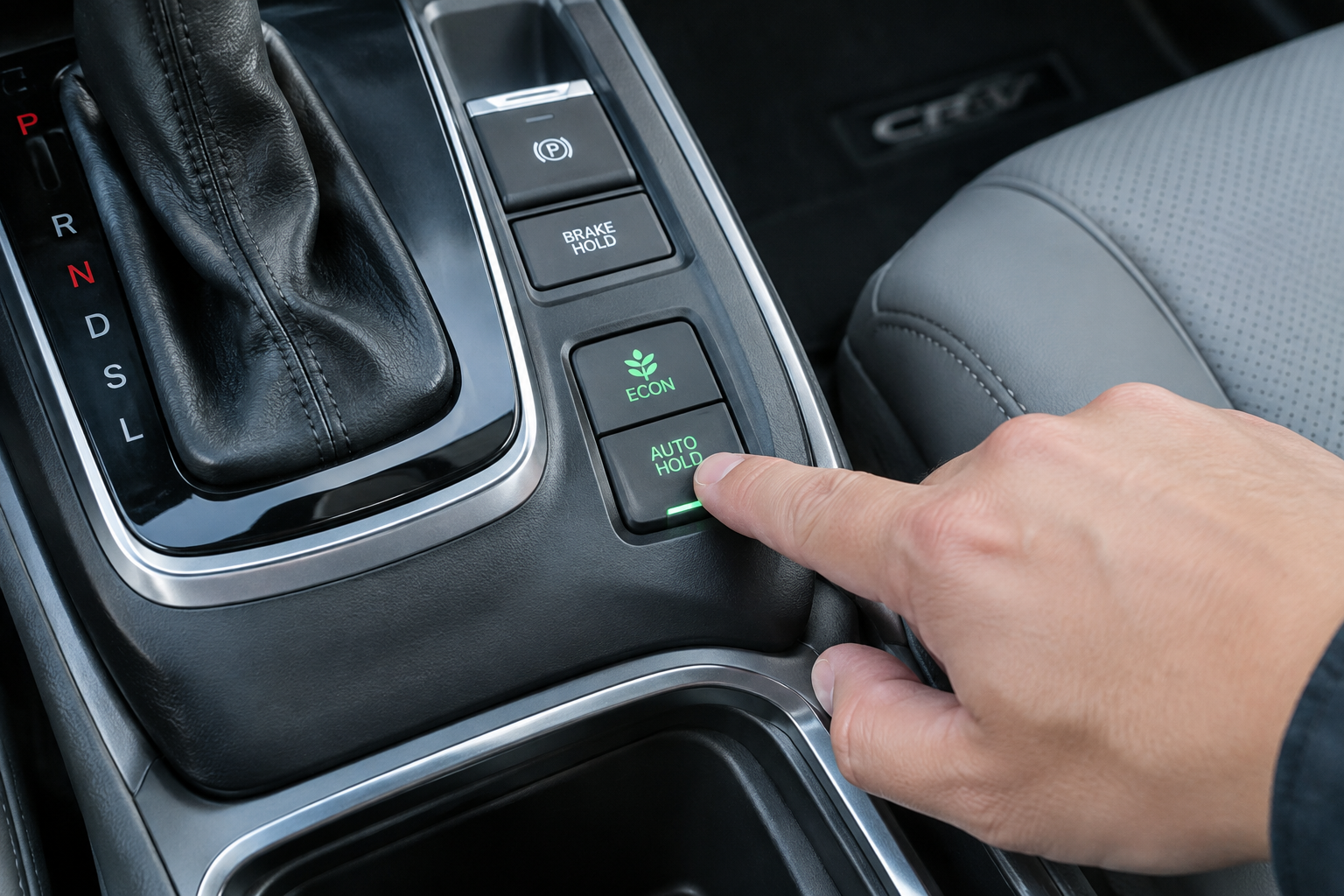
Honda calls this feature “Brake Hold” in the owner’s manual, though most people (and even some Honda dealers) refer to it as Auto Hold, matching the terminology used by other automakers with similar systems. On the CR-V, you’ll find the button near the parking brake switch, usually marked with an “H” inside a circle with a brake symbol.
When activated, Brake Hold keeps the brakes applied automatically after you come to a complete stop, so you don’t have to keep your foot on the pedal at red lights or in traffic. Once you press the accelerator again, the brakes release smoothly and the car moves off. It’s a genuinely useful feature, but it only works when several background conditions line up correctly.
This feature has been standard on the CR-V since the fifth generation (2017 and newer), and the logic hasn’t changed dramatically across model years. The CR-V Hybrid uses the same basic Brake Hold system, though it interacts slightly differently with the regenerative braking system, which is worth understanding if you’re also noticing odd brake feel on the hybrid model.
Does Brake Hold Stay On After You Restart the Car?
Here’s the part that trips up a lot of owners: Honda designed Brake Hold to turn off every time you shut off the engine. It is not a persistent setting like your climate control preferences or seat memory positions. Every time you start the CR-V, you have to press the Brake Hold button again if you want to use it.
This is normal operation, not a malfunction. Honda intentionally reset it this way for safety reasons, so a driver doesn’t unknowingly pull away expecting normal brake behavior after Brake Hold was left engaged from a previous drive. If your CR-V is asking you to re-enable it every single trip, that’s the system working exactly as intended, not a sign anything is broken.
Required Conditions for Brake Hold to Activate
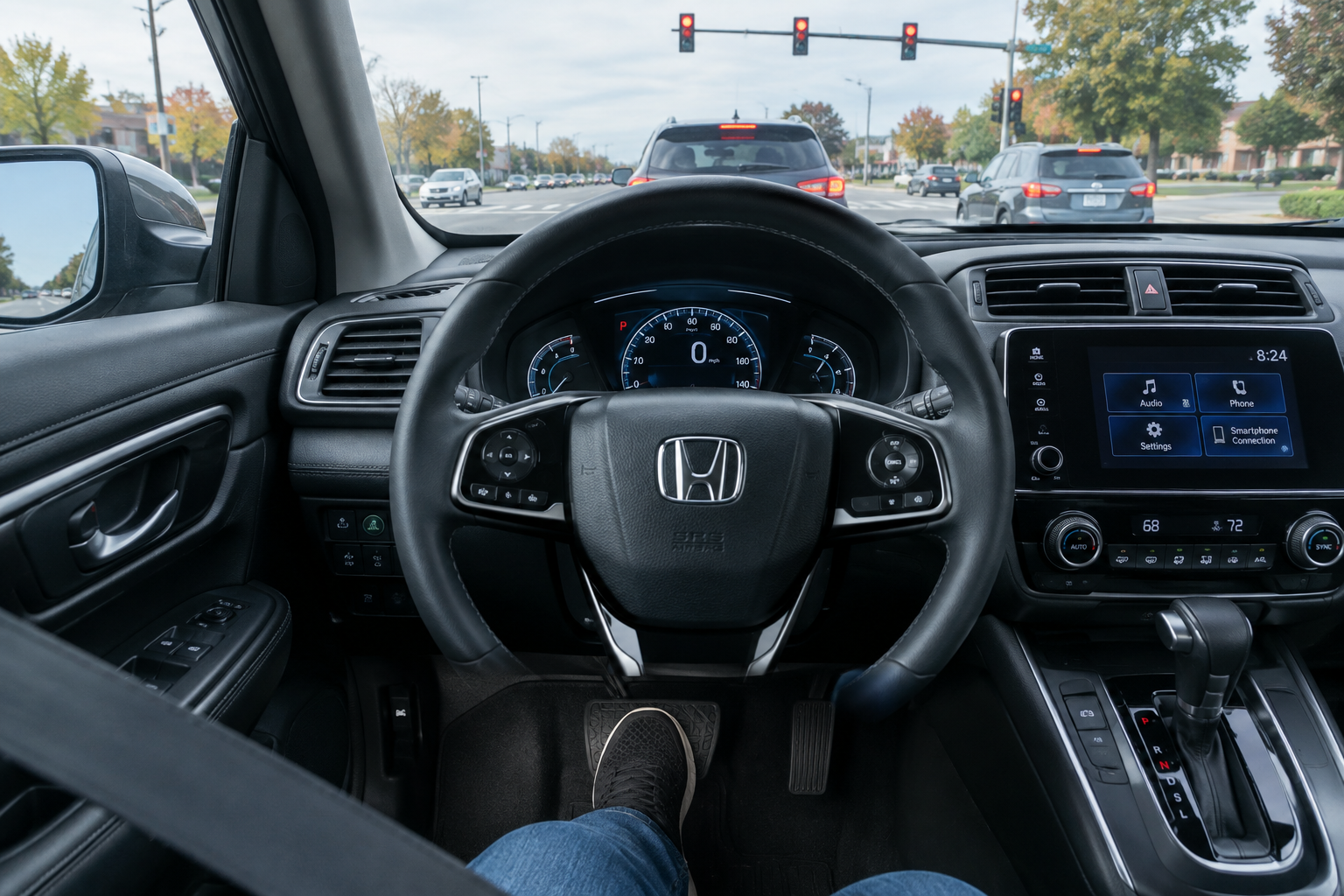
Even after you press the button, Brake Hold won’t actually engage unless the car is happy with a full checklist of conditions. Miss even one, and the light will either blink, stay off, or turn off shortly after you thought it was on.
- Driver’s seat belt must be fastened. The system checks the buckle switch, and an unfastened belt will block activation entirely.
- All doors need to be closed. An open door, or even one that isn’t fully latched, will prevent or cancel Brake Hold.
- The transmission must be in Drive or another forward/reverse gear. Brake Hold won’t function in Park or Neutral.
- You need to come to a complete stop with steady brake pressure. Tapping the brakes lightly or rolling to a stop too slowly can sometimes fail to trigger it.
- The parking brake (Electric Parking Brake) must be released. If the EPB is engaged, Brake Hold can’t take over.
- The engine needs to be running and the vehicle out of any fault state. Any active brake system warning will block the feature.
If you’re stopped and Brake Hold suddenly deactivates on its own, the most common trigger is a door being opened, even briefly, like when a passenger hops out at a stoplight. The system is designed to release the brakes automatically the moment a door opens, both for safety and so the car doesn’t feel “stuck” to someone getting in or out.
Why Auto Hold Won’t Activate At All
If pressing the button does nothing, or the indicator light won’t illuminate steady, the cause is usually one of these:
- Seat belt not detected as buckled. A worn buckle switch or a belt that isn’t clicked in all the way can fool the system into thinking it’s unbuckled even when it looks fine.
- A door ajar sensor stuck or misaligned. Sometimes a door is physically closed but the latch sensor doesn’t register it correctly, especially after minor body work or a door that’s slightly out of alignment.
- Low brake fluid. The CR-V’s brake system monitors fluid level, and a low reading will disable several brake-dependent features, including Brake Hold.
- Electric Parking Brake fault. Since Brake Hold and the EPB share components and wiring, a fault in one often disables the other.
- ABS or VSA (Vehicle Stability Assist) warning light on. Brake Hold relies on the same wheel speed sensors and hydraulic control unit as the stability and anti-lock systems, so any fault there takes Brake Hold offline too.
Before assuming the worst, do a simple visual check: make sure every door, including the rear hatch, is fully latched, buckle your seat belt firmly until you hear the click, and glance at your dash for any illuminated warning lights. This alone resolves a surprising number of “broken” Auto Hold complaints.
Warning Lights That Explain the Problem
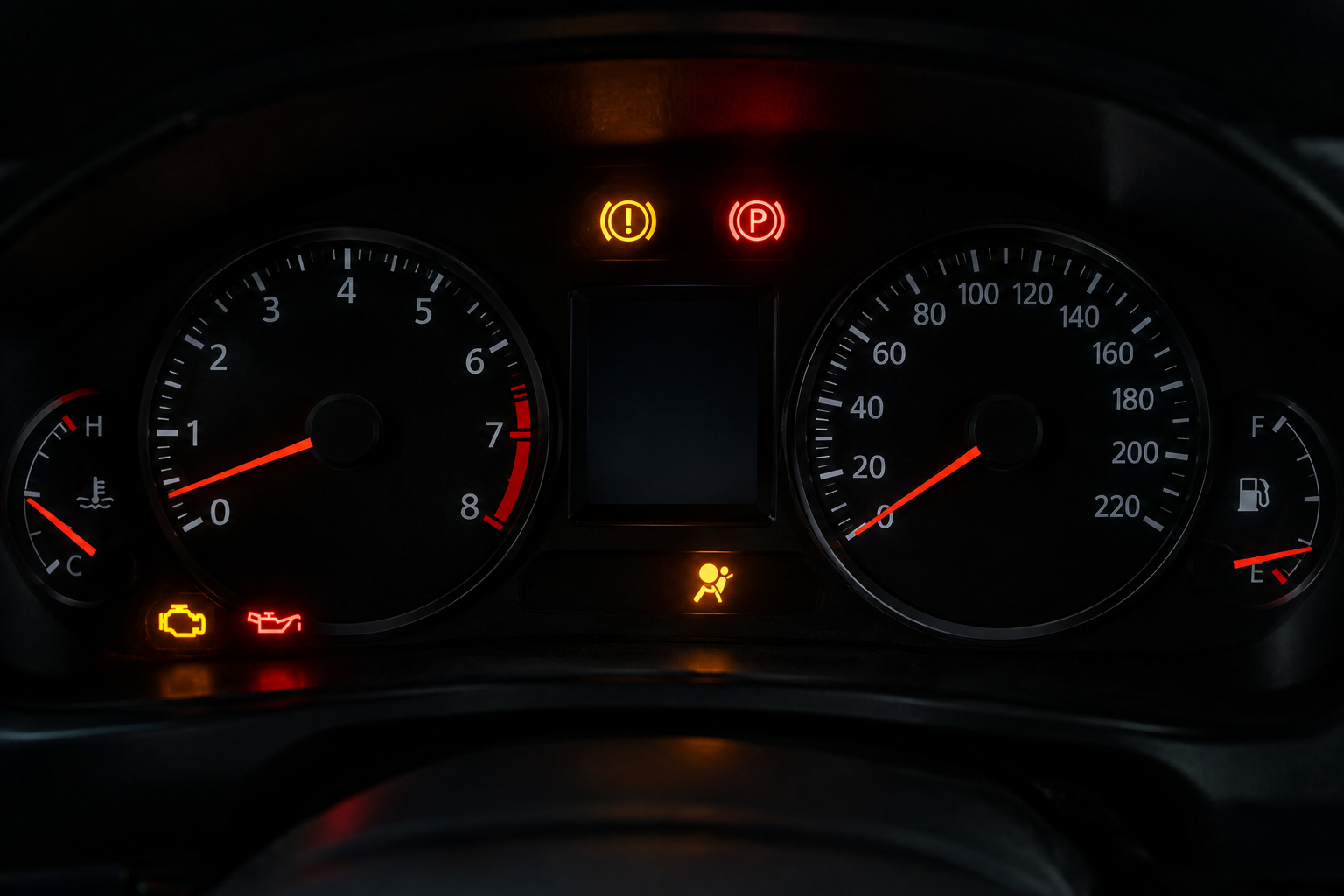
Your CR-V’s dashboard will usually tell you exactly why Brake Hold isn’t cooperating, if you know what to look for.
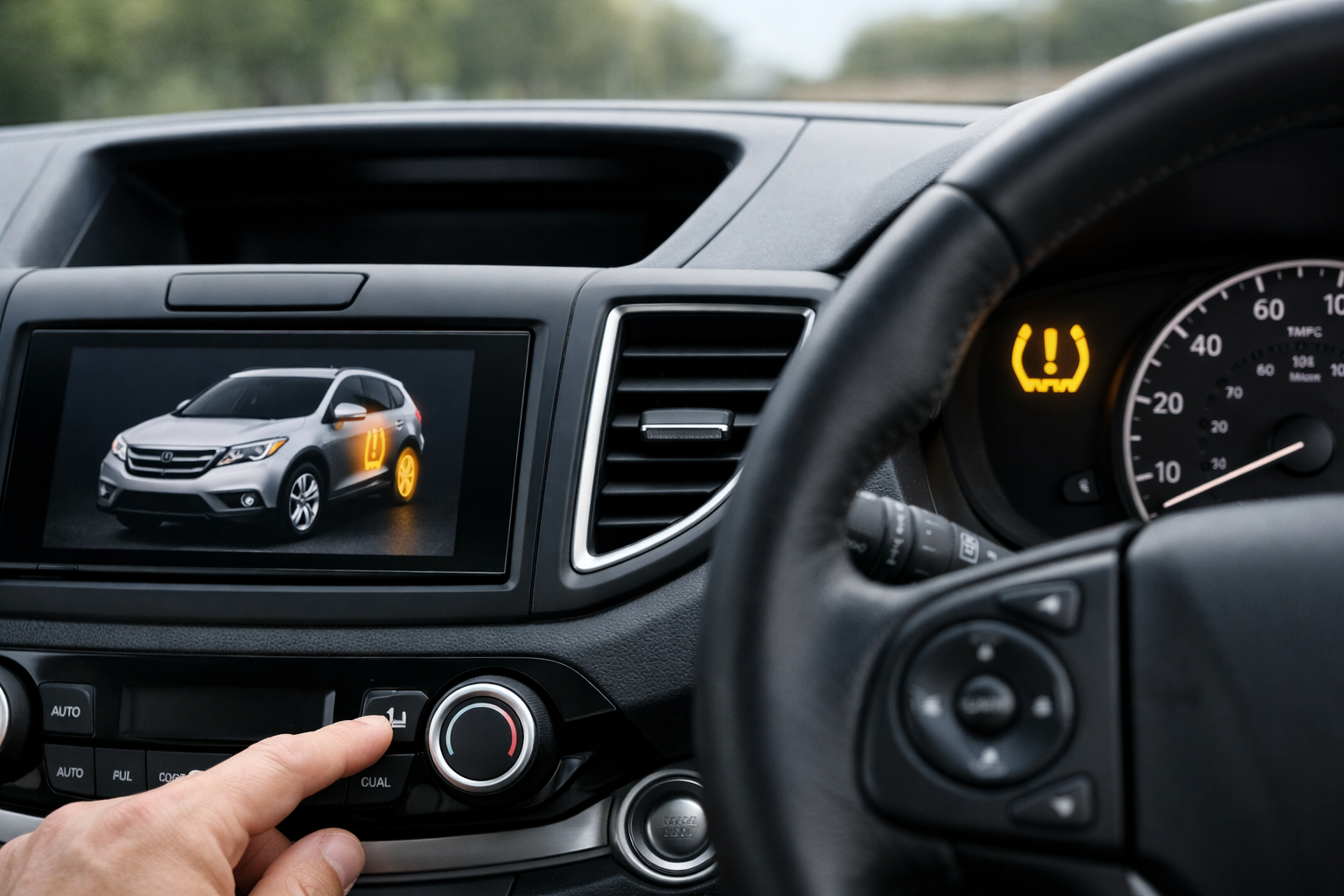
- Brake system warning light (red, exclamation point in a circle): Often tied to low brake fluid or a parking brake issue. Brake Hold will be disabled until this is addressed.
- ABS light: Points to a wheel speed sensor or ABS module problem. Brake Hold and VSA both depend on this system.
- EPB warning light or “Parking Brake System Problem” message: Indicates a fault in the electric parking brake actuator or its wiring, which shares circuitry with Brake Hold.
- VSA light: A stability control fault will typically knock out Brake Hold along with it, since they’re part of the same control module.
If any of these lights are on, don’t bother chasing the Brake Hold problem directly. Fix the underlying warning first, and Brake Hold will almost always come back on its own once the fault clears.
For diagnosing exactly which sensor or module is throwing the fault, a code reader that covers ABS and EPB systems, not just basic engine codes, makes this process much faster.
Honda CR-V OBD2 Scanner ABS EPB
Reads ABS, EPB, and body control codes so you can pinpoint exactly why Brake Hold is disabled instead of guessing.
A scanner like this will pull the specific fault code (for example, a wheel speed sensor circuit issue or an EPB motor fault) rather than just clearing the light temporarily. That distinction matters, because clearing a code without fixing the cause just means Brake Hold will drop out again on your next drive.
Normal Quirk vs. Real Malfunction
It helps to separate what’s expected from what actually needs a repair.
Normal behavior includes:
- Brake Hold turning off every time you shut off the ignition, requiring you to press the button again
- Brake Hold releasing when you open a door while stopped
- Brake Hold not engaging until you’re fully and firmly stopped, not just slowing down
- A brief delay of a second or so between stopping and the hold light going solid
Signs of an actual problem include:
- Brake Hold won’t engage even with your seat belt on, doors closed, and parking brake released
- The ABS, VSA, or brake warning light stays on continuously
- You hear unusual noises (clicking, grinding) from the parking brake area when starting the car
- The EPB warning message appears repeatedly, even after restarting
- Brake Hold engages but the pedal feels soft, or the car creeps forward on an incline despite the light showing it’s active
If your brake pedal has been acting strange in other ways too, like feeling low or sinking after the car sits overnight, it’s worth reading through what typically causes a brake pedal that goes soft after sitting, since a hydraulic issue there can absolutely interfere with Brake Hold as a side effect.
CR-V Hybrid Owners: A Slightly Different Situation
On the CR-V Hybrid, Brake Hold works alongside the regenerative braking system, and the two can sometimes feel like they’re fighting each other, particularly right as the car transitions from regen braking to full stop. If you’re noticing jerky or inconsistent braking feel on top of Brake Hold issues, that’s a separate but related symptom worth looking into on its own, and our guide on weak or jerky regenerative braking covers the most common causes in hybrids like this one.
In most hybrid cases, though, Brake Hold itself still follows the exact same rules as the gas CR-V: seat belt, doors, brake pressure, and no active fault codes.
Quick Troubleshooting Checklist
- Buckle your seat belt fully and listen for the click, even if it looks fastened.
- Close all doors firmly, including the rear hatch, and check for any ajar warnings on the dash.
- Confirm the parking brake is fully released, not just partially disengaged.
- Check your brake fluid reservoir level under the hood.
- Look for any illuminated ABS, VSA, brake, or EPB warning lights.
- If lights are on, scan for codes rather than guessing at the cause.
- If everything checks out and Brake Hold still won’t hold, have the brake switch and door latch sensors tested by a technician.
Since Brake Hold shares its foundation with the ABS and stability control systems, this is one of those repairs where a proper diagnostic tool pays for itself quickly. Something like an Autel OBD2 scanner with ABS and SRS coverage can save you a diagnostic fee at the dealership if the issue turns out to be something simple like a wheel speed sensor connector.
Actron CP9690 Bluetooth OBD2 Scanner
A budget-friendly option that still reads ABS codes, handy for confirming whether a brake system fault is behind your Brake Hold problem.
If you’re already comfortable pulling codes yourself, pairing a scanner with your phone makes it easy to check things in the driveway before deciding whether a shop visit is actually necessary.
Frequently Asked Questions
Is it normal for Auto Hold to turn off every time I restart my CR-V?
Yes. Honda designed Brake Hold to reset with every ignition cycle, so it never carries over from your last drive. You’ll need to press the button again each time you start the car if you want to use it.
Why does my CR-V’s Brake Hold light blink instead of staying solid?
A blinking light usually means the system wants to activate but one condition isn’t met yet, most commonly an unbuckled seat belt, an open door, or the car not being fully stopped. Check those three things first before assuming there’s a fault.
Can low brake fluid really disable Brake Hold?
Yes. The brake fluid level sensor feeds into the same system that manages Brake Hold, ABS, and VSA. If fluid drops below the minimum line, the car will disable several brake-dependent features until the level is corrected.
Does Brake Hold work the same way on the CR-V Hybrid as the gas model?
The activation conditions are identical, but the hybrid’s regenerative braking system interacts with the transition into Brake Hold, which can occasionally make the handoff feel less smooth than on the gas-only CR-V. This is a feel difference, not a defect, in most cases.
Leave a Reply