

That grinding noise coming from your steering wheel area can be concerning, especially when you’re not sure what’s causing it. The good news is that most grinding sounds have specific causes that can be diagnosed and fixed with the right knowledge.
Understanding what creates these noises and when they occur will help you identify the problem and determine how urgently you need to address it. Some grinding sounds indicate minor issues, while others signal potentially dangerous problems that need immediate attention.
Understanding Steering-Related Grinding Noises
Grinding noises when turning your steering wheel typically originate from one of several mechanical systems. These sounds can range from a light scraping to a harsh metal-on-metal grinding that you can feel through the steering wheel itself.
The timing of the noise provides important clues about its source. Some grinding only happens when you turn the wheel to full lock (completely left or right), while others occur during partial turns or even slight steering adjustments.
Most steering-related grinding comes from worn suspension components, failing CV joints, power steering issues, or damaged steering linkage parts. Each has distinct characteristics that can help you pinpoint the exact cause.
Low Power Steering Fluid
One of the most common causes of grinding when turning is low power steering fluid. When your power steering system doesn’t have enough fluid, the pump struggles to provide adequate hydraulic pressure, creating grinding or whining sounds.
This type of grinding usually gets worse when you’re parked or moving slowly, as the system works hardest during these conditions. You’ll often hear it most clearly when making sharp turns in parking lots or backing out of driveways.
Identifying Power Steering Fluid Issues
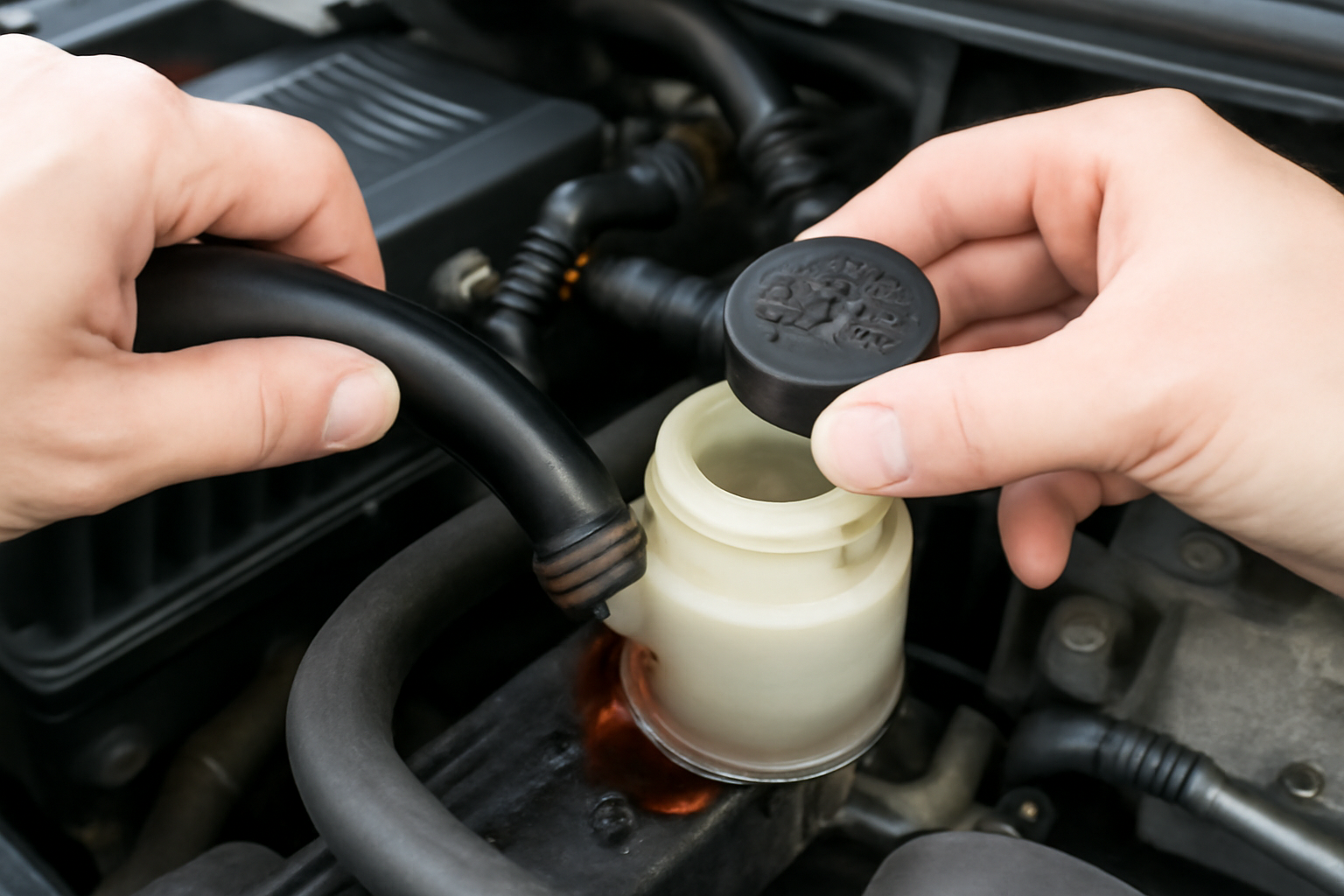
Check your power steering fluid reservoir, typically located near the front of the engine bay. The reservoir should have minimum and maximum level markers, and the fluid should appear relatively clean and translucent.
Dark, dirty fluid or levels below the minimum mark indicate problems. If you find low fluid, look around the reservoir, pump, and steering rack for signs of leaks, which appear as wet or stained areas.
Adding the correct type of power steering fluid can temporarily resolve the grinding, but you’ll need to address any underlying leaks to prevent the problem from returning.
Worn CV Joints
CV joints (constant velocity joints) allow your wheels to turn while receiving power from the transmission. When these joints wear out, they create distinctive grinding or clicking noises, especially during turns.
CV joint grinding typically occurs when turning at low speeds, particularly when accelerating out of turns. The noise often gets louder when turning in one direction compared to the other, depending on which joint is failing.
Outer vs Inner CV Joint Problems
Outer CV joints usually fail first and create noise during sharp turns, like when pulling out of parking spaces. You’ll hear clicking or grinding that increases with the sharpness of the turn and acceleration.
Inner CV joints typically produce grinding during gentler turns and highway driving. This noise often sounds like a rumbling or grinding that varies with vehicle speed and turning angle.
Worn CV joints require replacement of the entire axle assembly in most cases. This isn’t a DIY repair for most people, as it requires removing the wheel, brake components, and sometimes suspension parts to access the axle.
Bad Strut Mount
The strut mount sits at the top of your vehicle’s strut assembly and allows the strut to rotate when you turn the steering wheel. When this mount wears out, it can create grinding noises during steering input.
Strut mount grinding usually happens during parking lot maneuvers and low-speed turns. The noise comes from the top of the wheel well area and may be accompanied by a feeling of roughness in the steering wheel.
Signs of Strut Mount Problems
Besides grinding, bad strut mounts often cause clunking sounds over bumps and a loose feeling in the steering. You might notice that the steering wheel doesn’t return to center as smoothly after turns.
Visual inspection of the strut mount requires looking at the top of the strut tower, usually visible under the hood. Look for cracked rubber, separated metal components, or obvious wear patterns.
Strut mount replacement typically costs less than full strut replacement but requires similar labor, as the strut assembly must be removed and disassembled to access the mount.
Worn Tie Rod Ends
Tie rod ends connect your steering rack to the wheels and are critical for proper steering control. When they wear out, they can create grinding noises along with dangerous handling problems.
Tie rod grinding often sounds like metal-on-metal contact and may be accompanied by looseness in the steering wheel. This noise typically occurs during turns but can also happen when driving straight on rough roads.
Testing Tie Rod Ends
You can check tie rod ends by grabbing the wheel at 9 and 3 o’clock positions and trying to rock it back and forth. Excessive movement or clunking sounds indicate worn tie rod ends.
Professional mechanics use a more thorough inspection process, checking for play in the joint while the vehicle is lifted. They’ll also examine the rubber boots that protect the joint from dirt and moisture.
Worn tie rod ends create serious safety hazards and should be replaced immediately. Severe wear can cause complete steering failure, making the vehicle impossible to control.
Full Lock vs Partial Turn Noises
The timing and steering position when grinding occurs provides valuable diagnostic information. Noises at full lock (steering wheel turned completely left or right) usually indicate different problems than noises during partial turns.
Full lock grinding often points to CV joint problems, particularly outer CV joints that experience maximum stress when the wheels are turned to their limits. Power steering system issues also become most apparent at full lock.
Partial Turn Grinding
Grinding during partial turns often indicates strut mount or tie rod problems. These components experience stress throughout the steering range, not just at the extremes.
Pay attention to whether the grinding happens during the initial steering input, throughout the turn, or when returning the wheel to center. Each pattern suggests different failing components.
Document when the grinding occurs, including vehicle speed, steering position, and road conditions. This information will help your mechanic diagnose the problem more quickly and accurately.
Diagnosing the Problem
Start your diagnosis by noting exactly when the grinding occurs. Drive slowly through a parking lot and make both sharp left and right turns, paying attention to any differences in noise level or character.
Check your power steering fluid first, as this is the easiest and least expensive potential fix. If the fluid level is adequate and clean, you’ll need to investigate mechanical components.
Listen carefully to pinpoint where the noise originates. Grinding from the front wheels suggests CV joints, while noise from the center of the vehicle points to steering rack or strut mount problems.
When to Seek Professional Help
Any grinding noise that affects steering feel or vehicle control requires immediate professional attention. These aren’t problems you want to ignore or attempt to fix yourself without proper tools and experience.
Metal-on-metal grinding sounds particularly concerning and often indicate components that have worn beyond safe limits. Continuing to drive with these noises can cause additional damage and safety hazards.
A qualified mechanic can perform a proper inspection, including lifting the vehicle to check for play in suspension and steering components. They’ll also have access to service information specific to your vehicle.
Prevention and Maintenance
Regular maintenance prevents many steering-related grinding problems. Check your power steering fluid monthly and address any leaks promptly to avoid pump and rack damage.
Have your suspension and steering components inspected annually or whenever you notice changes in handling or noise. Early detection of wear can prevent more expensive repairs and safety issues.
Avoid holding the steering wheel at full lock for extended periods, as this puts maximum stress on CV joints and power steering components. This habit is particularly hard on your vehicle during parking maneuvers.
Cost Considerations
Repair costs vary significantly depending on the failing component and your vehicle’s make and model. Power steering fluid replacement might cost under $100, while CV joint or strut mount replacement can run $300-800 per side.
Tie rod end replacement typically costs $200-400 per side, but the exact price depends on your vehicle’s design and local labor rates. Some vehicles require wheel alignment after tie rod replacement, adding to the total cost.
Getting quotes from multiple shops can help you find competitive pricing, but remember that steering and suspension work affects your safety. Choose a reputable shop over the lowest bidder for these critical repairs.
Frequently Asked Questions
Can I drive with grinding steering noises?
This depends on the cause, but any grinding that affects steering control is dangerous. Power steering fluid issues might be manageable short-term, but worn tie rods or CV joints require immediate attention. If you experience any change in steering feel or control, stop driving and have the vehicle inspected.
Will grinding noises get worse over time?
Yes, grinding noises almost always indicate wear that will continue to worsen. Ignoring these sounds typically leads to more expensive repairs and potential safety hazards. Components that create grinding noises are often near the end of their service life.
How can I tell if the grinding is serious?
Metal-on-metal grinding sounds are always serious, especially if accompanied by steering wheel vibration or changes in steering feel. Any grinding that occurs during normal driving (not just extreme maneuvers) indicates components that need immediate attention.
Can I fix grinding steering noises myself?
Adding power steering fluid is a simple DIY task, but most other causes of grinding require professional repair. Steering and suspension work involves safety-critical components and often requires special tools, proper torque specifications, and wheel alignment. Unless you have significant mechanical experience, these repairs are better left to professionals.

Leave a Reply