
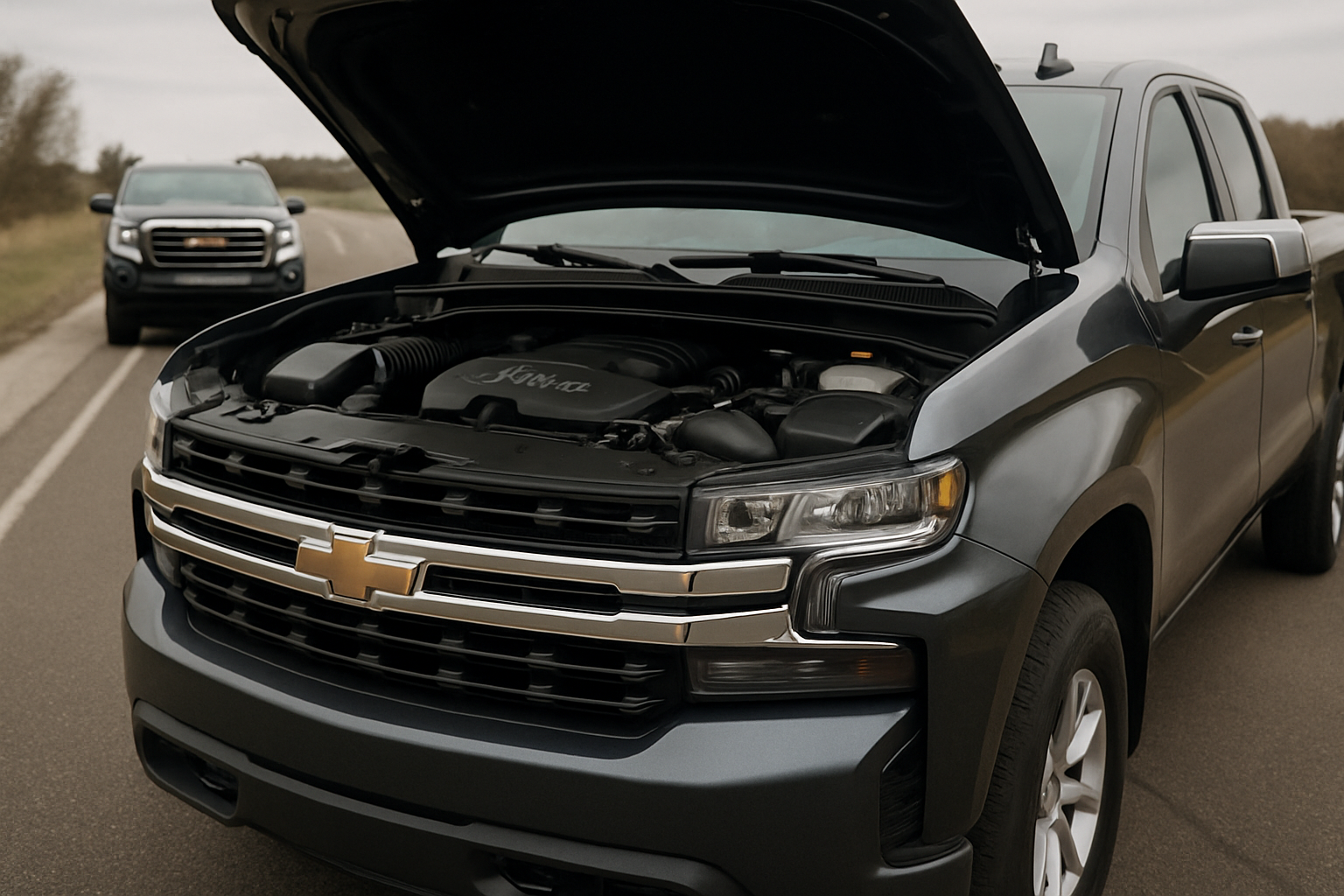
The GM 5.3L V8 engine has powered millions of Chevy and GMC trucks since 2005, becoming one of America’s most popular truck engines. While generally reliable, this powerplant has developed some well-documented issues that every owner should know about. Understanding these common problems can save you thousands in repairs and help you make informed maintenance decisions.
Understanding the GM 5.3L Engine Generations
GM has produced two main generations of the 5.3L V8 that affect which problems you might encounter. The Gen IV engines (2007-2014) introduced Active Fuel Management (AFM) technology, while Gen V engines (2014-present) continued with AFM and later added Dynamic Fuel Management (DFM) in 2019.
Gen IV engines use the LMG, LY5, LC9, and LH6 engine codes, depending on your specific truck model. Gen V engines primarily use the L83 and L84 codes. You can find your engine code on the eighth digit of your VIN or on a label under your hood.
Both generations share similar architecture but have different fuel management systems that create distinct problem patterns. Knowing which generation you own helps predict what issues might develop over time.
AFM and DFM Lifter Failure: The Biggest Issue
Active Fuel Management represents the most significant problem area for 5.3L engines. This system deactivates four cylinders during light load conditions to improve fuel economy, but it creates additional stress on the valve train components.
The AFM system uses special lifters that can collapse to deactivate cylinders. These lifters receive oil pressure through dedicated passages in the engine block. When oil pressure drops or debris clogs these passages, lifters can stick or fail completely.
Symptoms of AFM Lifter Problems
Lifter failure typically announces itself with several warning signs. You might hear a distinct ticking or tapping noise from the engine, especially during startup or idle. Some owners describe it as a “typewriter” sound that gets worse as the engine warms up.
Engine misfires often accompany lifter problems. Your truck might run rough, hesitate during acceleration, or trigger check engine lights with misfire codes (P0300-P0308). In severe cases, you’ll notice reduced power and poor fuel economy.
Advanced lifter failure can damage camshafts, requiring much more expensive repairs. Some failed lifters actually bore holes through the cam lobes, necessitating complete engine rebuilds.
Why AFM Lifters Fail
Several factors contribute to AFM lifter problems. Oil change intervals play a critical role, as extended intervals allow oil to break down and clog the small AFM oil passages. GM recommends 7,500-mile intervals, but many mechanics suggest 5,000 miles for AFM-equipped engines.
Low oil levels exacerbate the problem because AFM lifters need consistent oil pressure to function properly. Even slightly low oil can cause lifter issues, especially during extended highway driving when AFM operates most frequently.
Manufacturing tolerances in early AFM systems also contributed to premature failures. GM has updated lifter designs several times, but the fundamental system remains problematic.
Excessive Oil Consumption Problems
Many 5.3L engines develop excessive oil consumption, particularly in higher-mileage vehicles. This issue affects both Gen IV and Gen V engines, though the causes vary between generations.
Normal oil consumption for these engines should be less than one quart per 3,000 miles. However, many owners report burning a quart every 1,000-1,500 miles, which indicates a significant problem.
Common Causes of Oil Consumption
Worn piston rings represent the most common cause of oil burning in high-mileage 5.3L engines. The AFM system’s constant cylinder activation and deactivation can accelerate ring wear, allowing oil to slip past into the combustion chambers.
Valve stem seals also fail frequently, especially on Gen IV engines. These seals prevent oil from flowing down the valve stems into the cylinders. When they harden and crack, oil consumption increases dramatically.
PCV system problems can create excessive crankcase pressure, forcing oil past seals and gaskets. A failing PCV valve costs under $20 but can cause hundreds of dollars in oil consumption if ignored.
Diagnosing Oil Consumption
Start by monitoring your oil level regularly and documenting consumption rates. Check for external leaks around the oil pan, valve covers, and rear main seal before assuming internal consumption.
Blue smoke from the exhaust indicates oil burning, but modern catalytic converters often mask this symptom. Heavy oil consumption without visible smoke usually points to internal engine wear.
A compression test can reveal worn rings, while a leak-down test provides more detailed information about where compression is escaping. These tests help determine if the engine needs major internal work.
Timing Chain Stretch and Wear
Timing chain problems plague both generations of 5.3L engines, though Gen V engines show improvement over earlier designs. The timing chain connects the crankshaft to the camshafts, maintaining precise valve timing for proper engine operation.
Over time, timing chains stretch and wear, causing the camshafts to lag behind their intended timing. This creates performance problems and can eventually lead to valve-to-piston contact in severe cases.
Timing Chain Problem Symptoms
Timing chain issues often start with a rattling noise during startup, particularly on cold mornings. This rattling typically lasts 10-15 seconds until oil pressure builds up and tensions the chain properly.
Performance symptoms include rough idle, reduced power, and poor fuel economy. Advanced timing chain stretch can trigger check engine lights with timing-related codes like P0008, P0009, P0016, or P0017.
In extreme cases, stretched timing chains can jump teeth on the timing gears, causing catastrophic engine damage. This typically happens suddenly and results in bent valves or damaged pistons.
Timing Chain Maintenance
Regular oil changes with the correct viscosity help prevent premature timing chain wear. Use 5W-30 oil as specified by GM, and avoid extended drain intervals that can cause chain and tensioner problems.
Timing chain tensioners rely on oil pressure to maintain proper chain tension. Dirty oil or low oil levels can cause tensioner problems that accelerate chain wear.
Most timing chains need replacement between 100,000-150,000 miles, though some fail much earlier. Replacing the chain, guides, and tensioners as a complete kit prevents repeated failures.
When to Delete AFM
AFM deletion represents a popular modification that eliminates many 5.3L engine problems. This modification disables the AFM system entirely, allowing all eight cylinders to run continuously.
Consider AFM deletion if you’ve experienced lifter problems, plan to keep your truck long-term, or want to prevent expensive AFM-related repairs. The modification typically costs $600-1,200 depending on whether you need hardware replacement.
AFM Deletion Methods
Software-only AFM deletion works for engines with healthy AFM components. A tuner disables AFM operation through the engine computer, preventing cylinder deactivation without hardware changes.
Hardware deletion involves replacing AFM lifters with standard lifters and installing a new camshaft without AFM lobes. This method requires significant engine disassembly but provides the most complete solution.
Some shops offer a hybrid approach using AFM lifters with delete software. This saves on hardware costs but leaves potentially problematic AFM components in place.
AFM Delete Considerations
AFM deletion will void your powertrain warranty if discovered during warranty repairs. However, many owners accept this risk to prevent expensive post-warranty AFM failures.
Fuel economy typically decreases by 1-2 MPG after AFM deletion, though some drivers report no noticeable difference in real-world driving. The trade-off depends on your driving patterns and priorities.
Emissions compliance varies by location. AFM deletion doesn’t remove emissions equipment, but it changes engine operation in ways that might affect emissions testing in some areas.
Gen IV vs Gen V Differences
Gen IV engines (2007-2014) represent the first generation with AFM and tend to have more lifter problems than later engines. These engines also use older timing chain designs that stretch more readily than Gen V components.
Gen V engines (2014-present) feature updated AFM lifters and improved timing chains, but they’re not immune to problems. The newest engines with DFM (2019+) show promise but haven’t accumulated enough miles for long-term reliability assessment.
Oil consumption problems affect both generations similarly, though Gen V engines seem slightly less prone to valve stem seal failures. Both generations benefit from frequent oil changes and proper maintenance.
Prevention and Maintenance Tips
Preventing 5.3L engine problems starts with proper maintenance habits. Change your oil every 5,000 miles instead of the recommended 7,500-mile interval, especially if you have an AFM-equipped engine.
Use high-quality oil and filters designed for AFM engines. Mobil 1, Valvoline MaxLife, and Castrol GTX High Mileage all work well. Avoid cheap oils that might not provide adequate protection for AFM components.
Monitor oil consumption regularly and address any increases immediately. Keep detailed records of oil changes and consumption to identify developing problems early.
Early Problem Detection
Listen for unusual noises during startup and idle. Ticking, rattling, or knocking sounds often indicate developing problems that cost less to fix when caught early.
Pay attention to check engine lights and have them diagnosed promptly. Many 5.3L problems start with subtle symptoms that progressively worsen over time.
Consider regular oil analysis if you plan to keep your truck long-term. Oil analysis can detect internal wear patterns before they cause major damage.
Frequently Asked Questions
How much does AFM lifter repair cost?
AFM lifter replacement typically costs $2,000-4,000 depending on the extent of damage and local labor rates. If camshaft damage occurred, costs can exceed $6,000. Many owners choose AFM deletion during lifter replacement to prevent future problems.
Can I drive with AFM lifter problems?
You can drive short distances with minor AFM lifter issues, but continued driving risks expensive secondary damage. Failed lifters can damage camshafts, requiring much more expensive repairs. Address lifter problems as soon as possible.
Do all 5.3L engines have AFM problems?
Not every 5.3L engine experiences AFM problems, but the failure rate is high enough to be considered a common issue. Proper maintenance and early AFM deletion can prevent most AFM-related failures.
Is the 5.3L engine worth keeping?
Despite these problems, the 5.3L engine offers good power, reasonable fuel economy, and relatively affordable repairs compared to other truck engines. With proper maintenance or AFM deletion, these engines can provide reliable service for 200,000+ miles.


Leave a Reply