
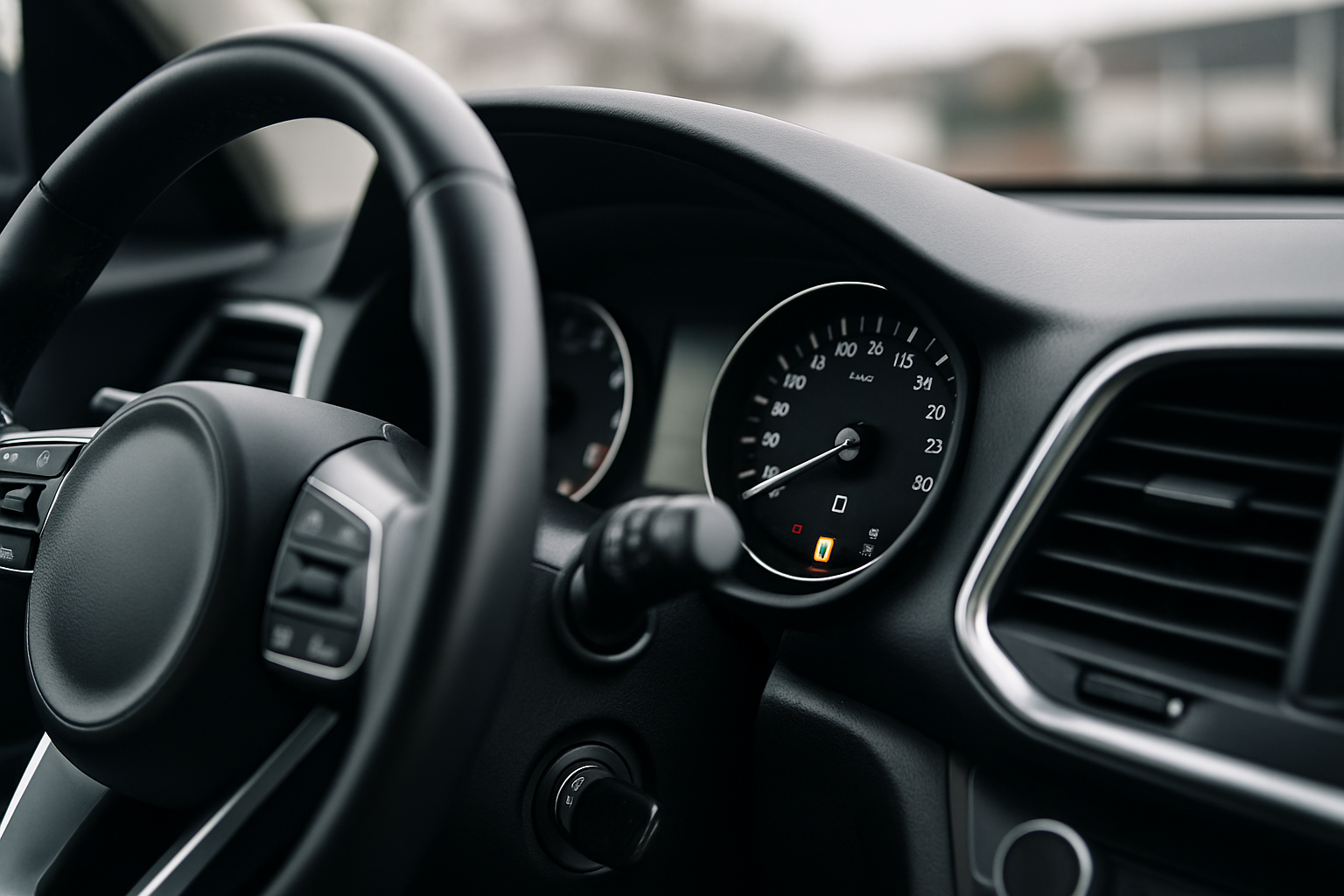
Your fuel gauge probably lies to you every single day, and you’re not imagining things. Most drivers notice their tank seems to stay “full” forever, then suddenly drops to empty faster than they expected.
This isn’t a conspiracy by car manufacturers to confuse you. Your fuel gauge inaccuracy comes from a combination of mechanical wear, design compromises, and the basic physics of how these systems work.
How Your Fuel Gauge Actually Works
Your fuel gauge relies on a surprisingly simple system that hasn’t changed much in decades. Inside your fuel tank, there’s a fuel sending unit with a float attached to an arm, similar to the float in an old toilet tank. As fuel levels change, this float moves up and down.
The float connects to a variable resistor (called a rheostat) that changes electrical resistance based on the float’s position. When the tank is full, the float sits high and creates one resistance value. When it’s empty, the float drops down and creates a different resistance value.
Your instrument cluster reads this changing resistance and translates it into the fuel level display you see on your dashboard. Simple in theory, but plenty can go wrong in practice.
Why Fuel Gauges Become Inaccurate Over Time
Float and Resistor Wear
The most common cause of fuel gauge problems is wear in the sending unit itself. That float bounces around constantly as you drive, especially during turns, stops, and acceleration. Over years of use, the resistor track develops worn spots or the float arm becomes loose.
When the resistor track wears unevenly, certain portions of your tank’s range will read incorrectly. You might notice the gauge sticks at three-quarters full, then suddenly jumps down to half. This happens because the worn section can’t provide accurate resistance readings anymore.
The float itself can also develop problems. If it cracks and fills with fuel, it won’t float properly anymore. A waterlogged float will sink lower than it should, making your gauge read empty when you still have fuel left.
Instrument Cluster Issues
Sometimes the problem isn’t in your tank at all. The gauge itself can malfunction, giving you wildly inaccurate readings even when the sending unit works perfectly. Digital instrument clusters can develop software glitches, while analog gauges might have failing motors or electrical connections.
Voltage fluctuations in your car’s electrical system can also throw off fuel gauge accuracy. If your alternator or battery develops problems, the inconsistent voltage can make your fuel gauge behave erratically.
Asymmetric Tank Design
Many modern cars have irregularly shaped fuel tanks that wrap around exhaust systems, suspension components, or spare tire wells. These complex shapes mean your fuel level doesn’t drop at a consistent rate as you drive.
When your tank is full, fuel sits in all the irregular spaces and pockets. The float reads this as “full” for longer than you’d expect. Once the fuel level drops below these irregular sections, it falls much faster through the more uniform part of the tank.
This design reality explains why your gauge often shows full for the first 50-100 miles, then seems to plummet toward empty much quicker. Your tank isn’t broken; it’s just not a perfect rectangle.
The “Full Forever, Then Empty Fast” Problem
This is probably the most common fuel gauge complaint, and it’s usually a combination of tank design and sending unit positioning. Most fuel tanks are wider at the top than at the bottom, creating what engineers call a non-linear fuel curve.
When your tank is full, there’s a large volume of fuel at the top portion. The float has to drop quite a bit before it registers a significant change. But as fuel levels get lower, the same physical drop in the float represents a much larger percentage of your remaining fuel.
Car manufacturers try to compensate for this through programming in the instrument cluster, but it’s never perfect. They usually err on the side of caution, making the gauge read full longer to avoid customer complaints about rapid fuel level drops.
Temperature and Driving Conditions
Your fuel gauge accuracy also depends on temperature and how you drive. Fuel expands when it’s hot and contracts when it’s cold, which can affect float position and gauge readings.
Aggressive driving makes the problem worse. During hard acceleration, braking, or cornering, fuel sloshes around in your tank. The float bounces with it, causing temporary gauge fluctuations that your instrument cluster tries to smooth out.
Some cars have multiple fuel level sensors or baffled tanks to minimize this sloshing effect, but most budget vehicles rely on a single sending unit that does its best to average out the movement.
Why Manufacturers Don’t Fix This
Car manufacturers know about fuel gauge inaccuracy, but they accept it as a reasonable trade-off. Building a perfectly accurate fuel gauge would require multiple sensors, complex programming, and significantly higher costs for a feature most drivers can live with.
They also prioritize avoiding empty tank situations over perfect accuracy. Most fuel gauges are calibrated to show “empty” when you still have 1-3 gallons left. This prevents drivers from running out of fuel due to gauge inaccuracy, but it also means your gauge is intentionally wrong.
The “reserve” fuel after your gauge hits empty serves as a built-in safety margin. Different manufacturers set this reserve at different levels, which is why some cars seem to drive forever on empty while others leave you stranded.
What You Can Do About It
Track Your Actual Fuel Economy
Instead of relying entirely on your fuel gauge, start tracking your actual mileage and fuel consumption. Reset your trip odometer when you fill up, then note how many miles you typically get before needing fuel again.
Most modern cars also have a “distance to empty” display that’s often more accurate than the gauge itself. This system uses your recent fuel economy data to estimate remaining range, which accounts for your specific driving conditions.
Replace the Fuel Sending Unit
If your fuel gauge has become extremely inaccurate or erratic, replacing the fuel sending unit might solve the problem. This repair typically costs $200-600 depending on your vehicle, with most of the expense being labor to access the tank.
Some vehicles allow access to the sending unit through the rear seat or trunk floor, while others require dropping the fuel tank entirely. Check your specific model before assuming this will be an expensive repair.
Instrument Cluster Calibration
Certain vehicles allow fuel gauge calibration through diagnostic tools or specific procedures. Some GM vehicles, for example, have a gauge calibration mode you can access through button combinations on the dashboard.
Professional scan tools can also calibrate fuel gauges on many vehicles, though this service usually requires a visit to a qualified technician with the right equipment.
When to Worry About Fuel Gauge Problems
Minor fuel gauge inaccuracy is normal and expected. But certain symptoms indicate a more serious problem that needs attention.
If your fuel gauge suddenly stops moving entirely, shows empty when you just filled up, or fluctuates wildly while driving, you likely have a failing sending unit or wiring problem. These issues can leave you stranded if you can’t accurately judge your fuel level.
Fuel gauge problems sometimes indicate issues with your fuel pump as well, since many vehicles mount the sending unit and fuel pump together. If you notice starting problems or fuel delivery issues along with gauge inaccuracy, have the entire fuel system checked.
Living with an Inaccurate Fuel Gauge
Most fuel gauge inaccuracy falls into the “annoying but manageable” category. Once you understand your specific vehicle’s quirks, you can adapt your refueling habits accordingly.
Pay attention to your trip odometer and average fuel economy rather than relying solely on the gauge. Keep track of how many miles you typically drive on a full tank, and use that information to plan fuel stops.
Don’t let your tank get below one-quarter full regularly, especially if your gauge tends to drop quickly in the lower ranges. This habit protects you from unexpected empty tank situations and helps preserve your fuel pump, which relies on fuel for cooling and lubrication.
Your fuel gauge will probably never be perfectly accurate, but understanding why it behaves the way it does takes away much of the frustration. Focus on the information it does provide reliably, and supplement it with your own tracking for the most accurate picture of your fuel situation.
Leave a Reply