
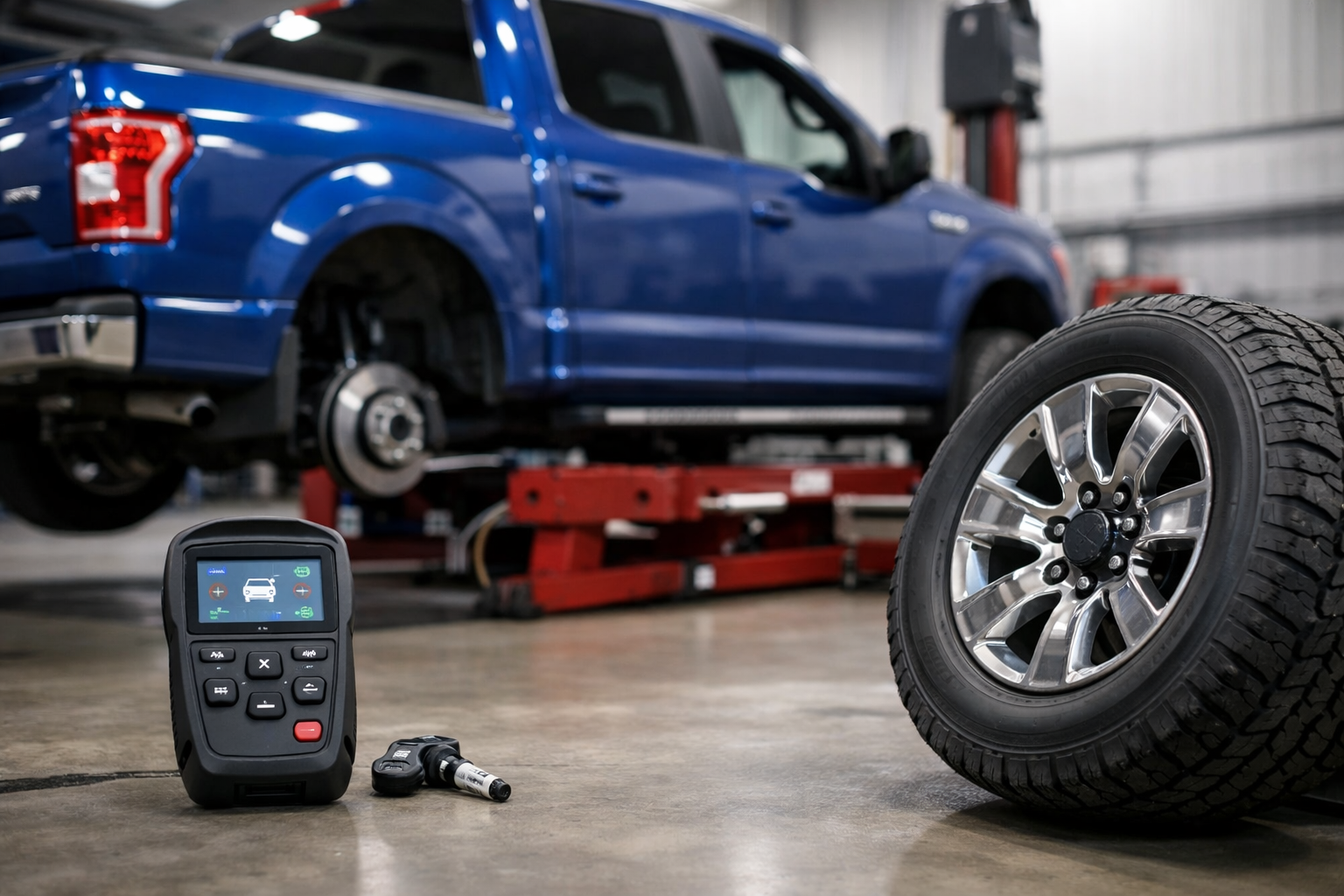
Ford’s TPMS system on the F-150 requires a specific sensor relearn sequence after tire rotation or sensor replacement. Unlike some brands that auto-relearn sensor positions during driving, the F-150 needs you to trigger each sensor in a specific order using a TPMS activation tool. This makes the process slightly more involved than a simple button press, but once you understand the sequence, it takes less than 10 minutes.
14th Gen F-150 (2021+): SYNC 4 Method
Inflate all four tires to the correct pressure listed on the driver’s door jamb sticker. On the SYNC 4 touchscreen, navigate to Settings > Vehicle > Tire Monitor System > Relearn Tires. The truck enters relearn mode and prompts you to trigger each sensor in sequence, starting with the left front tire.
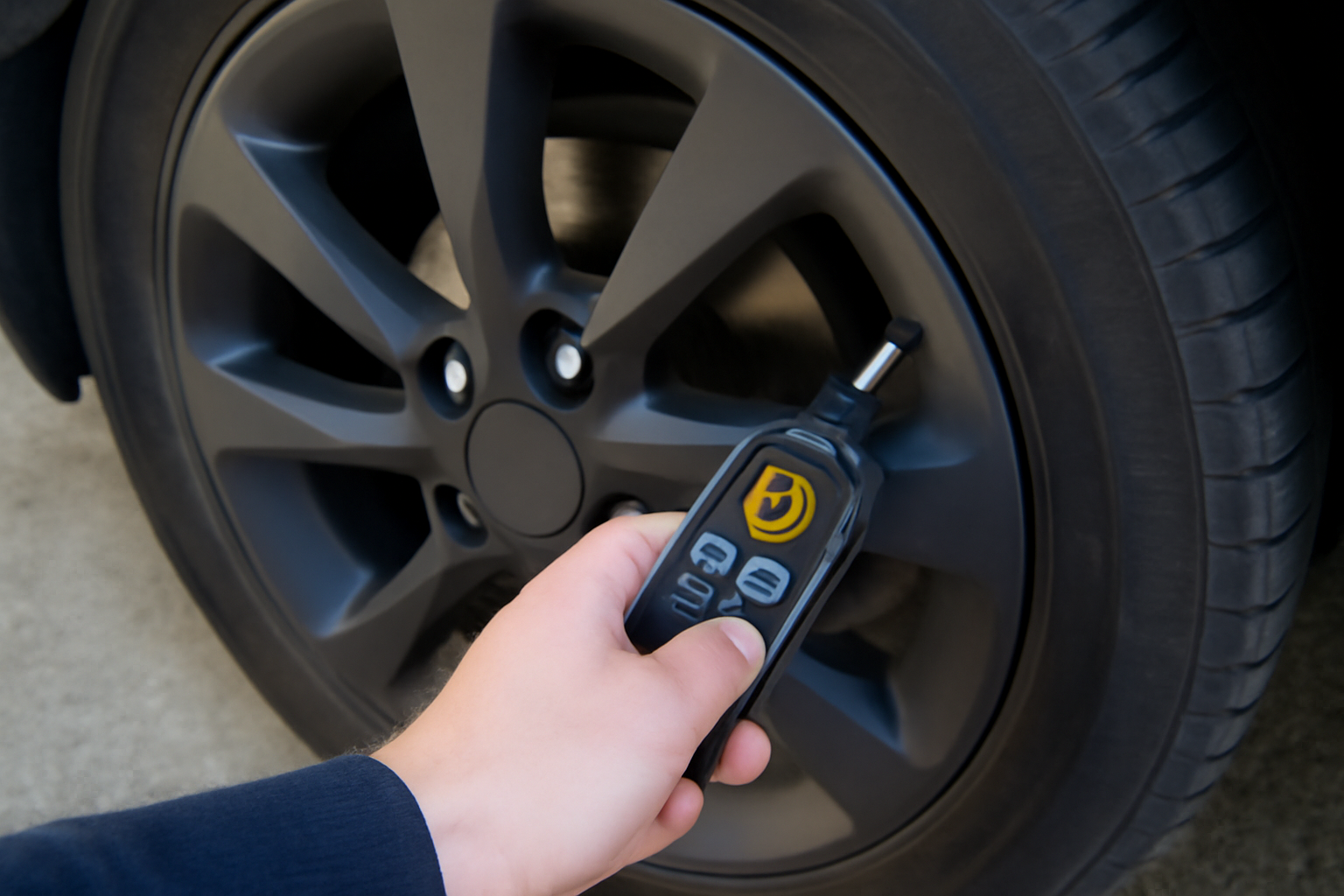
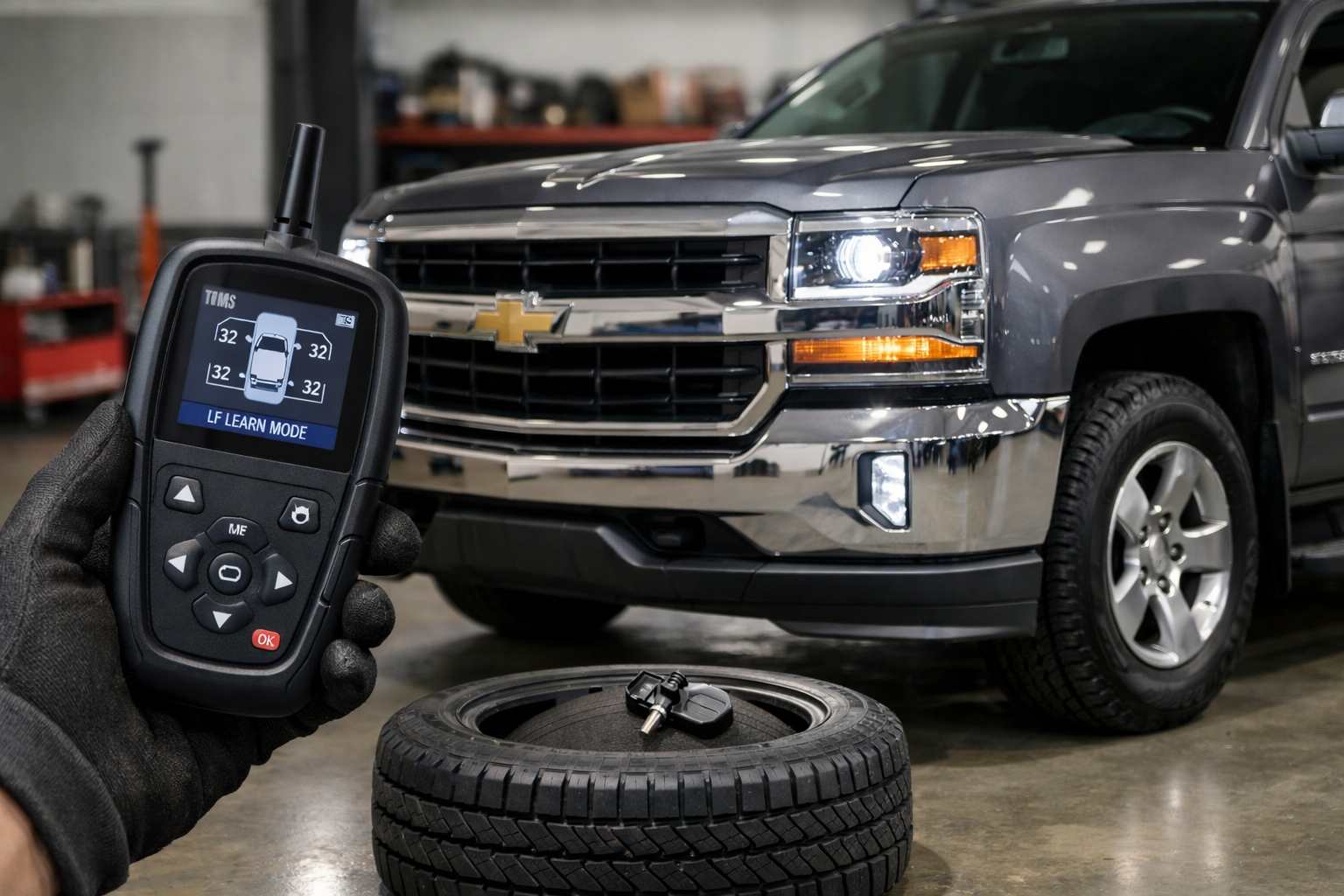
Use a TPMS activation tool held against each tire’s valve stem. Press the tool’s activation button, and it sends a magnetic or radio signal that forces the sensor to transmit its ID to the truck’s TPMS receiver. Follow the sequence: left front, right front, right rear, left rear. A horn chirp confirms each sensor has been registered. After the fourth sensor, two chirps confirm the relearn is complete.
13th Gen F-150 (2015-2020): Hazard Button Method
Inflate all tires. Turn the ignition to ON without starting the engine. Press the hazard button three times within 10 seconds. The horn chirps once, confirming the system is in relearn mode. Trigger each sensor with a TPMS tool in the LF-RF-RR-LR sequence. A horn chirp confirms each sensor. Two chirps after the fourth sensor signal completion. Turn the ignition off.
12th Gen F-150 (2009-2014): Similar Procedure
The relearn process is similar to the 13th gen: turn ignition to ON, activate relearn mode via the hazard button sequence, and trigger sensors in order. Some 12th gen models use a slightly different hazard button count (two presses instead of three), so check your owner’s manual for the exact initiation sequence for your specific year.
Why Ford Requires a TPMS Tool
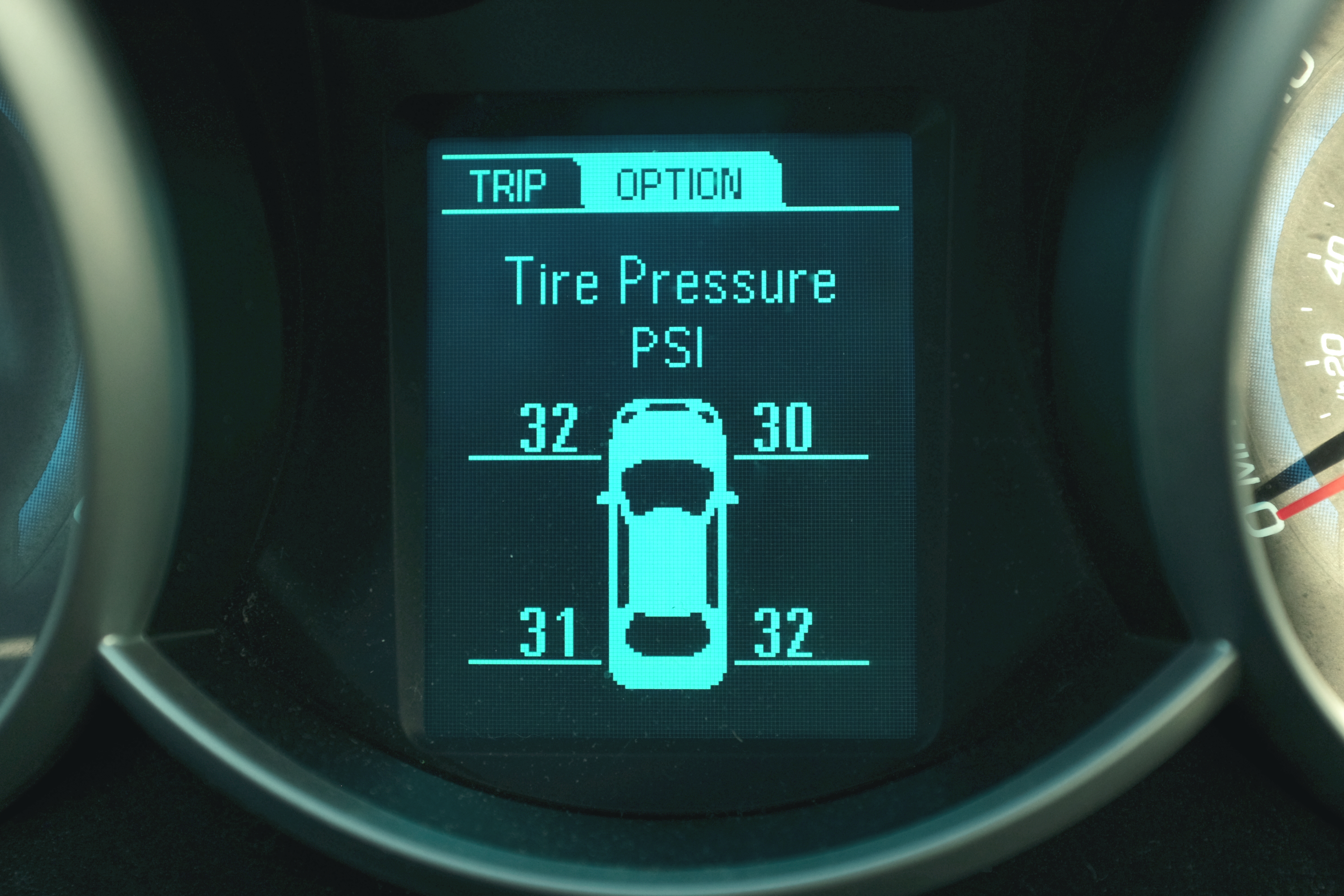
Ford’s direct TPMS system needs to associate each sensor’s unique ID with a specific wheel position. When you rotate tires, the sensors move to new positions, and the truck needs to know which ID is now at which corner. The sequential activation process tells the TPMS receiver “this sensor is now at the left front, this one is at the right front,” and so on.
Without this relearn, the truck may display correct total pressure warnings but associate the wrong pressure readings with the wrong tire positions on the dashboard display. This matters more than you might think, especially if you’re towing a travel trailer and need accurate pressure data for each corner of your truck to maintain proper weight distribution, similar to the precision required when towing with an F-150 vs Silverado.

TPMS Sensor Activation Tool for Ford
Required for Ford’s specific sensor relearn sequence after rotation or replacement
Aftermarket vs. OEM Sensors
Ford OEM sensors guarantee compatibility but cost a premium. Quality aftermarket sensors from brands like Autel, ATEQ, and Mobiletron are significantly less expensive and work reliably when properly programmed for your specific F-150 model year and trim. Make sure aftermarket sensors are cloned or programmed with the correct protocol before installation, as the F-150 uses different sensor frequencies depending on the generation.
When replacing sensors, many tire shops recommend replacing all four simultaneously if the originals are over 7 years old. Sensor batteries all age at the same rate, so once one dies, the others are likely close behind.
Regular Maintenance Keeps TPMS Running Properly
Regular tire rotations every 5,000 to 7,500 miles help extend tire life and improve your truck’s fuel efficiency. Each time you rotate, you’ll need to relearn the sensor positions using the procedures above. This takes just a few minutes with the right tool and prevents dashboard warning lights from confusing you about which tire actually needs attention.
Keep valve stems in good condition too. Rubber valve stems can crack and leak over time, especially on work trucks exposed to harsh conditions. When installing new tires or sensors, consider upgrading to metal valve stems for better durability.
Frequently Asked Questions
Can I do a TPMS relearn without a tool?
On some F-150 model years, deflating and reinflating each tire in sequence while the system is in relearn mode can trigger the sensors without a tool, but this method is unreliable and time-consuming. A TPMS activation tool makes the process quick, reliable, and repeatable. It’s a worthwhile investment if you rotate your own tires.
Why does my TPMS light flash then stay solid?
A flashing TPMS light that turns solid indicates a system malfunction, usually a dead sensor battery rather than a low-pressure condition. A functioning sensor with low pressure shows a solid light immediately. The flash-then-solid pattern specifically identifies a sensor communication failure.
Does the spare tire have a TPMS sensor?
Some F-150 trims include a TPMS sensor in the spare tire. If equipped, the spare sensor is included in the relearn sequence (it’s triggered fifth, after the four mounted tires). A low-pressure spare can trigger the TPMS warning even when all four mounted tires are properly inflated.
How long do TPMS sensor batteries last?
TPMS sensor batteries typically last 7 to 10 years. The batteries are sealed inside the sensor housing and can’t be replaced separately. When a sensor battery dies, you’ll need to replace the entire sensor. This is why shops often recommend replacing all four sensors at once when they’re all the same age.


Leave a Reply