
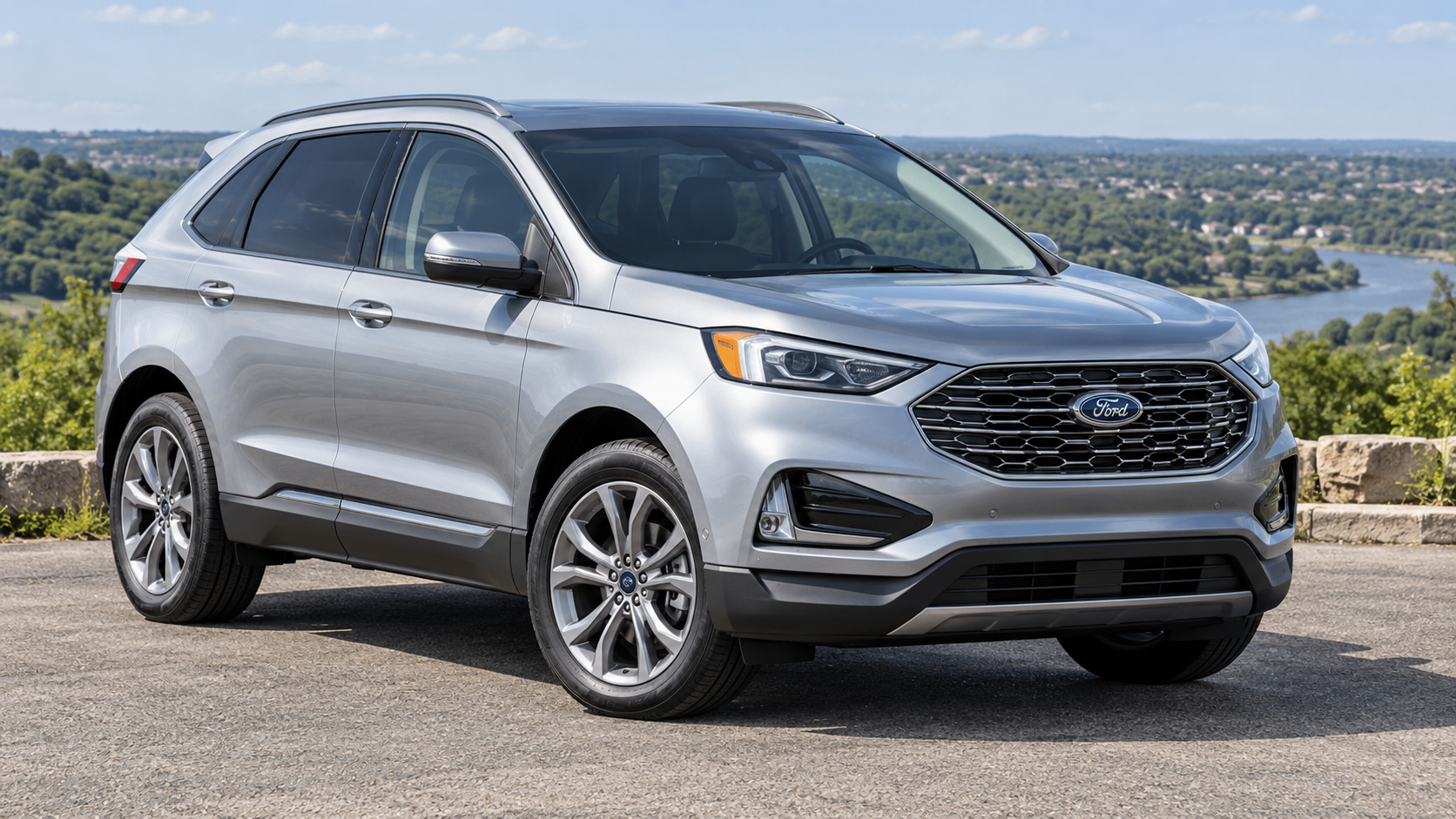
The 2024 Ford Edge with the 2.0L EcoBoost engine is EPA-rated at 21 mpg city, 28 mpg highway, and 23 mpg combined. The 2.7L V6-powered Edge ST is rated at 19 city, 25 highway, and 21 combined.
If your Edge falls below those figures, start by checking the rating for its exact model year, engine, and drivetrain. Short trips, traffic, cold weather, and idling can explain disappointing mileage. A persistent drop on an unchanged driving routine deserves closer investigation.
Ford Edge MPG: Compare the Right Configuration
| 2024 U.S. model | City | Highway | Combined |
|---|---|---|---|
| 2.0L EcoBoost AWD, including ST-Line | 21 mpg | 28 mpg | 23 mpg |
| ST, 2.7L EcoBoost V6 AWD | 19 mpg | 25 mpg | 21 mpg |
ST-Line and ST are different models. The 2024 ST-Line uses the 2.0L engine, while the ST uses the 2.7L V6. Earlier model years also have different engine and drivetrain combinations, so the table above should not be applied to every Edge.
EPA figures provide a standardized comparison. The highway rating is not a promise for every freeway trip, especially in congestion or at high speeds.
First, Measure Your Actual Gas Mileage
Check several tanks before diagnosing a problem from one dashboard reading:
- Fill the tank until the nozzle shuts off normally. Do not top off.
- Reset the trip odometer.
- At the next fill-up, record the distance traveled and gallons added.
- Divide miles by gallons.
For example, 330 miles ÷ 15 gallons = 22 mpg. For a better average, divide the total miles across several fill-ups by the total gallons added. Keep the filling method consistent.
Common Reasons Your Ford Edge Gets Poor MPG
Short Trips and Cold Starts
An engine takes time to reach efficient operating temperature. Repeated short journeys can consume more fuel per mile than one longer trip covering the same distance. Cold weather adds to that penalty.
Where practical, combine errands and reduce unnecessary warm-up idling. Clear the windows fully before driving.
Traffic, Idling, and Rapid Acceleration
Time spent running while stationary consumes fuel without adding miles. Remote-start warm-ups, school pickup lines, and stop-and-go commutes can pull the average down.
Accelerate smoothly, leave enough following distance to avoid repeated braking, and stay within posted speed limits. High-speed driving also increases fuel consumption.
Low Tire Pressure
Check pressures when the tires are cold and use the specification on the driver’s door label. The maximum pressure molded into the tire sidewall is not the recommended everyday setting.
Ford recommends checking tire pressures at least monthly. Recheck them when temperatures change substantially.
Roof Cargo and Extra Weight
A roof-mounted cargo box increases aerodynamic drag, particularly on the highway. Remove it when it is no longer needed, and clear unnecessary heavy items from the vehicle.
When Should You Have It Checked?
A lasting decline under similar routes, weather, and driving conditions is more useful evidence than a single low reading. Bring your fuel records and maintenance history to the shop.
If the check-engine light comes on, arrange a diagnostic inspection even if the Edge seems to drive normally. Have the fault identified before replacing sensors or buying fuel additives.
Keep up with scheduled maintenance, but avoid expecting every service item to produce a large MPG gain. For example, the Department of Energy notes that replacing a clogged air filter on a modern fuel-injected gasoline vehicle can improve acceleration without improving fuel economy.
Sources
- California Air Resources Board DriveClean: Ford Edge — model-specific fuel-economy data.
- Ford Edge Owner’s Manual — tire-pressure guidance.
- FuelEconomy.gov: Fuel Economy in Cold Weather.
- FuelEconomy.gov: Driving More Efficiently.
- FuelEconomy.gov: Keeping Your Vehicle in Shape.
Leave a Reply