
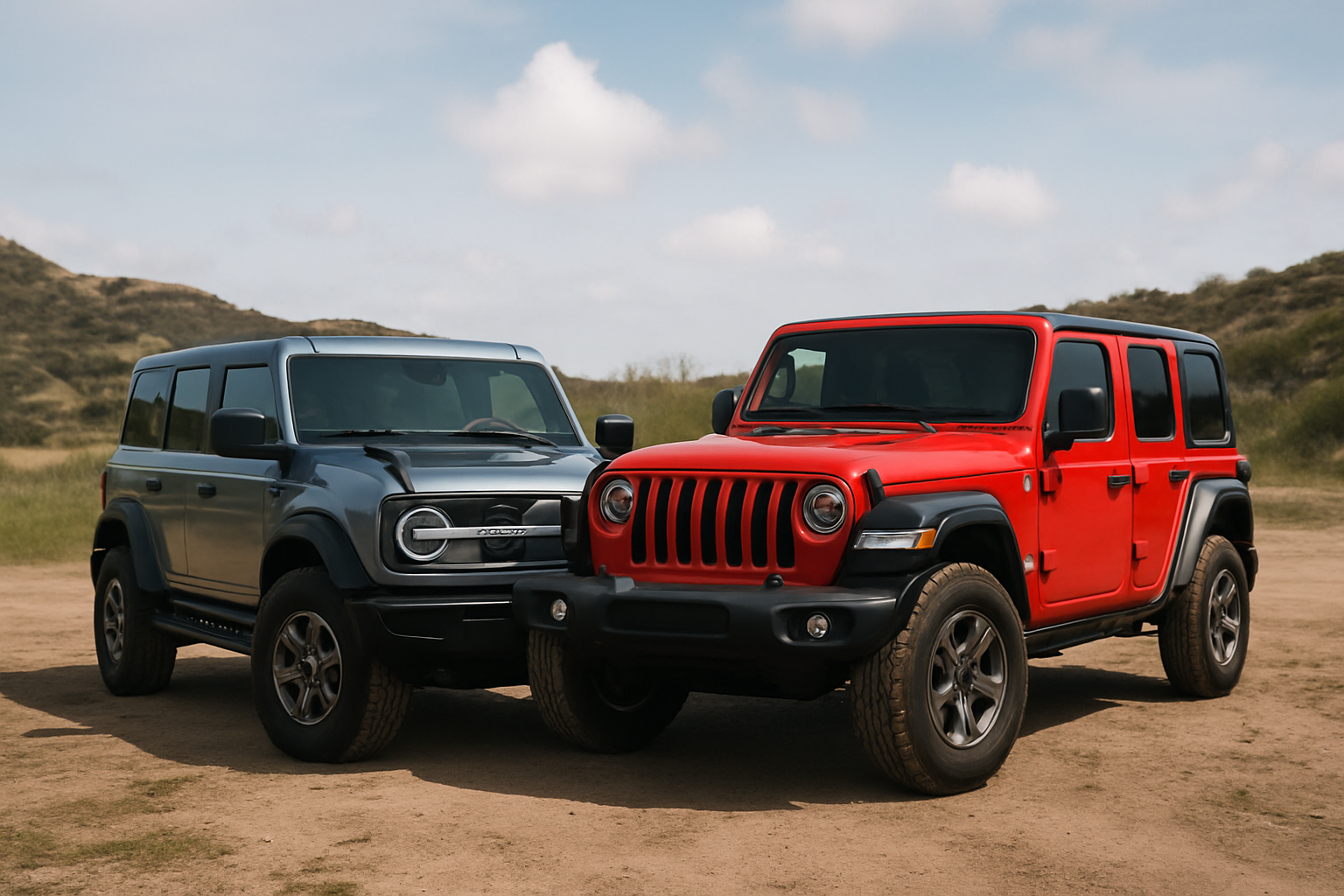
After two years on dealership lots, the Ford Bronco has finally given the Jeep Wrangler some real competition in the removable-top off-road segment. Both vehicles have built solid reputations, but enough time has passed to see how they actually perform in the real world.
I’ve spent considerable time with both the 2021-2023 Ford Bronco and current-generation Jeep Wrangler JL (2018-present). After driving them back-to-back on highways, city streets, and trails, plus talking to owners about their experiences, here’s what you need to know about each vehicle’s strengths and weaknesses.
On-Road Manners: Daily Driving Reality
The Ford Bronco feels more refined on pavement, especially at highway speeds. Its independent front suspension translates to better steering precision and less wandering compared to the Wrangler’s solid front axle setup. You’ll notice this difference immediately when merging onto highways or navigating parking lots.
Wind noise becomes a factor with both vehicles, but the Bronco’s design seems to handle crosswinds better. The Wrangler’s upright windshield and boxy shape create more buffeting, particularly noticeable above 65 mph. Both trucks require more steering corrections than a typical SUV, but the Bronco demands less constant attention.
Ride quality gives the Bronco another advantage for daily commuting. While neither vehicle will be mistaken for a luxury SUV, the Bronco’s suspension absorbs road imperfections with less harshness. The Wrangler’s solid axles create more of that “truck-like” feel that some buyers love but others find tiresome after long drives.
Engine options matter here too. The Bronco’s 2.3L EcoBoost provides smoother power delivery than the Wrangler’s base 3.6L Pentastar V6. The Bronco’s 2.7L EcoBoost V6 offers substantially more torque, making highway passing and loaded driving more confident. The Wrangler’s available 2.0L turbo-four provides good power but can feel strained under heavy acceleration.
Off-Road Capability: Where Both Shine
Both vehicles excel off-road, but they take different approaches. The Wrangler’s solid front and rear axles provide superior articulation over rocks and uneven terrain. You can watch the wheels flex independently while maintaining traction in situations that would leave other vehicles spinning.
The Bronco counters with advanced traction management systems and impressive approach/departure angles. Its Terrain Management System offers more driving modes than the Wrangler, including dedicated settings for sand, rocks, and mud. The system actively manages throttle, transmission, and differential behavior more aggressively than Jeep’s approach.
Ground clearance favors the Wrangler slightly, with Rubicon models offering 10.8 inches versus the Bronco’s 10.1 inches in Wildtrak trim. However, both provide enough clearance for serious trail work when properly equipped.
Wading depth gives the Bronco a clear advantage at 33.5 inches versus the Wrangler’s 30 inches. This difference matters for water crossings and flood recovery situations. The Bronco’s air intake positioning and electrical system routing were designed with deeper water in mind.
Crawl ratio comparison shows the Wrangler Rubicon with its 4:1 transfer case achieving better low-speed control than most Bronco configurations. However, the Bronco Sasquatch package with its Torsen limited-slip differentials provides excellent traction without requiring manual locker engagement.
Removable Top and Door Systems
Here’s where Jeep’s decades of experience show clearly. The Wrangler’s door removal process takes about five minutes with basic tools. Four bolts per door, electrical connections that unplug easily, and doors light enough for one person to handle comfortably.
The Bronco’s door removal involves more steps and heavier components. You’ll need to remove multiple trim pieces, deal with more complex wiring, and the doors themselves weigh considerably more than Wrangler doors. Plan on 15-20 minutes for door removal even after you’ve practiced.
Soft top operation heavily favors the Wrangler. Jeep’s three-piece soft top can be partially or completely removed by one person in under 10 minutes. The front section folds back for an open-air feel without full removal. Storage is simpler too, with dedicated spaces behind the rear seat.
The Bronco’s soft top requires two people for removal and takes significantly longer. The mechanism feels less refined, and reassembly can be frustrating if the fabric doesn’t align properly. However, when properly installed, it seals better than the Wrangler’s top and creates less wind noise.
Hard top removal on both vehicles requires two people and similar time investment. The Bronco’s modular hard top offers more configuration options, but the Wrangler’s simpler design means fewer potential leak points.
Reliability Track Record After Two Years
The Wrangler benefits from its longer production history and more mature platform. Common issues include water leaks around the windshield frame and soft top attachments, but these problems are well-documented with established fixes. The 3.6L Pentastar engine has proven reliable across multiple Stellantis vehicles.
Bronco reliability has been more concerning, particularly for early 2021 models. Hard top paint defects, soft top fit issues, and quality control problems affected many initial deliveries. Ford issued multiple service bulletins addressing top latching, water leaks, and trim panel fitment.
More serious Bronco issues include some 2.7L EcoBoost engine problems, transmission software glitches, and electrical gremlins affecting various systems. The Sasquatch package had early problems with CV joint durability that Ford addressed through parts updates.
Current 2023 models show improvement in build quality, but the Bronco still carries higher risk for unexpected problems. Ford’s warranty coverage has been reasonable for addressing these issues, but downtime and dealer visits create inconvenience.
Independent repair costs favor the Wrangler due to parts availability and technician familiarity. Most shops can work on Wrangler suspension and drivetrain components, while Bronco-specific parts may require dealer service.
Technology and Interior Space
The Bronco’s interior feels more modern with better materials and technology integration. The available 12-inch touchscreen operates more smoothly than Jeep’s Uconnect system, and Ford’s SYNC 4A includes more comprehensive off-road apps and trail mapping.
Rear seat space gives the four-door Bronco a slight advantage in legroom, but both vehicles prioritize function over passenger comfort. Neither offers exceptional rear seat space compared to traditional SUVs, but both accommodate adults adequately for shorter trips.
Cargo space measurements favor the Wrangler Unlimited with 31.7 cubic feet behind the rear seat versus the Bronco’s 29.5 cubic feet. However, the Bronco’s cargo area shape accommodates longer items more easily due to its wider opening.
Resale Value Considerations
Jeep Wrangler resale values remain exceptionally strong, often retaining 60-65% of original value after three years. This strength comes from consistent demand, brand loyalty, and the vehicle’s unique position in the market. Wrangler values actually increased during the pandemic shortage period.
Bronco resale values started strong due to initial demand exceeding supply, but long-term projections remain uncertain. The vehicle’s reliability concerns and Ford’s history of discontinuing specialty models create some uncertainty. However, strong initial sales and positive reception suggest decent value retention.
Special editions affect resale differently for each brand. Wrangler limited editions typically hold value well due to Jeep’s established collector following. Bronco special editions may appreciate if the model becomes collectible, but this remains speculative.
Fuel Economy Reality
Neither vehicle excels at fuel economy, but the Bronco’s engines generally achieve better EPA ratings. The 2.3L EcoBoost Bronco manages around 20 mpg combined in real-world driving, while the Wrangler’s 3.6L V6 typically achieves 17-18 mpg combined.
Highway fuel economy shows a bigger difference, with the Bronco capable of 24-25 mpg on long trips versus the Wrangler’s 21-22 mpg. City driving brings both vehicles down to similar levels around 16-17 mpg.
Premium fuel requirements affect operating costs. The Bronco’s 2.7L EcoBoost engine requires premium fuel for optimal performance, while the Wrangler runs fine on regular gasoline. This difference adds roughly $200-300 annually for average drivers.
Which Vehicle Makes Sense for You
Choose the Jeep Wrangler if you prioritize proven reliability, easier top/door removal, strong resale value, and maximum off-road capability. The Wrangler makes sense for buyers who plan frequent door-off driving, serious rock crawling, or want lower long-term ownership costs.
The Ford Bronco works better for buyers who want more refined on-road manners, modern technology, better fuel economy, and don’t mind trading some convenience for improved daily drivability. The Bronco suits buyers who plan more street driving than serious trail work.
Consider your local dealer network too. Jeep dealers have more Wrangler experience, while Ford dealers may still be learning Bronco-specific service procedures. Parts availability currently favors the Wrangler, especially for aftermarket modifications.
Final Recommendations
Both vehicles succeed at their primary mission of providing open-air off-road capability. Your choice should depend on how you balance daily usability versus maximum off-road performance.
For most buyers who want a capable weekend trail vehicle that won’t punish them during the work week, the Bronco offers better overall balance. Its superior on-road manners and modern amenities make it easier to live with daily.
Enthusiasts who prioritize maximum off-road ability and plan frequent door/top removal should stick with the Wrangler. Its superior articulation, easier modification, and proven reliability make it the better choice for serious off-road use.
Either way, you’ll get a genuinely capable vehicle that stands apart from typical SUVs. Both the Bronco and Wrangler deliver experiences that crossovers simply can’t match, making them worthwhile despite their compromises.
Leave a Reply