
A squeaky or noisy suspension can turn every drive into an embarrassing orchestra of creaks, groans, and rattles. While these sounds often indicate worn components that need attention, you can diagnose and sometimes fix suspension noise yourself without immediately heading to a shop.
Understanding Common Suspension Noise Sources
Your suspension system contains multiple components that can create noise as they wear out or lose lubrication. The most common culprits include sway bar end links, rubber bushings throughout the system, ball joints, and strut mounts.
Sway bar end links connect your sway bar to the suspension and often develop a distinctive clunking sound over bumps when they wear out. Ball joints create creaking or squeaking noises, especially when turning. Worn strut mounts produce knocking sounds from the top of your wheel wells, while dried-out bushings create squeaks and groans.
Each component has its own characteristic sound and location, which helps you pinpoint the problem. Learning to identify these sounds can save you diagnostic fees and help you tackle the right repair.
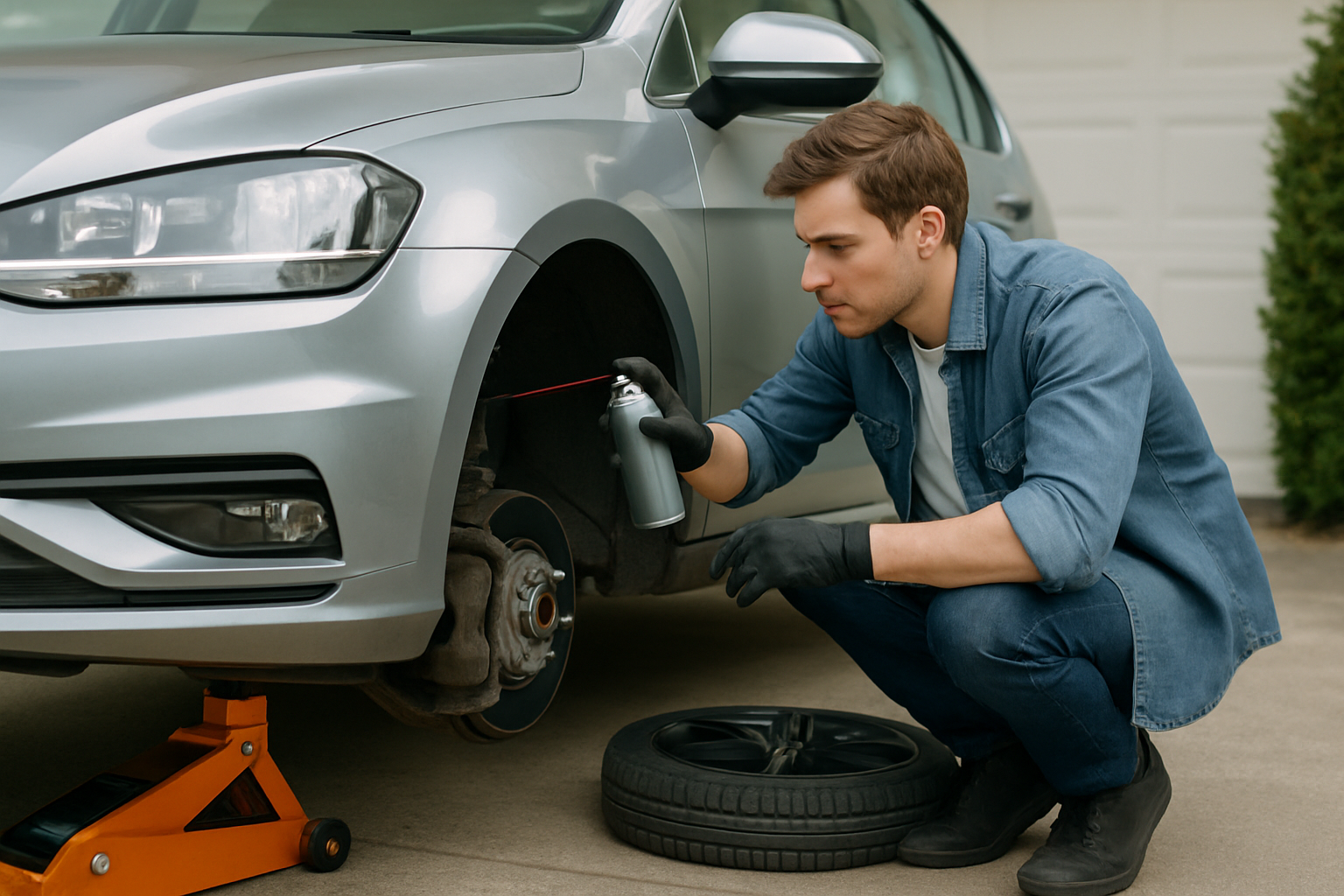
Quick Temporary Fix with Spray Lubricant
Before diving into part replacements, you can often quiet suspension noise temporarily using silicone spray lubricant on rubber bushings. This won’t fix worn components, but it can help you determine if bushings are the source of your noise.
Start by cleaning dirt and debris from visible bushings on your sway bar, control arms, and other suspension components. Spray a generous amount of silicone lubricant on each rubber bushing, working the suspension up and down by hand if possible.
Take the car for a test drive after treatment. If the noise disappears or significantly reduces, you’ve identified worn or dry bushings as the culprit. This fix typically lasts a few weeks to a month, giving you time to plan for proper repairs.
Avoid using petroleum-based lubricants on rubber bushings, as these can cause the rubber to deteriorate faster. Stick with silicone-based products specifically designed for rubber components.
The Bounce Test for Worn Shocks
Worn shocks and struts often create noise while also affecting your vehicle’s handling and ride quality. You can perform a simple bounce test to check their condition without any tools.
Push down firmly on each corner of your vehicle and release quickly. A properly functioning shock or strut should allow the car to return to its normal position with minimal bouncing. If the corner continues bouncing more than once or twice, that shock or strut likely needs replacement.
Worn shocks can create knocking, rattling, or clunking noises, especially over bumps or during compression and rebound cycles. They may also cause uneven tire wear patterns and reduced vehicle stability.
Recommended Tools and Products for DIY Suspension Work
Having the right products makes suspension maintenance much easier and more effective. Quality silicone lubricant sprays for rubber bushings are essential for both temporary fixes and long-term maintenance of suspension components.
Look for products specifically formulated for automotive rubber components. These typically resist washing away in rain and provide longer-lasting lubrication than general-purpose sprays. CRC, WD-40 Specialist, and 3M all make quality silicone lubricants suitable for suspension bushings.
You’ll also want a good penetrating oil for metal components and a wire brush for cleaning corroded parts before inspection or lubrication.
Diagnosing Sway Bar End Link Problems
Sway bar end links are often the first suspension components to fail and create noise. They’re also among the easiest to diagnose and replace yourself.
Listen for clunking or rattling noises over small bumps, especially when driving slowly through parking lots. The noise typically comes from the front wheels and may be more pronounced on one side.
Visually inspect the end links by looking through your wheel spokes or removing the wheels for better access. Check for obvious damage like cracked bushings, bent links, or loose hardware. You can often grab the end link and move it by hand to check for excessive play.
Many end links use ball joints that wear out and develop play. When the ball joint wears, you’ll hear clicking or clunking with each suspension movement. Replacement end links are typically inexpensive and straightforward to install with basic tools.
Ball Joint Inspection and Maintenance
Ball joints connect your control arms to the steering knuckles and bear significant loads while allowing suspension movement. When they wear out, they create creaking, squeaking, or clicking noises, especially during turns.
Check ball joints by grabbing the tire at the 12 and 6 o’clock positions and trying to rock it vertically. Excessive movement or clicking sounds indicate worn ball joints. You can also check by grabbing at 9 and 3 o’clock positions.
Some ball joints have grease fittings that allow periodic lubrication. If yours do, regular greasing can extend their life significantly. Use a grease gun with chassis grease, but don’t over-grease as this can damage the seals.
Ball joint replacement varies greatly in difficulty depending on your vehicle. Some press in and require special tools, while others bolt in place. Check your service manual before attempting replacement, as improper installation can be dangerous.
Strut Mount Issues and Solutions
Strut mounts sit at the top of your struts and often develop noise as the rubber components age and deteriorate. You’ll typically hear knocking or clunking from the top of the wheel wells, especially over bumps.
Strut mount problems often coincide with other suspension issues, as they tend to wear at similar rates. If you’re replacing struts, always consider replacing the mounts at the same time since labor overlap makes it cost-effective.
Some strut mounts are serviceable with just the mount replacement, while others require spring compression tools for safe disassembly. This job often requires specialized tools and experience, making it a good candidate for professional work if you’re not comfortable with spring compressors.
Bushing Replacement Strategies
Rubber bushings throughout your suspension system gradually deteriorate and can create various noises. Control arm bushings, sway bar bushings, and shock mount bushings all wear at different rates.
Inspect bushings for obvious cracking, deterioration, or separation from their metal housings. Many bushings can be pressed out and replaced individually, though some require special tools or heating for removal.
Consider upgrading to polyurethane bushings if noise continues to be a problem. Polyurethane lasts longer than rubber but may transmit more road noise and vibration into the cabin. The trade-off depends on your priorities for comfort versus longevity.
Some bushings come as part of complete control arm assemblies. While more expensive than just the bushing, complete assemblies often save labor time and ensure proper alignment of all components.
When to Call a Professional
While many suspension noises can be addressed with DIY methods, some situations require professional attention. Safety-critical components like ball joints and struts can be dangerous if installed incorrectly.
Consider professional help if you discover severely worn ball joints, as these affect steering control and can fail catastrophically. Similarly, strut work often requires spring compressors that can be dangerous without proper experience.
Multiple worn components often indicate it’s time for a comprehensive suspension overhaul. A shop can provide a complete assessment and tackle multiple repairs efficiently, often saving money compared to replacing components one at a time.
Any noise accompanied by changes in steering feel, vehicle pulling, or unusual tire wear patterns should be diagnosed professionally to ensure safe operation.
Frequently Asked Questions
Can I drive with squeaky suspension components?
Minor squeaks from dry bushings are usually safe to drive on temporarily, but any noise should be investigated promptly. Clunking, knocking, or grinding sounds may indicate safety-critical wear that requires immediate attention. When in doubt, have the noise diagnosed professionally before continuing to drive.
How long does spray lubricant last on suspension bushings?
Silicone spray lubricant typically provides 2-4 weeks of noise reduction on suspension bushings, depending on driving conditions and weather. This temporary fix helps identify the noise source but shouldn’t replace proper bushing replacement when components are worn beyond their service life.
What’s the difference between worn shocks and worn bushings in terms of noise?
Worn shocks typically create knocking or rattling noises during compression and rebound cycles, especially over larger bumps. Worn bushings usually produce squeaking, creaking, or groaning sounds during smaller suspension movements. The bounce test helps distinguish shock problems from other suspension noise sources.
Should I replace suspension components in pairs?
Yes, suspension components should generally be replaced in pairs to maintain balanced handling and prevent premature wear of the new part. This applies to shocks, struts, sway bar end links, and ball joints. Even if only one side is making noise, the other side is likely worn to a similar degree.
Leave a Reply