
A slow, sticky power window is one of those car problems that goes from mildly annoying to genuinely frustrating in about two days. You’ll find yourself pressing the button multiple times, waiting for that sluggish glass to creep up or down, and eventually wondering if you’ll be stuck with a half-open window forever.
Most window issues start simple but get worse over time. The good news is that many slow window problems can be fixed with basic maintenance and a few common tools.
Why Power Windows Get Slow and Sticky
Your power windows move along tracks and channels that collect dirt, debris, and old grease over months and years of use. Weather stripping gets stiff, rollers wear down, and the whole system starts working harder to move the glass.
Sometimes the problem is electrical. Window motors can weaken with age, or connections can get corroded. But before you assume you need expensive repairs, try the simple fixes first.
The window regulator, which is the mechanical assembly that actually moves the glass, can also wear out. When regulator components fail, you’ll notice specific symptoms beyond just slow movement.
Start With Cleaning and Lubrication
Before replacing any parts, clean and lubricate the window tracks. This simple maintenance step fixes about 70% of slow window issues and costs less than $10.
You’ll need a silicone-based spray lubricant designed for automotive use. Regular WD-40 isn’t ideal because it can attract dirt over time. Silicone spray lubricants work much better for window tracks because they don’t collect grime.
Start by rolling the window down completely. Look for the rubber weather stripping that runs along the inside and outside of the door frame. You’ll also see the metal tracks where the window glass slides.
Clean out any visible dirt, leaves, or debris from the tracks using a damp cloth or soft brush. Pay special attention to the bottom of the door where water and dirt collect.
Lubrication Process
Spray the silicone lubricant along both window tracks, focusing on the areas where you can see metal-to-metal contact points. Don’t oversoak the area, just a light, even coating.
Also lubricate the rubber weather stripping. Old, dry rubber creates a lot of friction as the window moves up and down. The silicone will help restore flexibility and reduce drag.
Once you’ve lubricated everything, operate the window several times to distribute the lubricant. You should notice smoother operation almost immediately if dirty tracks were your main problem.
Window Regulator Failure Symptoms
If cleaning and lubrication don’t solve the problem, you might be dealing with window regulator issues. The regulator is the mechanical system inside your door that converts the motor’s rotation into the up-and-down motion of the window.
Common regulator failure symptoms include windows that move very slowly even after lubrication, windows that stop partway and won’t continue, grinding or clicking noises when operating the window, and windows that fall down on their own.
You might also notice that the window sits crooked in the frame or doesn’t seal properly when fully closed. These are signs that the regulator’s guide tracks or mounting points have worn out.
Cable-type regulators can have frayed or broken cables, while gear-type regulators often develop worn plastic components. Both types can be repaired, but replacement is usually more cost-effective.
Electrical Issues and Motor Problems
Window motors can weaken over time, especially if they’ve been working against dirty tracks or worn regulators for months. A weak motor will struggle to move the window at normal speed.
Check the window switch first. Sometimes the problem isn’t the motor at all, but a worn switch that isn’t sending full power to the motor. Try operating the window from both the driver’s master switch and the individual door switch to see if one works better.
If the window moves normally from one switch but not the other, the switch is likely your problem. Window switches are usually easier and cheaper to replace than motors.
You can also test the motor by listening carefully when you press the switch. A healthy motor makes a smooth humming sound. Motors that are failing often make grinding noises, or you might hear the motor running but see no window movement.
Fixing Windows That Get Completely Stuck
When a window gets completely stuck and won’t move at all, you need to determine if the problem is electrical or mechanical. Start by checking the obvious things: blown fuses and dead switches.
Your owner’s manual will show you which fuse controls the power windows. Swap it with another fuse of the same amperage to rule out a simple blown fuse.
If the fuse is good and you can hear the motor running when you press the switch, the problem is likely mechanical. The regulator might have broken, or the window could have come off its track.
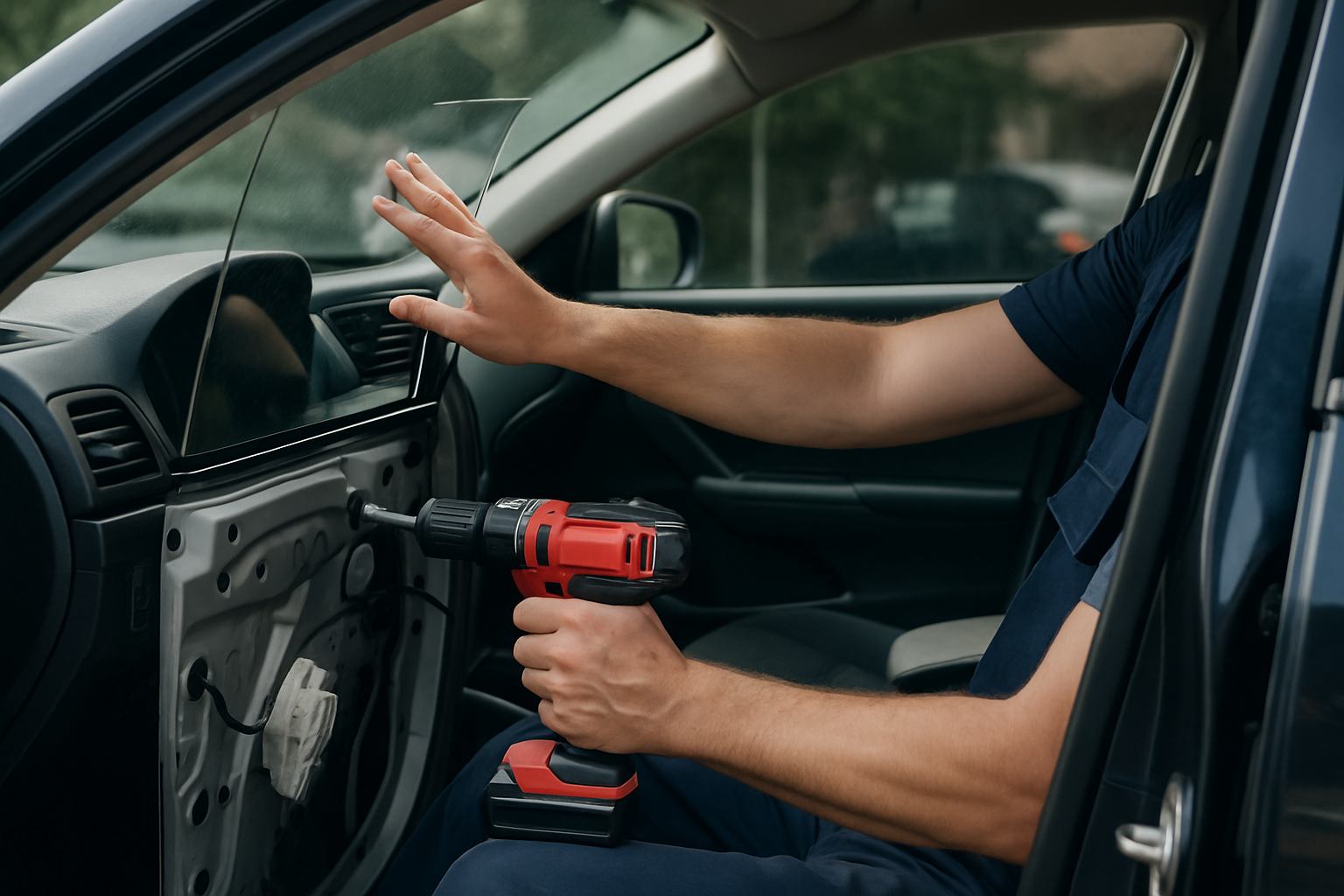
For windows stuck in the down position, you might be able to manually raise the glass enough to close the window temporarily. Remove the door panel carefully and look for the window glass. You can often push it up by hand while someone operates the switch.
Resetting Auto Up/Down After Battery Disconnect
Many modern cars have an auto up/down feature that lets you tap the window switch to automatically raise or lower the window completely. This feature can stop working after you disconnect the battery or after certain electrical work.
The auto function relies on the window control module “learning” the full travel range of each window. When this information gets erased, you’ll need to reset the system.
The reset process is usually simple but varies by manufacturer. For most cars, you’ll need to fully lower the window using the manual (non-auto) switch position, then hold the switch in the up position until the window closes completely and continue holding for 2-3 seconds after it stops.
Some vehicles require you to repeat this process twice, or to perform the reset with the engine running. Check your owner’s manual for the specific procedure for your car.
When to Call a Professional
While cleaning tracks and replacing switches are DIY-friendly tasks, some window repairs require removing door panels and working with electrical components inside tight spaces.
Window regulator replacement often involves supporting heavy glass while disconnecting multiple mounting points. If you’re not comfortable with this type of work, a professional can usually complete the job in 1-2 hours.
Motor replacement can also be tricky because you need to transfer the regulator assembly to the new motor, and the timing has to be correct to avoid damaging the new part.
Get quotes from both dealerships and independent shops. Independent shops often charge significantly less for window repairs, and the parts quality is usually equivalent.
Preventing Future Window Problems
Regular maintenance prevents most window issues. Clean and lubricate your window tracks every six months, especially if you park outside or drive in dusty conditions.
Avoid forcing stuck windows. If a window doesn’t want to move, stop pressing the switch and investigate the cause. Continuing to operate a stuck window can burn out the motor or damage the regulator.
Keep your weather stripping in good condition. Cracked or hardened rubber puts extra strain on the entire window system. Replace worn weather stripping before it starts affecting window operation.
If you live in a cold climate, don’t try to operate frozen windows. Let the car warm up and the ice melt naturally. Forcing a frozen window can damage multiple components at once.
Frequently Asked Questions
How much does it cost to fix a slow power window?
Simple fixes like cleaning and lubrication cost under $10. Window switch replacement typically runs $50-150 including parts and labor. Motor or regulator replacement can cost $200-500 depending on your vehicle and whether you choose OEM or aftermarket parts.
Can I drive with a broken power window?
You can drive safely with a non-functioning power window, but consider security and weather protection. If the window is stuck partway down, try to get it closed temporarily by manually pushing the glass up while operating the switch.
Why does my window work sometimes but not others?
Intermittent window operation usually indicates a worn switch, loose wiring connection, or a motor that’s beginning to fail. These problems typically get worse over time, so address them sooner rather than later.
Should I use regular oil or grease on window tracks?
Use only silicone-based lubricants designed for automotive applications. Regular oils and greases attract dirt and can actually make window operation worse over time. Silicone spray stays cleaner and lasts longer in automotive applications.

Leave a Reply