
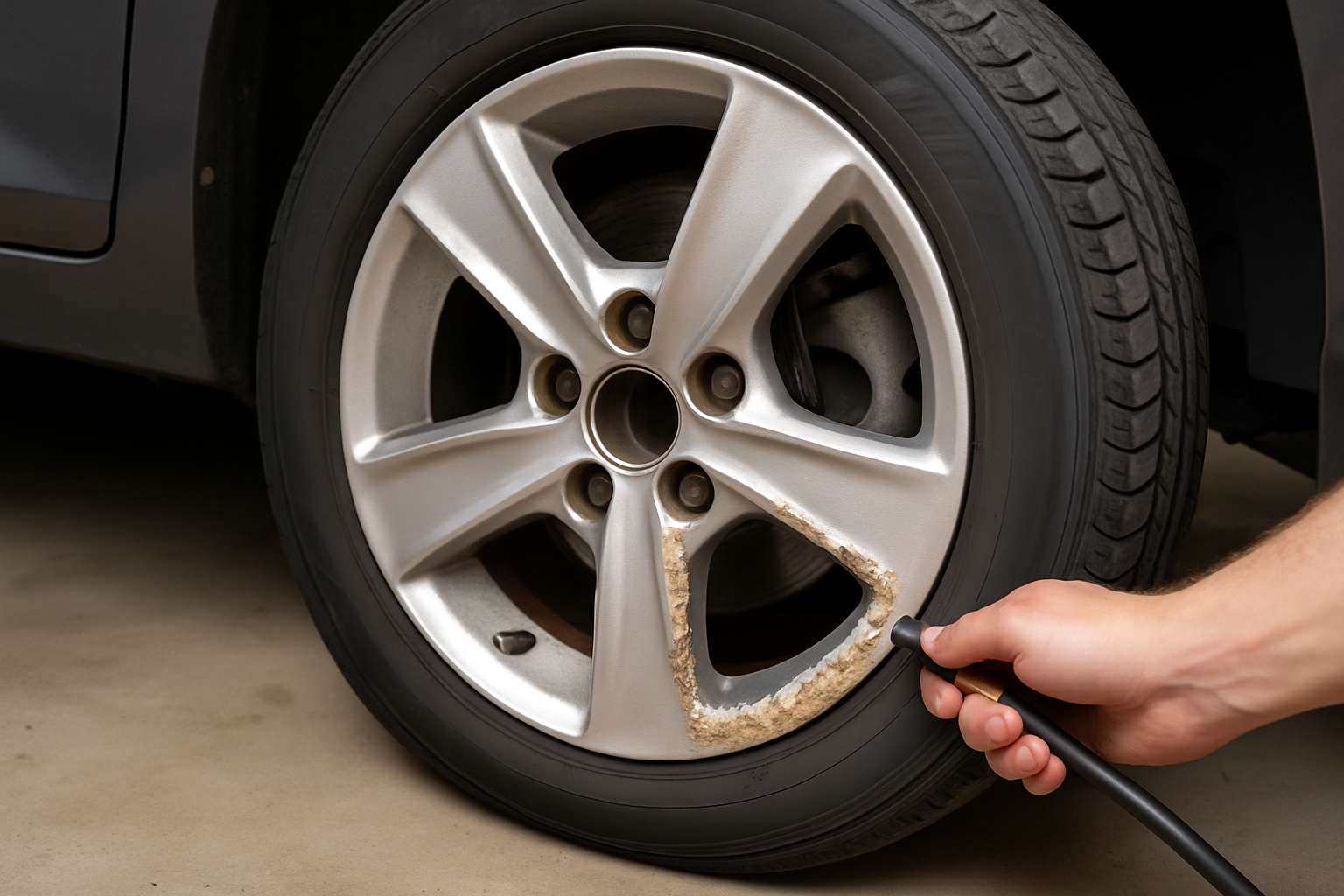
Dealing with a tire that slowly loses air pressure is frustrating, especially when the culprit isn’t a nail or obvious puncture. When your rim corrodes where the tire bead sits, it creates tiny gaps that let air escape gradually, leaving you constantly adding air to maintain proper pressure.
This problem is particularly common in rust belt states where road salt and harsh winters accelerate corrosion on alloy wheels. The good news is that fixing a corroded rim seal doesn’t require replacing expensive wheels.
Understanding How Rim Corrosion Causes Tire Leaks
Your tire creates an airtight seal where its inner edge (called the bead) meets the rim. This seal relies on smooth, clean metal surfaces pressed tightly together. When corrosion builds up on the rim where the tire bead sits, it creates microscopic channels that allow air to escape slowly.
Alloy wheels are especially susceptible to this type of corrosion. The aluminum material reacts with road salt, moisture, and other environmental factors to form white, chalky deposits. These deposits prevent the tire bead from sealing properly against the rim.
You’ll typically notice this problem as a tire that loses 5-10 PSI per week or month, depending on how severe the corrosion has become. The leak often gets worse during temperature changes because thermal expansion and contraction can open up the microscopic gaps even more.
Signs Your Slow Leak is Caused by Rim Corrosion
Before assuming rim corrosion is your problem, you should rule out other common causes. Check for obvious punctures, damaged valve stems, or visible cracks in the tire sidewall.
Several clues point specifically to rim corrosion as the culprit. The tire loses air gradually over days or weeks rather than going flat quickly. You might notice white, chalky residue around the rim where it meets the tire, especially on the inside edge that’s harder to see during regular inspections.
Temperature changes often make the leak more noticeable. Cold weather typically makes the problem worse because the tire contracts and creates larger gaps at the corroded seal points.
If you’ve had the tire professionally inspected and they couldn’t find any punctures or valve issues, rim corrosion becomes the most likely explanation for your slow leak.
Temporary Fix: Using Bead Sealer
Bead sealer offers a quick temporary solution that can buy you time before getting a proper repair. This thick, paste-like compound fills small gaps between the tire bead and rim to restore the seal temporarily.
You can find bead sealer at most auto parts stores. Popular brands include Permatex Bead Sealer and STA-BIL Tire Seal. The process involves deflating the tire, applying the sealer around the rim where the tire bead sits, then reinflating.
Keep in mind this is truly a temporary fix. Bead sealer typically lasts several months at best, and it doesn’t address the underlying corrosion problem. The corrosion will continue getting worse underneath the sealer.
This temporary approach works well if you’re planning to replace the wheels soon anyway, or if you need to get through winter before addressing the problem properly in spring.
The Proper Professional Fix: Dismounting and Cleaning
The correct long-term solution involves dismounting the tire from the rim and properly cleaning away all corrosion. Most tire shops can handle this repair, though some may be more experienced with the process than others.
A qualified technician will use a tire machine to carefully remove the tire from the corroded rim. They’ll then use sandpaper, wire brushes, or specialized cleaning tools to remove all visible corrosion from the rim’s bead seat area.
The cleaning process requires removing every trace of corrosion and oxidation. Any remaining deposits can cause the leak to return quickly. Many shops finish the cleaning with fine-grit sandpaper to create a smooth surface for optimal sealing.
After cleaning, the technician applies fresh tire mounting paste or soap to help the tire bead seat properly, then remounts and balances the wheel. The entire process typically takes 30-45 minutes per wheel.
What to Expect During Professional Service
When you take your vehicle to a tire shop, explain that you suspect rim corrosion is causing your slow leak. A good technician will inspect the wheel before dismounting to confirm the diagnosis and show you the corroded areas.
Expect to pay between $25-50 per wheel for this service, depending on your location and the severity of corrosion. Shops with more experience dealing with corroded rims tend to do more thorough cleaning jobs.
Some technicians might recommend additional services like applying rim protectant or suggesting wheel replacement if the corrosion is extremely severe. However, most rim corrosion can be successfully cleaned and resealed.
Ask the shop to show you the cleaned rim before remounting the tire. You should see bright, smooth metal where the tire bead will sit, with no visible white or gray corrosion remaining.
DIY Approach: Tools and Process
If you have access to tire mounting equipment, you can tackle this repair yourself. You’ll need a way to dismount the tire, which typically requires specialized tire machines that most home mechanics don’t have.
Some adventurous DIYers use tire spoons and soap to manually break the bead and work the tire off the rim. This approach requires significant physical effort and risks damaging the tire or rim if done incorrectly.
For the cleaning process, you’ll need medium-grit sandpaper (around 220-grit), wire brushes, and plenty of patience. Work methodically around the entire bead seat area, removing every trace of corrosion you can see or feel.
Clean the area thoroughly with degreaser or brake cleaner after sanding, then dry completely before remounting the tire. Use tire mounting paste or soap solution to help the bead seat properly during reinstallation.
Preventing Future Rim Corrosion
Once you’ve fixed the immediate problem, taking steps to prevent future corrosion will save you from repeating this repair. Regular wheel cleaning helps remove salt and corrosive materials before they can cause significant damage.
Pay special attention to cleaning the inner barrel of your wheels where the tire mounts. This area often gets neglected during regular car washing but accumulates the most damaging road salt and debris.
Consider applying wheel wax or specialized rim protectant products that create a barrier against corrosive materials. These products are especially valuable if you live in areas where road salt is used heavily during winter months.
When possible, rinse your wheels thoroughly after driving on salted roads. Even a quick spray with a garden hose can help prevent salt from sitting on the rim surface long enough to cause corrosion.
When to Consider Wheel Replacement
Most cases of rim corrosion can be successfully cleaned and repaired. However, some situations call for wheel replacement instead of attempting repairs.
If the corrosion has created deep pits or actual holes in the rim metal, cleaning won’t restore a proper sealing surface. Severe corrosion that has weakened the structural integrity of the wheel also requires replacement for safety reasons.
Wheels that have been previously repaired for corrosion multiple times may not be worth fixing again. The repeated sanding and cleaning can eventually thin the rim material enough to compromise its strength.
When replacement becomes necessary, consider upgrading to wheels with better corrosion resistance or applying protective coatings to new wheels from the start.
Cost Comparison: Repair vs. Replace
Professional rim cleaning and resealing typically costs $25-50 per wheel, making it an economical solution for most situations. Even if you need all four wheels serviced, the total cost usually stays under $200.
Replacement wheels vary dramatically in price. Basic steel wheels might cost $50-100 each, while OEM alloy wheels often run $200-500 or more per wheel. High-end aftermarket wheels can cost even more.
Factor in mounting, balancing, and disposal fees when comparing repair versus replacement costs. The repair option becomes even more attractive when you consider these additional expenses.
However, don’t let cost alone drive your decision if the corrosion is severe enough to compromise wheel safety or structural integrity.
Frequently Asked Questions
How long does a professional rim corrosion repair last?
When done properly, cleaning corroded rim bead seats should provide a permanent fix for the air leak. The repair itself doesn’t wear out, but the rim can develop new corrosion over time if exposed to the same conditions that caused the original problem. With proper maintenance and protection, you can expect several years before corrosion becomes an issue again.
Can I drive on a tire with a slow leak caused by rim corrosion?
You can continue driving as long as you monitor tire pressure regularly and keep it properly inflated. Check the pressure at least weekly and add air as needed. However, don’t ignore the problem long-term. Driving on underinflated tires reduces fuel economy, causes uneven wear, and can be dangerous if the pressure drops too low.
Will tire sealant products fix a leak caused by rim corrosion?
Liquid tire sealants that you inject through the valve stem rarely work effectively for bead seal leaks. These products are designed to seal punctures in the tire tread area, not gaps between the tire and rim. The sealant typically can’t reach the leak location or create a lasting seal against the corroded metal surface.
Is rim corrosion covered under tire or wheel warranties?
Most tire warranties don’t cover air leaks caused by rim corrosion since the problem originates with the wheel, not the tire itself. Wheel warranties typically exclude corrosion damage unless it’s clearly a manufacturing defect rather than environmental damage from road salt and normal use. Check your specific warranty terms, but plan to pay for this repair out of pocket in most cases.
Leave a Reply