
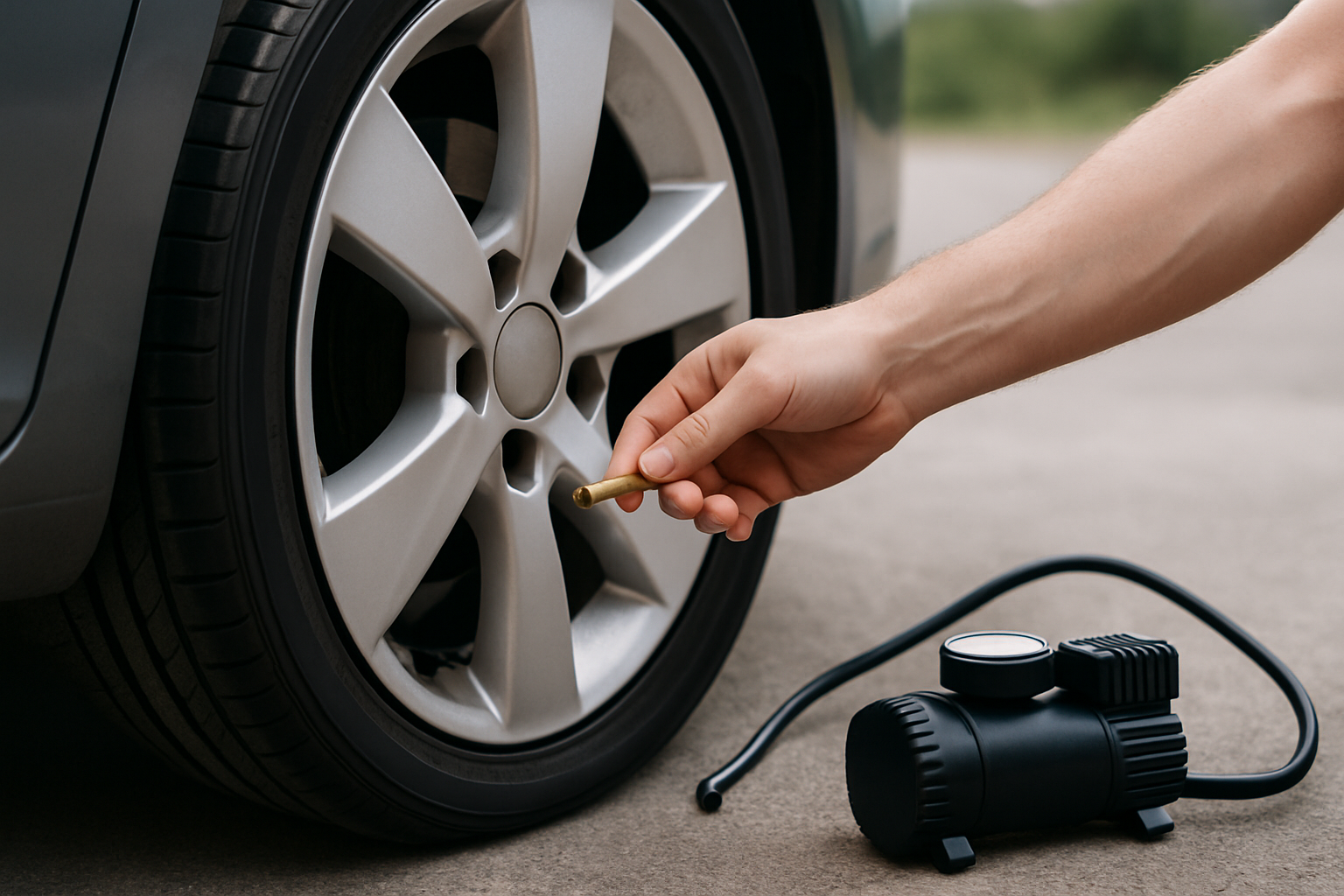
A slow leak from your tire valve stem is one of those annoying car problems that seems to require a trip to the tire shop, but you can actually fix it yourself in about 10 minutes for around $2. Most valve stem leaks come from a worn valve core inside the stem, not the stem itself.
What Causes Tire Valve Stem Leaks
Your tire’s valve stem has a small removable part called a valve core that does the actual work of keeping air in and letting air out when you press it. Over time, the tiny rubber seal inside this valve core deteriorates from heat, cold, and regular use.
The valve core is basically a spring-loaded pin with a rubber washer. When that washer gets old and brittle, air slowly escapes past it. This creates the classic slow leak where you find your tire down 5-10 PSI every few days or weeks.
Most people assume they need a whole new valve stem, but replacing just the valve core fixes about 80% of these leaks. It’s a much simpler and cheaper solution than you might think.
How to Identify a Valve Core Leak
Before you start replacing parts, you want to confirm the leak is actually coming from the valve core and not somewhere else on the tire or rim.
Mix up some soapy water in a spray bottle or small container. You can use dish soap, hand soap, or even shampoo. Spray or dab this soapy solution directly onto the valve stem while the tire is inflated.
If you see bubbles forming around the center of the valve stem (where you’d attach an air chuck), the valve core is leaking. If bubbles appear around the base where the stem meets the rim, you might have a different problem with the stem itself.
Check the entire valve stem area, including the threads and the rubber base. Focus on the tip where the valve core sits, since that’s the most common leak point.
Tools and Parts You’ll Need
The only specialized tool you need is a valve stem tool, which costs about $3-5 at any auto parts store or online. This small tool has threads on one end that match the valve core threads and a slotted tip for turning.
You’ll also need a replacement valve core. These typically come in packs of multiple cores for around $2-3. Most valve cores are universal and will fit any standard tire valve stem on cars, trucks, or motorcycles.
Some valve stem tool kits include replacement cores, which makes the whole repair even more convenient. Having a basic tire pressure gauge handy helps too, so you can check your work when you’re done.
Removing the Old Valve Core
Start with the tire inflated to normal pressure. You don’t need to remove air first, though the tire will deflate as you unscrew the valve core.
Thread the valve stem tool clockwise into the valve stem until it grabs the valve core inside. You’ll feel it catch onto the core’s threads after turning it a few times.
Once the tool is engaged with the valve core, turn it counterclockwise to unscrew the core. The tire will start hissing and releasing air as soon as you begin loosening the core.
Keep turning until the valve core comes completely out. The air will stop flowing once the core is removed. Don’t worry about losing all the air, you’ll re-inflate the tire after installing the new core.
Installing the New Valve Core
Take your new valve core and thread it onto the valve stem tool. Make sure it’s seated properly on the tool’s threads before you start the installation.
Insert the tool with the new core into the valve stem and turn clockwise. The core should thread in easily without forcing it. Cross-threading can damage the valve stem, so go slowly at first.
Tighten the core until it seats properly, but don’t overtighten. You want it snug enough to seal completely, but not so tight that you strip the soft metal threads. Hand-tight plus about a quarter turn is usually right.
Remove the valve stem tool by turning it counterclockwise while holding the core in place with slight pressure. The core should stay put while the tool backs out.
Testing Your Repair
Re-inflate your tire to the proper pressure using your normal air source. Check the sidewall or door jamb sticker for the correct PSI specification for your vehicle.
Once the tire is inflated, test your repair with the soapy water solution again. Spray or dab it onto the valve stem area and look for any bubbles that indicate ongoing leaks.
If you don’t see any bubbles after a minute or two, your repair is successful. Replace the valve cap to keep dirt and moisture out of the valve core area.
Monitor the tire pressure over the next few days to make sure the leak is completely resolved. A properly installed valve core should hold air indefinitely.
Recommended Valve Core Replacement Tools
You can find quality valve stem core tools and replacement cores that make this repair simple and affordable. Look for kits that include both the removal tool and multiple replacement cores.
Many of these kits cost less than what you’d pay for a single trip to the tire shop, and you’ll have extra cores for future repairs. Some include different types of cores for various applications.
The basic four-in-one valve tools are particularly useful because they can remove cores, check tire pressure, add air, and remove foreign objects from the valve stem threads.
When Valve Core Replacement Won’t Work
If your soapy water test shows bubbles around the base of the valve stem or along the rubber where it meets the rim, you have a different problem. This usually means the valve stem itself is cracked or the rubber seal around it has failed.
Valve stems that are visibly cracked, split, or severely weathered need complete replacement. This requires dismounting the tire from the rim, which typically means a trip to the tire shop.
Metal valve stems on some wheels can develop leaks at threaded connections that won’t be fixed by replacing just the core. These might need thread sealant or complete stem replacement.
If you replace the valve core but still have a slow leak, double-check your installation and consider that the problem might be elsewhere on the tire or rim.
Preventing Future Valve Core Problems
Valve cores typically last several years, but you can extend their life with basic maintenance. Always replace the valve cap after checking or adding air to prevent dirt and moisture contamination.
When you’re at gas stations or using public air pumps, check that the air chuck is clean before connecting it to your valve stem. Dirty air chucks can introduce debris that damages valve cores.
Consider replacing valve cores preventively when you get new tires installed. It’s cheap insurance against future leaks and gives you a fresh start with new tires.
Keep a valve stem tool and spare cores in your vehicle’s toolkit. This repair is easy enough to do roadside if you have the right tools available.
Frequently Asked Questions
How long do valve cores typically last?
Most valve cores last 3-5 years under normal driving conditions. Extreme temperatures, frequent pressure checks, and exposure to road chemicals can shorten this lifespan. If your car sits outside year-round or you live in an area with harsh winters, you might need to replace cores more frequently.
Can I drive on a tire with a slow valve core leak?
You can drive short distances while monitoring the pressure closely, but don’t ignore a valve core leak. Even slow leaks can lead to dangerous underinflation, especially on longer trips. The repair is so quick and inexpensive that there’s no good reason to delay fixing it.
Are all valve cores the same size?
Standard passenger car, truck, and motorcycle valve cores are nearly universal and use the same threading. Some specialty applications like tubeless wheelbarrow tires or industrial equipment might use different sizes, but automotive valve cores are standardized across manufacturers.
What if the valve core won’t come out?
If a valve core is stuck or corroded in place, try penetrating oil and let it sit for a few minutes. Make sure your valve stem tool is properly engaged with the core’s threads. In extreme cases, you might need to replace the entire valve stem, which requires professional tire service.

Leave a Reply