
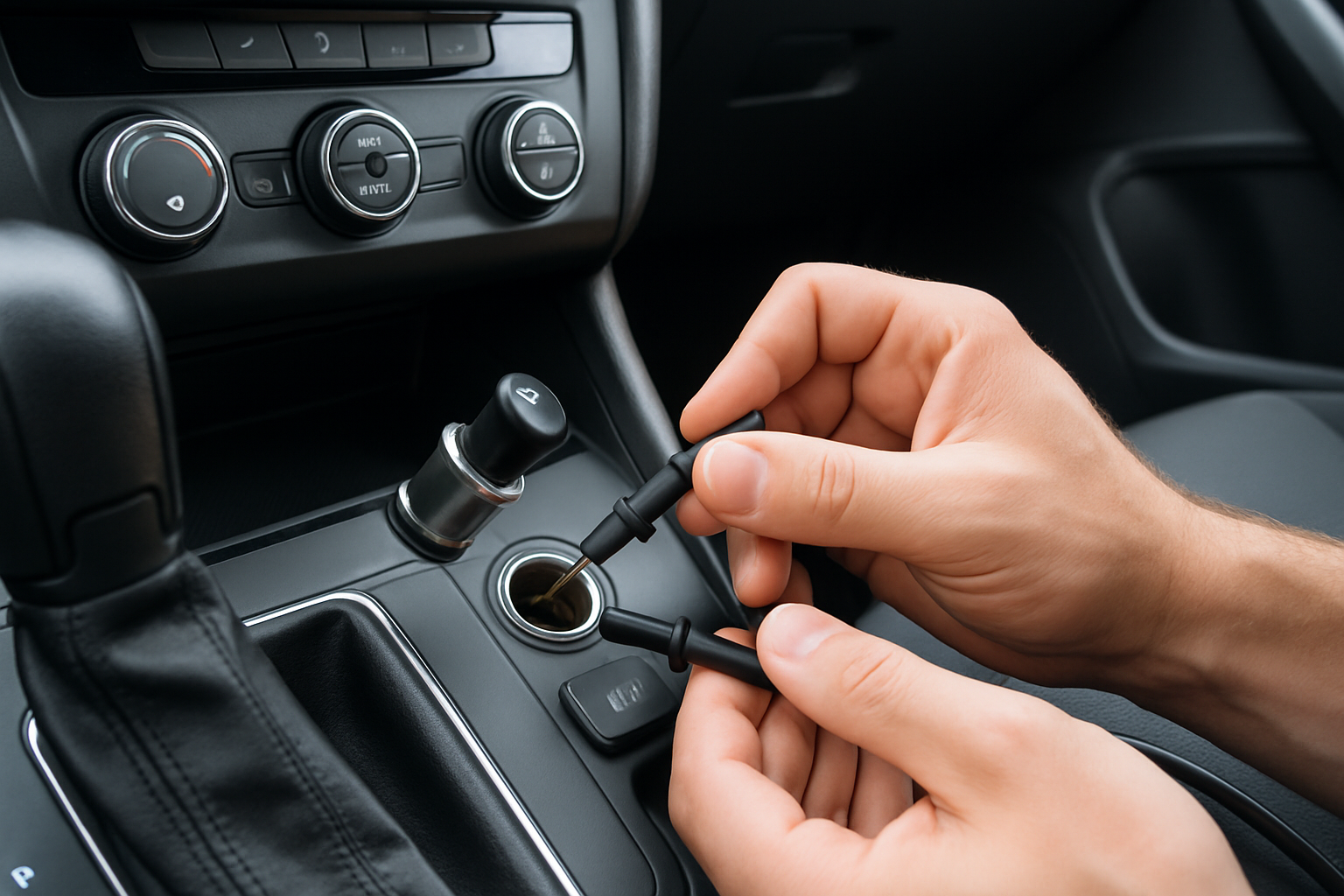
When your car’s cigarette lighter or 12V outlet stops working, you’ve got a real problem on your hands. These ports power everything from phone chargers to dash cams, and losing that functionality can turn a simple road trip into a frustrating experience.
The good news is that 95% of the time, you’re dealing with nothing more than a blown fuse. This is actually one of the easier car problems to diagnose and fix yourself, and you probably won’t need any special tools or expensive parts.
Understanding Your Car’s 12V Outlet System
Your cigarette lighter and 12V outlets are essentially the same thing. Modern cars use these ports primarily for powering accessories rather than actual cigarette lighters. They all connect to your car’s electrical system through a dedicated fuse, usually rated between 15 and 20 amps.
When you plug in a device that draws too much power, or if there’s a short circuit, the fuse blows to protect your car’s electrical system. This is actually the fuse doing its job correctly, even though it’s inconvenient for you.
Most vehicles have multiple 12V outlets, but they often share the same fuse. This means if one stops working, you might find that several outlets have failed simultaneously.
Diagnosing the Problem
Before you start pulling fuses, confirm that the outlet is actually dead. Try plugging in a device you know works, like a phone charger with an LED indicator. If the device doesn’t power on and there’s no light, you’ve likely got a blown fuse.
Check all your 12V outlets if you have multiple ones. If they’re all dead, you can be almost certain it’s a fuse issue. If only one outlet isn’t working, you might have a problem with that specific socket.
Some outlets only work when the ignition is on, while others stay powered all the time. Make sure your car is running or in accessory mode when testing.
Locating the Correct Fuse Box
Most cars have two fuse boxes: one under the hood and one inside the cabin. The cigarette lighter fuse is almost always in the interior fuse box, though some vehicles put it in the under-hood box.
The interior fuse box is typically located in one of these spots:
- Left side of the dashboard (driver’s side)
- Below the steering wheel
- In the center console
- On the passenger side footwell
Check your owner’s manual for the exact location. If you don’t have the manual, look for a rectangular plastic cover that might have “FUSE” printed on it, or search online for your specific make and model.
Finding the Right Fuse
Once you’ve located the fuse box, you need to identify which fuse controls your 12V outlets. There should be a diagram either on the inside of the fuse box cover or in your owner’s manual.
The fuse might be labeled as:
- CIG LIGHTER
- POWER OUTLET
- ACCESSORY
- 12V OUTLET
- PWR POINT
The fuse number and amperage will be listed on the diagram. Most cigarette lighter fuses are 15 or 20 amps, though some vehicles use 10 or 25 amp fuses.
Checking and Replacing the Fuse
Turn off your car and remove the key before working with fuses. Most fuse boxes have a small plastic fuse puller tool attached inside the box. If not, you can use needle-nose pliers, but be gentle.
Pull out the suspected fuse and hold it up to the light. A blown fuse will have a broken metal strip inside the clear or colored plastic housing. Sometimes the plastic will be blackened or melted if the fuse blew dramatically.
If the fuse looks good, double-check that you’ve got the right one by referring back to the diagram. You might also want to test the fuse with a multimeter if you have one available.
Replacement fuses cost less than a dollar each and are available at any auto parts store, gas station, or even many grocery stores. Make sure you get the exact same amperage. Using a higher amp fuse can damage your car’s electrical system, while a lower amp fuse will just blow again immediately.
Push the new fuse firmly into place until it sits flush with the other fuses. Test your outlets to make sure everything works before closing up the fuse box.
When the Fuse Isn’t the Problem
If you’ve replaced the fuse and your outlets still don’t work, or if the new fuse blows immediately, you’ve got a more serious issue. The outlet socket itself might have failed, or there could be a short circuit in the wiring.
Outlet sockets can wear out over time, especially if you frequently plug and unplug devices. The spring contacts inside can lose tension or break completely. You might also see physical damage like melted plastic around the socket.
Replacing a 12V outlet socket is more involved than changing a fuse. You’ll typically need to remove dashboard panels to access the back of the socket, and you might need to splice new wiring connections.
Troubleshooting a Short Circuit
If your new fuse blows immediately after installation, you’ve got a short circuit somewhere in the system. This could be in the wiring harness or inside one of the outlet sockets.
Unplug any devices from all your 12V outlets and try the fuse again. If it still blows, the problem is in the wiring or sockets themselves. If the fuse holds with nothing plugged in, one of your devices is drawing too much current.
Check the amp rating on your devices. A typical 12V outlet can handle 10-15 amps safely. Power inverters, especially cheap ones, are common culprits for blowing fuses because they can draw massive amounts of current.
Professional Diagnosis and Repair
If you’re not comfortable working with electrical systems, or if the problem turns out to be more than just a blown fuse, take your car to a qualified mechanic. Electrical problems can be tricky to diagnose without proper tools and experience.
A shop will typically charge 1-2 hours of labor to diagnose and repair a 12V outlet issue. This might seem expensive for such a simple problem, but they’ll have the right tools to quickly pinpoint shorts and replace faulty components.
Some shops specialize in automotive electrical work and might be more cost-effective than a general repair facility for this type of problem.
Preventing Future Problems
Most 12V outlet failures happen because people plug in devices that draw too much power. Always check the amp rating on your accessories before plugging them in. Your outlet should have its amp rating printed nearby, or you can check your owner’s manual.
Avoid using cheap power inverters or charging multiple high-draw devices simultaneously. If you need more power capacity, consider having additional outlets installed or upgrading to higher-capacity circuits.
Keep your outlets clean and free of debris. Coins, paper clips, and other metal objects can cause short circuits if they fall into the socket. Some people install spring-loaded covers to protect unused outlets.
FAQ
Can I use a higher amp fuse if I keep blowing the original rating?
Never use a higher amp fuse than specified. The fuse protects your car’s wiring from overheating and potentially causing a fire. If you keep blowing fuses, you need to reduce the electrical load or fix an underlying problem, not increase the fuse rating.
Why do some outlets work only when the car is running?
Many vehicles have outlets connected to two different circuits. Some stay powered all the time for convenience, while others only work with the ignition on to prevent draining your battery. Check your owner’s manual to see which outlets are always-on versus ignition-controlled.
Can I replace a 12V outlet socket myself?
Replacing the socket is possible for someone with basic electrical skills, but it requires removing interior panels and working with live wiring. If you’re not comfortable with electrical work, have a professional handle the replacement to avoid damage to your dashboard or electrical system.
How much does it cost to fix a dead 12V outlet?
If it’s just a blown fuse, you’re looking at under $5 for parts and maybe 15 minutes of your time. If the outlet socket needs replacement, expect $50-150 in parts and labor at a shop, depending on how difficult it is to access the outlet in your specific vehicle.

Leave a Reply