
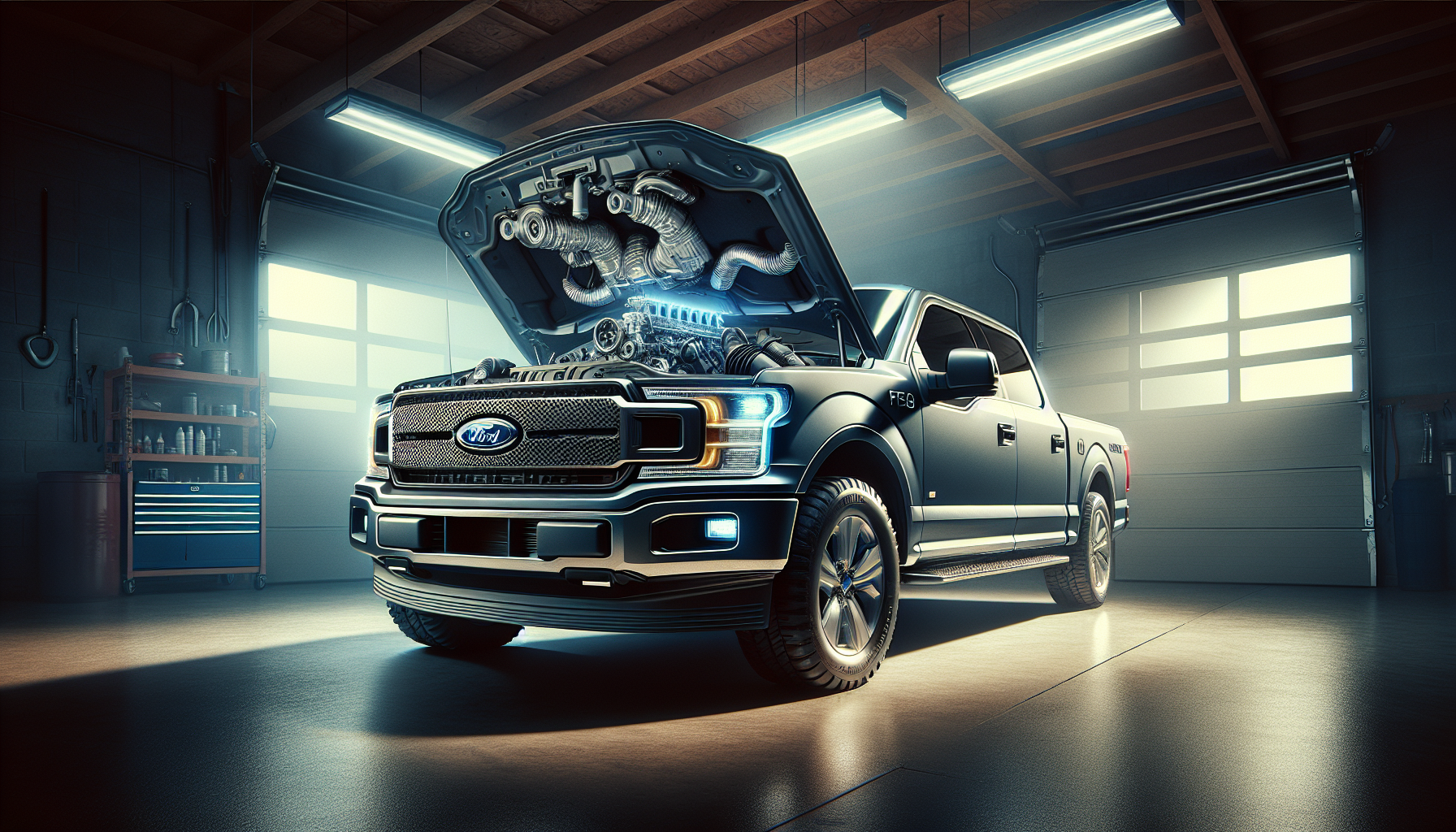
If you own a Ford F-150 with the 3.5L EcoBoost engine, you’ve probably heard it. That distinctive rattling sound on cold starts that sounds like marbles bouncing around in a tin can. It usually lasts a few seconds, then disappears once the engine warms up. Welcome to the world of wastegate rattle, one of the most common complaints among EcoBoost owners.
This isn’t just an annoyance. It’s actually a documented issue with the wastegate actuators on these turbos. The good news is that it’s not always a sign of catastrophic failure, and there are ways to address it without dropping thousands at the dealer. Some fixes work better than others, and I’ll walk you through what actually helps versus what’s just wishful thinking.
Common Causes
The wastegate is a valve that controls how much exhaust gas flows through the turbocharger. When it’s not needed, the wastegate opens to divert exhaust away from the turbine wheel. The problem is in how Ford designed the actuator arm and rod assembly.
On cold starts, the actuator rod can develop excessive play. Metal contracts when it’s cold, and the tolerances in these actuators weren’t tight enough from the factory. This creates a gap that lets the rod bounce around for those first few seconds until everything heats up and expands. Some trucks rattle louder than others depending on how worn the components are.
Ford has gone through multiple revisions of these wastegate actuators. Earlier versions from 2011-2014 seem to develop the rattle more frequently, but even newer models aren’t immune. The 2015+ models got updated actuators with slightly better tolerances, though they still develop noise over time.
Heat cycling makes it worse. Every time your truck goes from cold to hot and back again, those metal components expand and contract. After 50,000 miles or so, the wear adds up. Some trucks start rattling at 30,000 miles, others not until 100,000. It depends on how the truck was driven and whether it sees a lot of short trips where the turbos never fully heat soak.
How to Diagnose the Problem
Before you start throwing parts at it, make sure you’re actually dealing with wastegate rattle and not something else. There are a few other noises that get mistaken for this issue.
Start your truck from completely cold. Like, it sat overnight in your driveway cold. Listen carefully during the first 5-10 seconds. The wastegate rattle is a metallic clattering that’s most noticeable right at idle, and it goes away or significantly reduces once the engine reaches operating temperature. If the noise persists when warm, you might be dealing with a different problem like timing chain wear or exhaust leaks.
Pop the hood and listen from the engine bay. The sound comes from the back of the engine where the turbos sit. If you have someone start the truck while you listen (safely, don’t stand where you could get hurt), you can usually pinpoint which turbo is making noise. Often it’s the passenger side, but both can rattle.
This video explains the cold startup rattle in detail:
Check for any trouble codes with an OBD2 scanner. Wastegate rattle by itself usually won’t throw a code, but if you’re seeing P0046, P0047, P0049, or similar turbo control codes, that confirms you’ve got wastegate issues. No codes? That’s normal for this particular problem.
How to Fix It
There are a few approaches here, ranging from free to moderately expensive. I’ll start with what actually works based on what I’ve seen from other EcoBoost owners.
The Spring Clip Fix
This is the cheapest option and surprisingly effective for mild to moderate rattle. You’re essentially adding tension to the wastegate actuator rod to reduce the play. You need small stainless steel hose clamps or heavy-duty zip ties.
Locate the wastegate actuator on the back of each turbo. You’ll see a rod that connects to the wastegate valve. Place a small hose clamp or zip tie around the boot where the rod enters the actuator housing. Tighten it enough to add resistance without preventing the wastegate from moving freely. This takes up some of that excess play.
Does it work? For some trucks, yes. It can reduce or eliminate the rattle for 20,000-30,000 miles. For others, it’s a temporary band-aid that buys you a few months. It won’t hurt anything to try, and you’re out maybe $5 in parts.
This video shows the spring clip fix in action with before and after sounds:
Wastegate Actuator Replacement
If the spring fix doesn’t cut it or you want a more permanent solution, replacing the wastegate actuators is the real fix. Ford has revised these parts multiple times, and the newer versions are better designed.
You can replace just the actuators without replacing the entire turbo assembly. The part numbers you want are BR3Z-6K682-B for the updated actuators. They run about $150-200 each from Ford, and you’ll need two if you’re doing both sides.
This job isn’t terrible if you’re comfortable working on your truck, but it requires removing the exhaust downpipes and getting to the back of the engine. Budget 4-6 hours if you’re doing it in your driveway. You’ll need basic hand tools, a jack and stands, and some penetrating oil for those exhaust bolts.
Remove the plastic engine cover first. Disconnect the vacuum lines from the actuators and mark which goes where with tape. Unbolt the actuator from the turbo housing (usually three bolts). The tricky part is getting the rod disconnected from the wastegate arm without damaging anything. Some people use a small pry bar, but be gentle.
Install the new actuator in reverse order. Make sure the rod engages properly with the wastegate arm. Reconnect vacuum lines, tighten everything down, and start it up. The rattle should be gone or dramatically reduced.
Full Turbo Replacement
If your turbos are already showing signs of failure beyond just the rattle (oil consumption, loss of boost, blue smoke), then replacing the entire turbo assembly might make sense. But for wastegate rattle alone? That’s overkill and expensive.
Aftermarket companies make upgraded turbo assemblies with better wastegate designs, but you’re looking at $2,000-3,000 for parts alone. Only go this route if you’re already rebuilding the engine or the turbos are genuinely shot.
When to See a Mechanic
The spring clip fix is easy enough for anyone. But wastegate actuator replacement gets into territory where you need some mechanical skill and the right tools.
If you’re not comfortable working underneath your truck or dealing with exhaust components, take it to a shop. A good independent shop that knows Ford EcoBoost engines can do the actuator replacement for $500-800 in labor on top of parts. The dealer will charge more, usually $1,200-1,500 total for both actuators installed.
You should definitely see a mechanic if the rattle is accompanied by loss of power, check engine lights, excessive oil consumption, or smoke from the exhaust. Those symptoms suggest the turbos have bigger problems than just noisy wastegates.
Also, if you’re still under warranty or have an extended warranty, let Ford deal with it. They’ve issued technical service bulletins about this issue (TSB 18-2346), so it’s a known problem. Some dealers will replace the actuators under warranty, though others claim it’s “normal operation” unless it throws a code. Push back if they give you that line.
Estimated Repair Costs
| Repair Option | Parts Cost | Labor Cost (Shop) | DIY Difficulty |
|---|---|---|---|
| Spring clip/zip tie fix | $5-10 | $0 (DIY only) | Easy |
| Wastegate actuator replacement (both) | $300-400 | $500-800 | Moderate |
| Dealer actuator replacement | Included | $1,200-1,500 | N/A |
| Full turbo replacement (both) | $2,000-3,000 | $1,000-1,500 | Difficult |
Prices vary by location and whether you use OEM Ford parts or aftermarket. The actuators themselves are pretty similar across brands, so OEM is usually the safe bet for this repair.
Prevention Tips
Once you’ve fixed the rattle, you want to keep it from coming back. Here’s what actually helps.
Let your truck warm up for 30-60 seconds before driving. I know everyone says modern engines don’t need warmup time, but giving the oil a chance to circulate and the turbos to come up to temperature reduces that cold metal-on-metal contact that causes wear.
Don’t beat on cold turbos. Wait until the engine reaches operating temperature before doing pulls or towing heavy loads. Cold turbo components don’t expand evenly, which accelerates wear on those actuator rods.
Use quality oil and change it on time. The 3.5L EcoBoost is picky about oil. Ford specifies 5W-30 synthetic, and you should stick with that. These turbos run hot, and cheap oil breaks down faster. Change it every 5,000 miles if you tow or do a lot of short trips.
Consider switching to a slightly heavier weight oil if you’re in a warm climate and past 100,000 miles. Some owners report that 5W-40 reduces rattle on high-mileage trucks, though this isn’t officially recommended by Ford. It’s worth discussing with your mechanic.
Final Thoughts
Wastegate rattle is annoying, but it’s not an emergency. Most F-150 EcoBoost owners live with it for years without any actual turbo failure. If it bugs you or you’re worried about resale value, the actuator replacement is the real fix. The spring clip method works surprisingly well as a cheap temporary solution.
Don’t panic if your truck starts making this noise. It’s common enough that there’s a whole community of EcoBoost owners dealing with the same thing. The turbos themselves are generally solid, it’s just this one design quirk that Ford never quite got right on the earlier models.


Leave a Reply