
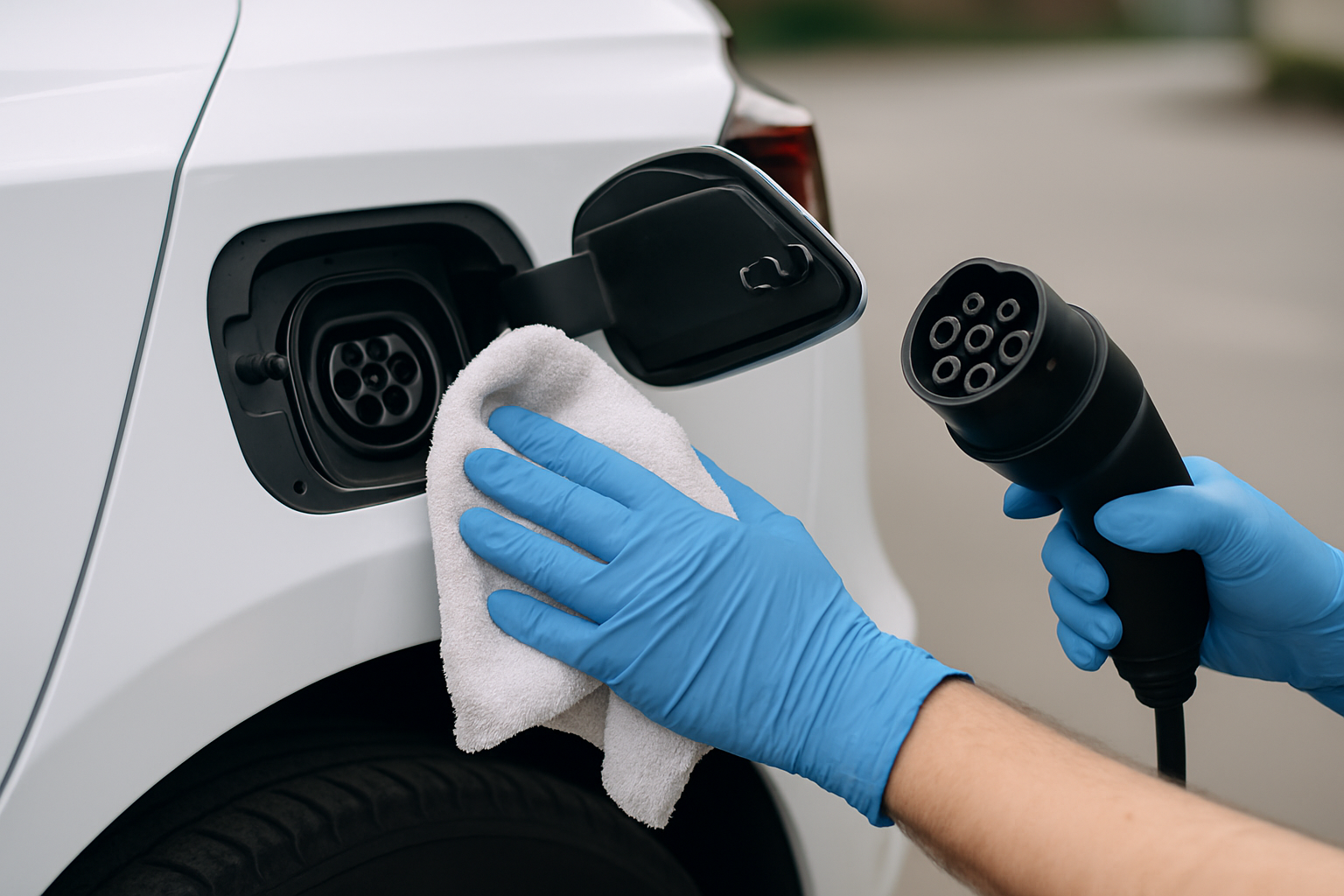
Your EV’s charging port might look clean at first glance, but dirt, moisture, and road grime love to hide in those pins and connectors. Over time, this buildup slows your charging speeds and can even cause arcing or connection failures. A quick cleaning every few months keeps your charging system working at full capacity and prevents costly repairs down the road.
Just like maintaining other vehicle systems (similar to how EV battery maintenance matters for longevity), keeping your charging port clean is essential preventive care. Here’s exactly how to do it safely and effectively.
Safety First: Preparing to Clean Your Charging Port
Before you touch anything, make sure your vehicle is completely powered off. Never clean the charging port while the car is on or connected to a charger. This isn’t just about protecting your equipment; it’s about protecting yourself from potential electrical shock.
Wait at least 10 minutes after your last charge to let any residual current dissipate. Check that the port area is dry. If you’ve been driving in rain or snow, park in a covered area and let everything air out for 30 minutes before starting.
You’ll need a few basic supplies: a microfiber cloth, isopropyl alcohol (91% or higher), cotton swabs, and a can of compressed air. For regular maintenance, that’s really all you need.

EV Charging Port Cleaning Kit
Complete kit with specialized brushes and cleaning solution designed specifically for EV charging contacts.
The Step-by-Step Cleaning Process
Start with compressed air to blow out loose debris from both the vehicle port and your charging connector. Hold the can upright and use short bursts to avoid moisture buildup. Pay special attention to the pin contacts and any crevices where dirt accumulates.
Next, dampen a microfiber cloth with isopropyl alcohol. Wipe down the outer housing of the port and the visible surfaces. For the pins and contact points, dip a cotton swab in alcohol and gently clean each contact. Don’t scrub aggressively; light, careful strokes work better and won’t damage the contacts.
Let everything air dry for at least 15 minutes before plugging in. The alcohol evaporates quickly, but you want to be absolutely certain no moisture remains on the electrical contacts.
For stubborn buildup or corrosion, a specialized electrical contact cleaner works better than alcohol. These cleaners are designed to dissolve oxidation without leaving residue.
Applying Dielectric Grease for Long-Term Protection
After cleaning, applying a thin layer of dielectric grease to the port’s rubber seals (not the pins) helps prevent moisture intrusion. This is especially important if you park outdoors or live in humid climates.

Dielectric Grease
Prevents corrosion and moisture damage on charging port seals and weather-exposed connections.
Use a small amount on your fingertip or a clean swab and apply it only to the rubber gasket around the port opening. Avoid getting any grease on the metal pins or contact surfaces, as this can actually interfere with conductivity. The grease creates a moisture barrier that keeps water and contaminants out between cleanings.
For your charging cable connector, inspect the pins for any signs of pitting or discoloration. Clean them the same way you cleaned the port. Many people forget to maintain their home charging equipment, but your cable connector needs just as much attention as the vehicle port.
How Often Should You Clean Your Charging Port?
If you charge primarily at home in a garage, cleaning every three to four months is usually sufficient. For those who frequently use public chargers or park outdoors, monthly inspections make more sense. You’re exposing the port to more environmental contaminants, dust, and varying weather conditions.
Watch for warning signs between scheduled cleanings. Slower than normal charging speeds, connection errors on your dashboard, or visible dirt in the port all signal it’s time for maintenance. Don’t wait for these symptoms; regular cleaning prevents them from happening in the first place.
Frequently Asked Questions
Can I use WD-40 or other household cleaners on my charging port?
No, avoid WD-40, household cleaners, or any petroleum-based products. These leave residues that attract more dirt and can interfere with electrical connections. Stick with isopropyl alcohol (91% or higher) or dedicated electrical contact cleaners. These evaporate completely and won’t damage sensitive components.
What should I do if I see corrosion on the charging pins?
Light surface corrosion can usually be cleaned with electrical contact cleaner and a soft brush. If you see deep pitting, discoloration that won’t clean off, or any melted plastic around the pins, stop using that port immediately and have it inspected by a certified EV technician. Continuing to use a damaged port risks electrical faults or fire hazards. Minor corrosion is normal over time, but significant damage indicates a bigger problem that requires professional attention.
Leave a Reply