
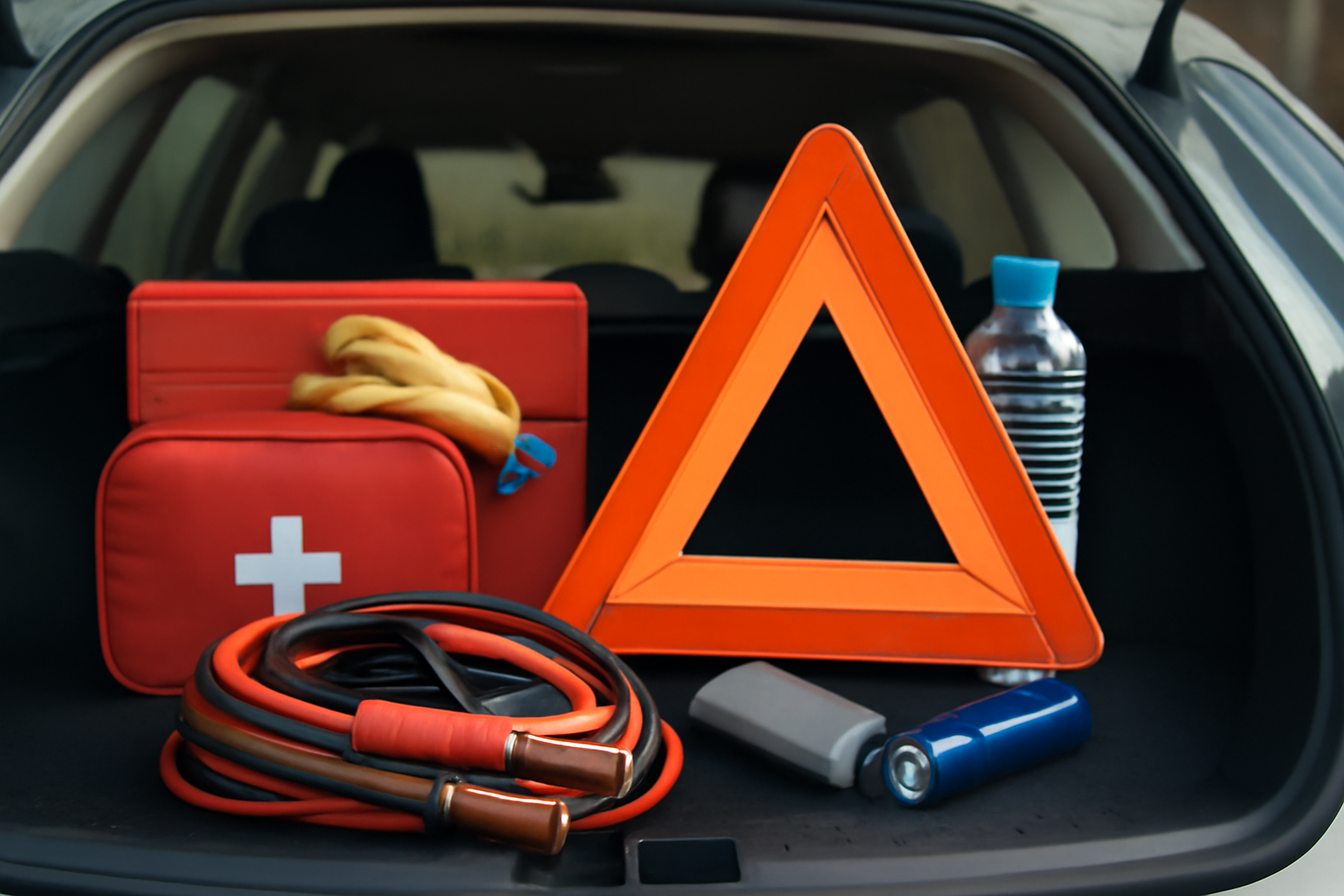
An emergency kit sitting in your trunk is like insurance you hope you never need, but you’ll be incredibly grateful for when you do. A flat tire on a rural highway at night, a dead battery in a parking garage, or an unexpected breakdown in winter weather are all situations where the right supplies can mean the difference between a minor inconvenience and a genuine crisis.
Whether you’re buying a reliable used car or driving a first car for a new driver, having the right emergency supplies on board is essential for every vehicle on the road.
Essential Items Every Kit Should Include
These are the non-negotiable items that belong in every vehicle. A set of heavy-duty jumper cables (or a lithium jump starter), a basic first aid kit, a flashlight with extra batteries, reflective warning triangles, and a rain poncho. Add a phone charger and a USB cable that works with your phone.
A multi-tool or basic tool kit with pliers, screwdrivers, and an adjustable wrench handles a surprising number of roadside situations. Duct tape and zip ties serve as temporary fixes for everything from loose trim to dangling exhaust heat shields.

Heavy Duty Jumper Cables
Look for cables with at least 4-gauge wire and 20-foot length for easier positioning between vehicles
Pre-Made vs. Build-Your-Own Kits
Pre-made car emergency kits are convenient starting points. They typically include reflective triangles, a basic tool set, jumper cables, a flashlight, gloves, and first aid supplies in a compact bag. The quality varies significantly by price point, so inspect the contents when they arrive and replace any flimsy items.
Building your own kit lets you choose higher-quality components and customize for your specific needs. Start with the essentials above and add items based on your climate, driving patterns, and vehicle type.
Climate-Specific Additions
Cold Weather
Add a wool blanket or emergency mylar blankets, hand warmers, an ice scraper, a small bag of sand or kitty litter for traction, and a candle with matches (a single candle can keep a car interior above freezing for hours). Non-perishable snacks and a bottle of water round out your cold-weather supplies.
These items become especially important if you drive in remote areas or own trucks that hold their value and get used for winter work or outdoor activities.
Hot Weather
Extra water (at least one gallon per person), sunscreen, a wide-brimmed hat, and a battery-powered fan are essential in hot climates. A jug of premixed coolant can address an overheating emergency until you reach a shop.
If you’ve ever experienced car overheating with the AC on, you know how quickly a hot-weather breakdown can become dangerous. Having extra coolant and water can be a lifesaver.
Tire Repair Supplies
A portable tire inflator and a tire repair kit (plug-style) handle most punctures from nails and screws. Many 2026 vehicles no longer include a spare tire, making these items even more critical. Add a can of tire sealant as a backup for small punctures when a plug repair isn’t practical.
If your vehicle does have a spare tire, check its pressure every 6 months. Spare tires lose air just like the mounted tires, and a flat spare is useless when you need it most.

Portable Tire Inflator
Choose one that plugs into your 12V outlet and includes a digital pressure gauge for accuracy
Safety and Visibility Items
Reflective triangles are visible at much greater distances than flares and don’t pose a fire risk. Set them up at 10 feet, 100 feet, and 200 feet behind your vehicle when stopped on the roadside. A reflective safety vest makes you visible to passing traffic if you need to walk around your vehicle at night.
LED road flares are a modern alternative to traditional flares. They’re reusable, visible for over a mile, and have multiple flashing modes.
Frequently Asked Questions
How often should I check my emergency kit?
Inspect your kit every 6 months. Check flashlight batteries, replace expired first aid supplies, verify your phone charger still works with your current phone, and swap out water bottles to keep them fresh.
Should I keep a fire extinguisher in my car?
A small ABC-rated fire extinguisher is a smart addition. Mount it securely (under a seat or in the trunk with a bracket) so it doesn’t become a projectile in a collision. Even a small extinguisher can contain an engine fire long enough to get everyone to safety.
Do I need an emergency kit if I have roadside assistance?
Yes. Roadside assistance can take 30 minutes to several hours to arrive, depending on your location. Your emergency kit keeps you safe, visible, and comfortable while you wait.
What items should I replace most frequently in my kit?
Water bottles should be rotated every 6 to 12 months, batteries need checking twice a year, and first aid supplies have expiration dates that require regular monitoring. Food items like energy bars should also be replaced before they expire.

Leave a Reply