

Breaking down on the side of the road happens to every driver eventually. A well-stocked emergency kit in your trunk turns a potential crisis into a manageable inconvenience. Whether you’re buying for yourself or assembling one for a teen driver heading off to college, having the right gear within reach makes all the difference.
What Every Roadside Kit Should Include
A good emergency roadside kit covers three categories: visibility, basic repairs, and personal safety. Pre-made kits bundle these essentials together in a single bag or case, which keeps everything organized and easy to grab.
Visibility and Warning
Reflective triangles or LED road flares warn other drivers you’re stopped. Triangles are wind-resistant and don’t expire, while LED flares are visible from farther away.
A flashlight with fresh batteries (or a rechargeable one) lets you see what you’re doing and signals to passing cars that someone is present.
Basic Tools and Repair
Jumper cables (at least 4-gauge, 16 feet) handle dead batteries. A tire pressure gauge and portable inflator address low tires. Basic hand tools like pliers, a screwdriver set, duct tape, and zip ties handle minor roadside fixes.
A rain poncho keeps you dry while working outside.
Personal Safety
A basic first aid kit covers cuts and scrapes. A reflective safety vest makes you visible if you need to walk along the road.
In cold climates, add a blanket, hand warmers, and a few granola bars. A USB-compatible phone charger or battery bank ensures you can always call for help.
Pre-Made Kits vs. Building Your Own
Pre-made kits are convenient and usually less expensive than buying each item individually. The downside is that some kits include low-quality jumper cables or skip important items to hit a price point.
Check the cable gauge (lower is thicker and better) and make sure the kit includes reflective triangles, not just a flimsy reflective triangle sticker.
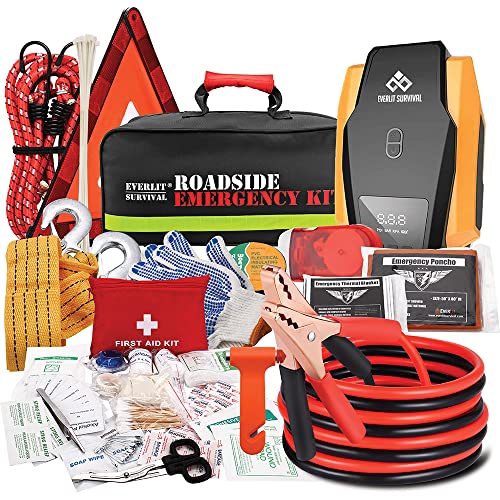
Car Emergency Roadside Kit
Look for kits with at least 4-gauge jumper cables and durable reflective triangles
Building your own kit lets you choose higher-quality components. Start with a durable bag or plastic case, then add items based on your climate and driving habits.
If you live in a snowy region, add a small shovel, ice scraper, and traction mats. Desert drivers should include extra water and sunscreen.
Upgrading a Basic Kit
A portable jump starter replaces bulky jumper cables and doesn’t require a second vehicle. A compact lithium jump starter fits in the kit bag and doubles as a phone charger. It’s the single best upgrade for any roadside kit.

Portable Jump Starter
Works without needing another vehicle and includes USB charging for phones
A tire plug kit handles punctures from nails and screws without removing the tire. Combined with a portable inflator, it gets you back on the road faster than waiting for roadside assistance.
Kits for Teen Drivers
Parents buying kits for new teen drivers should focus on simplicity. Include a laminated card with emergency contacts, insurance information, and step-by-step instructions for common situations like a flat tire or dead battery.
A prepaid roadside assistance membership adds another layer of support. This pairs well with choosing one of the best first cars for new teenage drivers that are reliable and easy to maintain.
Walk through the kit with your teen and practice using the jumper cables or jump starter in the driveway. Knowing the tools exist is useless if they don’t know how to use them under pressure.
Maintaining Your Kit
Check your kit every six months. Replace expired first aid supplies, test the flashlight batteries, and verify that the jump starter is charged.
Inspect cables for cracking and make sure nothing has leaked or deteriorated in the heat. A kit that’s been baking in a hot trunk for two years without a check may not work when you need it.
This is especially important if you’re driving high-mileage vehicles where the risk of breakdown is higher.
Frequently Asked Questions
How much should a roadside kit cost?
Quality pre-made kits are quite affordable and cover the basics well. A custom-built kit with premium components costs more. Either way, it’s a tiny investment compared to the cost of a tow or the stress of being stranded unprepared.
Do I need a roadside kit if I have AAA?
Yes. Roadside assistance can take 30 to 90 minutes to arrive, and it doesn’t help with minor issues like low tire pressure, a small cut, or needing a flashlight to find something you dropped in a dark parking lot. A kit handles the situations that don’t require a tow truck.
Where should I store the kit in my car?
Keep it in the trunk where it’s accessible but not in the way of groceries and daily cargo. A trunk organizer with a dedicated compartment for the kit works well. Avoid storing it under heavy items that make it hard to reach in an emergency.
What’s the most important upgrade for a basic kit?
A portable jump starter is the best single upgrade you can make. It eliminates the need for another vehicle and also serves as a phone charger, making it useful in multiple emergency situations.

Leave a Reply