
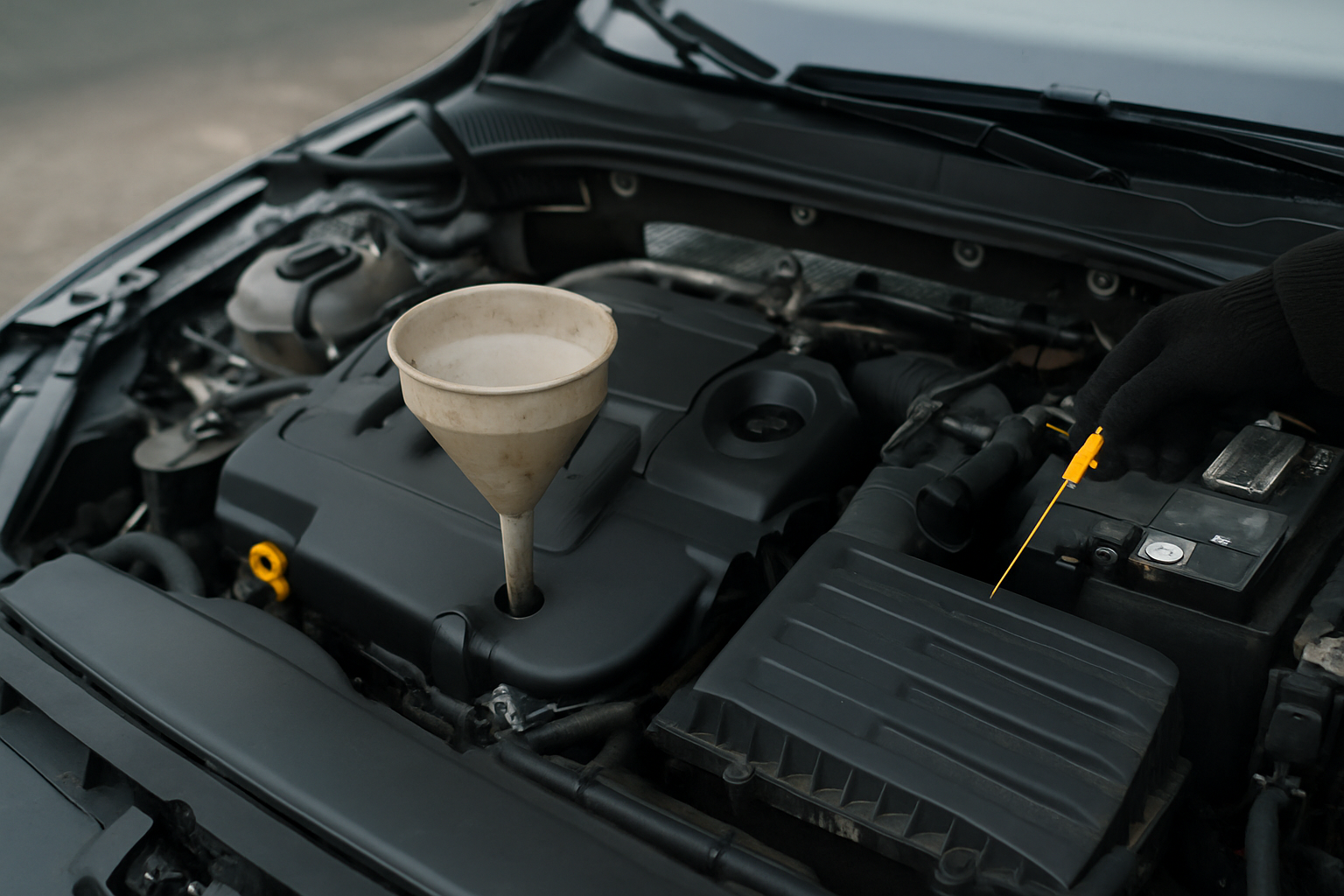
Checking your oil level and finding it low again can be frustrating, especially when you just topped it off last month. Oil consumption is normal for most engines, but excessive burning can signal serious problems that need attention. Understanding when oil consumption crosses the line from normal to concerning helps you protect your engine and avoid costly repairs.
How Much Oil Consumption is Actually Normal
Every engine burns some oil during normal operation. Most manufacturers consider oil consumption of up to one quart per 3,000 to 5,000 miles acceptable. However, if you’re adding a quart every 1,000 miles or less, your engine has crossed into excessive oil consumption territory.
Modern engines typically consume less oil than older designs, but even new vehicles can develop consumption issues. Some engines have earned reputations as oil burners, including certain Subaru boxer engines and Toyota’s 2.5-liter four-cylinder found in Camrys and RAV4s from specific model years.
Keep track of your oil consumption by noting the mileage when you add oil. This data becomes crucial if warranty claims or major repairs become necessary.
The Main Culprits Behind Oil Burning
Worn Piston Rings
Piston rings create a seal between the piston and cylinder wall, preventing oil from entering the combustion chamber. When rings wear out, oil seeps past them and burns during combustion. High mileage, poor maintenance, or manufacturing defects can cause premature ring wear.
Worn rings often produce blue smoke from the exhaust, especially during startup or acceleration. You might also notice reduced engine power and increased oil consumption that gradually worsens over time.
Failing Valve Stem Seals
Valve stem seals prevent oil from flowing down the valve stems into the combustion chamber. These small rubber seals harden and crack over time, allowing oil to leak past them. Unlike worn rings, bad valve seals typically cause oil burning primarily during startup.
You’ll see blue smoke when starting the engine after it sits for several hours. Once the engine warms up, the smoking usually stops until the next cold start.
Faulty PCV Valve
The Positive Crankcase Ventilation (PCV) valve regulates pressure in the crankcase and prevents oil from being sucked into the intake manifold. A stuck or failed PCV valve can create excessive vacuum, pulling oil through seals and into the combustion chamber.
PCV valve problems often cause rough idle, increased oil consumption, and sometimes oil leaks around seals and gaskets. Fortunately, PCV valves are inexpensive and easy to replace on most vehicles.
Worn Cylinder Walls
Excessive wear on cylinder walls, often called cylinder bore wear, reduces the effectiveness of piston rings. This wear can result from poor lubrication, overheating, or contaminated oil that acts like sandpaper on internal components.
Cylinder wear typically affects high-mileage engines or those subjected to severe operating conditions like frequent short trips, dusty environments, or extended oil change intervals.
Engine-Specific Oil Consumption Issues
Certain engines have known oil consumption problems that affect thousands of vehicles. Subaru’s horizontally opposed engines, particularly the 2.5-liter naturally aspirated versions, developed reputations for excessive oil burning due to piston ring design issues.
Toyota’s 2AZ-FE 2.5-liter engine, used in 2006-2014 Camrys and other models, also experienced widespread oil consumption problems. Toyota extended warranties and offered piston ring replacements for affected vehicles.
If you own a vehicle with a known oil consumption issue, research Technical Service Bulletins (TSBs) and warranty extensions that might cover repairs. Manufacturers sometimes provide remedies for widespread problems even outside normal warranty periods.
Warning Signs That Demand Immediate Attention
Blue smoke from the exhaust indicates oil burning in the combustion chamber. Light blue smoke during startup might suggest valve seal problems, while smoke during acceleration or steady driving points to more serious internal wear.
White smoke mixed with blue coloring can indicate both oil and coolant consumption, suggesting head gasket failure or cracked cylinder heads. This situation requires immediate professional diagnosis to prevent catastrophic engine damage.
Metal particles in your oil, discovered during oil changes, signal serious internal wear. Combined with high oil consumption, metallic contamination suggests major engine components are failing.
Unusual engine noises, especially knocking or rattling sounds combined with oil consumption, indicate severe internal damage. Stop driving immediately and seek professional diagnosis to avoid complete engine failure.
When Oil Consumption Becomes Critical
Consuming more than one quart per 1,000 miles puts your engine at risk of oil starvation between changes. Running low on oil can cause bearing damage, timing chain problems, and complete engine seizure.
If oil consumption suddenly increases dramatically, investigate immediately. Rapid changes often indicate catastrophic failures like blown head gaskets, cracked pistons, or damaged cylinder walls.
Don’t ignore oil consumption in newer vehicles under warranty. Document your oil additions with receipts and mileage records. Many manufacturers will perform oil consumption tests and cover repairs for excessive burning under warranty.
Diagnostic Steps and Solutions
Start diagnosis by performing a compression test to check cylinder sealing. Low compression in one or more cylinders suggests internal wear requiring major repairs. A leak-down test provides more detailed information about where compression is escaping.
Check the PCV valve first since it’s the least expensive potential fix. Remove the valve and shake it. A good valve should rattle freely. If it’s stuck or doesn’t rattle, replace it and monitor oil consumption for several hundred miles.
Professional diagnosis might include cylinder leakage testing, borescope inspection of cylinder walls, and oil analysis to identify wear patterns. These tests help determine whether repairs are economically viable.
Repair Options and Costs
Valve stem seal replacement typically costs $800 to $1,500 depending on engine complexity. This repair addresses oil consumption that primarily occurs during startup and often provides good results for moderate oil burning.
Piston ring replacement requires complete engine disassembly and typically costs $2,500 to $4,500. Many shops recommend engine rebuilding or replacement at this point since the labor investment is substantial.
Engine replacement might be more cost-effective than rebuilding for high-mileage vehicles. Remanufactured engines typically cost $3,000 to $6,000 installed, while rebuilding can approach similar costs without guaranteed longevity.
Prevention and Maintenance Tips
Regular oil changes using the correct viscosity help prevent premature wear. Follow manufacturer intervals religiously, and consider shorter intervals for severe driving conditions like frequent short trips or dusty environments.
Use quality oil filters and check oil levels monthly. Many oil consumption problems develop gradually, and early detection allows for less expensive interventions.
Address check engine lights promptly since many codes indicate conditions that can accelerate oil consumption. Ignoring issues like misfires or fuel system problems can cause additional internal damage.
Making Repair Decisions
Consider your vehicle’s overall condition and value before investing in major engine repairs. Spending $4,000 on engine work for a vehicle worth $6,000 might not make financial sense.
Factor in other needed repairs when making decisions. If your vehicle needs transmission work, major suspension repairs, or other expensive fixes, engine problems might tip the scales toward replacement.
Get multiple diagnostic opinions for expensive repairs. Oil consumption can have various causes, and some shops might recommend unnecessary work. A second opinion can save thousands of dollars.
Frequently Asked Questions
Can I use thicker oil to reduce consumption?
Switching to slightly thicker oil might temporarily reduce consumption but won’t fix underlying problems. Use only manufacturer-recommended viscosities to avoid affecting lubrication or fuel economy. Thicker oil can also stress oil pumps and reduce cold-weather protection.
Do oil additives actually work for consumption problems?
Oil additives claiming to reduce consumption rarely provide lasting solutions for mechanical wear. While some products might temporarily swell seals or reduce minor leakage, they won’t fix worn rings or damaged cylinder walls. Save your money for proper repairs.
How long can I drive with excessive oil consumption?
You can continue driving if you maintain proper oil levels, but frequent monitoring becomes crucial. Check oil weekly and carry extra quarts to prevent running low. However, consumption problems typically worsen over time, eventually requiring repair or replacement.
Will oil consumption affect my catalytic converter?
Yes, burned oil can damage catalytic converters over time. Oil contains additives and contaminants that can coat catalyst surfaces, reducing efficiency and eventually causing failure. Address oil consumption promptly to avoid expensive emissions system repairs.

Leave a Reply