
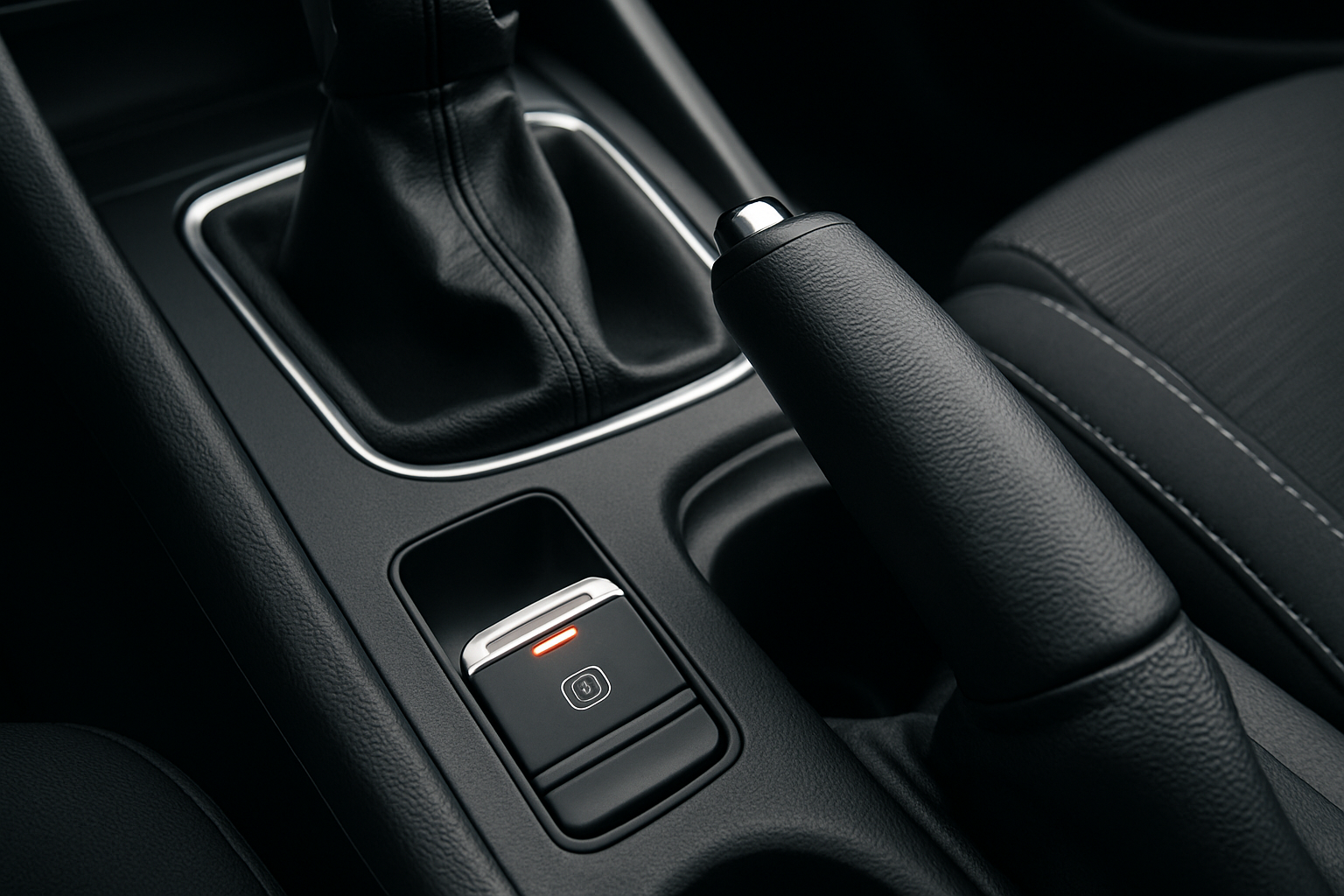
Electronic parking brakes have quietly revolutionized how we secure our parked cars, replacing the familiar hand-operated lever with the simple push of a button. While this technology offers undeniable convenience and advanced safety features, it’s also contributing to the gradual disappearance of traditional manual parking brakes that drivers have relied on for decades.
What Is an Electronic Parking Brake?
An electronic parking brake (EPB) replaces the traditional manual handbrake lever with an electronic switch. Instead of pulling a lever connected to cables, you simply press a button or flip a switch to engage the parking brake. The system uses electric motors to apply and release the brake pads or shoes automatically.
Most modern EPB systems integrate seamlessly with other vehicle safety features like hill start assist and automatic brake hold. When you come to a complete stop in traffic, the system can automatically hold the brakes until you’re ready to move again, eliminating the need to keep your foot on the brake pedal.
How Electronic Parking Brakes Actually Work
The most common EPB design uses a motor-on-caliper system. Each rear brake caliper houses a small electric motor that drives a mechanical actuator. When you press the EPB button, the vehicle’s control module sends a signal to these motors, which then push the brake pads against the rotors with precise force.
The system constantly monitors the clamping force through sensors and adjusts as needed. If the brake pads compress over time or temperature changes affect the components, the motors automatically compensate to maintain proper braking force. This self-adjusting capability ensures consistent performance without manual intervention.
Integration with Vehicle Safety Systems
Electronic parking brakes don’t work in isolation. They communicate with your car’s ABS system, traction control, and electronic stability control to provide coordinated braking assistance. When you stop on a hill, the EPB can work with hill start assist to prevent rollback when you release the brake pedal.
The auto hold feature takes this integration further. After coming to a complete stop, the system automatically applies the parking brake and releases it when you press the accelerator. This feature proves particularly useful in stop-and-go traffic or at drive-through windows.
Why Manual Parking Brakes Are Disappearing
Automakers are rapidly phasing out manual parking brakes for several compelling reasons. Space efficiency tops the list, as eliminating the traditional lever or pedal frees up valuable interior real estate for larger center consoles, cup holders, and storage compartments.
Manufacturing costs actually favor electronic systems in modern vehicles already equipped with extensive electronic control modules. Since most cars already have the necessary wiring and computing power, adding EPB functionality costs less than installing mechanical linkages, cables, and levers.
Safety and Convenience Advantages
Electronic systems eliminate human error in parking brake application. You can’t partially engage an EPB or forget to fully release it before driving. The system applies exactly the right amount of force every time and automatically releases when you’re ready to drive.
Integration with other safety systems provides benefits impossible with manual brakes. EPB can automatically engage if you exit the vehicle without setting the parking brake, or release automatically when you fasten your seatbelt and shift into gear.
Regulatory and Efficiency Pressures
Government safety regulations increasingly favor electronic systems that can integrate with mandatory stability control and collision avoidance systems. EPB systems can respond instantly to electronic signals from crash prevention systems, potentially preventing accidents that manual brakes couldn’t address quickly enough.
Fuel efficiency regulations also play a role. Electronic parking brakes weigh less than manual systems and eliminate parasitic drag that can occur when manual brakes aren’t fully released. These small efficiency gains help automakers meet stringent fuel economy standards.
The Downside for DIY Mechanics
Electronic parking brakes create significant challenges for home mechanics and independent repair shops. Unlike manual systems where you simply pull a lever to retract the pads, EPB systems require electronic commands to enter service mode for pad replacement or rotor work.
Most EPB systems need specialized scan tools or dealer-level diagnostic equipment to retract the motors during brake service. Without proper tools, you can’t safely compress the pistons or install new brake pads. This requirement forces many DIY mechanics to visit dealers or shops with the necessary equipment.
Increased Complexity and Failure Points
Electronic systems introduce multiple failure points that don’t exist in manual brakes. Electric motors can fail, wiring harnesses can corrode, and control modules can malfunction. When these components fail, you might find yourself unable to release or engage the parking brake without professional help.
Replacement costs significantly exceed manual brake repairs. A failed EPB motor typically costs $200-400 per side, while control module replacement can exceed $500. Manual parking brake repairs rarely require more than cable replacement or adjustment, usually costing under $100.
Common EPB Problems and Solutions
Electronic parking brake systems generally prove reliable, but certain issues occur more frequently. Motor failure represents the most common problem, typically announced by grinding noises during engagement or release. These motors contain internal gears that can strip over time, especially if the system repeatedly cycles in sandy or corrosive environments.
Calibration issues can develop after battery replacement or system repairs. The EPB control module needs to relearn the full range of motor travel to apply appropriate force. Most systems require a specific calibration procedure using a scan tool, though some vehicles offer manual calibration through button sequences.
Maintenance Requirements
Despite their electronic nature, EPB systems still require regular maintenance. The brake pads and rotors wear just like conventional brakes, but replacement procedures differ significantly. Many systems automatically adjust for pad wear, but this constant adjustment can accelerate motor wear over time.
Regular operation helps maintain system health. If you rarely use the parking brake, the motors and mechanisms can seize or corrode. Weekly activation helps keep components moving freely and prevents moisture buildup in motor housings.
What This Means for Vehicle Owners
Electronic parking brakes represent the automotive industry’s continued shift toward electronic control of mechanical systems. While they offer genuine advantages in convenience and safety integration, they also increase complexity and repair costs.
If you’re shopping for a new vehicle and prefer working on your own brakes, consider how EPB will affect your maintenance routine. Budget for potentially higher repair costs and factor in the need for specialized tools or professional service for brake work.
For current EPB owners, familiarize yourself with your system’s operation and emergency release procedures. Most vehicles include manual release methods for situations where the electronic system fails, but these procedures vary significantly between manufacturers.
The Future of Parking Brake Technology
Electronic parking brakes represent just one step in the evolution toward fully automated vehicle systems. Future developments will likely integrate EPB more deeply with autonomous driving features and predictive safety systems.
Some manufacturers are already experimenting with parking brakes that engage automatically based on GPS location, vehicle sensors, or smartphone integration. These systems could automatically secure your vehicle when parked in specific locations or situations without any driver input.
As electric vehicles become more common, EPB systems may evolve to integrate with regenerative braking systems, potentially eliminating separate parking brake hardware entirely. The transition away from manual parking brakes appears irreversible as automakers prioritize integration, efficiency, and automated safety features over mechanical simplicity.
Frequently Asked Questions
Can I convert my electronic parking brake back to manual?
Converting EPB to manual isn’t practical or cost-effective. The retrofit would require extensive mechanical modifications, new cables, levers, and significant interior changes. The integrated nature of EPB with other vehicle systems makes conversion nearly impossible without affecting other functions.
What happens if my EPB fails while parked?
Most vehicles include emergency release procedures in the owner’s manual. These typically involve accessing a manual release mechanism near the EPB motors or using a specific button sequence. Some systems can be released using jumper cables if the battery is dead but the motors still function.
Do electronic parking brakes work without engine power?
EPB systems draw power directly from the vehicle’s 12-volt electrical system and can operate with the engine off. However, repeated cycling without the engine running can drain the battery. Most systems include safeguards to prevent operation if battery voltage drops too low.
How long do EPB motors typically last?
EPB motors generally last 100,000-150,000 miles under normal conditions, though frequent use in harsh environments can reduce lifespan. Regular cycling actually helps maintain motor health, while long periods of disuse can lead to seized mechanisms and premature failure.
This article contains affiliate links. If you purchase through these links, we may earn a small commission at no extra cost to you.

Leave a Reply