
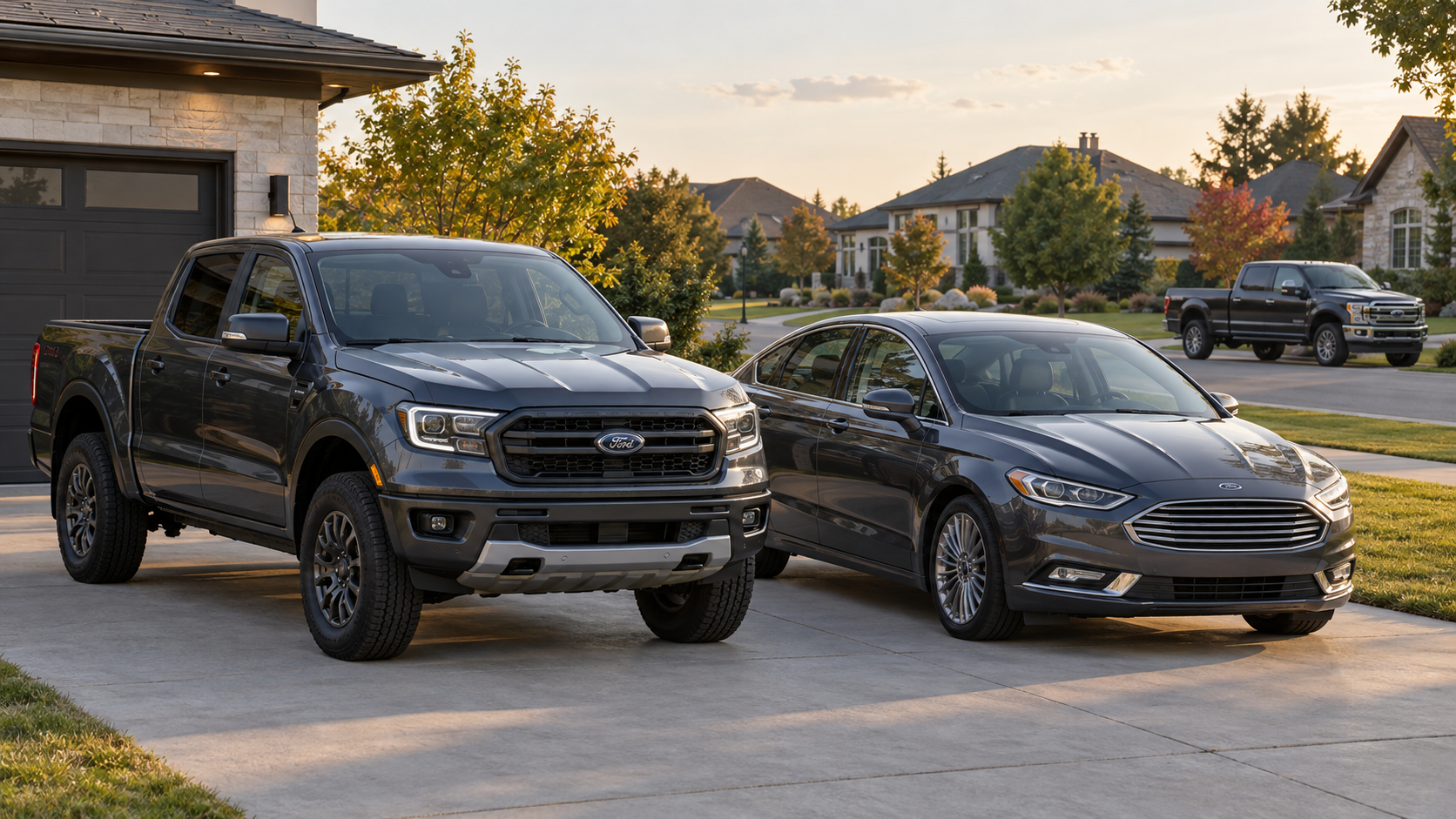
Do You Actually Need a Truck?
Pickup trucks have become some of the most popular vehicles in America, but not everyone who buys one regularly tows a trailer, hauls lumber, or drives off-road. For many drivers, the appeal of a truck goes beyond its practical capabilities.
A pickup can represent independence, ruggedness, self-sufficiency, and preparedness. It can also simply be what someone is accustomed to driving. If you like trucks but rarely use the capabilities of a full-size pickup, however, there is a legitimate question worth asking: would you be better off with a midsize truck or even a sedan?
The answer depends on what you actually want from your vehicle.
Why People Buy Trucks Even When They Don’t Need One
Buying a vehicle isn’t a purely mathematical decision. Cars are unusually visible possessions, and the vehicle you drive can become part of how you see yourself and how you present yourself to other people.
That’s particularly relevant with pickup trucks. Trucks traditionally communicate capability and utility. Even if the bed spends most of its life empty, having it available means you can haul furniture, carry dirty equipment, pick up building materials, tow a trailer, or handle other jobs without borrowing or renting another vehicle.
There is also an undeniable image component. Some drivers simply prefer the rugged, traditionally masculine appearance of a pickup over the appearance of a sedan or crossover.
There is nothing inherently wrong with considering appearance when buying a vehicle. Styling is one of the reasons there are so many different types of vehicles in the first place. The important thing is recognizing how much you’re paying for that preference.
Full-Size Trucks Have Become Very Large
One problem for buyers who simply like trucks is that modern full-size pickups are substantial vehicles.
Trucks such as the Ford F-150, Chevrolet Silverado 1500, GMC Sierra 1500, and Ram 1500 offer enormous capability, but that capability comes with a larger footprint. Depending on configuration, a full-size crew-cab truck can stretch well beyond 19 feet in length.
That size is useful when you’re towing, hauling, or carrying several passengers. It can be less appealing when you’re navigating parking garages, squeezing into older parking spaces, commuting through crowded streets, or simply trying to fit another vehicle into your garage.
For someone who wants a truck without wanting a particularly imposing vehicle, this is where midsize pickups start making considerably more sense.
The Midsize Pickup Is the Compromise
Vehicles such as the Ford Ranger, GMC Canyon, Chevrolet Colorado, Toyota Tacoma, and Nissan Frontier preserve most of the characteristics people associate with pickup trucks while reducing their overall footprint.
You still get a separate cargo bed. You still get meaningful towing and payload capability. Four-wheel drive is widely available. Most offer useful ground clearance and legitimate off-road configurations.
But a midsize pickup generally feels more manageable in ordinary daily driving than a full-size truck.
For someone who likes the idea and appearance of a pickup but doesn’t routinely need the capabilities of an F-150 or Silverado, that can be a much more rational compromise.
Ford Ranger vs. GMC Canyon
The Ford Ranger and GMC Canyon illustrate two slightly different approaches to the midsize-truck formula.
The Ranger is relatively understated in standard trims. It looks unmistakably like a pickup without necessarily looking like an expensive luxury vehicle. Ford also offers everything from ordinary work-oriented Rangers to the much more aggressive Ranger Raptor.
The current GMC Canyon takes a more upscale approach. Its interior, styling, technology, and available AT4 and AT4X configurations give it more of a premium feel. For someone specifically trying to avoid a flashy truck, however, a lower-trim Ranger may actually fit the assignment better.
Either gives you considerably more utility than a sedan while avoiding some of the bulk associated with today’s full-size trucks.
But What If You Almost Never Use the Bed?
This is where the argument for the sedan becomes much stronger.
If your typical week consists of commuting, going to the gym, buying groceries, visiting friends, and taking occasional road trips, a sedan will accomplish those jobs extremely well.
In exchange for giving up the pickup bed and towing capability, you can generally expect several advantages:
- Better fuel economy
- Easier parking
- Lower step-in height
- More secure enclosed cargo space
- Better handling
- A smoother and quieter highway ride in many cases
- Potentially lower tire and operating costs
A sedan can also be surprisingly practical. Fold-down rear seats allow many longer items to fit inside, while a large trunk handles normal groceries and luggage without exposing them to weather or requiring a tonneau cover.
A Sedan Doesn’t Have to Be Boring
The comparison also shouldn’t be framed as an appealing pickup versus the most anonymous economy sedan available.
Someone considering a Ranger or Canyon might also consider vehicles such as the Honda Accord, Toyota Camry, Acura Integra, Acura TLX, or other sporty sedans and hatchbacks.
A good sedan offers something a pickup generally can’t replicate: a lower seating position, lower center of gravity, and more car-like handling. If you enjoy driving on winding roads, that can matter more than having a cargo bed you use three times per year.
There is also a different kind of appeal to an understated sedan. Rather than communicating ruggedness, it can simply look clean, mature, and practical.
Consider How Often You Would Actually Use Truck Features
Before buying a pickup, think about what you’ve actually carried or towed during the previous 12 months rather than what you hypothetically might carry during the next 12.
If you’ve hauled furniture, landscaping supplies, automotive parts, camping equipment, bicycles, tools, or building materials several times, a truck bed may provide genuine value.
If you haven’t put anything particularly large in your current vehicle, paying for permanent hauling capability becomes harder to justify strictly on practical grounds.
That’s especially true because occasional truck capability can be rented. Someone who needs a pickup once or twice per year can rent one for those occasions while enjoying the efficiency of a sedan during the other 360-plus days.
There’s Nothing Wrong With Buying a Truck Because You Like Trucks
There is another possibility that shouldn’t be ignored: you might simply like driving a truck.
Not every vehicle purchase needs to maximize utility per dollar. Sports-car owners don’t need sports cars. Convertible owners don’t need removable roofs. Jeep owners don’t need to drive the Rubicon Trail before they’re allowed to own a Wrangler.
A vehicle is something many people use almost every day for years. Enjoying it has value.
The distinction is between knowingly paying for something you enjoy and convincing yourself that you need capabilities you probably won’t use.
If you recognize that a pickup is partly an emotional purchase and the additional cost comfortably fits your budget, buying one can still be perfectly reasonable.
The Question to Ask Before Buying
There is a useful thought experiment for anyone deciding between a pickup and a more practical car:
If nobody else ever saw me driving it, which vehicle would I choose?
If the answer is still the truck, you probably genuinely enjoy trucks.
If the answer suddenly becomes the sedan, appearance and social signaling may be playing a larger role in the decision than you realized.
Neither answer automatically determines what you should buy. It simply tells you more about what you’re actually purchasing.
Midsize Truck vs. Sedan: Which Makes More Sense?
| Consideration | Midsize Pickup | Sedan |
|---|---|---|
| Cargo versatility | Excellent | Moderate |
| Towing | Excellent | Limited |
| Fuel economy | Moderate | Excellent |
| Parking | Moderate | Excellent |
| Handling | Moderate | Excellent |
| Off-road capability | Good to excellent | Limited |
| Open cargo bed | Yes | No |
| Daily commuting | Good | Excellent |
| Rugged appearance | Excellent | Limited |
Bottom Line
If you regularly use a bed, tow, tackle home projects, travel on rough roads, or simply genuinely enjoy owning a pickup, a midsize truck like the Ford Ranger or GMC Canyon can be an excellent middle ground. You retain real truck capability without moving all the way up to the enormous dimensions of many modern full-size pickups.
If the truck bed would spend virtually its entire life empty, however, don’t dismiss a sedan. You’ll likely get better fuel economy, easier parking, better handling, and plenty of practicality for normal daily life.
And if you ultimately choose the truck mostly because you like how it looks and how you feel driving it? That’s a legitimate reason too. Just recognize it for what it is and decide whether the additional cost is worth it to you.
Leave a Reply