
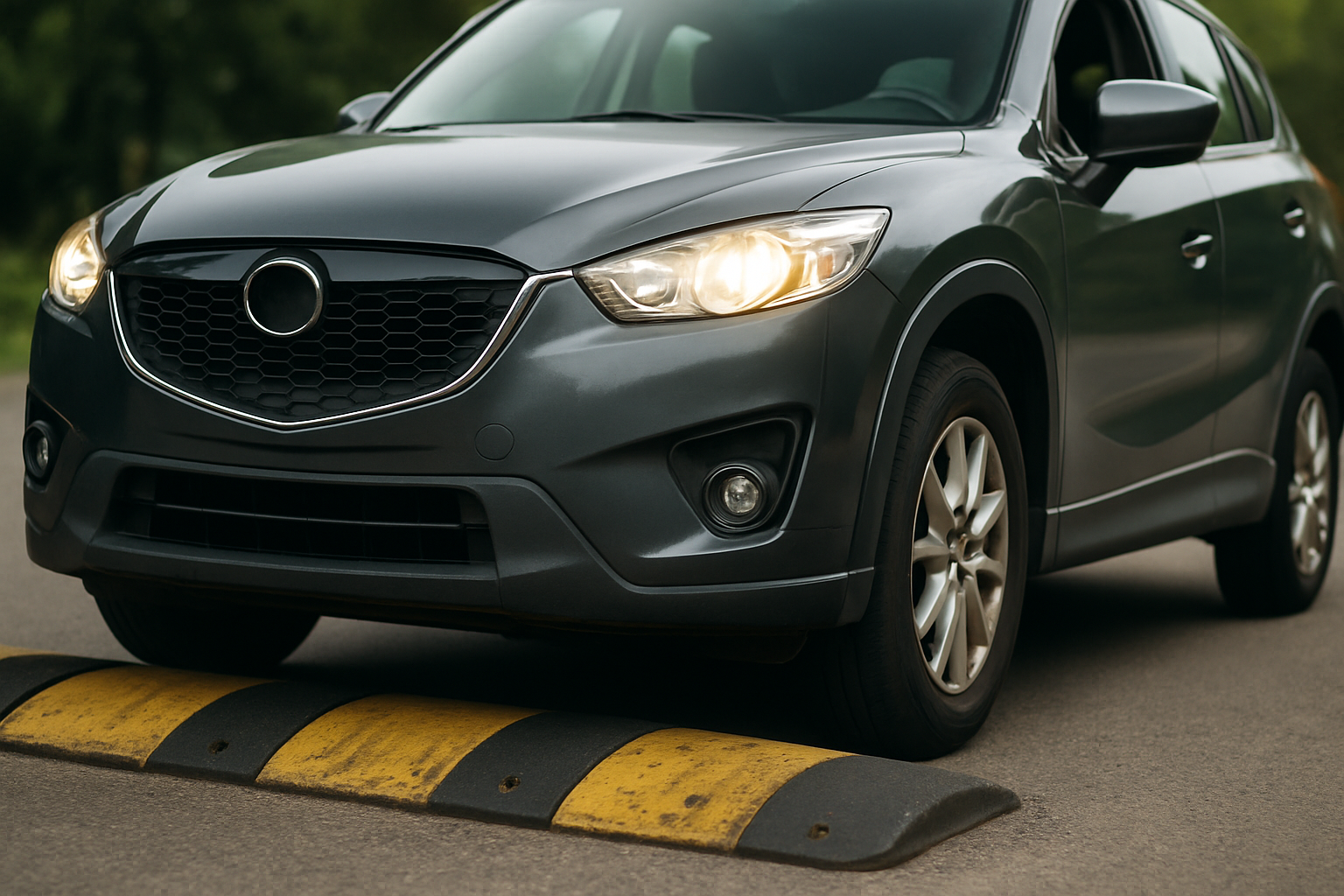
That annoying clunking sound every time you hit a speed bump isn’t just embarrassing when passengers are in your car. It often signals worn suspension components that need attention before they lead to bigger problems or safety issues.
The good news is that most clunking noises over bumps come from relatively inexpensive parts that are common failure points on all vehicles. By understanding what causes these sounds and following a logical troubleshooting approach, you can often fix the problem without breaking the bank.
What Causes Clunking Noises Over Speed Bumps
When your car goes over a speed bump, the suspension system compresses and extends to absorb the impact. This movement puts stress on various joints, bushings, and connections throughout the suspension. If any of these components are worn or loose, they’ll create that telltale clunking sound.
The key to fixing this problem efficiently is starting with the most common and least expensive culprits first. You don’t want to replace expensive struts only to discover the real problem was a $20 sway bar link.
Start With the Most Common Culprit: Sway Bar End Links
Sway bar end links are the most frequent cause of clunking over speed bumps, and they’re also the cheapest to replace. These small connecting rods link your sway bar to the suspension and take a beating every time you drive.
You can often diagnose bad sway bar links by grabbing them with your hand and trying to move them up and down. If there’s any play or movement in the ball joint connections, they need replacement. Another test is to have someone bounce the car while you listen near each wheel for the clunking sound.
Most sway bar end links cost between $15-40 each, and you’ll typically need to replace them in pairs on the same axle. The job usually takes about an hour per side for a DIY mechanic with basic tools.
Signs Your Sway Bar Links Are Bad
Beyond the clunking noise, bad sway bar links often create a rattling sound when driving over rough roads or small bumps. The noise usually comes from the front of the vehicle and happens most noticeably at lower speeds.
You might also notice increased body roll when cornering, though this symptom is less obvious than the audible clues. If you hear clunking specifically when turning into driveways or parking lots at an angle, sway bar links are very likely the culprit.
Check Your Strut Mounts Next
If new sway bar links don’t solve the problem, strut mounts are the next logical step. These rubber and metal assemblies connect your struts to the vehicle’s body and allow the strut to pivot as the suspension moves.
Worn strut mounts create a clunking or knocking sound that’s most noticeable over speed bumps and when turning the steering wheel while stationary. You might also hear the noise when backing out of driveways or turning into parking spaces.
Testing strut mounts requires getting under the hood and visually inspecting them while someone else turns the steering wheel. Look for cracking in the rubber, separation between the rubber and metal, or excessive movement in the mount itself.
Strut Mount Replacement Costs
Strut mounts typically cost between $50-150 per side, depending on your vehicle. The labor can be significant because accessing the mounts often requires removing the strut assembly. Many shops will recommend replacing struts at the same time if they’re showing wear.
If your struts are relatively new or still functioning well, you can replace just the mounts. However, if the struts are original equipment with high mileage, it makes financial sense to do both jobs together.
Don’t Overlook Ball Joints
Ball joints connect your control arms to the steering knuckles and allow the wheels to move up and down while still being able to turn. When they wear out, they create a distinct clunking noise over bumps that often sounds like it’s coming directly from the wheel area.
You can test ball joints by jacking up the vehicle and grabbing the tire at the top and bottom. Try to rock it back and forth. Any movement indicates worn ball joints that need replacement. Some ball joints have grease fittings that allow for lubrication, but once they start clunking, replacement is usually necessary.
Ball joint replacement costs vary significantly depending on whether they’re serviceable separately or integrated into the control arm. Simple bolt-on ball joints might cost $50-100 per side, while control arms with integrated ball joints can run $200-400 each.
Safety Considerations With Ball Joints
Ball joints are critical safety components. A completely failed ball joint can cause loss of control or wheel separation. If you suspect ball joint problems, have them inspected professionally as soon as possible.
Many states include ball joint inspection as part of their annual safety inspections. If yours are borderline, it’s better to replace them proactively rather than risk a roadside failure.
Check for a Loose Heat Shield
Sometimes the simplest explanations are correct. A loose exhaust heat shield can create clunking or rattling noises that sound remarkably similar to suspension problems. These thin metal shields protect other components from exhaust heat but can come loose over time.
Heat shield problems are easy to diagnose by getting under the vehicle and visually inspecting the exhaust system. Look for shields that are hanging down, have broken mounting points, or can be moved by hand. You’ll often see rust or corrosion around the mounting points.
Fixing loose heat shields usually involves either tightening existing bolts, installing new mounting hardware, or temporarily securing them with high-temperature zip ties. The parts cost is minimal, often under $10.
Control Arm Bushings: The Expensive Option
Control arm bushings are rubber or polyurethane components that allow the control arms to pivot smoothly while absorbing road vibrations. When they wear out, they create clunking noises over bumps and can also cause steering instability.
Worn control arm bushings often create noise when accelerating, braking, or turning in addition to the clunking over speed bumps. You might notice the steering wheel moving slightly when accelerating or braking if the bushings are severely worn.
Bushing replacement can be expensive because it often requires special tools to press out old bushings and install new ones. Labor costs can be substantial, and some shops will recommend replacing entire control arms rather than just the bushings.
DIY vs Professional Installation
While sway bar links and heat shields are reasonable DIY projects, control arm bushings usually require hydraulic presses and specialized tools. Most home mechanics don’t have the equipment needed to do this job properly.
If you’re handy with tools and have access to a well-equipped shop, you might tackle this project yourself. Otherwise, plan on paying a professional shop for bushing replacement.
Diagnostic Steps to Follow
Start by having someone drive the car slowly over a speed bump while you listen from outside the vehicle. Try to pinpoint which corner of the car the noise is coming from. This narrows down your search area significantly.
Once you’ve identified the general location, perform the simple visual and physical tests for each component. Check sway bar links first since they’re the most common problem and cheapest to fix.
If multiple components show wear, prioritize safety-critical items like ball joints first. Then move to items that affect ride quality and comfort.
When to Call a Professional
If you’ve checked the common culprits and still have clunking noises, it might be time for professional diagnosis. Some suspension problems require specialized knowledge and tools to identify properly.
A good independent shop can usually diagnose suspension noise issues in 30 minutes to an hour. The diagnostic fee is worthwhile if it prevents you from replacing parts unnecessarily.
Additionally, if you discover safety-critical components like ball joints are worn, professional installation ensures the job is done correctly. This isn’t the time to risk improper installation.
Frequently Asked Questions
How urgent is it to fix clunking noises over speed bumps?
The urgency depends on the cause. Loose heat shields or worn sway bar links won’t strand you roadside, but they should be addressed for comfort and to prevent further damage. Ball joint problems require immediate attention since they affect vehicle safety and control.
Can I drive with clunking suspension noise?
You can usually drive short distances with minor suspension noise, but avoid highway speeds and long trips until you identify the problem. If the noise is accompanied by steering problems or vibrations, stop driving immediately and have the vehicle towed to a repair shop.
Why do these parts wear out?
Suspension components wear naturally from constant movement and exposure to road salt, moisture, and temperature changes. Driving on rough roads, hitting potholes hard, and normal aging all contribute to suspension wear. Most of these parts are designed to last 80,000-120,000 miles under normal driving conditions.
Should I replace suspension parts in pairs?
For components like sway bar links and struts, replacing both sides at the same time is usually recommended. This ensures even performance and prevents the other side from failing shortly after. Ball joints and bushings can often be replaced individually if only one side shows wear.

Leave a Reply