
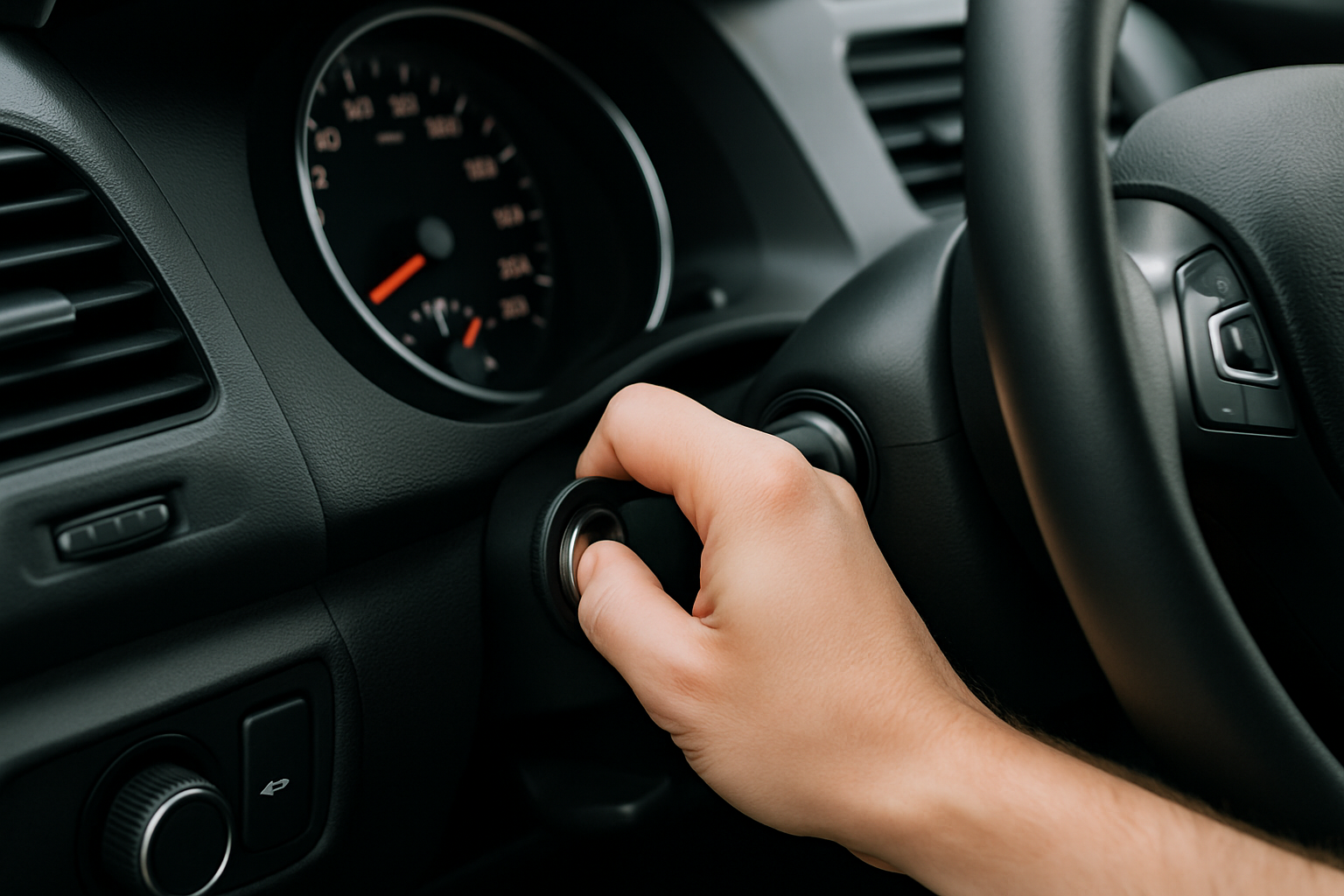
You turn the key or press the start button, and instead of your engine roaring to life, you hear clicking sounds coming from under the hood. This clicking can tell you exactly what’s wrong with your car and how much you’re about to spend fixing it.
The type of clicking you hear provides crucial clues about whether you need a simple jump start or a trip to the mechanic. Understanding these sounds can save you time, money, and the frustration of calling for help when a quick fix might get you back on the road.
What Causes Clicking Sounds When Starting Your Car
When you turn your key or push the start button, you’re completing an electrical circuit that engages the starter motor. This motor needs significant electrical power to turn your engine’s heavy internal components and get combustion started.
The clicking sounds occur when there’s not enough electrical power reaching the starter motor, or when the starter components themselves have failed. Your car’s electrical system includes several components between the battery and starter motor, and problems with any of these parts can create different clicking patterns.
The starter solenoid acts like a heavy-duty electrical switch, using battery power to engage the starter motor. When this system doesn’t work correctly, you’ll hear clicking instead of the normal cranking sound of a healthy starter motor turning your engine.
Rapid Clicking: Your Battery Is Dead
If you hear fast, repetitive clicking sounds (like a machine gun or rapid tapping), your battery is dead or nearly dead. This rapid clicking comes from the starter solenoid trying repeatedly to engage but not having enough power to complete the connection.
Each time the solenoid tries to engage, it draws power from the already weak battery, which causes the voltage to drop even further. The solenoid then releases, voltage comes back up slightly, and the cycle repeats many times per second, creating that distinctive rapid clicking sound.
You might also notice that your dashboard lights are dim or flickering, your radio won’t turn on, or your headlights are very weak. These are all signs that your battery doesn’t have enough charge to power your car’s electrical systems.
Cold weather makes this problem worse because batteries lose capacity in low temperatures. A battery that barely worked yesterday might be completely dead after a cold night in the garage.
Single Click: Starter Motor or Solenoid Problems
One loud click followed by silence usually means your battery has enough power, but either your starter motor or starter solenoid has failed. You’ll hear one solid “clunk” sound, and then nothing happens when you try to start the car.
This single click is the solenoid engaging successfully, but the starter motor itself isn’t turning. The solenoid is doing its job of completing the electrical connection, but the motor that actually turns your engine has seized up or burned out internally.
Sometimes a failing solenoid will make one click but fail to maintain the connection to the starter motor. In this case, the solenoid engages for a split second but then releases immediately, creating that single clicking sound.
Your dashboard lights and other electrical components will work normally with this type of problem since your battery and alternator are fine. The issue is mechanical rather than electrical.
The Starter Tap Trick: Emergency Fix
If you’re hearing single clicks and suspect starter motor problems, you can try the old “tap the starter” trick to get your car running temporarily. This works because starter motors sometimes stick due to worn brushes or debris, and a gentle tap can free them up.
First, locate your starter motor. It’s usually mounted on the engine block near the transmission, about the size of a coffee can with electrical wires connected to it. On most cars, you can reach it from above by removing the air intake tube, but sometimes you’ll need to crawl under the vehicle.
Use a hammer, wrench, or similar tool to give the starter motor body several firm taps. Don’t hit the electrical connections or wires, just the metal housing of the motor itself. You want solid taps, not gentle touches, but don’t swing like you’re trying to break it.
Have someone try starting the car while you tap, or tap it several times and then try starting it yourself. This trick works surprisingly often, but consider it a temporary fix to get you to a repair shop rather than a permanent solution.
Jump Starting vs. Replacing Your Battery
When rapid clicking indicates a dead battery, you need to decide whether to jump start the car or replace the battery entirely. This decision depends on why your battery died and how old it is.
If your battery is less than three years old and you left lights on overnight or haven’t driven in several weeks, a jump start will probably solve your problem. The battery just needs to be recharged, and your alternator will handle that once the engine is running.
Batteries older than four years, especially in extreme climates, often won’t hold a charge properly even after jump starting. You might get the car started, but the battery will die again within a few days or weeks because the internal cells have deteriorated.
If you’ve jump started the same battery multiple times in recent months, replacement time has arrived. A healthy battery shouldn’t need frequent jump starts unless you’re regularly leaving lights on or have an electrical drain somewhere in the system.
How to Jump Start Your Car Safely
Before attempting to jump start your car, make sure you have quality jumper cables and either another running vehicle or a portable jump starter. Portable jump starters are incredibly convenient because you don’t need another car or person to help you.
Connect the red positive cable to the positive terminal on your dead battery first, then connect the other red end to the positive terminal on the good battery or jump starter. Connect one black negative cable to the negative terminal on the good battery, but connect the final black cable to an unpainted metal surface in your engine bay rather than the negative terminal on the dead battery.
This ground connection away from the battery prevents sparks near the battery, which could ignite hydrogen gas that batteries sometimes emit. Let the good battery or jump starter charge your dead battery for a few minutes before trying to start your car.
Once your car starts, remove the cables in reverse order and let your engine run for at least 20 minutes to recharge the battery. Drive directly to a parts store or mechanic if you suspect the battery needs replacement.
When to Replace Your Starter
Starter motors typically last 100,000 to 150,000 miles, but they can fail earlier due to heat, contamination, or electrical problems. If the tap trick works temporarily but the single clicking returns, your starter motor needs replacement.
Starter replacement costs vary widely depending on your car’s make and model. Easy-to-access starters on older vehicles might cost $200-300 for parts and labor, while starters buried deep in modern engine bays can cost $600-800 to replace.
Some mechanics will rebuild your existing starter motor instead of installing a new one, which can save money. Rebuilt starters typically come with shorter warranties than new ones, but they’re a reasonable option if you’re planning to keep your car for just a few more years.
Don’t ignore starter problems hoping they’ll resolve themselves. A failing starter that works intermittently will eventually leave you stranded, often at the worst possible time and location.
Other Electrical Issues That Cause Clicking
Sometimes clicking sounds come from problems other than the battery or starter motor. Corroded battery terminals can create poor electrical connections that mimic dead battery symptoms, even when the battery itself is fine.
Clean battery terminals with a wire brush and baking soda solution if you see white, green, or blue crusty buildup around the connections. This corrosion acts like insulation, preventing proper electrical flow even with a good battery and starter.
Worn ignition switches can also cause clicking sounds, particularly in older vehicles. If jiggling the key in different positions changes the clicking pattern, your ignition switch might need replacement rather than your starter or battery.
Bad alternators don’t usually cause clicking sounds directly, but they can kill your battery over time by failing to keep it charged. If your battery keeps dying despite being relatively new, have your alternator tested along with the battery.
Preventing Starting Problems
Regular maintenance prevents most clicking-related starting problems. Have your battery tested annually after it reaches three years old, especially before winter weather arrives. Most parts stores will test your battery for free and can tell you if replacement time is approaching.
Keep your battery terminals clean and tight. Loose connections cause voltage drops that can mimic dead battery symptoms. Check the terminals every few months and clean them if you notice any corrosion starting to form.
If you don’t drive regularly, consider using a battery tender or disconnecting the negative terminal when the car sits for weeks at a time. Modern cars have small electrical drains even when turned off, and these can slowly kill batteries during extended storage periods.
Pay attention to how your car starts normally. If cranking becomes slower or takes longer than usual, address the problem before you’re stuck with clicking sounds and a car that won’t start.
Frequently Asked Questions
Can I drive my car immediately after jump starting it?
You should drive your car immediately after jump starting to help recharge the battery, but avoid turning off the engine for at least 20-30 minutes. Your alternator needs time to put charge back into the battery. If you turn off the car too soon, you might need another jump start.
How long do car batteries typically last?
Most car batteries last 3-5 years, but this varies significantly based on climate, driving habits, and vehicle electrical demands. Extreme heat and cold both shorten battery life. Vehicles with many electrical accessories or cars that sit unused for long periods may need battery replacement more frequently.
Is it safe to tap my starter motor with a hammer?
Tapping the starter motor with moderate force is generally safe and often effective as a temporary fix. Use a hammer or heavy wrench to hit the starter body (not the electrical connections). This technique works because it can free up stuck brushes or solenoid components, but don’t rely on it as a permanent solution.
Why does my car click sometimes but start fine other times?
Intermittent clicking usually indicates components that are beginning to fail but haven’t completely died yet. This could be a battery losing capacity, corroded connections that work sometimes, or starter components that stick occasionally. Have the starting system tested soon, as intermittent problems typically become permanent failures without warning.
Leave a Reply