
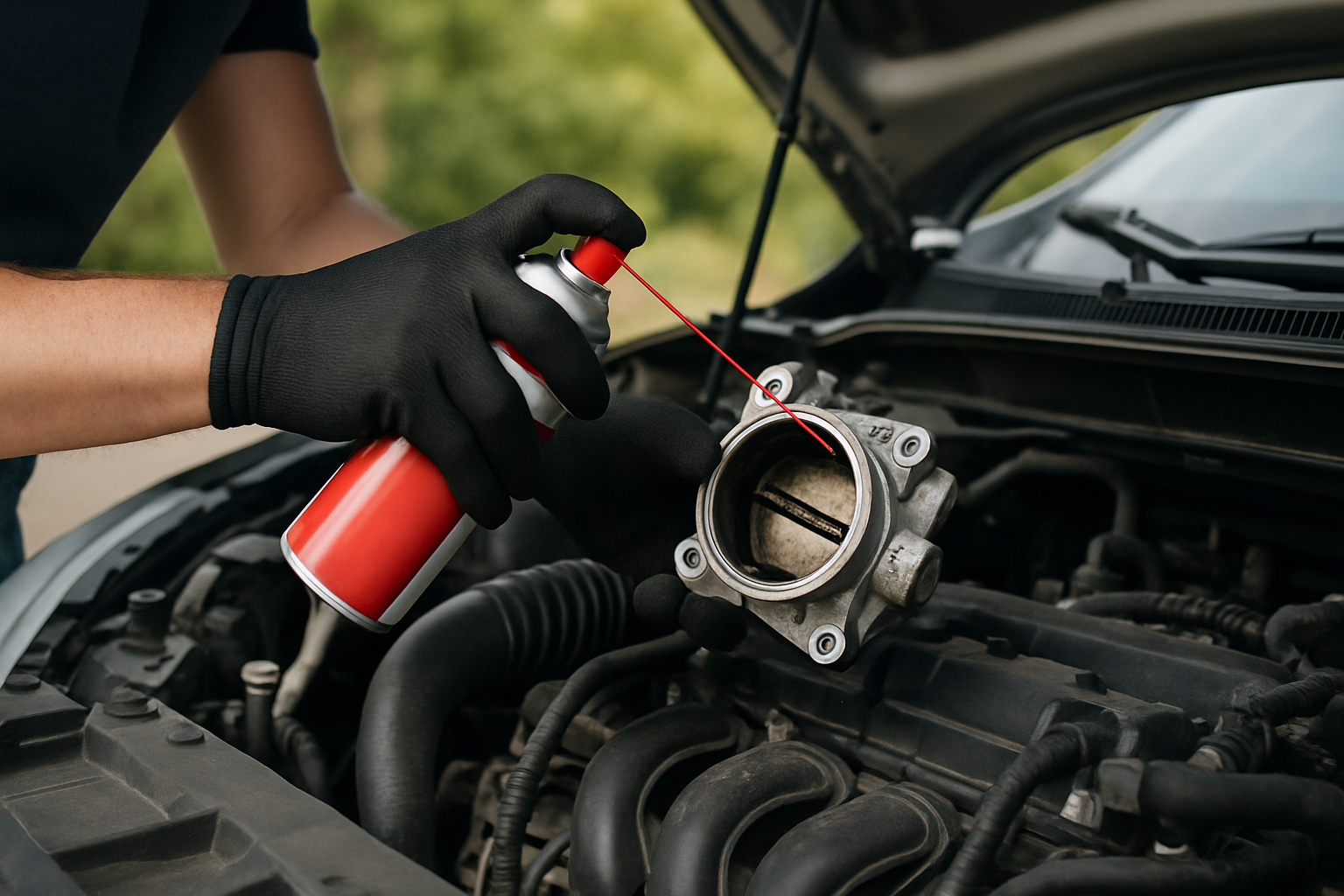
A rough idle can turn your daily drive into a frustrating experience, with your engine stumbling, shaking, or even stalling at traffic lights. One of the most common culprits behind this problem is a dirty throttle body that’s accumulated carbon buildup over time.
Cleaning your throttle body is often the quickest and most cost-effective solution to restore smooth idle performance. This maintenance task takes about 30 minutes and can save you hundreds of dollars in diagnostic fees at the shop.
What Causes Throttle Body Carbon Buildup
Your throttle body controls the amount of air entering your engine by opening and closing a butterfly valve. Over time, oil vapors from the PCV system, exhaust gases from the EGR valve, and combustion byproducts create a sticky residue on the throttle plate and bore.
This carbon buildup disrupts the smooth airflow your engine expects at idle. Even a small amount of buildup can cause the throttle plate to stick partially open or closed, leading to erratic idle speeds, rough running, and stalling.
Modern engines with electronic throttle control are particularly sensitive to this buildup. The engine control module expects precise airflow readings, and any disruption can trigger rough idle conditions or even illuminate your check engine light.
Signs Your Throttle Body Needs Cleaning
Several symptoms indicate your throttle body has accumulated enough carbon to affect performance. The most obvious sign is a rough or unstable idle, where your engine RPMs fluctuate or the engine shakes while stationary.
You might also notice stalling when coming to a stop, especially after highway driving. This happens because the dirty throttle body can’t properly regulate the small amount of air needed for stable idle after the throttle closes.
Other common symptoms include hesitation during acceleration, reduced fuel economy, and difficulty starting the engine. Some vehicles may also display error codes related to throttle position or airflow sensors.
Tools and Materials You’ll Need
Gather these items before starting your throttle body cleaning project. You’ll need a quality throttle body cleaner spray, clean shop rags or paper towels, and basic hand tools like screwdrivers or socket wrenches.
For throttle body cleaner, choose a product specifically designed for this purpose. Throttle body cleaner sprays are formulated to dissolve carbon buildup without damaging sensitive components or oxygen sensors downstream.
You might also need a small brush with soft bristles for stubborn buildup, though most cleaning can be accomplished with spray and rags alone. Keep a flashlight handy to inspect your work and ensure you’ve removed all visible carbon deposits.
Safety Precautions Before Starting
Always disconnect the negative battery terminal before beginning this procedure. This prevents accidental activation of the electronic throttle control system and protects sensitive components from electrical damage.
Work in a well-ventilated area since throttle body cleaner contains solvents that produce strong fumes. Wear safety glasses and nitrile gloves to protect yourself from chemical contact.
Allow the engine to cool completely before starting. Hot engine components can cause burns, and some cleaners are more effective on cool surfaces anyway.
Step-by-Step Throttle Body Cleaning Process
Locate and Access the Throttle Body
Your throttle body sits between the air filter housing and intake manifold, connected by rubber hoses or hard plastic tubing. Follow the large air intake hose from your air filter box to find the throttle body assembly.
Remove the air intake hose by loosening the hose clamps with a screwdriver or socket wrench. Some vehicles use spring clamps that require special pliers, while others have simple worm-gear clamps.
Take a photo of any vacuum lines or electrical connections before disconnecting them. This makes reassembly much easier and prevents confusion about where everything connects.
Initial Inspection
With the air intake removed, you’ll see the throttle plate inside the throttle body bore. Use your flashlight to inspect the buildup on both the plate and surrounding walls.
Light brown or black deposits are normal carbon buildup that responds well to cleaning. Heavy, tar-like buildup indicates the throttle body hasn’t been serviced in a very long time but can still be cleaned effectively.
Check the throttle plate movement by gently pressing the accelerator pedal while someone observes the plate. It should move smoothly without binding or sticking.
Apply Throttle Body Cleaner
Spray throttle body cleaner liberally on the throttle plate and bore walls. Focus on areas with visible carbon buildup, but coat the entire surface for thorough cleaning.
Allow the cleaner to penetrate for several minutes before wiping. This dwell time lets the solvents dissolve the carbon deposits, making removal much easier.
Avoid spraying cleaner directly onto electrical connections or sensors. While throttle body cleaners are generally safe for these components, it’s better to keep them as dry as possible.
Wipe Away Carbon Deposits
Use clean shop rags to wipe away the dissolved carbon and cleaning solution. You’ll likely see black residue coming off on the rags, which confirms the cleaning process is working.
For the throttle plate edges and hard-to-reach areas, wrap a rag around a small screwdriver or use a soft-bristled brush. Be gentle around the throttle plate to avoid damaging the butterfly valve mechanism.
Repeat the spray and wipe process until the rags come away clean. This usually takes 2-3 cycles for moderately dirty throttle bodies, or more for heavily contaminated units.
Final Cleaning and Inspection
Give the throttle body one final spray and wipe to ensure you’ve removed all visible carbon deposits. The throttle plate and bore should appear clean and metallic, not black or brown.
Check the throttle plate movement again to ensure it opens and closes smoothly. The cleaning process often frees up sticky plates that weren’t moving properly before.
Inspect the air intake hose and connections for cracks or damage while they’re removed. Replace any damaged components before reassembly to prevent vacuum leaks.
Reassembly and Relearn Procedure
Reinstall the air intake hose and tighten all clamps securely. Reconnect any vacuum lines or electrical connections you removed, using your photos as reference.
Reconnect the negative battery terminal and ensure all connections are tight. Double-check that you haven’t left any tools or rags in the engine bay before starting the vehicle.
Most vehicles require a throttle relearn procedure after cleaning. This teaches the engine control module the new “clean” position of the throttle plate at idle.
Performing the Throttle Relearn
Start the engine and allow it to warm up to normal operating temperature. The idle may be rough initially while the computer adjusts to the clean throttle body.
Turn off the engine and wait 10 seconds, then restart. Repeat this process 3-4 times to help the computer learn the new idle position.
Take the vehicle for a test drive, including city driving with stops and highway cruising. The computer will continue learning during normal driving, and idle quality should improve over the first few miles.
What to Expect After Cleaning
You should notice improved idle quality within the first few minutes of driving. The engine will run smoother at idle, with more consistent RPMs and less vibration.
Stalling issues typically resolve immediately after the relearn procedure is complete. Your engine should maintain stable idle even when coming to sudden stops or running accessories like air conditioning.
Some vehicles may experience slightly higher idle RPMs immediately after cleaning. This usually normalizes within a few driving cycles as the computer adapts to the improved airflow.
When Professional Service Is Needed
If rough idle persists after throttle body cleaning, you may have additional issues requiring professional diagnosis. Vacuum leaks, faulty idle air control valves, or internal engine problems can cause similar symptoms.
Extremely heavy carbon buildup sometimes requires removal of the entire throttle body for thorough cleaning. This involves additional steps like draining coolant and removing multiple components.
Consider professional service if you’re uncomfortable working with automotive electrical systems or lack the proper tools for your specific vehicle.
Maintenance Tips to Prevent Future Buildup
Regular throttle body cleaning every 30,000-50,000 miles prevents heavy carbon accumulation and maintains optimal engine performance. Mark your calendar or maintenance log to stay on schedule.
Using quality gasoline with detergent additives helps reduce carbon formation throughout your fuel and air systems. Top-tier gasoline brands contain cleaning agents that minimize deposits.
Replace your air filter regularly according to manufacturer recommendations. A dirty air filter restricts airflow and can contribute to throttle body contamination over time.
Frequently Asked Questions
How often should I clean my throttle body?
Most vehicles benefit from throttle body cleaning every 30,000 to 50,000 miles, depending on driving conditions. City driving with frequent stops and starts typically requires more frequent cleaning than highway driving. Check your throttle body during regular maintenance intervals and clean it when you notice carbon buildup.
Can I use carburetor cleaner instead of throttle body cleaner?
While carburetor cleaner might work, throttle body cleaner is specifically formulated to be safe for modern sensors and components. Carburetor cleaners can be too aggressive and may damage MAF sensors, oxygen sensors, or catalytic converters if residue travels downstream. Stick with proper throttle body cleaning products for best results.
Why does my car idle rough after cleaning the throttle body?
Temporary rough idle after cleaning is normal and usually resolves within a few driving cycles. The engine control module needs time to relearn the new idle position with the clean throttle body. Follow the relearn procedure and drive normally for 10-20 miles to allow the computer to adapt.
Do I need to reset any computer codes after throttle body cleaning?
You typically don’t need to clear codes unless a check engine light was present before cleaning. However, performing the throttle relearn procedure helps the computer adapt faster. If codes persist after cleaning and the relearn procedure, you may have additional issues requiring further diagnosis.

Leave a Reply