
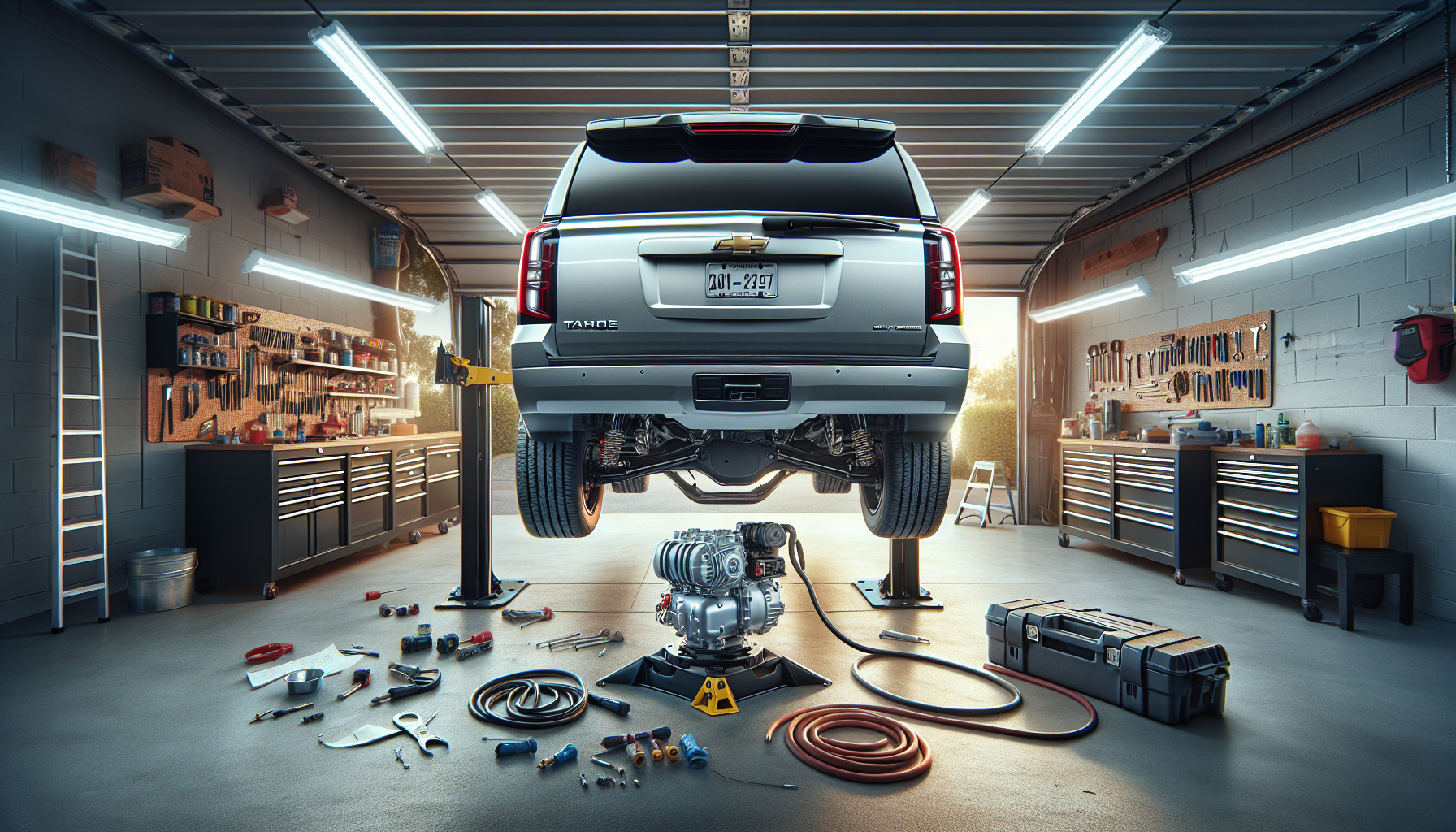
If you’ve been driving your Chevy Tahoe and noticed the rear end sagging, heard a loud buzzing or grinding noise coming from behind the rear axle, or seen a “Service Suspension System” warning light on your dashboard, there’s a good chance your air suspension compressor is on its way out. This is one of those problems that starts small and gets progressively worse until your Tahoe is riding like a lowrider.
The air suspension compressor is basically a small electric air pump tucked up near the rear axle. Its job is to inflate the rear air shocks to keep your ride height level, especially when you’re hauling cargo or towing. When it fails, those shocks deflate and you lose the ability to adjust your suspension. The compressor can fail for several reasons, but heat and contamination are the big killers. Let’s break down what causes this, how to diagnose it, and whether you can tackle the fix yourself.
Common Causes of Air Compressor Failure
The compressor itself is a fairly simple piece of equipment, but it operates in a hostile environment. Here’s what typically goes wrong:
Excessive Heat Buildup: The compressor sits right above the exhaust system on many Tahoe models, especially the 2007-2014 generation. That location exposes it to constant heat cycling, which breaks down the internal seals and dries out the rubber components. Over time, the motor windings can overheat and burn out. This is probably the most common failure mode I’ve seen.
Air Leaks in the System: When you have a leak somewhere in the air lines or the shocks themselves, the compressor runs constantly trying to maintain pressure. It’s not designed for continuous duty. Running non-stop eventually burns out the motor or wears out the piston seals. You’ll often hear the compressor running for extended periods before it finally gives up completely.
Moisture Contamination: Water can get into the system through failed air dryer components or worn seals. Once moisture is inside, it corrodes the internal parts and ruins the motor. You might find rust particles in the air lines if this has happened.
Age and Mileage: These compressors typically last anywhere from 80,000 to 150,000 miles. If your Tahoe has high mileage and the original compressor, failure is almost inevitable. The internal components just wear out from normal use.
Electrical Issues: Sometimes it’s not the compressor itself but the relay or fuse that supplies power to it. A failing relay can cause intermittent operation or complete shutdown. Less common, but worth checking before you replace the whole unit.
How to Diagnose the Problem
Before you order parts, confirm that the compressor is actually the problem. Here’s how to narrow it down:
Listen for Compressor Operation: Start your Tahoe and listen near the rear axle. You should hear the compressor run for maybe 30-60 seconds when you first start the vehicle, then shut off once it reaches proper pressure. If you hear nothing, the compressor might be dead or not getting power. If it runs constantly and never shuts off, you’ve got a leak somewhere or a pressure sensor issue.
Check for Sagging: Park on level ground and look at your rear ride height. If one side or both sides are noticeably lower than normal, and the compressor isn’t running to correct it, that points to compressor failure. If it’s just one side sagging, you might have a bad air shock instead.
Inspect the Compressor: Get under the truck (safely, with jack stands) and locate the compressor. It’s usually mounted on the driver’s side near the rear axle. Look for obvious damage, burnt wiring, or oil leaking from the unit. If the compressor housing is cracked or you see burn marks, it’s toast.
Test Electrical Supply: Use a multimeter to check if the compressor is getting power. You should see 12 volts at the connector when the system calls for air. No voltage means you need to check the fuse and relay first. The fuse is typically in the underhood fuse box, labeled something like “Air Susp” or “Rear Sus.” The relay is usually nearby.
This video walks through the diagnostic process for GM air suspension systems:
Pressure Test: If you have an air pressure gauge, you can tap into the air line (use a Schrader valve adapter) and check system pressure. It should build to around 120-150 psi and hold steady. If pressure drops quickly, you’ve got a leak. If it won’t build pressure at all and the compressor is running, the compressor is likely worn out internally.
How to Fix It
Replacing the air suspension compressor isn’t terribly difficult if you’re comfortable working under your vehicle. You’ll need basic hand tools, jack stands, and about two hours.
What You’ll Need:
- New air suspension compressor (OEM or quality aftermarket)
- Socket set and wrenches
- Jack and jack stands
- Wire brush and dielectric grease
- Safety glasses
Step-by-Step Replacement:
1. Disconnect the Battery: Always disconnect the negative battery terminal before working on electrical components. This prevents accidental shorts and keeps the system from trying to run while you’re working on it.
2. Raise and Support the Vehicle: Lift the rear of the Tahoe and support it securely on jack stands. Never work under a vehicle supported only by a jack. Make sure you have enough clearance to access the compressor comfortably.
3. Locate and Access the Compressor: On most Tahoes, the compressor is on the driver’s side frame rail near the rear axle. You might need to remove a heat shield or plastic cover to access it. Some models have better access than others.
4. Disconnect the Air Lines: The compressor will have air lines connected to it (usually push-to-connect fittings). Press the release collar and pull the line out. Some air will escape when you do this, which is normal. Mark which line goes where if they’re not obviously different.
5. Disconnect Electrical Connector: Unplug the electrical connector from the compressor. There’s usually a tab or clip you need to press to release it. Clean any corrosion from the connector with a wire brush.
6. Remove Mounting Bolts: The compressor is held by two or three bolts. Remove these and carefully lower the compressor down. Watch out for the exhaust pipe, it might still be hot if you just drove the vehicle.
7. Install New Compressor: Mount the new compressor in the reverse order. Don’t overtighten the mounting bolts; these usually go into plastic or rubber bushings. Reconnect the air lines (you should hear them click into place) and the electrical connector. Apply a little dielectric grease to the electrical connection to prevent future corrosion.
8. Reconnect Battery and Test: Hook the battery back up and start the vehicle. The compressor should run immediately to fill the system. It might run for several minutes on the first start because the shocks are completely deflated. Listen for leaks around your connections. The rear should rise to normal height within a few minutes.
Here’s a detailed replacement walkthrough specific to the Tahoe:
Important Note on Relocation: Some owners relocate the compressor to a cooler location away from the exhaust to extend its life. This requires longer air lines and custom mounting, but it can prevent premature failure. If you’re handy and want to do this right the first time, consider relocating while you’ve got everything apart.
When to See a Mechanic
Most people can handle a compressor replacement, but there are situations where professional help makes sense.
If you’ve replaced the compressor and still have problems, there’s likely an electrical issue or a problem with the air suspension module (the computer that controls the system). Diagnosing these requires a scan tool that can read suspension system codes, which most DIYers don’t have.
If you have multiple leaks in the air lines or the shocks themselves are bad, you might be looking at a bigger job. Sometimes it makes financial sense to convert to regular coil springs and shocks rather than keep repairing an aging air suspension system. A mechanic can advise whether that’s the right move for your situation.
Electrical issues beyond a simple fuse or relay can be tricky. If you’ve confirmed the compressor is good but it’s not getting power, and you’ve checked the obvious stuff, chasing down wiring problems can eat up a lot of time. Paying a pro to diagnose might save you hours of frustration.
Estimated Repair Costs
Here’s what you can expect to pay for this repair:
| Repair Type | Cost Range |
|---|---|
| DIY Compressor Replacement (aftermarket) | $150 – $300 |
| DIY Compressor Replacement (OEM) | $300 – $500 |
| Shop Labor for Compressor Replacement | $200 – $400 |
| Total Shop Repair (parts + labor) | $400 – $900 |
| Relay or Fuse Replacement (DIY) | $10 – $30 |
| Conversion to Standard Suspension | $500 – $1,200 |
Aftermarket compressors vary widely in quality. Cheaper units might save you money upfront but could fail sooner. Arnott and Dorman are decent middle-ground options. OEM GM parts are more expensive but generally more reliable.
Labor costs depend heavily on your location. Dealerships charge more than independent shops. If you’re having other suspension work done at the same time, the incremental labor cost for the compressor might be less.
Prevention Tips
You can extend the life of your air suspension compressor with a few simple practices:
Fix Leaks Immediately: If you notice your Tahoe sagging or the compressor running excessively, don’t ignore it. Track down and repair any air leaks right away. The longer the compressor runs trying to compensate for a leak, the faster it wears out. Check the air shocks and lines regularly for cracks or damage.
Keep the System Clean: Dirt and road salt can corrode the air lines and compressor connections. When you wash your truck, spray off the undercarriage occasionally. This simple step prevents a lot of corrosion-related failures.
Consider Relocation: If you’re replacing a failed compressor on a 2007-2014 Tahoe, seriously think about relocating it away from the exhaust heat. Yes, it’s extra work, but it can double or triple the compressor’s lifespan. Mount it higher on the frame rail where it gets better airflow.
Don’t Overload Constantly: The air suspension is designed to handle heavy loads, but constant heavy towing or maxing out your payload puts extra strain on the compressor. If you’re regularly hauling heavy loads, consider upgrading to heavy-duty air shocks or adding a helper spring system to take some load off the air suspension.
Address Warning Lights Promptly: When you see a suspension warning message, don’t just clear it and hope it goes away. Get it diagnosed. Often these warnings appear before complete failure, giving you a chance to fix a smaller problem before it becomes expensive.
Final Thoughts
A failed air suspension compressor is annoying but not catastrophic. Your Tahoe will still drive with a dead compressor; it’ll just ride lower in the rear and handle poorly when loaded. That said, fixing it sooner rather than later prevents damage to other suspension components and keeps your truck driving the way it should.
The repair is manageable for most DIYers with basic mechanical skills. The hardest part is usually accessing the compressor, not the actual removal and installation. If you’ve changed shocks or done basic suspension work before, you can handle this.
For high-mileage Tahoes, evaluate whether it makes sense to keep repairing the air suspension or convert to a traditional coil spring setup. Air suspension is nice when it works, but if you’re facing multiple expensive repairs, a conversion might be the smarter long-term choice. Either way, at least now you know what you’re dealing with and what it’ll take to fix it.



Leave a Reply