
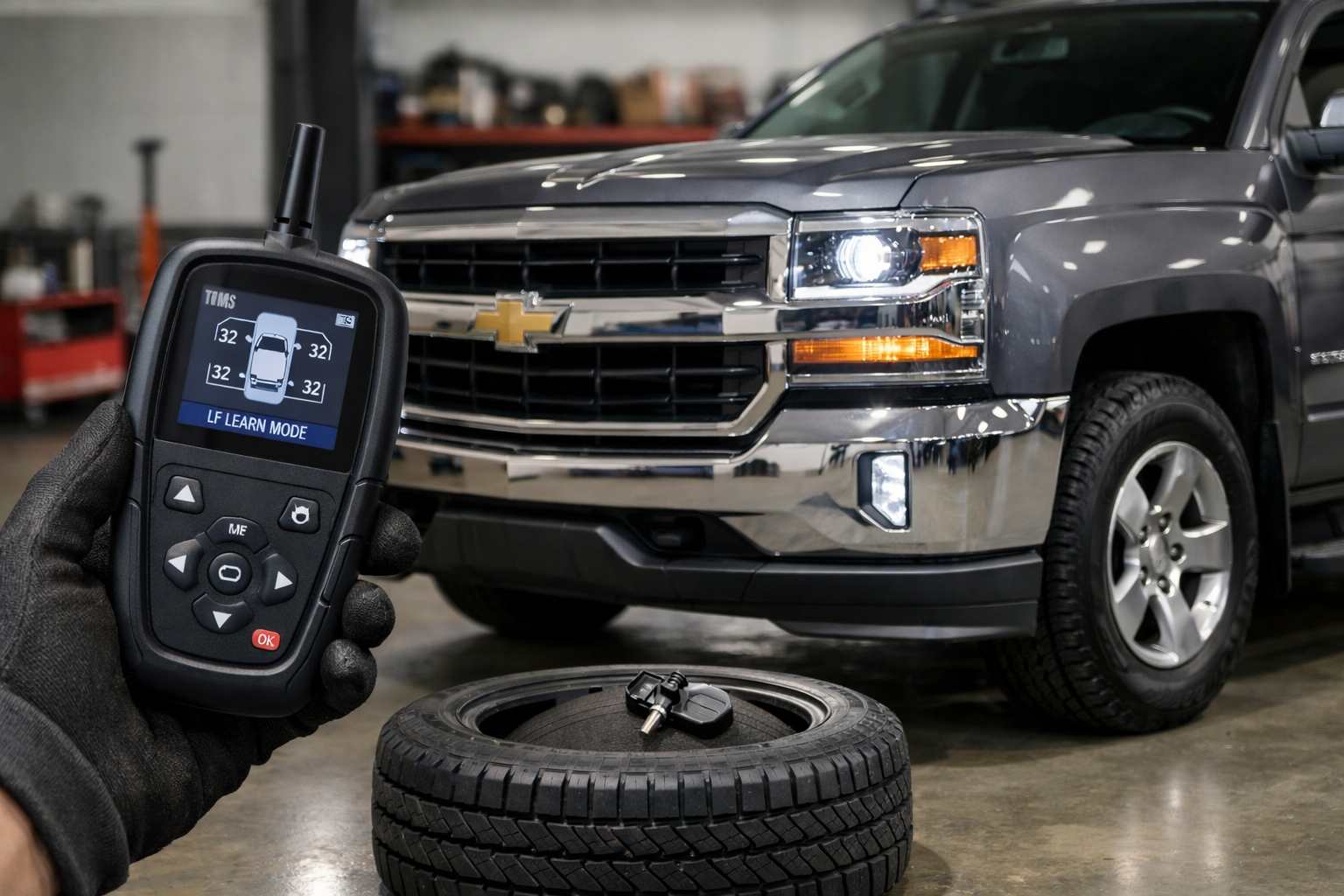
GM’s TPMS relearn procedure for the Chevy Silverado is unique because it requires triggering sensors in a specific order (left front, right front, right rear, left rear) while the system is in relearn mode. Unlike some brands that auto-relearn sensor positions during driving, GM needs you to manually tell the system which sensor is at which wheel position.
The process differs slightly between the K2 (2014-2018) and T1 (2019+) platforms, but both require a TPMS activation tool to complete the procedure properly.
T1 Silverado (2019+): Infotainment Method
Inflate all tires to the correct pressure listed on the driver’s door jamb sticker. On the infotainment touchscreen, navigate to Settings > Vehicle > Tire Pressure Monitor > Relearn Tires.
The system enters relearn mode, and the horn chirps once to confirm. Use a TPMS activation tool against each tire’s valve stem in the required sequence: left front, right front, right rear, left rear. A horn chirp confirms each sensor.
Two chirps signal that all four sensors have been registered and the relearn is complete.
K2 Silverado (2014-2018): DIC Button Method
Turn the ignition to ON without starting the engine. Press the DIC (Driver Information Center) info button on the steering wheel until “TIRE LEARNING” or “RELEARN TIRE POSITION” appears on the cluster display.
Press and hold the checkmark or SET button until the horn chirps once. Trigger each sensor with a TPMS tool in the LF-RF-RR-LR sequence. A chirp confirms each one.
Two chirps signal completion. Turn the ignition off.
Why GM Requires This Specific Order
GM’s TPMS module maps each sensor’s unique ID to a specific wheel position during the relearn process. The fixed order (LF-RF-RR-LR) tells the computer exactly which sensor belongs where.
If you trigger sensors out of order, the system assigns them to the wrong positions, which means the dashboard display shows incorrect pressure readings for specific tires. The truck will still warn you about low pressure, but it’ll tell you the wrong tire is low, which is confusing and defeats the purpose of position-specific monitoring.

TPMS Relearn Tool for GM
Required for GM’s specific sensor relearn sequence after rotation or replacement
Common Reasons the Light Stays On After Inflation
A steady light after inflation and relearn usually means one tire is still genuinely low. Double-check all four tires with a known-accurate gauge.
Also check the spare tire, because some Silverado trims include a TPMS sensor in the spare. If the spare has lost pressure (which is common since spare tires are rarely checked), it can trigger the warning even though all four mounted tires are properly inflated.
A flashing TPMS light followed by a solid light indicates a system malfunction, typically a dead sensor battery. Sensor batteries last 5 to 10 years. When one fails, the others are likely close behind since they were all manufactured at the same time.
Cold weather is another common trigger. Tire pressure drops about 1 PSI per 10-degree temperature change. Tires that were properly inflated during a warm afternoon can be 3 to 5 PSI low on a freezing morning, which is enough to trigger the TPMS warning.
Recheck pressure in the morning during cold snaps and top off as needed. This same principle applies to any vehicle, whether you’re dealing with fuel efficiency concerns on your truck or simply maintaining proper tire health.
How the System Compares to Other Modern Vehicle Tech
The TPMS system on your Silverado is one of many computerized safety features that modern trucks rely on. Just like blind spot monitoring systems or adaptive cruise control, TPMS uses sensors to constantly monitor conditions and alert you to potential problems.
The difference is that TPMS requires your intervention to tell the system where each sensor is located after tire rotations or replacements. Other systems like lane keep assist calibrate themselves automatically as you drive.
Frequently Asked Questions
Does the spare tire have a TPMS sensor?
Some Silverado trims include a TPMS sensor in the spare. If the TPMS display on the dashboard shows a fifth tire reading, your spare has a sensor. Check its pressure along with the four mounted tires whenever the TPMS light appears.
Can I do a relearn without a TPMS tool?
Some owners have had success by deflating each tire by 8 to 10 PSI and then reinflating while the truck is in relearn mode. This method forces the sensor to transmit during the pressure change.
However, it’s inconsistent and time-consuming. A TPMS activation tool is inexpensive, fast, and reliable, making it the better approach.
How long do GM TPMS sensors last?
Sensor batteries last 5 to 10 years under normal conditions. When one sensor fails, the others are typically close behind.
Many tire shops recommend replacing all four sensors during a tire change if the originals are over 7 years old, which avoids multiple trips back for individual sensor failures over the following months.
Will the TPMS light affect my insurance or inspection?
A lit TPMS warning can cause your vehicle to fail safety inspection in many states. While it won’t directly affect your insurance rates like your credit score does, maintaining proper tire pressure and a functioning TPMS system is part of regular vehicle maintenance that keeps your truck safe and road-legal.

Leave a Reply