
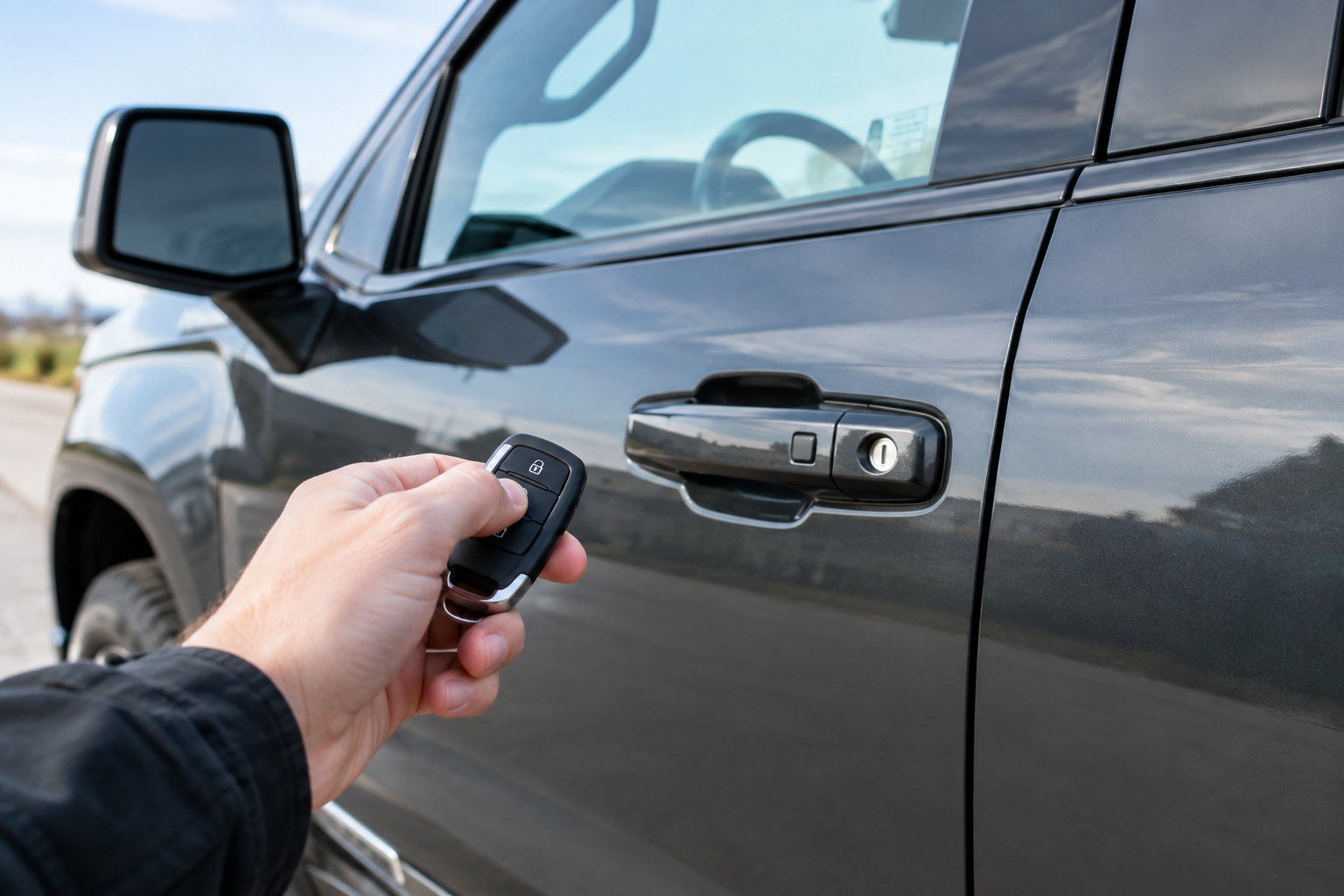
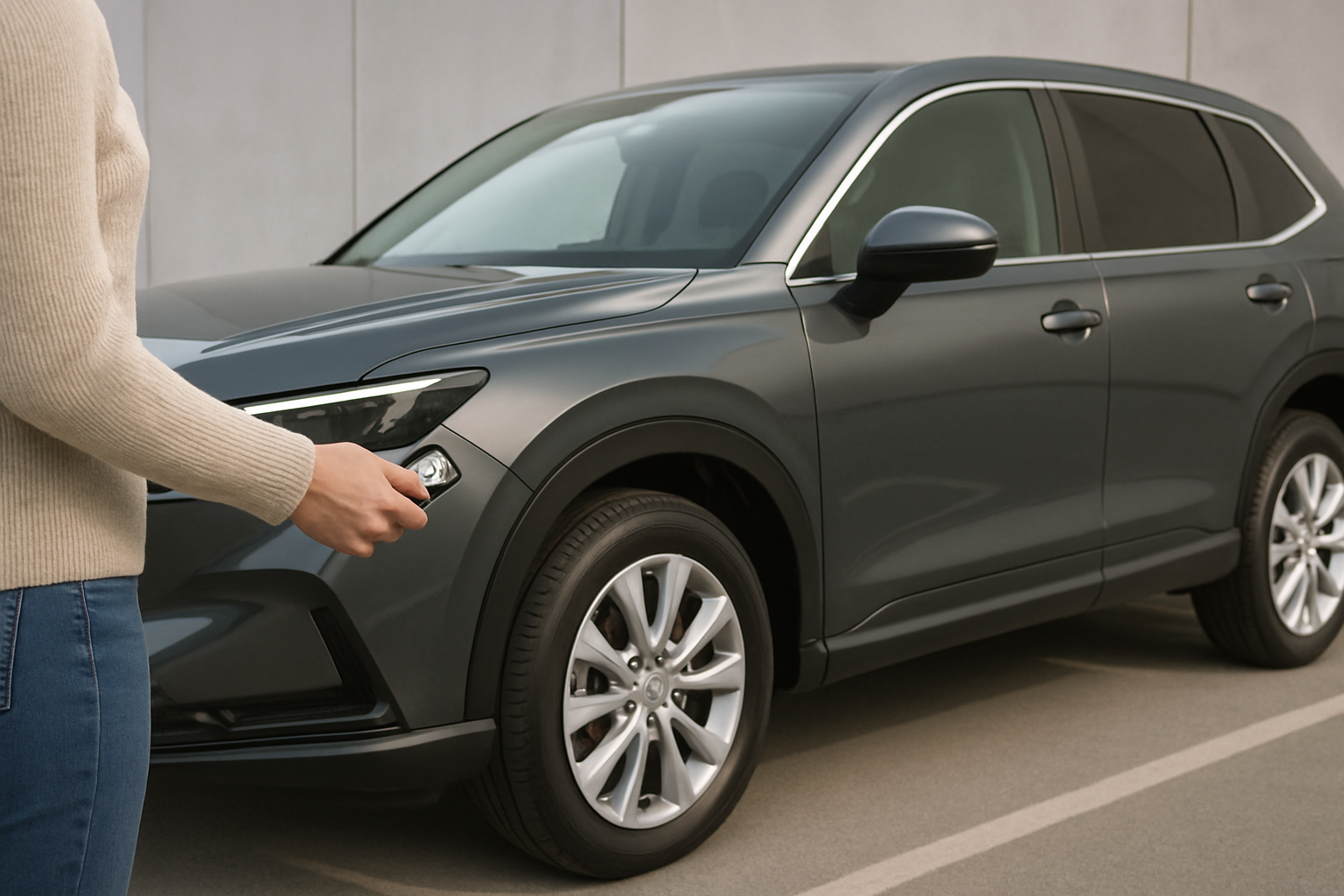
You walk up to your Silverado with an armload of groceries, tap the door handle like you always do, and nothing happens. No click, no unlock, no green flash from the mirror lights. You check your pocket, the fob is right there, and it even beeps the horn when you press the button. So why won’t the handle itself unlock the truck?
This is one of the most common complaints on Silverado 1500 forums, and it usually isn’t a mystery repair bill. It’s almost always one of a handful of specific things: a tired fob battery, a passive entry setting that got toggled off, a single bad door handle sensor, or a 12V battery that’s too weak to power the low-voltage systems that run keyless entry. Let’s walk through how to figure out which one you’re dealing with.
Know the Feature Name First
GM calls this system “Passive Entry” (sometimes labeled Keyless Access on window stickers and owner’s manuals). It’s different from the “unlock” button on your fob. Passive entry lets you approach the truck, touch the door handle release pad, and have it unlock automatically as long as the fob is within range, usually inside the cab or within a few feet of the door.
Not every Silverado 1500 has this feature. It’s standard on higher trims like RST, LTZ, and High Country, and it’s optional or unavailable on base Work Truck (WT) and some Custom trims. If your truck never came with passive entry, touching the handle was never supposed to unlock anything, and you’ll need to use the fob button or the manual key blade instead.
Start With the Fob Battery
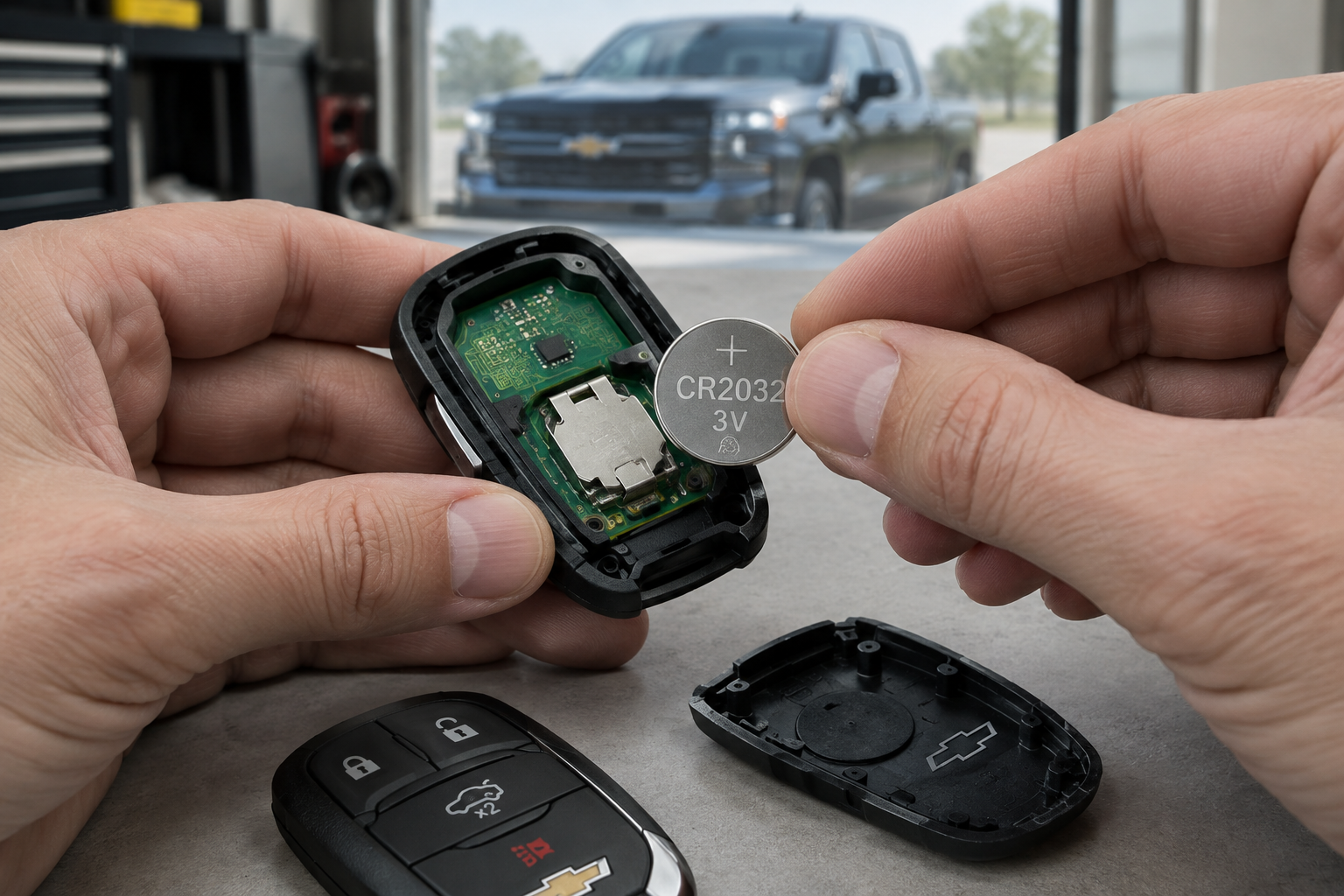
Before you assume there’s a wiring problem, rule out the simplest cause. Passive entry uses a low-frequency signal that requires more consistent power than the basic unlock button, so a fob with a weakening battery can still send a strong enough signal to work when you press the button but fail at the shorter, passive range check the handle sensor performs.
Most Silverado fobs use a CR2032 coin cell. If your remote start range has gotten shorter, or the fob takes two or three tries to lock the truck, that’s a sign the battery is on its way out. Swap it before doing anything else.
CR2032 Key Fob Battery
A fresh CR2032 is the cheapest fix you can try, and it solves this problem more often than owners expect.
While you’re in there, check the battery orientation and make sure the contacts aren’t corroded or loose. A fob that’s been dropped or sat in a cupholder full of spilled coffee can develop a weak connection even with a brand new battery installed.
Is It One Handle or the Whole Truck?
This is the step most owners skip, and it’s the one that tells you whether you’re chasing a fob issue or a vehicle-side fault. Walk around the truck and try passive entry at every door, including the tailgate handle if your Silverado has power tailgate release.
- If every handle fails to unlock, the problem is almost certainly the fob, the antenna module, or the 12V battery.
- If only one handle won’t respond while the others work fine, you’re looking at a bad capacitive touch sensor in that specific handle, a corroded connector, or a wiring chafe point near the door hinge.
A single dead handle is common on trucks that see a lot of pressure washing or driven through harsh winters, since road salt and water intrusion are the usual culprits behind a corroded handle sensor. That’s a door handle repair, not a fob or battery issue, and it usually requires pulling the door panel to inspect or replace the sensor pad and wiring harness.
Check the Passive Entry Setting in the Truck’s Menu
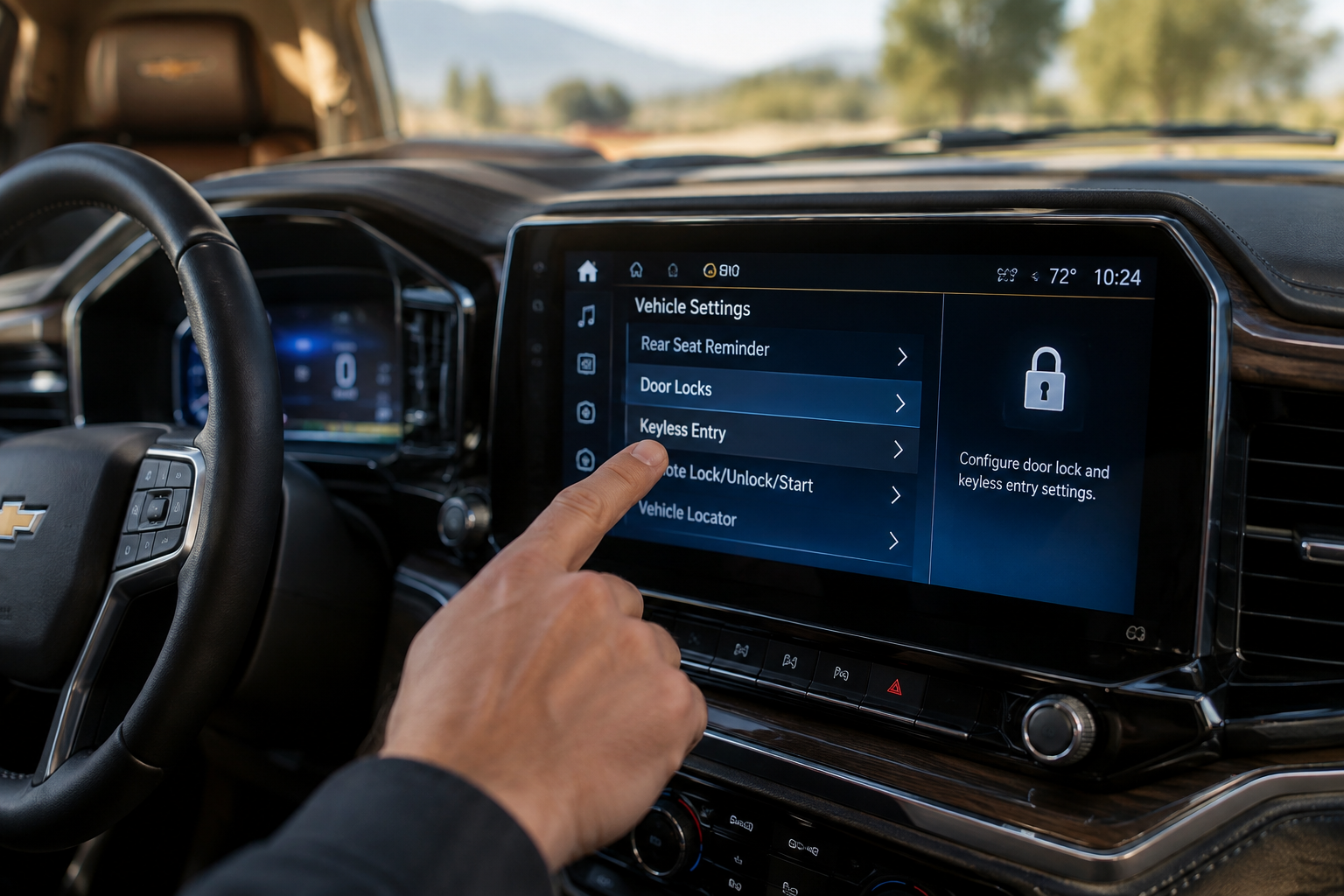
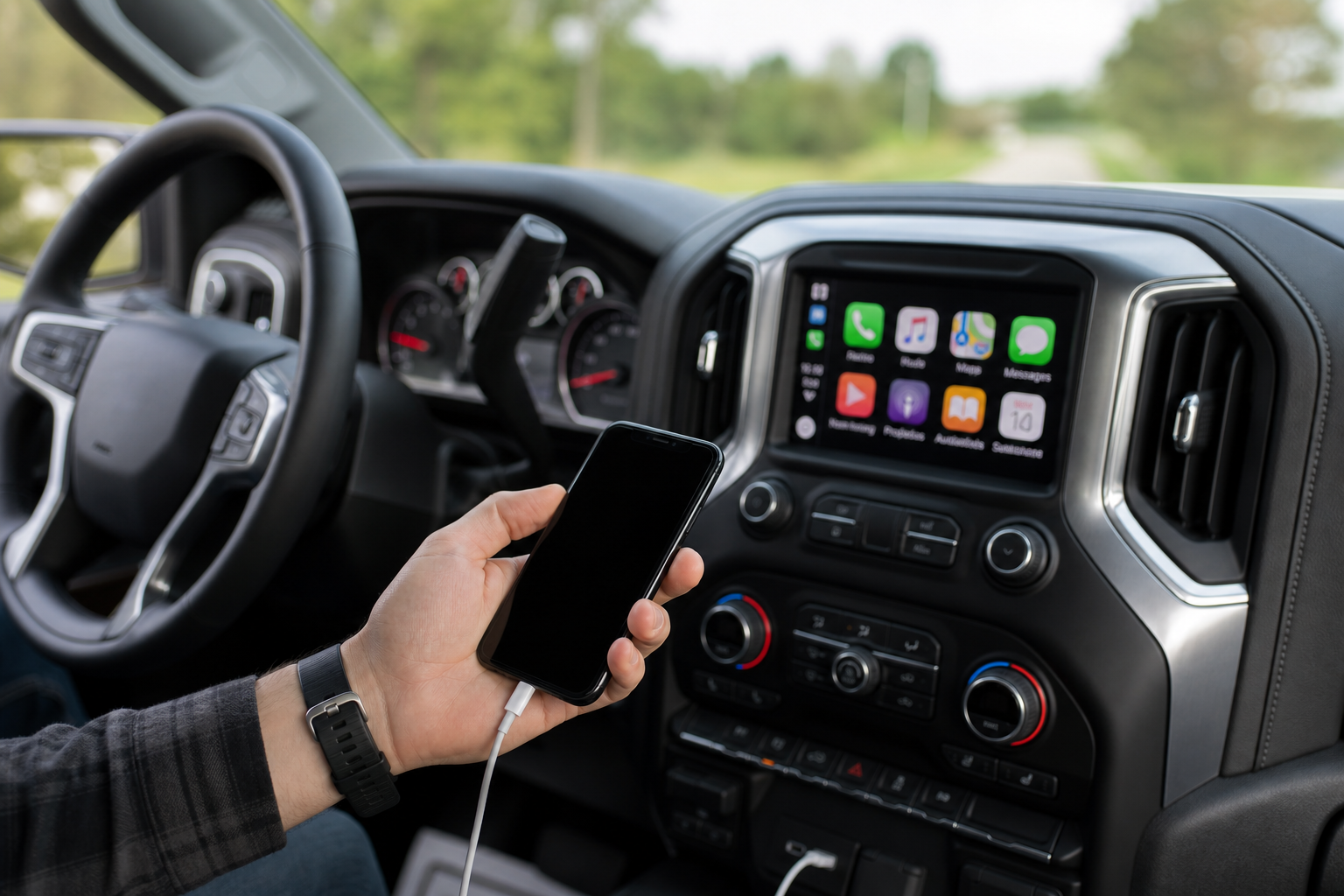
GM builds an option into the infotainment settings that lets you disable passive entry system-wide, and it’s easy to bump accidentally, especially if someone else has driven the truck or a dealer service tech reset settings during a visit.
On most Silverado 1500 model years, you’ll find this under Settings, then Vehicle, then Door Locks (wording varies slightly by model year and infotainment version). Look for an option labeled “Passive Entry” or “Passive Unlock” and confirm it’s toggled on. Some trims also let you set passive entry to unlock only the driver’s door or all doors, so double check that setting matches what you expect.
Rule Out Interference and Antenna Problems
Passive entry relies on low-frequency antennas built into the door handles and a receiver module, typically mounted near the console or under a seat depending on model year. Aftermarket electronics, phone mounts with wireless chargers, and even certain LED interior light strips can throw off enough electromagnetic interference to block the handshake between fob and truck.
If you’ve added aftermarket gear recently, unplug it temporarily and test the handles again. It’s also worth checking whether your remote start module or any aftermarket alarm system was installed by a shop that tapped into the factory keyless entry wiring, since a sloppy splice is a common source of intermittent passive entry failures.
Low 12V Battery Voltage
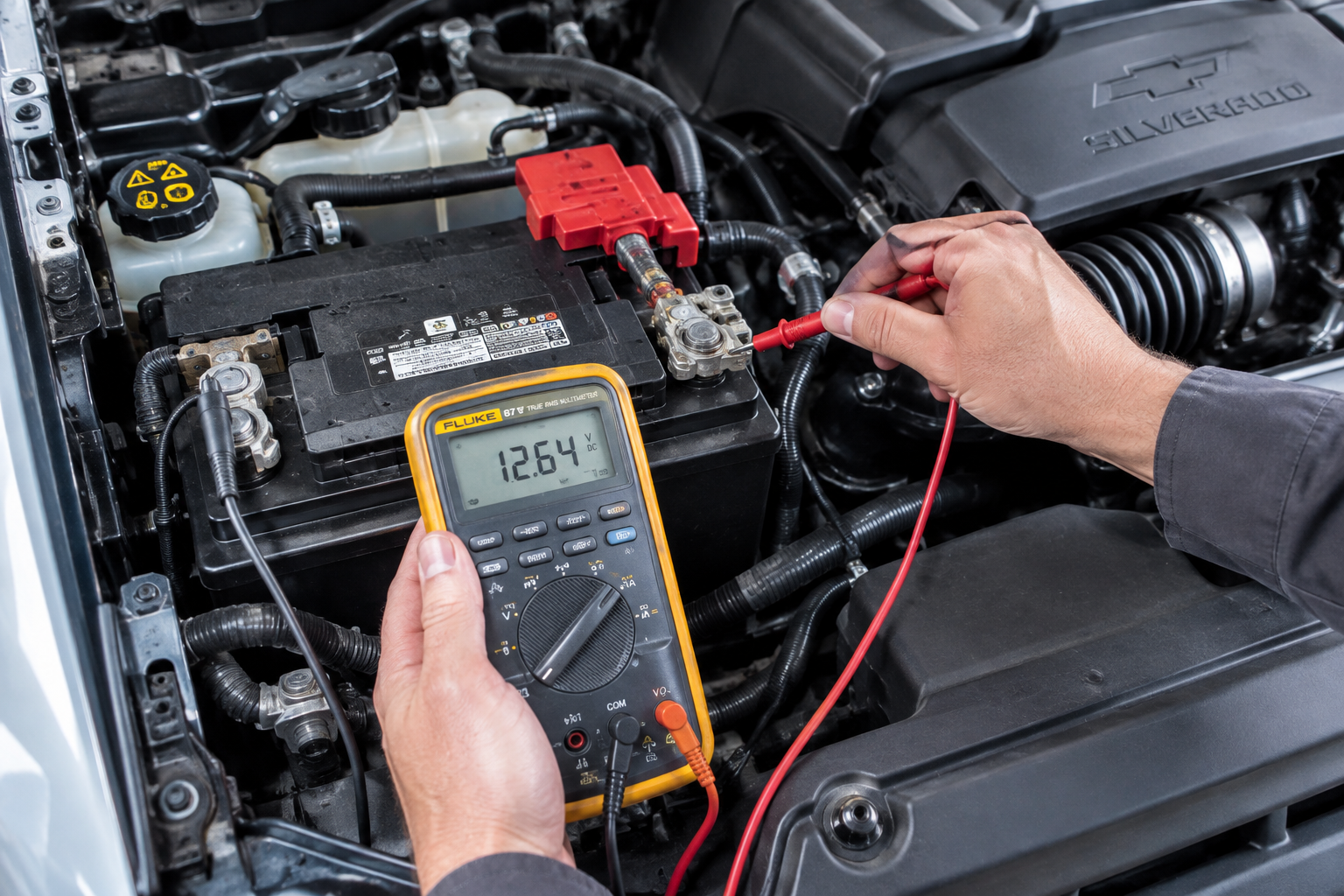
Passive entry pulls from your truck’s 12V accessory battery, not the fob battery, to power the body control module and door handle sensors. If that battery is weak from age, a parasitic draw, or cold weather, the system can behave erratically, working sometimes and failing other times, especially first thing in the morning.
A quick way to check this yourself is with a basic multimeter or a dedicated battery tester. Anything reading below 12.4 volts at rest suggests the battery is losing capacity and should be tested under load before you rule it out as the cause.
Digital Battery Load Tester
A load tester takes the guesswork out of diagnosing a weak battery instead of just checking resting voltage.
If your Silverado is a few years old and you haven’t replaced the battery, weak voltage is a more likely cause than most owners assume, since keyless systems are one of the first things to act up when battery health starts to slip.
Trim and Model Year Differences Matter
Chevy has changed how passive entry behaves across Silverado generations. On the current-generation trucks, touching the handle release pad triggers the unlock, while on some earlier model years you needed to grab the handle itself rather than press a button. Mixing up the correct handle operation for your specific year is a surprisingly common reason people think the system is broken when it’s actually working exactly as designed.
Check your owner’s manual for the exact instructions for your model year, since GM has revised this mechanism more than once. If you recently switched from an older truck to a newer Silverado, or vice versa, that muscle memory mismatch is worth ruling out before you start pulling apart door panels.
If you’re already digging into your Silverado’s settings menu for this fix, it’s a good time to check whether other convenience features are configured the way you want. Owners going through the passive entry menu often end up adjusting things like the rear seat reminder or reviewing how lane assist settings reset between drives, since GM’s infotainment system groups a lot of these preferences together.
When to See a Dealer or Locksmith
If you’ve swapped the fob battery, confirmed passive entry is enabled, ruled out interference, and tested the 12V battery, and the handles still won’t unlock on any door, the antenna module or body control module itself may need diagnostic scanning. This is where a dealer or an automotive locksmith with GM-specific scan tools comes in, since they can pull fault codes tied to the keyless entry system that aren’t visible from the driver’s seat.
A single failed handle, on the other hand, is a more affordable fix and often something a mobile locksmith or independent shop can handle without dealer pricing. Get a quote for just the handle sensor and harness before agreeing to any broader electrical diagnostic work.
Frequently Asked Questions
Why does my fob still unlock the truck with the button, but the handle doesn’t work?
This points to the passive entry system specifically, not the fob itself, since the button uses a stronger, different signal than the low-frequency handle sensors. Check the passive entry setting in your infotainment menu first, then test all four handles to see if it’s a single sensor or a system-wide issue.
Can a weak truck battery really affect keyless entry?
Yes. Passive entry sensors and the body control module both need stable voltage to communicate properly, and a battery under roughly 12.4 volts at rest can cause intermittent failures that look like a fob or sensor problem but are actually power related.
Does every Silverado 1500 trim have passive entry?
No. Passive entry is common on RST, LTZ, and High Country trims, but base Work Truck and some Custom configurations don’t include it at all. Check your window sticker or owner’s manual to confirm whether your specific truck ever had this feature before assuming something is broken.

Leave a Reply