
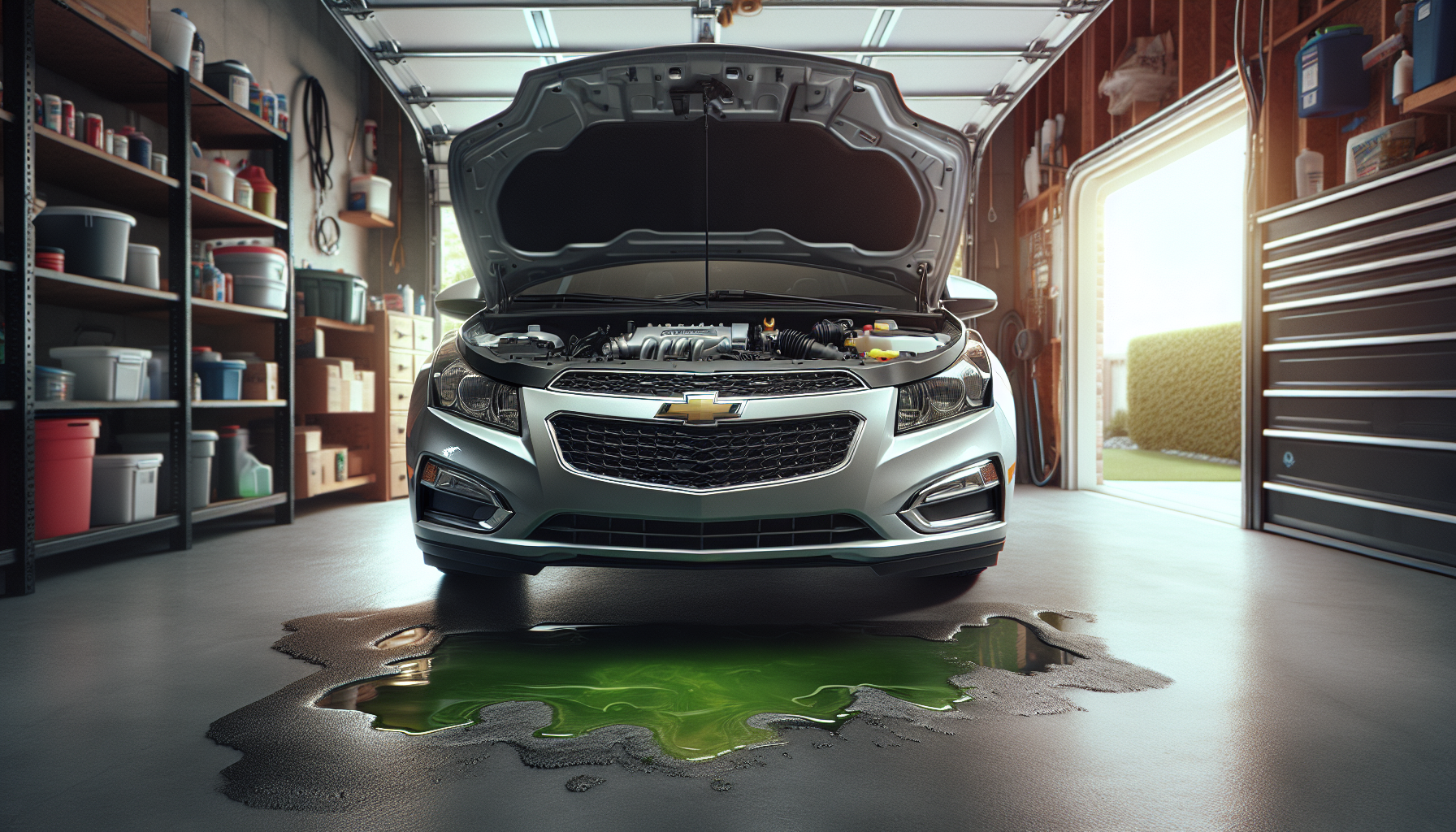
If you’ve noticed a puddle of bright green or orange coolant under your Chevy Cruze, there’s a good chance the water outlet is the culprit. This plastic housing sits on top of the engine and acts as a junction point for coolant flow. Over time, the plastic degrades from constant heat cycling, and the gasket fails. What starts as a small seep can turn into a steady drip that leaves you topping off coolant every few days.
The water outlet (sometimes called the thermostat housing or coolant outlet) is one of the most common leak points on 2008-2016 Cruze models. It’s not just you dealing with this. The problem affects Malibus and Impalas with similar engines too. The good news is that while it’s annoying, it’s also fixable without special tools or advanced skills.
Common Causes
The water outlet on these engines is made from plastic reinforced with fiberglass. That might sound durable, but constant exposure to 200-degree coolant takes its toll. Here’s what typically goes wrong:
Heat cycling degradation. Every time your engine heats up and cools down, the plastic expands and contracts. After 60,000 to 100,000 miles of this abuse, the material becomes brittle. Small cracks form around bolt holes or along seams. Sometimes you can see the damage, but often the cracks are hairline fractures that only leak when the system is under pressure.
Gasket failure. Even if the plastic housing itself is fine, the rubber gasket between the outlet and the engine head deteriorates. The gasket gets hard and loses its ability to seal. Coolant finds its way through the smallest gap, and before you know it, you’re seeing drips down the front of the engine.
Bolt torque issues. Some leaks start because someone over-tightened the bolts during a previous repair. Plastic threads strip easily, and cranking down too hard on those bolts can crack the housing immediately or create weak points that fail later. On the flip side, bolts that are too loose won’t compress the gasket properly.
Coolant quality neglect. If coolant hasn’t been changed in years, it loses its anti-corrosive properties. The fluid becomes acidic and eats away at gaskets and seals throughout the system. The water outlet gasket is particularly vulnerable because it sits in a hot zone.
How to Diagnose the Problem
Before you start ordering parts, confirm that the water outlet is actually your problem. Coolant can travel along engine surfaces and drip from places far from the actual leak source.
Start with a cold engine. Pop the hood and look at the top front of the engine. The water outlet is a black plastic piece with coolant hoses attached, sitting roughly in the center near the front. Check for crusty white or green residue around the base where it meets the engine. That’s dried coolant, and it’s a dead giveaway.
If nothing’s obvious, clean the area with brake cleaner and a rag. Let the engine warm up to operating temperature, then look again with a flashlight. Active leaks often show themselves when the system is hot and pressurized. You might see coolant seeping from the gasket line or bubbling from a crack in the plastic.
Check your coolant level in the overflow tank. If you’re losing coolant but don’t see puddles under the car, the leak might be small enough that it’s evaporating on hot engine components before it hits the ground. A slow drop in coolant level combined with visible residue on the water outlet points to this being your issue.
Don’t forget to inspect the hoses that connect to the outlet. Sometimes what looks like a housing leak is actually a hose that’s split or has a bad clamp. Squeeze the hoses near the connections. If they feel mushy or show cracks, replace them while you’re in there.
This video shows the most common coolant leak points on the Cruze, including the water outlet:
How to Fix It
Replacing the water outlet isn’t complicated, but it does require some patience. Plan on spending about an hour if everything goes smoothly. You’ll need a new water outlet assembly (which includes a fresh gasket), coolant, a drain pan, and basic hand tools.
First, let the engine cool completely. Working on a hot cooling system is a great way to burn yourself badly. Once it’s cool, place your drain pan under the radiator and open the petcock to drain a few quarts of coolant. You don’t need to drain the entire system, just enough to drop the level below the water outlet.
Disconnect the negative battery cable. This isn’t strictly necessary for the outlet replacement, but it’s good practice when working near electrical components.
Remove any air intake components that block access to the outlet. On most Cruze models, you’ll need to loosen a clamp and pull the intake tube out of the way. Take a photo with your phone before disconnecting anything so you remember how it goes back together.
Disconnect the coolant hoses from the outlet. There are usually two or three hoses secured with spring clamps. Use pliers to squeeze the tabs and slide the clamps down the hoses, then twist and pull the hoses off. Expect some coolant to spill out even if you drained the system.
Remove the bolts holding the outlet to the engine. There are typically three or four bolts. Keep track of them because they’re sometimes different lengths. Pull the old outlet straight up and off. The gasket might stick to the engine surface, so use a plastic scraper to remove any residue. Don’t use metal scrapers or you’ll gouge the aluminum.
Clean the mating surface on the engine head with a rag and some brake cleaner. It needs to be perfectly clean for the new gasket to seal properly. Any old gasket material or coolant residue will cause another leak.
Install the new outlet with its fresh gasket. Make sure the gasket is positioned correctly and hasn’t shifted. Thread the bolts in by hand first to avoid cross-threading. Tighten them in a criss-cross pattern to about 8-10 foot-pounds of torque. If you don’t have a torque wrench, just snug them down firmly without gorilla-gripping them. Remember, it’s plastic.
Reconnect the coolant hoses and reposition the spring clamps. Make sure the hoses are pushed all the way onto the outlet barbs.
Refill the cooling system with the correct coolant. Chevy Cruze models use Dex-Cool (orange coolant). Don’t mix coolant types. Run the engine with the radiator cap off until the thermostat opens and coolant starts circulating. Top off as needed and burp any air pockets by squeezing the upper radiator hose.
Let the engine reach operating temperature and check for leaks around your new outlet. If it’s dry, you’re done. Reinstall any air intake parts you removed and reconnect the battery.
This video demonstrates the complete water outlet replacement process:
When to See a Mechanic
Most people can handle this repair at home, but there are situations where a shop makes more sense.
If you discover multiple coolant leaks during your inspection, it might be time for a professional diagnosis. A leaking water pump, radiator, or heater core requires more involved work, and you want someone who can efficiently address everything at once.
Stripped bolt holes are another reason to seek help. If a previous repair damaged the threads in the engine head, you’ll need a mechanic with thread repair tools to install a helicoil insert. That’s not a beginner-friendly job.
Some folks just don’t have the time or workspace for DIY repairs. If you’re short on either, a mechanic can knock this out in under an hour. Just make sure you go somewhere that won’t upsell you on parts you don’t need.
Estimated Repair Costs
Here’s what you’re looking at cost-wise depending on whether you DIY or hire out:
| Repair Type | Cost Range |
|---|---|
| DIY Parts (outlet assembly + coolant) | $30 – $60 |
| Shop Labor (1 hour) | $80 – $150 |
| Total Shop Repair | $110 – $210 |
| Dealership Repair | $200 – $350 |
Aftermarket water outlet assemblies are cheaper than OEM parts and work just fine for most people. You can find quality units for $25-40. If you want the GM factory part, expect to pay closer to $60-80. Coolant adds another $15-20 for a gallon of Dex-Cool.
Labor rates vary by location, but most independent shops charge $80-120 per hour. Dealerships run higher, sometimes $150-200 per hour. Since this is a quick job, you’re mainly paying for one hour of shop time plus markup on parts.
Prevention Tips
You can’t prevent plastic parts from aging forever, but you can extend their life with proper maintenance.
Change your coolant every 5 years or 60,000 miles, whichever comes first. Fresh coolant protects gaskets and seals from degradation. Old coolant becomes acidic and accelerates wear throughout the cooling system. Stick with Dex-Cool for Chevy vehicles and don’t mix different coolant types.
When you do coolant changes or any cooling system work, use the correct torque specs on fasteners. Over-tightening plastic components causes immediate damage or creates stress points that fail prematurely. If you don’t have a torque wrench, get one. They’re cheap insurance against comebacks.
Address cooling system problems quickly. If your temp gauge creeps up or you notice coolant loss, don’t ignore it. Overheating puts extra stress on every component, including that water outlet. What could have been a simple fix becomes a cascade of failures if you keep driving with cooling problems.
Inspect hoses and clamps during oil changes. Catching a deteriorating hose before it fails completely can save you from being stranded. Look for soft spots, cracks, or bulges. Squeeze hoses near the connections and replace them if they feel mushy.
A leaking water outlet on your Chevy Cruze is frustrating but manageable. The repair is within reach for anyone comfortable with basic car maintenance, and even if you hire it out, it won’t break the bank. Catch it early before it leaves you stranded with an overheated engine, and you’ll save yourself bigger headaches down the road. Keep an eye on that coolant level and address drips when they’re small.


Leave a Reply