
Owning a car you can wrench on yourself in your own driveway saves real money over the life of the vehicle. We’re talking hundreds of dollars a year in labor costs alone, plus the ability to catch small problems before they turn into big ones. But not every car is built with the home mechanic in mind. Some models bury the oil filter behind a maze of plastic covers, use proprietary tools for basic jobs, or need a shop lift just to change a headlight bulb.
The eight vehicles below were chosen because they’re the opposite of that. Parts are cheap and widely available, service intervals are long, and most of the routine stuff, oil changes, brake pads, filters, spark plugs, can be done with a jack, a socket set, and an afternoon. We stuck to non-luxury brands and steered clear of engines with known expensive failure points, so you won’t find anything here that’s going to surprise you with a five-figure repair bill at 90,000 miles.
1. Toyota Corolla (2020-2025, 2.0L)
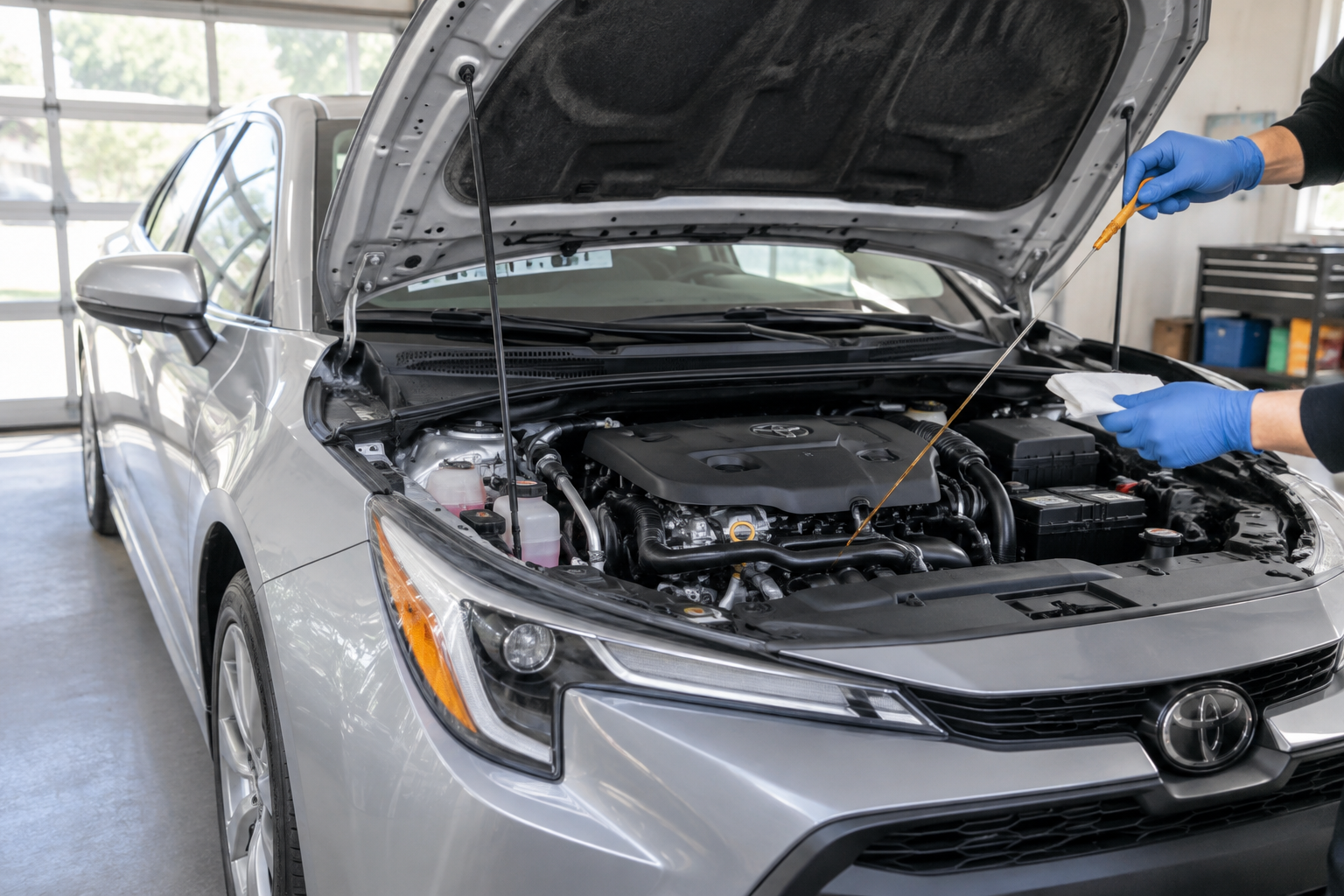
The Corolla’s 2.0L Dynamic Force engine runs on 0W-16 full synthetic and only needs about 4.5 quarts. A filter like the Toyota 04152-YZZA1 runs in the competitively priced to competitively priced range, so a full DIY oil change usually lands under competitively priced in parts. Toyota’s factory interval is 10,000 miles, which is generous for a naturally aspirated engine.
Front brake pads run competitively priced to competitively priced for a quality set, and the cabin air filter is a five-minute glovebox job. Spark plugs are rated for 120,000 miles, so you likely won’t touch them until well past the warranty. There’s no timing belt to worry about, just a chain that’s designed to last the life of the engine.
2. Honda Civic (2022-2025)
Whether you get the naturally aspirated 2.0L or the 1.5L turbo, the Civic uses the same 0W-20 oil and a filter like the Honda 15400-PLM-A02, which typically costs under competitively priced. Honda’s Maintenance Minder system adjusts the interval based on driving conditions, but most owners see 7,500 to 10,000 miles between changes.
Brake pads are inexpensive and easy to find, usually competitively priced to competitively priced a set, and the front calipers use a simple two-bolt bracket that any home mechanic can handle. Spark plugs are iridium and rated for 100,000 miles. Both engines use timing chains, so there’s no belt replacement lurking in your future.
3. Toyota Camry (2018-2024, 2.5L)
The Camry shares its engine family with the Corolla, so the parts story is nearly identical: cheap filters, 10,000-mile oil change intervals, and 120,000-mile spark plugs. Front brake pads run a bit higher than the Corolla’s, usually competitively priced to competitively priced, simply because the Camry is a heavier car.
One thing worth knowing: Toyota doesn’t require a transmission fluid change on the “normal” schedule for the 8-speed automatic, but doing one yourself around 60,000 miles with a simple drain-and-fill is cheap insurance and easy to do without a lift.
4. Honda CR-V (2017-2025)
The CR-V uses the same basic oil filter and fluid spec as the Civic, so maintenance costs stay low even though it’s a crossover. Cabin air filters (Honda CF10134 or equivalent) are competitively priced to competitively priced and take less than five minutes to swap.
If you’re cross-shopping crossovers for long-term ownership costs, it’s worth checking our breakdown of every SUV ranked by MPG to see how the CR-V stacks up against its competition on fuel costs, since that’s the other half of the ownership equation. Brake pads run competitively priced to competitively priced, and like the Civic, there’s no timing belt to budget for.
5. Mazda3 (2019-2025, Skyactiv-G 2.5L)
The Mazda3 is a fun car to own and a reasonably cheap one to maintain, with one caveat: Mazda’s recommended oil change interval is shorter than most on this list, at 7,500 miles under normal use. The oil filter (FL-910S or equivalent) is inexpensive, usually under competitively priced, and the 0W-20 synthetic oil isn’t hard to find on sale.
Spark plugs are rated for 60,000 miles rather than 100,000-plus, so you’ll be replacing them a bit more often than on the Toyotas and Hondas here. Brake pads run competitively priced to competitively priced. It’s still an easy car to service in a driveway, just budget for slightly more frequent attention.
6. Hyundai Elantra (2021-2025, 2.0L)
The Elantra’s 2.0L engine takes 0W-20 synthetic and a filter like the Hyundai/Kia 26300-35505, which is often under competitively priced. Hyundai recommends a 7,500-mile interval, and spark plugs are rated for 105,000 miles.
Brake pads are among the cheapest on this list, typically competitively priced to competitively priced for a full front set. Combined with Hyundai’s 10-year/100,000-mile powertrain warranty, the Elantra is a low-risk, low-cost car to own well past the point most warranties expire.
7. Kia Forte (2019-2025, 2.0L)
The Forte shares its engine and most of its drivetrain parts with the Elantra, so the maintenance picture is nearly a copy-paste: same oil filter part number, same 7,500-mile interval, same 105,000-mile spark plug life. Brake pads and rotors are shared across the Hyundai-Kia lineup, which keeps prices competitive at any parts store.
If you’re comparing the two, the Forte tends to be slightly cheaper up front, and the maintenance costs are close enough that it comes down to which body style and trim you prefer.
8. Ford Ranger (2019-2025, 2.3L EcoBoost)
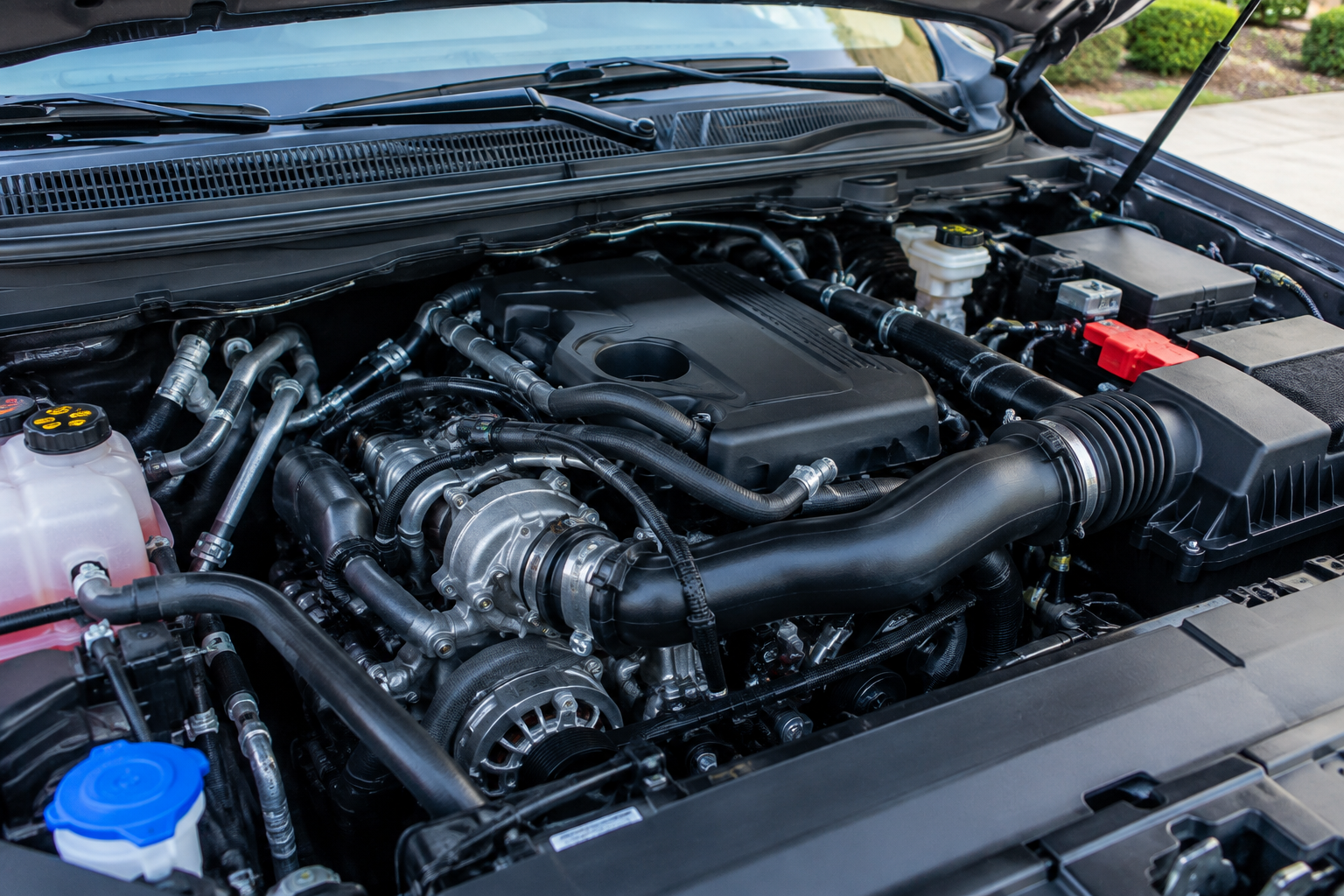
The Ranger is the one truck on this list, and it holds its own for DIY-friendliness. The 2.3L EcoBoost needs full synthetic 5W-30 and a filter like the Motorcraft FL500S, with parts typically running competitively priced to competitively priced for a full oil change. Ford’s normal interval is 10,000 miles, dropping to 7,500 under severe use like towing.
Spark plugs last 100,000 miles, and there’s no timing belt. The one thing to watch with any direct-injection turbo engine is carbon buildup on the intake valves over time. It’s not an expensive fix, an occasional bottle of intake cleaner or a walnut-blasting service every 60,000 to 80,000 miles handles it, and it’s far cheaper than the head gasket issues that plague some other brands’ engines (see our writeup on Subaru Outback years to avoid for an example of what you’re not dealing with here).
Tools and Supplies to Get Started
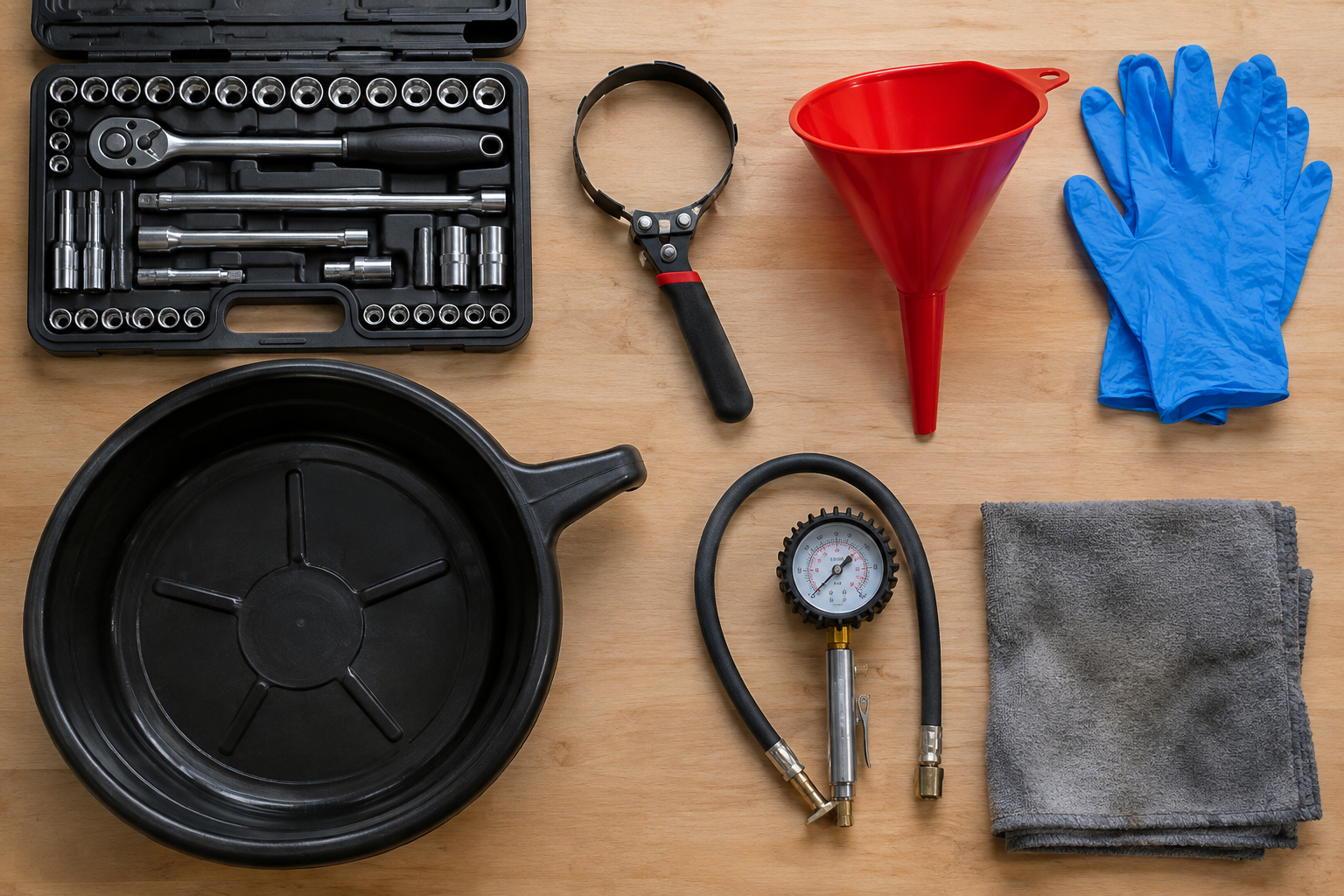
You don’t need a full shop to handle any of the maintenance above. A decent floor jack, jack stands, and a basic mechanic’s tool set will cover oil changes, brake pads, filters, and spark plugs on every vehicle on this list.

OBD2 Scanner Basic Tool Set
A budget-friendly code reader that pays for itself the first time it clears a check engine light instead of a shop diagnostic fee.
An OBD2 scanner is worth owning even if you never plan to diagnose anything serious yourself. It lets you check what triggered a warning light, clear codes after a repair, and reset maintenance reminders on most of these vehicles without a dealer visit. If you’re dealing with tire pressure warnings specifically, our guide to resetting TPMS on the Toyota RAV4 walks through the process step by step, and the same basic logic applies across most Toyota and Honda products.
A quality torque wrench matters more than people think, especially for lug nuts and drain plugs where over-tightening causes expensive damage down the road.

Torque Wrench Set
Keeps you from stripping threads or cracking an oil pan, which turns a cheap DIY job into a costly repair.
Round out your kit with a good oil filter wrench, a drain pan, nitrile gloves, and a set of ramps if you’d rather not deal with a jack every time. For brake jobs, a C-clamp or a dedicated caliper piston tool makes compressing the caliper far easier than improvising. And if you ever run into a brake pedal that feels soft or sinks to the floor after sitting overnight, check our guide on what to check first before assuming you need new pads.
Cabin air filters and AC performance go hand in hand too. If your AC has started smelling musty or blowing warm, our articles on fixing smelly car AC and why your AC isn’t blowing cold cover fixes you can usually handle yourself before paying a shop to look at it.
Frequently Asked Questions
What’s the single cheapest car to maintain on this list?
The Toyota Corolla and Hyundai Elantra are neck and neck. Both use inexpensive oil filters, have 10-year or long-mile spark plug life, and use commonly stocked brake pads. The Elantra edges it out slightly on brake pad pricing, while the Corolla’s resale value and parts availability are hard to beat.
How often should I really change my oil if I do it myself?
Follow the manufacturer’s interval on the sticker or in the owner’s manual, not a generic 3,000-mile rule from decades ago. Every vehicle on this list is rated for 7,500 to 10,000 miles between changes with modern synthetic oil, and stretching that further isn’t worth the risk to save one bottle of oil.
Do any of these cars have a timing belt I need to budget for?
No. Every engine listed here uses a timing chain, which is designed to last the life of the engine under normal conditions. That eliminates one of the more expensive scheduled maintenance items you’d find on older cars or some competitors that still use belts.


Leave a Reply