
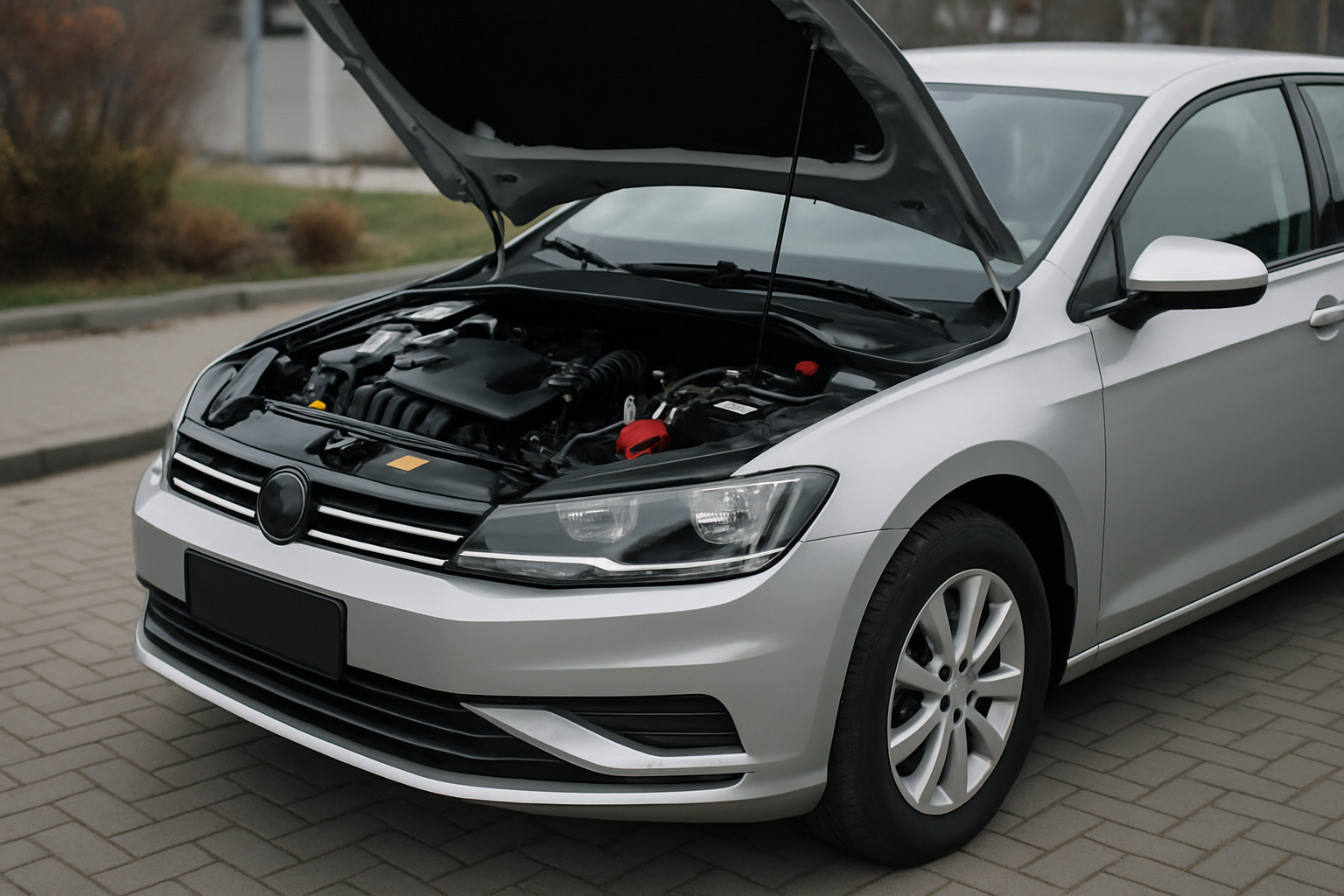
A car that stalls when you come to a stop is one of the most frustrating automotive problems you can face. You’re cruising along just fine, but the moment you pull up to a red light or stop sign, your engine dies and leaves you scrambling to restart before traffic starts moving again.
This issue affects vehicles across all makes and models, though it tends to be more common in cars with higher mileage or those that haven’t received regular maintenance. The stalling typically happens because your engine isn’t getting the right mixture of air, fuel, or spark it needs to maintain idle speed.
Understanding Why Cars Stall at Idle
Your engine needs three basic things to run: air, fuel, and spark. At idle, the engine operates at its lowest RPM, usually between 600-800 RPM for most vehicles. This makes it particularly sensitive to any disruption in that delicate balance.
When you’re driving at higher RPMs, small problems with airflow or fuel delivery often go unnoticed because the engine has plenty of power in reserve. But at idle, even minor issues can cause the engine to stumble and die.
The computer in your car, known as the Engine Control Module (ECM), constantly monitors various sensors to maintain proper idle speed. When one of these sensors fails or sends incorrect data, the ECM can’t make the right adjustments to keep your engine running smoothly.
The Most Common Causes of Idle Stalling
Idle Air Control Valve Problems
The idle air control valve (IAC) is probably the most common culprit when it comes to stalling at idle. This small motor-driven valve controls the amount of air that bypasses the throttle plate when your foot isn’t on the gas pedal.
Over time, the IAC valve can become clogged with carbon deposits or simply wear out mechanically. When it fails, your engine can’t maintain the proper air flow needed for a stable idle. You’ll often notice the RPMs hunting up and down before the engine finally stalls.
IAC valves are particularly prone to failure after a battery disconnect because they need to relearn their position. If you’ve recently had your battery replaced or disconnected, this should be your first suspect.
Vacuum Leaks
Your engine relies on a network of vacuum hoses to operate various systems and maintain proper air/fuel mixture. When one of these hoses develops a crack or becomes disconnected, it creates what’s called a vacuum leak.
Vacuum leaks introduce unmetered air into the engine, which throws off the carefully calculated air/fuel ratio. The ECM tries to compensate, but at idle, this extra air often causes the engine to run too lean and stall.
Common locations for vacuum leaks include the intake manifold gaskets, brake booster hose, PCV system, and various small vacuum lines that become brittle with age.
Dirty Throttle Body
The throttle body houses the throttle plate that controls airflow into your engine. Over time, it accumulates carbon deposits and oil residue that can interfere with proper operation.
A dirty throttle body affects the idle air bypass passages and can prevent the throttle plate from closing completely. This creates an inconsistent idle that often leads to stalling, especially when the air conditioning or other accessories are running.
Modern drive-by-wire throttle bodies are especially sensitive to carbon buildup because they rely on precise electronic control rather than a direct mechanical connection to the gas pedal.
Failing Fuel Pump
While a completely dead fuel pump will prevent your car from starting at all, a failing pump can still provide enough pressure for highway driving while struggling at idle. The lower fuel demand at idle can mask a weak pump until it finally gives up.
Fuel pumps typically fail gradually, with symptoms that worsen over time. You might notice the engine stumbles when you first start it up, or it may stall after sitting at idle for several minutes as the pump heats up and loses efficiency.
Electric fuel pumps are particularly susceptible to failure when the fuel tank is regularly run down to near empty, as the fuel helps cool and lubricate the pump motor.
Bad MAP or MAF Sensor
The Manifold Absolute Pressure (MAP) sensor and Mass Air Flow (MAF) sensor provide critical information to the ECM about engine load and airflow. When these sensors fail or become contaminated, they send incorrect data that causes the ECM to miscalculate fuel delivery.
MAP sensors measure the pressure in the intake manifold and can fail due to internal electrical problems or a torn vacuum hose. MAF sensors measure the actual mass of air entering the engine and commonly fail when contaminated by oil from an over-oiled air filter or general age-related degradation.
Both sensors can cause stalling at idle because the ECM relies heavily on their input to maintain proper air/fuel mixture at low RPMs.
Post-Battery Disconnect Issues
If your stalling problems started after having your battery disconnected or replaced, you’re dealing with a relearning issue. Modern cars store adaptive values in their computer memory that help fine-tune engine operation based on your specific vehicle’s characteristics.
When the battery is disconnected, these learned values are lost, and the ECM reverts to generic factory settings. While the car will usually run, it may not idle properly until the computer relearns the correct values for your engine.
The relearning process typically takes several drive cycles, but you can speed it up by following specific procedures outlined in your service manual. This usually involves letting the engine idle for a specified period and driving through various conditions while the ECM collects new data.
How to Diagnose the Problem
Start your diagnosis by checking for error codes using an OBD2 scanner. While not all idle issues trigger check engine lights, many sensor problems will store codes that point you in the right direction.
Pay attention to when the stalling occurs. Does it happen immediately after startup, only when warm, or after running accessories like the air conditioning? These details help narrow down the possible causes.
Listen carefully to how the engine behaves before it stalls. A hunting idle that surges up and down suggests an IAC valve problem, while a sudden drop in RPM points toward a vacuum leak or sensor issue.
Visual inspection can reveal obvious problems like disconnected vacuum hoses, corroded electrical connections, or oil contamination around the throttle body or MAF sensor.
Step-by-Step Repair Solutions
Cleaning the Idle Air Control Valve
Remove the IAC valve, which is usually located on the throttle body and held in place by two or three bolts. Clean it thoroughly with throttle body cleaner, paying special attention to the pintle valve and air passages.
Check the electrical connector for corrosion and ensure it clicks securely into place. When reinstalling, use a new gasket if one is provided and don’t overtighten the mounting bolts.
After installation, start the engine and let it idle for several minutes to allow the ECM to relearn the proper valve position.
Finding and Fixing Vacuum Leaks
Start by visually inspecting all vacuum hoses for cracks, splits, or loose connections. Pay particular attention to hoses near hot engine components where rubber deteriorates quickly.
For harder-to-find leaks, you can spray carburetor cleaner around suspected areas while the engine is running. If the idle speed changes when you spray a particular spot, you’ve found your leak.
Replace any damaged hoses with the correct size and type. Vacuum hoses are usually measured by inside diameter, with common sizes being 3/8″, 5/16″, and 1/4″.
Throttle Body Cleaning
Disconnect the air intake tube and remove the throttle body from the intake manifold. Clean all surfaces with throttle body cleaner and a soft brush, being careful not to force the throttle plate open on electronic throttle bodies.
Clean the idle air bypass passages thoroughly, as these small openings are critical for proper idle control. Replace the throttle body gasket when reassembling.
After installation, you may need to perform a throttle position sensor relearn procedure as outlined in your service manual.
Testing and Replacing Sensors
MAF sensors can often be cleaned with specialized MAF cleaner spray, but replacement is usually more reliable. MAP sensors are typically not cleanable and should be replaced if they test outside specification.
When replacing sensors, use OEM parts when possible, as aftermarket sensors sometimes don’t provide the accuracy needed for proper engine management.
Always clear error codes and perform any required relearn procedures after sensor replacement.
When to Seek Professional Help
While many idle stalling issues can be diagnosed and repaired by DIY mechanics, some problems require professional equipment and expertise. Fuel system problems, complex vacuum leaks, and internal engine issues often need professional attention.
If you’ve tried the basic fixes without success, or if you’re not comfortable working with fuel system components, take your car to a qualified technician. They have access to advanced diagnostic equipment and can perform procedures like fuel pressure testing and exhaust gas analysis.
Consider professional help especially important if your car is still under warranty, as DIY repairs might void coverage for related components.
Prevention and Maintenance Tips
Regular maintenance prevents many idle stalling problems before they start. Replace your air filter regularly and avoid over-oiling reusable filters, which can contaminate the MAF sensor.
Use quality fuel and consider occasional use of fuel system cleaners to prevent injector and intake valve deposits. Keep your engine oil changed regularly, as blow-by from worn engines can accelerate throttle body contamination.
Address check engine lights promptly rather than ignoring them, as many sensor problems worsen over time and can lead to additional failures.
Frequently Asked Questions
Can I drive my car if it stalls at idle?
While you can often restart and continue driving, stalling at idle is both dangerous and potentially damaging to your engine. The sudden loss of power steering and brake assist when the engine dies can create hazardous situations, especially in traffic.
How much should repairs cost?
Simple fixes like cleaning the IAC valve or replacing vacuum hoses can cost under $50 in parts. More complex repairs like fuel pump replacement can run $300-800 depending on your vehicle. Sensor replacements typically fall in the $100-300 range including labor.
Will stalling damage my engine?
Occasional stalling won’t damage your engine, but running with a severely lean condition due to vacuum leaks or sensor problems can cause internal damage over time. Address the problem promptly to avoid more expensive repairs.
Why does my car only stall when it’s hot?
Heat-related stalling often points to a failing fuel pump, heat-sensitive electrical connections, or a coolant temperature sensor problem. These components can work fine when cool but fail as operating temperatures rise.
Leave a Reply