
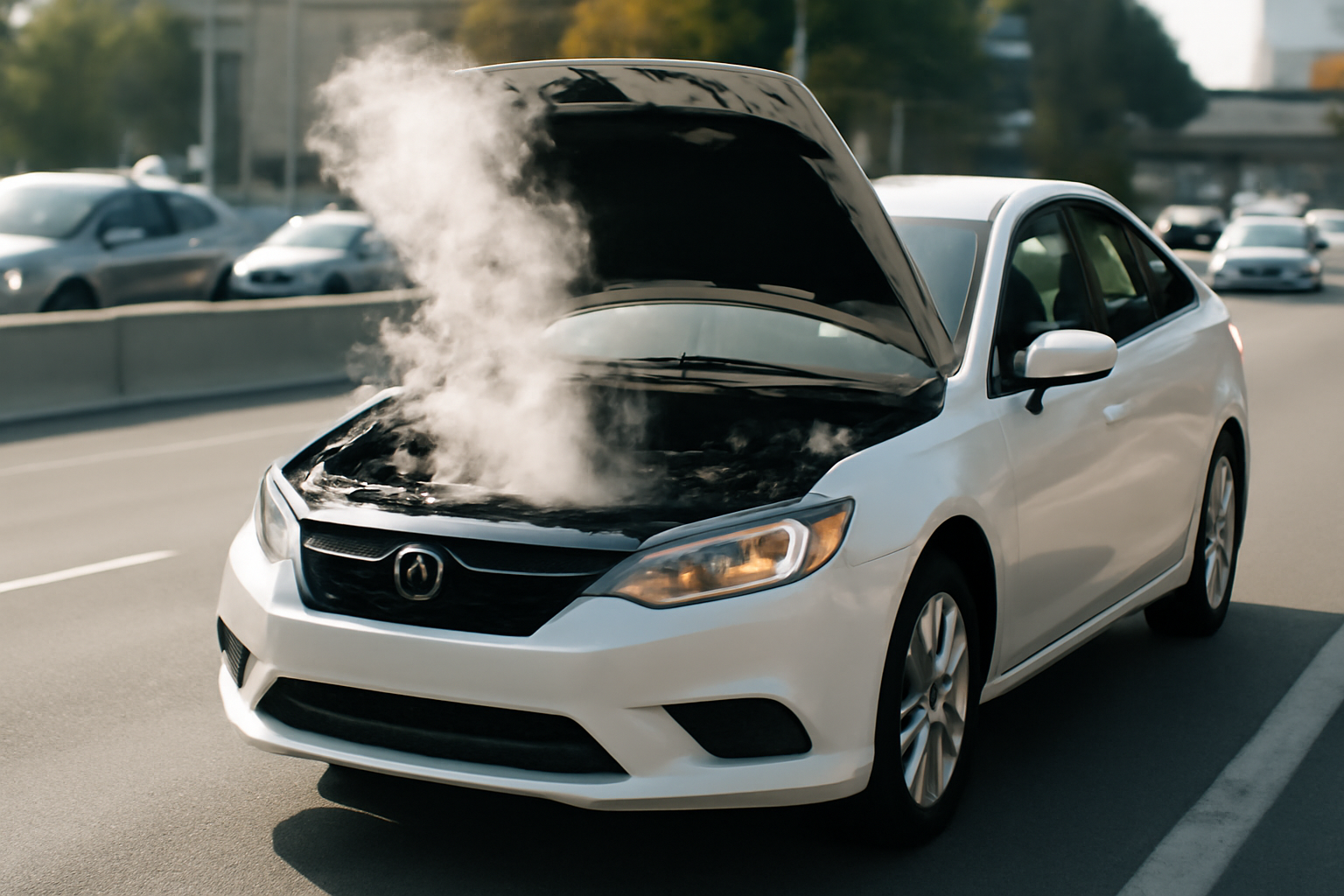
Your temperature gauge climbs steadily when you’re stuck in traffic, but drops back to normal the moment you hit highway speed. This pattern points to a specific set of cooling system problems, all related to airflow.
At highway speed, air rushes through the radiator naturally. In stop-and-go traffic, your car relies on other components to keep things cool, and when those fail, the engine overheats.
Cooling Fan Failure
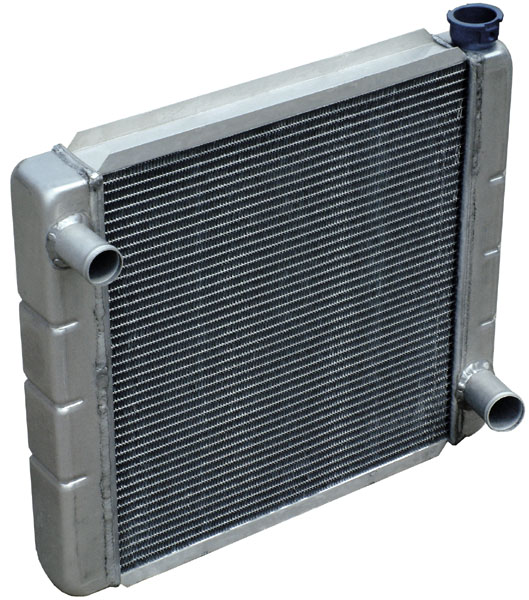
The electric cooling fan (or fans) behind the radiator kicks on when the engine reaches a certain temperature, typically around 200-210°F. The fan pulls air through the radiator when the car isn’t moving fast enough to create natural airflow.
If the fan motor fails, the relay dies, or the temperature sensor that triggers it malfunctions, no air moves through the radiator at low speeds. This creates the exact pattern you’re experiencing.
To check, let the engine warm up while parked and watch whether the fan engages. Most fans should start spinning within 5-10 minutes of idling on a warm day. If the fan stays off while the temperature climbs past normal, you’ve found the problem.
Fan motors, relays, and temperature sensors are all common failure points. A replacement cooling fan assembly is available for most vehicles and is a manageable DIY job on many models.

Universal Radiator Cooling Fan
Essential replacement when your OEM fan fails, restores proper airflow at idle
Clogged Radiator
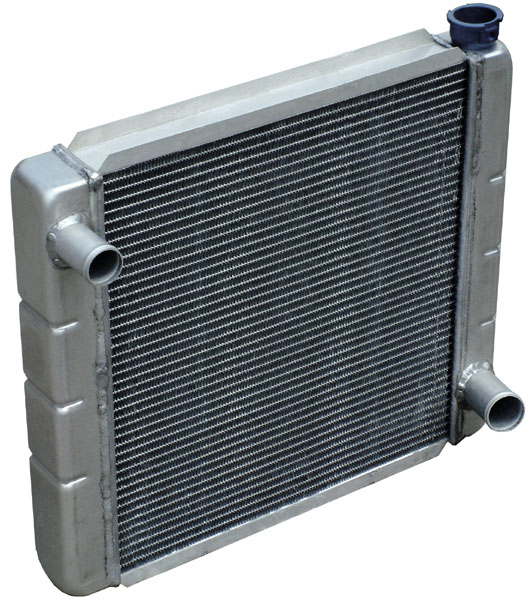
Over years of service, the radiator’s internal passages can become partially blocked by corrosion, scale, and old coolant deposits. A partially clogged radiator might handle highway driving (where strong airflow compensates) but can’t dissipate enough heat at idle when airflow depends entirely on the cooling fan.
Flushing the cooling system can clear minor blockages. Severely clogged radiators need replacement.
If coolant hasn’t been changed in over 5 years, internal buildup is a real possibility. Regular maintenance prevents this issue from developing in the first place.
Low Coolant Level
Even slightly low coolant reduces the system’s ability to absorb and transfer heat. The engine works harder in traffic (constant acceleration and braking), generating more heat than steady highway cruising.
A system that’s marginally low handles highway driving fine but can’t keep up with the extra heat load of city driving. This is especially true for older, high-mileage vehicles where small leaks are more common.
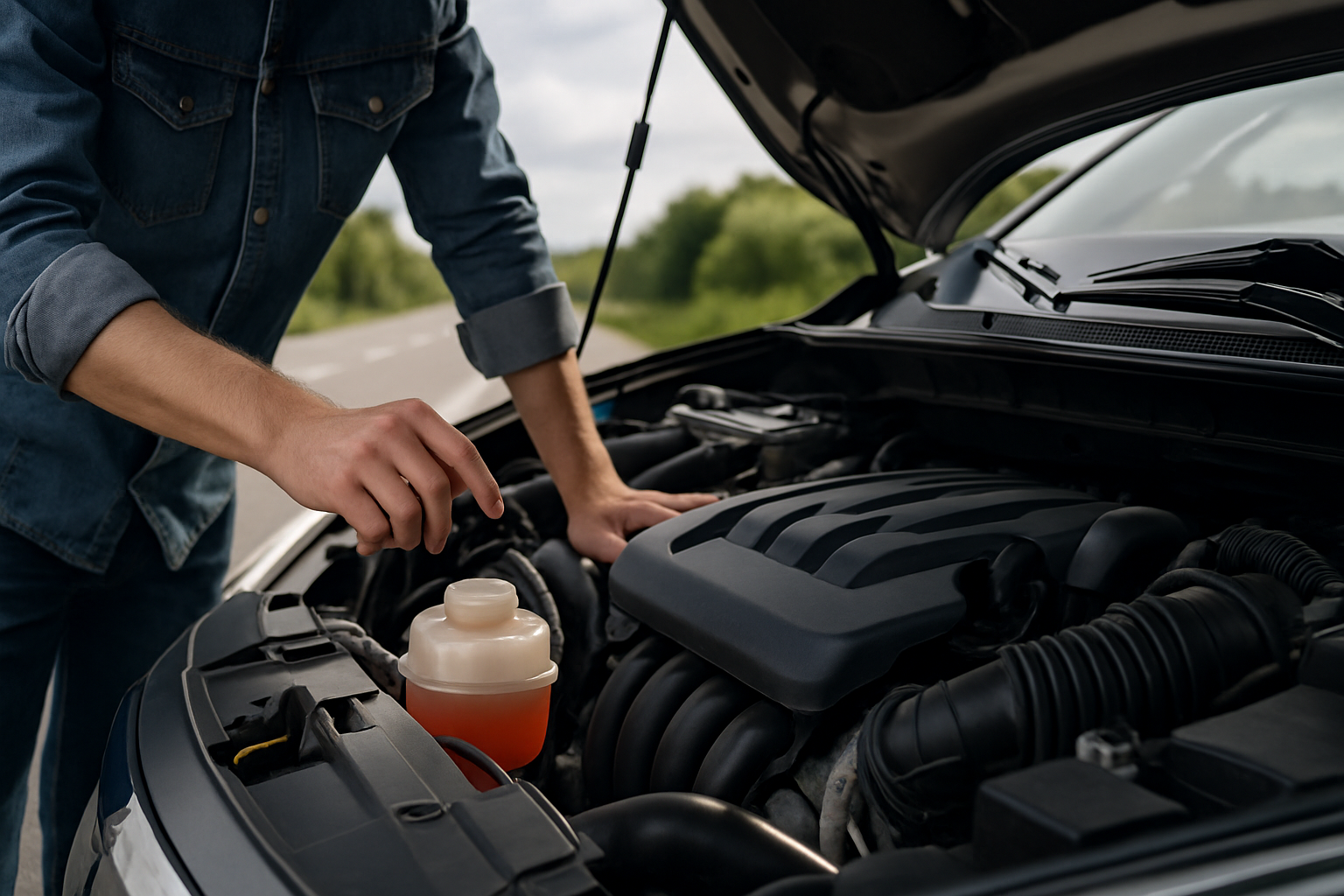
Check the coolant reservoir when cold. If it’s below the minimum line, top it up with the correct pre-mixed coolant and monitor the level over the next few days. Repeated low levels indicate a leak.

Pre-Mixed Engine Coolant
Ready to use, no mixing required, prevents mistakes that can damage your cooling system
Thermostat Stuck Partially Closed

The thermostat controls coolant flow between the engine and radiator. A thermostat stuck partially closed restricts flow, preventing the radiator from receiving enough hot coolant to cool.
It might pass enough coolant at highway RPMs but restrict too much at idle. This creates exactly the symptoms you’re seeing.
Thermostats are inexpensive parts, and many mechanics replace them as a first step when diagnosing overheating. The part itself is cheap, and labor is reasonable on most vehicles.
Water Pump Weakness
The water pump circulates coolant through the engine. A pump with a worn impeller moves less coolant at low RPMs (idle/traffic) than at higher RPMs (highway driving).
The reduced flow can’t carry heat away from the engine fast enough during slow driving. A failing water pump sometimes produces a whining or grinding noise, especially at idle.
Water pump failures are particularly common on certain models, including Volkswagen Golf engines where the pump is part of the timing chain system. On these vehicles, water pump replacement is a major service that should be handled by a qualified mechanic.
What to Do If Your Car Overheats in Traffic
Turn off the AC immediately. The AC condenser adds heat load to the radiator. Similar to what happens when cars overheat with the AC running, you need to eliminate every possible heat source.
Turn the heater to maximum heat and the fan to high. This uses the heater core as a secondary radiator to pull heat from the engine. It’s uncomfortable in summer, but it can prevent engine damage.
If the temperature continues climbing into the red zone, pull over safely, turn off the engine, and let it cool for at least 30 minutes. Never open the radiator cap on a hot engine.
Once cool, check the coolant level and drive directly to a repair facility. Don’t risk further damage by continuing to drive in traffic.
Frequently Asked Questions
Can I drive with a broken cooling fan?
You can drive on the highway where natural airflow cools the radiator, but avoid city driving and sitting in traffic. This is a temporary measure only.
Get the fan repaired as soon as possible, since overheating even once can cause head gasket failure or engine warping. The repair cost is minor compared to engine damage.
How do I know if my radiator is clogged?
With the engine warm and the thermostat open, feel the radiator from top to bottom. It should be hot at the top and progressively cooler toward the bottom.
Cold spots indicate blocked passages. A mechanic can also perform a flow test to check for restrictions inside the radiator.
Is overheating in traffic normal for older cars?
It’s common but not normal. Older cooling system components wear out, but a well-maintained older car should handle traffic without overheating.
If yours is running hot, one of the components mentioned here is likely failing. Don’t assume age alone is the problem. Even cars built to last 200,000 miles need cooling system maintenance to reach that milestone.
How much does it cost to fix traffic overheating?
Costs vary widely depending on the cause. A cooling fan relay might cost under competitively priced with DIY installation. A new water pump on some vehicles can run several hundred dollars including labor.
The key is diagnosing the exact problem before spending money. Start with the simplest checks (coolant level, fan operation) before moving to more expensive repairs.

Leave a Reply