
You’re sitting at a red light, waiting. The light turns green, you press the gas pedal, and instead of smoothly pulling away, your car stumbles. There’s a noticeable hesitation, maybe a brief stuttering sensation, before it finally gets going. It’s frustrating, embarrassing when someone’s behind you, and honestly a little worrying if you don’t know what’s causing it.
This hesitation during acceleration from a stop is one of the most common drivability complaints I hear. The problem can stem from several different systems in your car, from fuel delivery issues to ignition problems to transmission quirks. Most of these causes are fixable without spending a fortune at the dealership, and some you can diagnose yourself in your driveway.
Common Causes
When your car hesitates off the line, you’re essentially dealing with a mismatch between what the engine needs and what it’s getting. That stumble happens when combustion isn’t occurring smoothly. Let me walk you through the usual suspects.
Dirty or Faulty Mass Airflow Sensor (MAF)
Your MAF sensor tells the engine computer how much air is entering the engine so it can adjust fuel delivery accordingly. When this sensor gets dirty or fails, the computer gets bad information and can’t properly balance the air-fuel mixture. This often causes hesitation right when you need power most.
Clogged Fuel Filter or Weak Fuel Pump
Your engine needs a steady supply of fuel under the right pressure. A clogged fuel filter restricts flow, while a failing fuel pump can’t maintain proper pressure. Either problem starves the engine of fuel during acceleration, causing that frustrating lag.
Dirty Throttle Body
The throttle body controls airflow into the engine. Over time, carbon deposits build up on the throttle plate and bore. When you press the gas pedal from a stop, this buildup can prevent smooth airflow, creating a hesitation before the engine responds properly.
Worn or Fouled Spark Plugs
Spark plugs ignite the air-fuel mixture. When they’re worn out or covered in deposits, they can’t create a strong enough spark. You’ll notice this most during acceleration when the engine needs efficient combustion.
Faulty Ignition Coils
Coils provide the high voltage needed for spark plugs to fire. A weak or failing coil causes misfires, which feel like hesitation or stuttering when you accelerate. Modern cars have multiple coils, and often just one or two fail at a time.
Vacuum Leaks
Your engine relies on a sealed vacuum system. Any leak allows unmetered air into the engine, throwing off the air-fuel ratio. This often causes rough idle and hesitation, especially from a stop when engine load suddenly increases.
Transmission Issues
Sometimes the hesitation isn’t engine-related at all. A transmission that’s slow to engage or shift, especially in automatic vehicles, can create a delay that feels like engine hesitation. Low transmission fluid or worn clutch packs are common culprits.
Dirty or Failing Fuel Injectors
Fuel injectors spray precise amounts of fuel into the cylinders. When they get clogged with deposits, they can’t atomize fuel properly. This causes poor combustion and hesitation, particularly under load.
This video covers the main causes in detail:
How to Diagnose the Problem
Before you start throwing parts at the problem, spend some time narrowing down the cause. Here’s how I’d approach it.
Check for Error Codes
Start with the basics. Plug in an OBD-II scanner and check for trouble codes. Even if your check engine light isn’t on, there might be pending codes that point you in the right direction. Codes related to MAF sensors, misfires, or fuel trim can save you hours of guesswork.
Inspect the Air Filter
Pop the hood and check your engine air filter. If it’s clogged with dirt and debris, your engine can’t breathe properly. This is a two-minute check that rules out one of the simplest causes.
Test Drive and Pay Attention
Take the car for a drive and really pay attention to when the hesitation occurs. Does it happen only when the engine is cold, or all the time? Is it worse going uphill? Does the car hesitate and then surge, or just feel sluggish? These details matter. A cold-start-only problem often points to different issues than one that happens all the time.
Check Fuel Pressure
If you have access to a fuel pressure gauge, test the fuel system. Connect the gauge to the fuel rail test port and check pressure both at idle and during acceleration. Compare your readings to the specs in your repair manual. Low pressure indicates a weak pump or clogged filter.
Inspect the MAF Sensor
Locate your MAF sensor (usually between the air filter box and throttle body) and visually inspect it. Look for oil contamination or visible dirt on the sensor wire or element. You can also test it with a multimeter if you know the voltage specs for your vehicle.
Look for Vacuum Leaks
With the engine running, listen for hissing sounds around intake manifold gaskets, vacuum hoses, and the brake booster line. You can also spray carburetor cleaner around suspected leak points while the engine idles. If the idle changes when you spray a spot, you’ve found your leak.
Check Spark Plugs
Pull the spark plugs and inspect them. They should be light tan or gray. Black, sooty plugs indicate a rich mixture. White or blistered plugs mean the engine’s running too lean. Worn electrodes or excessive gap means it’s time for replacement.
How to Fix It
Once you’ve identified the likely cause, here’s how to fix it yourself.
Clean the MAF Sensor
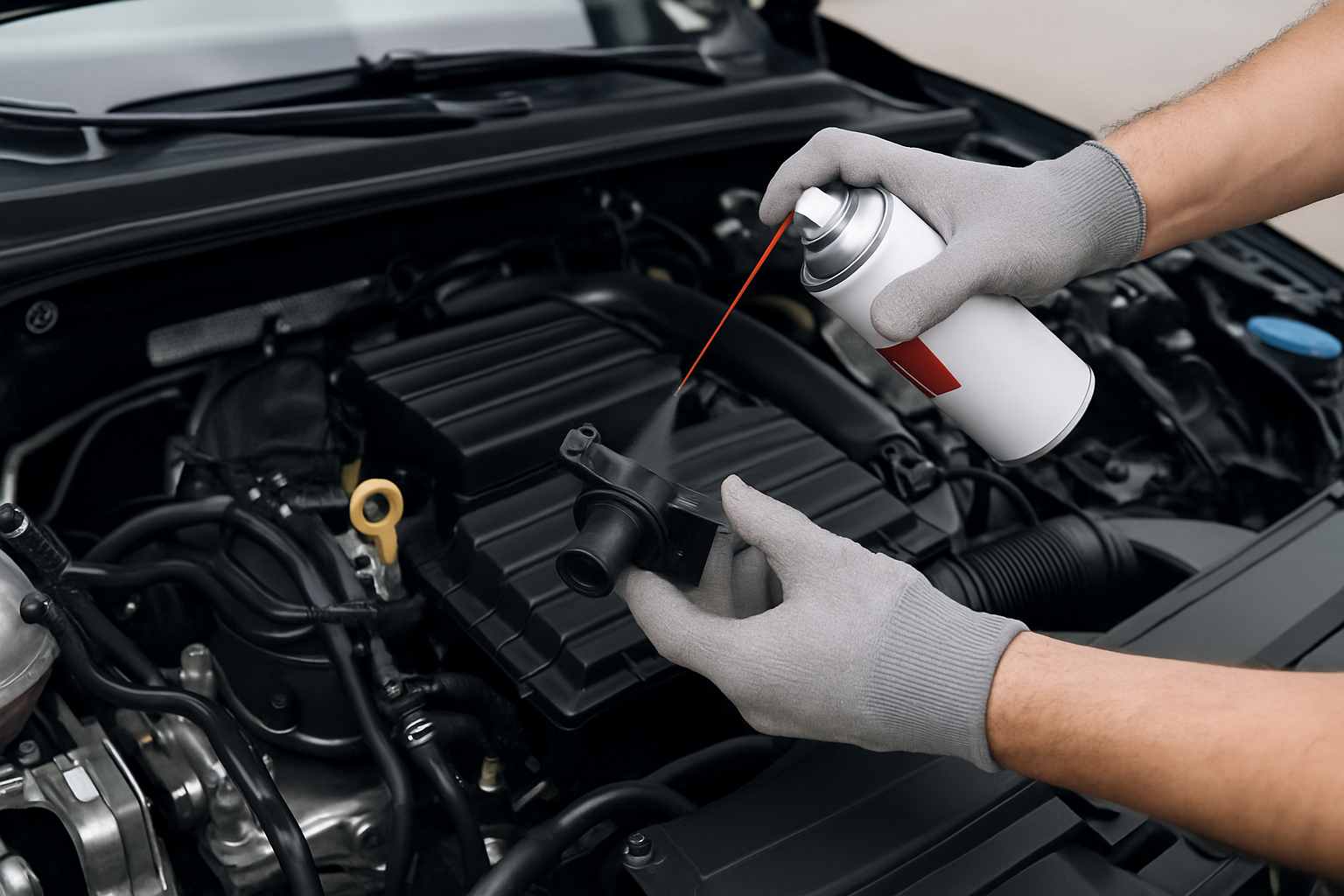
This is often the easiest fix. Buy MAF sensor cleaner (don’t use regular electronics cleaner or carb cleaner). Remove the sensor from the intake tube, spray the element with several light coats, and let it dry completely before reinstalling. I’ve seen this fix hesitation issues more times than I can count.
Replace the Fuel Filter
If your car has an external fuel filter (many newer cars have lifetime filters inside the tank), replacing it is straightforward. Relieve fuel system pressure first, then disconnect the lines from both ends of the filter and swap in a new one. Make sure the arrow on the filter points toward the engine.
Clean the Throttle Body
Remove the intake tube that connects to the throttle body. Spray throttle body cleaner onto the throttle plate and bore, using a toothbrush or soft cloth to scrub away carbon deposits. Don’t force the throttle plate open on drive-by-wire systems. Let the cleaner do the work. After cleaning, you might need to perform an idle relearn procedure, which varies by manufacturer.
Replace Spark Plugs
This is basic maintenance that makes a huge difference. Use the spark plug type specified in your owner’s manual. Gap them to spec before installation. Torque them properly with a torque wrench. Don’t overtighten or you’ll strip the threads in the cylinder head.
Replace Ignition Coils
If you have a misfire code pointing to a specific cylinder, swap that coil with one from another cylinder. If the misfire follows the coil, you’ve confirmed it’s bad. Replace it with an OEM or quality aftermarket coil. Some mechanics recommend replacing all coils at once if the car has high mileage, but I usually just replace the bad ones unless there’s a known pattern of failure for that model.
Fix Vacuum Leaks
Replace any cracked or deteriorated vacuum hoses. For intake manifold gasket leaks, you’ll need to remove the manifold and install new gaskets. This is more involved but still doable for a DIY mechanic with basic tools and a repair manual.
Service the Transmission
Check your transmission fluid level and condition. If it’s low, top it off with the correct type. If it’s dark and smells burnt, a fluid and filter change might help. Some transmissions also have adaptive learning that can be reset, which sometimes resolves shift hesitation issues.
Use Fuel System Cleaner
For dirty injectors, try a quality fuel system cleaner first before replacing injectors. Add it to a nearly empty tank, then fill up with fresh gas. Drive the car through that tank. Sometimes this is enough to clean minor deposits and restore proper spray patterns.
This video demonstrates several DIY fixes:
When to See a Mechanic
Some hesitation problems require professional diagnosis and repair. If you’ve tried the basic fixes and the problem persists, don’t keep throwing parts at it.
A failing fuel pump requires dropping the fuel tank in most vehicles. While technically DIY-able, it’s a pain without a lift. Plus, you need to properly depressurize the fuel system and take safety precautions working with gasoline.
Transmission issues beyond a simple fluid change need professional attention. Internal transmission problems require specialized tools, knowledge, and often expensive parts. Misdiagnosing transmission problems gets expensive fast.
If you’re getting multiple misfire codes across all cylinders, you might have a more serious issue like low compression, a jumped timing chain, or a failed catalytic converter. These require proper diagnostic equipment to pinpoint.
Computerized systems sometimes need dealer-level scan tools to access certain functions or perform relearns. Some throttle body cleanings require idle relearn procedures that need a factory scan tool. Modern cars with electronic throttle control can be finicky.
Estimated Repair Costs
Here’s what you might expect to pay if you take the car to a shop, versus doing it yourself.
| Repair | DIY Cost | Shop Cost |
|---|---|---|
| MAF Sensor Cleaning | Parts vary | $80-$150 |
| Fuel Filter Replacement | Parts vary | $100-$200 |
| Throttle Body Cleaning | Parts vary | $150-$250 |
| Spark Plug Replacement | Parts vary | $150-$400 |
| Ignition Coil Replacement (single) | Parts vary | $150-$300 |
| Fuel Pump Replacement | Parts vary | $500-$1,200 |
| Vacuum Leak Repair | Parts vary | $100-$400 |
| Fuel Injector Cleaning Service | Parts vary | $150-$300 |
| Transmission Fluid Service | Parts vary | $150-$300 |
Labor rates vary significantly by location and shop type. Dealerships charge more than independent shops. Parts quality also affects cost.
Prevention Tips
Most acceleration hesitation problems develop gradually and can be prevented with proper maintenance.
Change your air filter regularly. A clean filter ensures proper airflow and protects the MAF sensor from contamination. Check it every oil change and replace it annually or per your maintenance schedule.
Use quality fuel from busy stations. Top-tier gasoline contains better detergents that keep injectors and intake valves cleaner. Avoid bargain-basement gas stations with questionable fuel quality.
Replace spark plugs at the recommended interval. Don’t stretch it. Worn plugs stress ignition coils and can cause misfires. Modern plugs last 60,000 to 100,000 miles typically, but check your manual.
Keep up with fuel filter changes if your vehicle has a serviceable one. This simple maintenance prevents fuel delivery problems before they start.
Don’t ignore the check engine light. Address problems when they’re small. A minor misfire that you ignore can damage catalytic converters or lead to more expensive repairs.
Consider periodic fuel system cleaning. Every 30,000 miles or so, use a quality fuel system cleaner or have a professional cleaning service done. This prevents deposit buildup in injectors.
Check and maintain transmission fluid. Follow your manufacturer’s service intervals. Some transmissions claim to be lifetime fill, but changing the fluid can extend transmission life significantly.
Wrapping Up
Acceleration hesitation from a stop isn’t something you should ignore or just live with. It’s your car telling you something needs attention. The good news is that most causes are relatively simple fixes that don’t require major mechanical skills.
Start with the easy stuff. Check codes, inspect the air filter, clean the MAF sensor and throttle body. These steps solve the problem more often than not. If those don’t work, move on to spark plugs, ignition coils, and fuel system components.
Don’t let hesitation linger. Beyond being annoying, it can lead to more serious problems. Misfires damage catalytic converters. Fuel delivery issues can cause internal engine damage. Address the problem now and you’ll save money and hassle down the road.


Leave a Reply