
You walk out to your car in the morning, turn the key, and… nothing. Dead battery. Again. You’ve already had the alternator tested and it’s fine. The battery itself is maybe a year old. So what gives?
This is one of the most frustrating car problems because it sneaks up on you. Everything seems fine when you’re driving, but let the car sit for eight hours and suddenly you need a jump. The culprit is almost always a parasitic drain—something in your electrical system is slowly sipping power while your car is parked.
Common Causes
Parasitic drains are sneaky. Every car has a small amount of normal draw even when it’s off—things like your alarm system, clock, and computer memory need a tiny trickle of power. That’s usually around 25-50 milliamps, which is fine. Your battery can handle that for weeks.
But when something starts drawing 200, 300, or even 500 milliamps? That’s when you wake up to a dead battery.
Interior lights are the classic offender. A dome light that doesn’t shut off completely, a glove box light with a faulty switch, or trunk lighting that stays on can kill a battery surprisingly fast. I’ve seen this happen when someone installs aftermarket LED strips and doesn’t wire them properly to the door switches.
Aftermarket electronics cause more problems than people realize. That stereo system you installed last year? The remote start kit? The dash cam that’s supposed to turn off but doesn’t? These are all prime suspects. Even factory electronics can develop issues—I’ve tracked drains to faulty infotainment systems, power seat modules that won’t sleep, and even heated seat controllers stuck in an “on” state.
Relays can stick. Your car uses dozens of relays to control everything from fuel pumps to cooling fans. When a relay contact welds itself closed (usually from age or moisture), it keeps that circuit energized 24/7. Cooling fan relays are notorious for this.
Corroded or loose connections don’t help. A battery terminal that looks fine might have enough corrosion under the cable to cause resistance. This doesn’t directly cause a drain, but it makes your battery work harder to accept a charge while driving, so it starts each night slightly depleted.
Alternator diodes can fail in a way that creates a drain. Wait, didn’t we say the alternator was good? Yes, but standard alternator tests check if it’s charging properly. They don’t always catch a bad diode that’s allowing current to flow backward through the alternator when the car is off. It’s rare, but it happens.
How to Diagnose the Problem
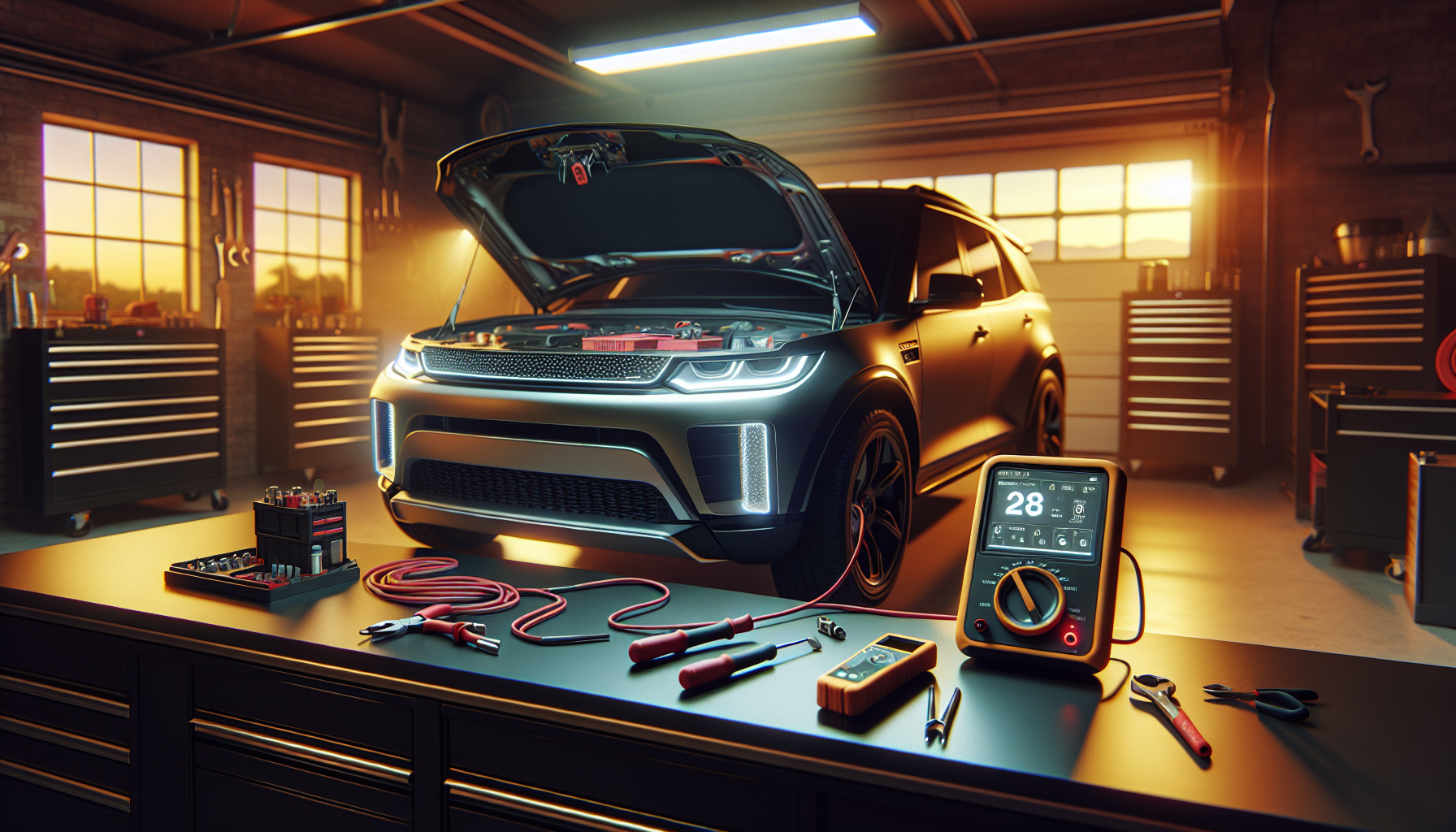
You need a digital multimeter. Not an expensive one—a basic $20 unit works fine. Set it to measure DC amps, usually marked as “A” with a straight line.
This video walks through the diagnostic process clearly:
First, check your actual draw. Make sure everything is off—doors closed, hood closed (you’ll need to trick the hood switch by taping it down or wedging something against it). Disconnect your negative battery cable. Put your multimeter in series between the negative terminal and the cable. You’re completing the circuit through your meter now.
Wait a few minutes. Some cars take time for all their modules to go to sleep. If you see the reading drop from 300 milliamps down to 50 after three or four minutes, that’s normal behavior. If it stays high or if you’re seeing anything over 100 milliamps after the car has “gone to sleep,” you’ve got a problem.
Now comes the fuse pulling. Leave your meter connected. Go to your fuse box (most cars have two or three—under the hood, under the dash, sometimes in the trunk). Start pulling fuses one at a time while watching your meter. When you pull a fuse and the reading drops significantly, you’ve found the circuit that’s causing your drain.
Write down which fuse it was. Look in your owner’s manual or on the fuse box cover to see what that fuse controls. That tells you where to focus your search.
Some circuits will show a small drop when you pull them—that’s normal. You’re looking for the big drop, the one that takes you from problem territory back down to normal draw levels.
Check your alternator specifically. Even though it tested fine, disconnect it completely (just pull the main power wire off the back) and measure your draw again. If your drain disappears, you’ve got a bad diode in the alternator. The charging circuit works fine, but it’s bleeding power backward when the engine is off.
How to Fix It
Once you’ve identified the circuit, fixing it depends on what you find.
For interior lights: Go through every light with the car in complete darkness. Look for any glow, no matter how faint. Check the dome lights, door lights, under-dash courtesy lights, trunk, glove box, and engine bay. If a light won’t shut off, the switch is usually the problem. Door jamb switches cost a few dollars and take five minutes to replace.
For aftermarket electronics: The cleanest fix is removing the device if you don’t use it much. If you want to keep it, you need to rewire it properly. Most aftermarket accessories should be connected to a switched power source—one that only has voltage when the key is on. If someone tapped into a constant power wire, that’s your problem. Moving it to switched power solves it.
For stuck relays: Replace the relay. They’re cheap, usually under ten dollars. The tricky part is finding which relay is stuck. If your fuse pulling narrows it down to, say, the cooling fan circuit, swap the fan relay with an identical one from another circuit (like the horn or fog lights) and see if the problem moves. If the drain disappears, you’ve confirmed it.
For faulty modules: This gets complicated. Body control modules, infotainment units, and other computers can develop software glitches or internal failures that prevent them from sleeping. Sometimes disconnecting the battery for 20 minutes and letting everything reset solves it. Sometimes you need a dealer-level scan tool to reprogram the module. Sometimes the module needs replacement.
For alternator diode issues: You need a new alternator or a rebuild. A bad diode can’t be fixed in place. If you caught it early and your battery is still good, just swap the alternator and you’re done.
Battery terminal corrosion needs cleaning. Pull both cables off. Use a wire brush or battery terminal cleaner to scrub the terminals and the inside of the cable clamps until they’re shiny. This won’t fix a drain, but it ensures your battery charges fully while driving.
When to See a Mechanic
If your fuse pulling doesn’t isolate the problem, something more complex is happening. Multiple circuits could be involved, or the drain might be on a circuit that doesn’t go through the fuse box (like the main charging wire).
Tracking down intermittent drains is maddening. Sometimes the problem only happens when the car is cold. Sometimes it’s triggered by specific conditions you can’t easily replicate. A good auto electrician has specialized tools and experience that make these diagnoses much faster.
Module programming and replacement usually requires a trip to a dealer or a shop with the right scan tools. You can’t just plug in a new body control module—it needs to be programmed to your specific car.
If you’ve traced the problem to a major component like the infotainment system and it’s still under warranty, definitely take it to the dealer. Don’t let them brush you off by saying the battery or alternator is fine—you already know that. Walk them through your diagnosis.
Estimated Repair Costs
| Repair | Estimated Cost |
|---|---|
| Battery terminal cleaning | $0-30 (DIY or quick service) |
| Door jamb switch replacement | Parts vary by vehicle, 15 minutes labor |
| Relay replacement | Parts vary, 10 minutes labor |
| Alternator replacement | $75-150 labor, parts vary by vehicle |
| Module replacement/programming | $150-300 labor plus parts |
| Parasitic drain diagnosis (shop) | $100-200 (1-2 hours labor) |
| Aftermarket device removal/rewiring | $60-120 labor depending on complexity |
Labor rates vary widely by region and shop type. Dealers charge more but have better diagnostic equipment for complex module issues. Independent shops are usually cheaper for straightforward repairs.
Prevention Tips
Once you’ve fixed your drain, a few habits will help prevent future problems.
When you add aftermarket electronics, have them professionally installed or at least verify that they’re wired to switched power. The $50 you save doing a sketchy installation isn’t worth the headache of a drain later.
Keep your battery terminals clean. Check them every few months. A light coating of dielectric grease after cleaning helps prevent corrosion.
If you only drive short distances, your alternator might not fully recharge your battery even without a drain. Take a longer drive (20-30 minutes of highway) once a week to keep your battery topped off.
Consider a battery maintainer if your car sits for long periods. These plug into a wall outlet and keep your battery at full charge without overcharging. They’re worth it for seasonal vehicles or if you travel frequently.
Pay attention to warning signs. If your car starts slower than usual or you notice the headlights dimming at idle, don’t ignore it. Catching problems early makes them easier and cheaper to fix.
Parasitic drains are fixable. They’re annoying, but the diagnostic process is systematic. Start with measuring your actual draw, identify the circuit, then zero in on the component. Most of these fixes are within reach of someone with basic tools and patience.



Leave a Reply