
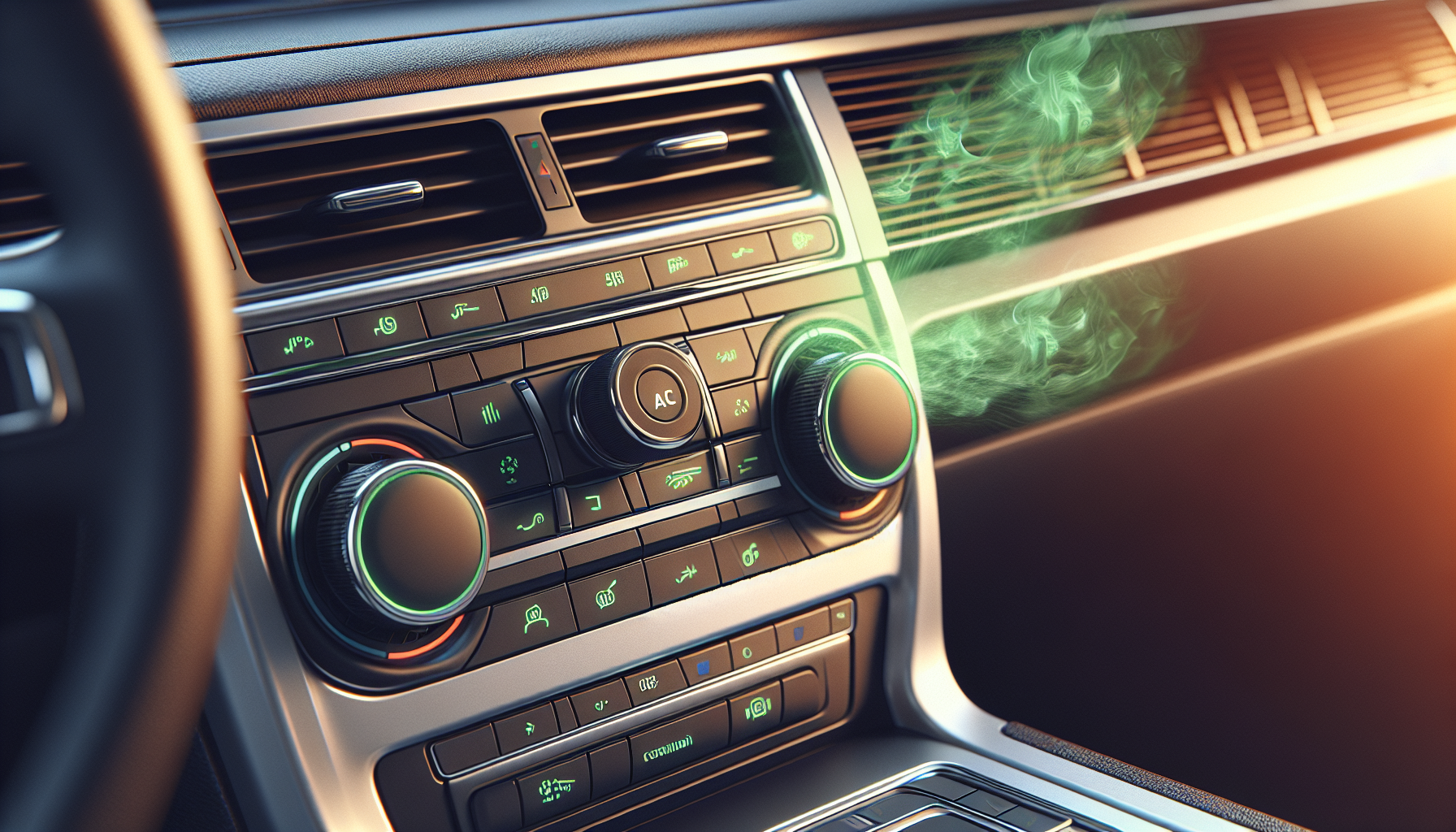
You turn on your car’s AC after it’s been sitting for a while, and that unmistakable vinegar smell hits you right in the face. It’s not pleasant, and honestly, it can make your morning commute pretty miserable.
That sour, acidic smell is usually a sign that organic material is breaking down somewhere in your AC system. Most of the time, it’s mold or bacteria growing on your evaporator coil or in the condensation that collects there. When you first fire up the AC, air blows over this stuff and carries the smell right into your cabin.
Common Causes
The vinegar smell almost always comes down to microbial growth in your AC system. Your evaporator coil sits inside the dashboard, and it gets cold when the AC runs. Moisture from the air condenses on this coil, which is exactly what’s supposed to happen. But when you shut off the car, that moisture doesn’t always drain away completely.
Some of it lingers. In a dark, damp environment, bacteria and mold start partying on the coil and in the condensate pan. These microorganisms produce organic acids as they break down dust, pollen, and other debris that gets pulled into the system. Those acids smell sour, like vinegar.
A clogged or dirty cabin air filter makes this worse. When the filter can’t do its job properly, more organic material gets past it and onto the evaporator coil. Think of it as feeding the bacteria buffet.
Another culprit is a clogged evaporator drain tube. This little rubber hose is supposed to let condensation drip out under your car. When it gets blocked with leaves, dirt, or algae, water pools up in the AC housing. Standing water is basically a bacteria resort.
Sometimes the smell is worse in humid climates or during certain seasons. Makes sense, more humidity means more condensation, which means more moisture for microbes to thrive in.
How to Diagnose the Problem
Start with the easiest check first. Pop your hood and look for the evaporator drain tube. It’s usually on the passenger side of the firewall, pointing down toward the ground. Start your car, turn the AC on full blast, and wait a few minutes. You should see water dripping from this tube.
No water? The drain is probably clogged.
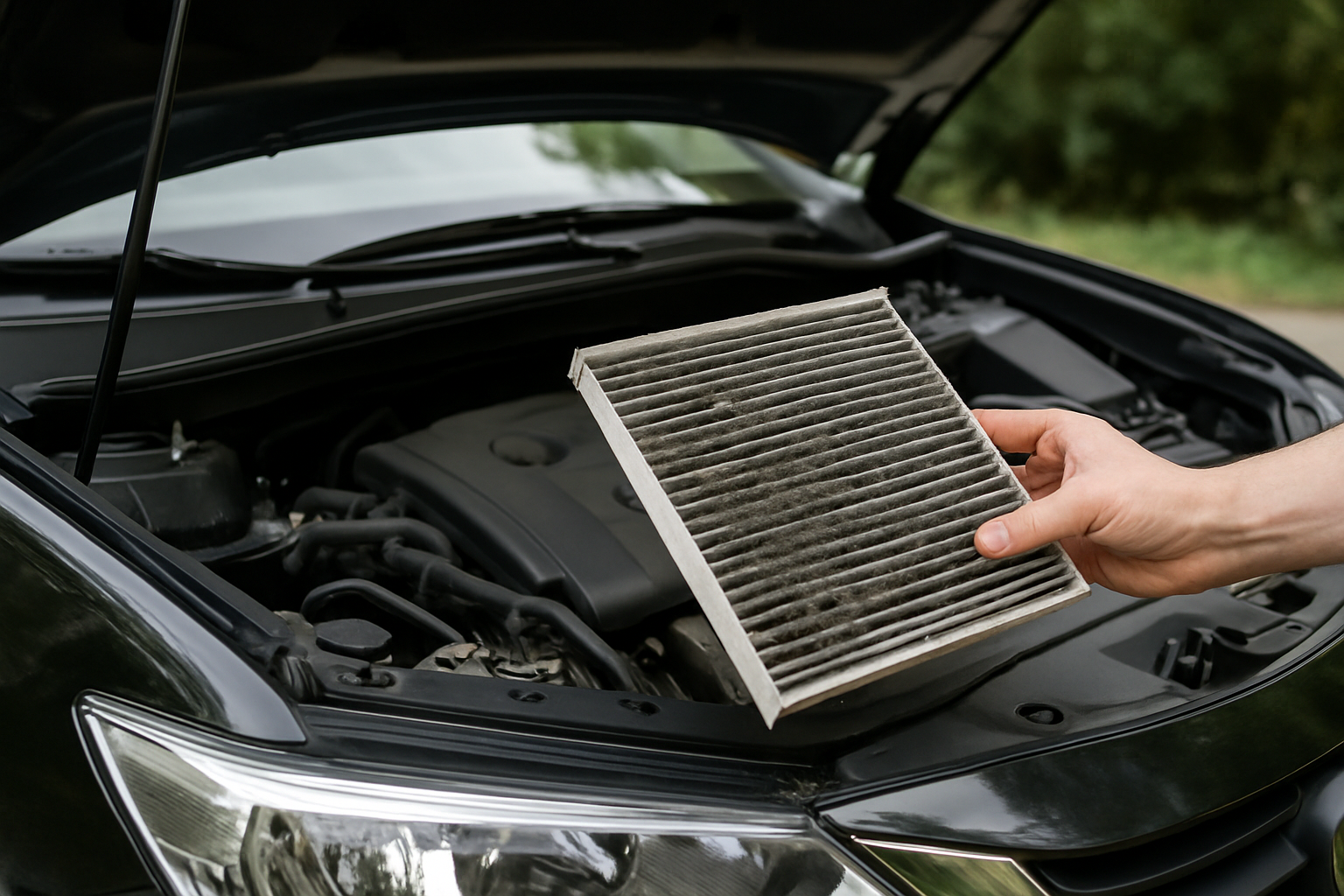
Next, check your cabin air filter. Most vehicles have this filter behind the glove box or under the dashboard. Your owner’s manual will show you exactly where. Pull it out and take a look. If it’s dark, clogged with debris, or hasn’t been changed in over a year, that’s part of your problem.
Here’s a simple smell test: Turn on your AC with the fan on low. Does the vinegar smell hit immediately? That means the source is right at the evaporator. If it takes a minute or two to show up, the contamination might be further along in the ductwork.
Check under your passenger-side floor mat too. If the evaporator drain is seriously clogged, water can actually back up and leak into your cabin. A wet carpet there is a dead giveaway.
This video walks through the diagnostic process and several effective solutions:
How to Fix It
The quickest fix is replacing your cabin air filter. Seriously, do this first. It’s cheap and takes maybe ten minutes on most cars. Add your make and model and year to the search results.
Once you’ve got a fresh filter in, you need to clean the evaporator coil. You can buy aerosol AC cleaner designed specifically for this. The process varies by vehicle, but generally you remove the cabin air filter, spray the cleaner through the filter opening onto the evaporator coil (you might be able to see it if you shine a flashlight in there), and let it sit for 15-20 minutes with the car off.
After it sits, turn on the AC and let it run for another 10 minutes. The cleaner will kill bacteria and mold, then drain out through the evaporator drain tube along with all the dead gunk.
If your drain tube is clogged, you’ll need to clear it. Crawl under the passenger side and locate that drain tube. You can try blowing compressed air up through it (gently, you don’t want to damage anything), or carefully insert a thin piece of wire or a pipe cleaner to break up the blockage. I’ve had good luck with a can of compressed air and a little patience.
Some people swear by running the AC on full cold for 10 minutes, then switching to heat on full blast with the windows down. The temperature change can help kill some bacteria. Does it work? Sometimes. It’s not as effective as actually cleaning the coil, but it’s free and takes no tools.
Here’s something mechanics don’t always tell you: Run your AC fan for a minute or two after you turn off the compressor before shutting down your car. This helps dry out the evaporator coil and gives bacteria less moisture to work with. Not a complete fix, but it helps prevent the smell from coming back.
When to See a Mechanic
If you’ve replaced the filter, cleaned the evaporator, cleared the drain, and the smell keeps coming back within days, something else is going on. The evaporator coil itself might be damaged or corroded in a way that traps moisture and debris.
Water leaking inside your cabin even after clearing the drain means there’s a crack or separation somewhere in the AC housing. That’s not a DIY fix for most people.
A smell that’s more like burning rubber, electrical, or sweet (antifreeze) is a different problem entirely. Don’t mess around with those, get it checked out.
If you’re not comfortable removing your cabin air filter or you can’t locate the evaporator drain tube, a shop can handle this quickly. Most mechanics have seen this issue a hundred times.
Estimated Repair Costs
| Repair | Estimated Cost |
|---|---|
| Cabin air filter replacement (DIY) | Parts vary—check current pricing |
| Cabin air filter replacement (shop) | $30-$60 labor plus parts |
| AC evaporator cleaning (DIY) | Parts vary—check current pricing |
| AC evaporator cleaning (shop) | $80-$150 |
| Evaporator drain tube clearing (shop) | $40-$80 |
| Full evaporator coil replacement | $500-$1,200 (labor-intensive) |
Most people can solve this for well under $100 doing it themselves. Even at a shop, you’re usually looking at less than $200 unless there’s actual component damage.
Prevention Tips
Change your cabin air filter every 12 months or 12,000 miles. If you drive in dusty conditions or areas with lots of pollen, do it twice a year. This single step prevents most AC smell issues.
Run your fan on vent mode (not recirculate) for the last minute or two of your drive. This pulls in drier outside air and helps evaporate moisture from the evaporator coil. Yeah, it’s an extra step, but it works.
Park in the shade when possible. A cooler car means less temperature differential when you start the AC, which means less condensation. Not always practical, but worth doing when you can.
Use your AC regularly, even in winter. Running it once a week for 10 minutes keeps the system lubricated and prevents stagnant moisture from sitting around. Turn on the defrost, that activates the AC compressor in most vehicles.
Check that evaporator drain tube every few months. Just a quick peek to make sure water is dripping out when the AC runs. Catching a clog early beats dealing with a full-blown bacteria farm.
Some people use those AC disinfectant sprays monthly as preventive maintenance. I think that’s overkill for most climates, but if you live somewhere super humid, it might be worth it.
That vinegar smell isn’t something you need to live with. A clean evaporator coil, a fresh cabin filter, and a clear drain tube will sort out 95% of cases. The other 5% might need professional attention, but at least you’ll know you tried the simple fixes first. Your nose will thank you, and so will anyone who rides in your car.

Leave a Reply