
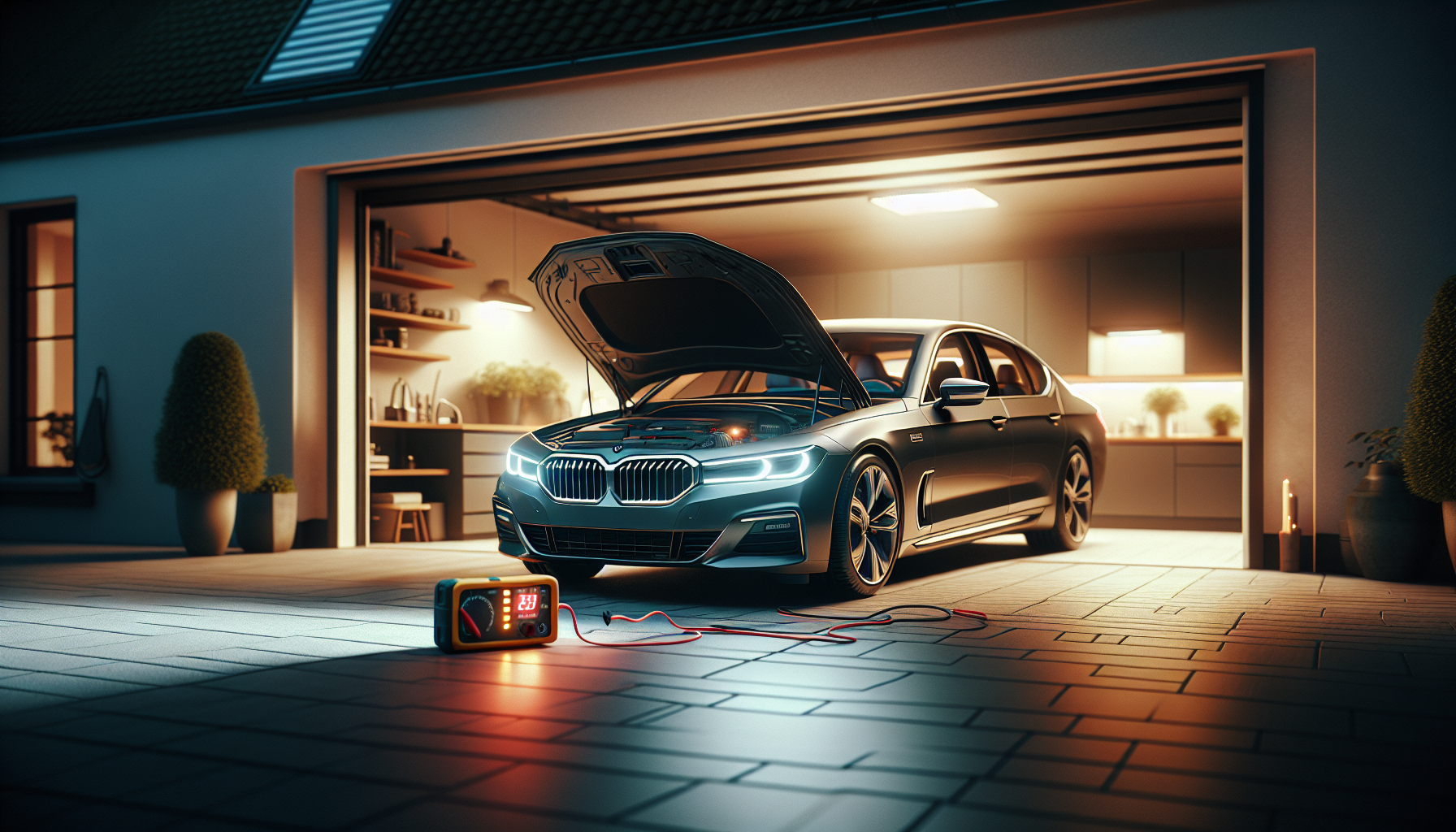
You walk out to your BMW 5 Series in the morning, press the start button, and… nothing. Or maybe just a sluggish crank that barely turns over. If this keeps happening after your car sits overnight, you’re dealing with parasitic battery drain. Something in your electrical system is staying awake when it should be sleeping, slowly sucking your battery dry while the car sits in your driveway.
BMW 5 Series models are packed with electronics, and any one of them can cause this problem. The good thing is that most parasitic drain issues follow predictable patterns, and with some basic tools, you can track down the culprit yourself.
Common Causes
Modern BMWs have complex electrical systems that need time to “go to sleep” after you lock the car. Various modules stay active for 15-20 minutes handling shutdown procedures. But sometimes they don’t shut down properly, or a component fails and stays powered when it shouldn’t.
Footwell Module (FRM) is the most common culprit in E60 and F10 5 Series models. This module controls interior lighting, and when it fails, it can keep drawing current continuously. I’ve seen this drain a battery completely flat in 24-48 hours.
The convenience access system can also cause problems. The door handle sensors that detect your key fob sometimes get stuck in an active state, constantly searching for the key. Water intrusion in the door handles makes this worse.
Aftermarket accessories are another frequent cause. Dashcams, GPS trackers, phone chargers, or alarm systems that weren’t installed properly can create significant drain. Even factory accessories like the rear entertainment system can develop faults.
Your alternator might not be charging properly, which isn’t technically parasitic drain but creates the same symptoms. If the alternator is weak, the battery never fully recharges during driving, so even a small normal drain will kill it overnight.
Trunk or glove box lights staying on due to faulty switches are classic causes. Simple, but they’ll drain a battery surprisingly fast. The trunk switch on F10 models is notorious for this.
Don’t overlook a failing battery itself. BMW batteries typically last 4-6 years. An old battery loses its ability to hold a charge, and what looks like parasitic drain might just be a battery that’s reached the end of its life.
How to Diagnose the Problem
First, verify you actually have parasitic drain rather than a weak battery or charging problem. You need a multimeter for this.
Fully charge your battery or jump-start the car and drive it for at least 30 minutes. Park it, turn everything off, remove the key, lock the doors, and wait. This is important: you need to wait at least 30 minutes for all the modules to go to sleep. Open the hood (do this gently without triggering the alarm) and disconnect the negative battery cable.
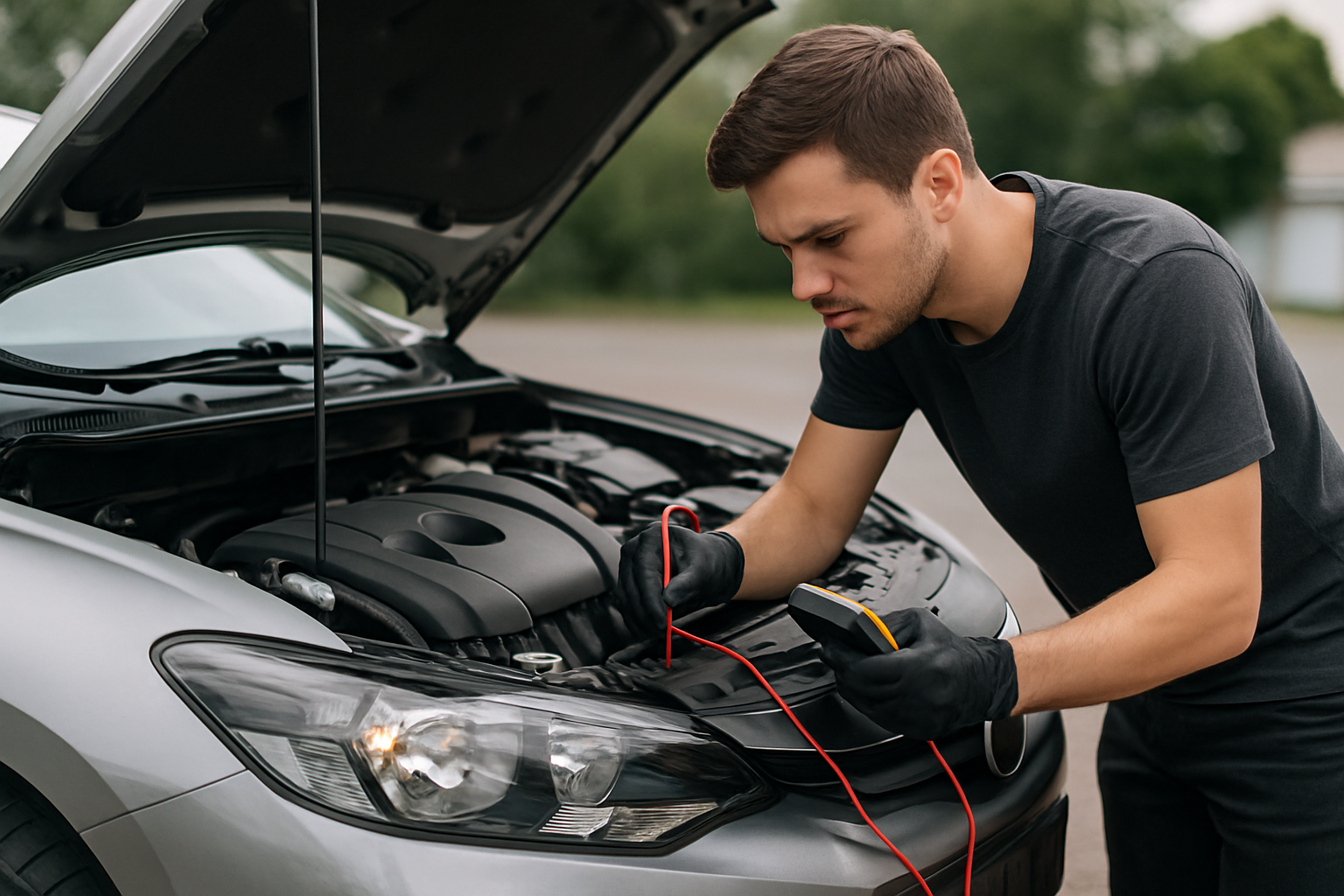
Set your multimeter to measure DC amps. Most meters have a 10A or 20A setting. Connect the multimeter in series between the negative battery terminal and the negative cable you just disconnected. You’re measuring all the current flowing from the battery.
Initially, you’ll see high draw, maybe 2-3 amps or more. This is normal; the car is still shutting down. Wait another 20-30 minutes. The draw should drop below 50 milliamps (0.05 amps). Some sources say up to 80mA is acceptable for newer BMWs with all their electronics, but I prefer to see it under 50mA.
If your draw is above 100mA after everything has settled, you have parasitic drain worth investigating.
This video walks through the diagnostic process specifically for BMWs:
Now comes the tedious part: finding which circuit is causing the drain. With your multimeter still connected and showing the excessive draw, start pulling fuses one at a time. Pull a fuse, watch the meter, and if the reading doesn’t drop significantly, replace that fuse and move to the next one.
When you pull the right fuse, the amperage will drop substantially. That tells you which circuit has the problem. Your owner’s manual or a fuse diagram will show what that fuse controls.
Check obvious things first before you start pulling fuses. Pop the trunk and glove box to make sure those lights go out. Check that all doors are fully closed and the interior lights are off.
If you don’t have a multimeter or don’t want to do this yourself, many auto parts stores will test your battery and charging system for free. That at least tells you if the battery or alternator is the issue.
How to Fix It
Once you’ve identified the problem circuit, the fix depends on what’s causing it.
For footwell module issues: The FRM is located under the dashboard on the driver’s side. You can try disconnecting it temporarily (you’ll lose interior lights and some other convenience features) to confirm it’s the problem. If the drain stops, the module needs replacement or repair. Some specialists can repair these modules for $200-300, which is cheaper than a new one. Replacing it yourself requires coding the new module to your car, which needs BMW software.
For convenience access problems: Remove the door handle sensors and check for water or corrosion. Dry them out thoroughly and apply dielectric grease. If a sensor is faulty, you can disconnect it temporarily or replace it. You can also disable convenience access through iDrive settings as a temporary fix.
For aftermarket accessories: Remove them or ensure they’re wired to a switched power source that turns off with the ignition. Hardwired dashcams should have a low-voltage cutoff feature enabled.
For trunk or glove box lights: Adjust or replace the switch. Sometimes you can bend the contact slightly to ensure it makes proper contact when closed. These switches are cheap and easy to replace.
For a weak alternator: Have it tested. If it’s not putting out at least 13.5-14.5 volts while running, it needs replacement or repair. This isn’t a DIY job on most 5 Series models due to the tight engine bay.
For a dead battery: If your battery is more than 5 years old and failing the load test, just replace it. BMW recommends using a battery with the same specifications (typically AGM batteries on newer models). After installing a new battery, it needs to be registered to the car using a scan tool so the charging system can adjust properly.
One practical temporary fix if you can’t solve it immediately: install a battery disconnect switch. For about $20, you can manually disconnect the battery when parking for extended periods. Not elegant, but it works.
When to See a Mechanic
If you’ve done the multimeter test and identified a problem circuit, but it’s something complex like the body control module or a network communication issue, take it to a shop. BMW’s electrical systems use CAN bus networks, and diagnosing communication faults requires specialized scan tools.
Coding and programming modules always requires a trip to a BMW specialist or dealer. You can’t do this with a basic OBD2 scanner.
If you’re pulling fuses and nothing makes a difference in the draw, you might have multiple problems or an issue with a module that doesn’t have a dedicated fuse. A good independent BMW shop will have the scan tools and knowledge to dig deeper.
Alternator replacement on some 5 Series engines requires removing other components and is genuinely difficult. Unless you’re comfortable with major engine bay work, let a shop handle it.
Also, if your parasitic drain appears after attempted DIY electrical work, stop and get professional help before you create bigger problems. BMW electrical systems are unforgiving of mistakes.
Estimated Repair Costs
| Repair | DIY Cost | Shop Cost |
|---|---|---|
| New battery (registered) | $200-300 | $350-500 |
| Footwell module replacement | $300-400 (plus coding) | $600-900 |
| Door handle sensor | $50-100 | $200-300 |
| Alternator replacement | $300-500 (parts) | $800-1,200 |
| Trunk light switch | $15-30 | $100-150 |
| Diagnostic time | Free (your time) | $150-250 |
These are rough estimates. Your actual costs will vary based on model year, location, and whether you use a dealer or independent shop. Dealers typically charge 20-30% more than independent BMW specialists.
Prevention Tips
Keep your battery terminals clean and tight. Corrosion creates resistance, which makes the alternator work harder and can cause voltage regulation issues.
If you’re not driving your 5 Series regularly, use a battery tender. These smart chargers maintain the battery at optimal charge without overcharging. Essential if the car sits for more than a week at a time.
Address any warning lights promptly. A stored fault code can keep modules awake trying to diagnose the problem.
When adding aftermarket electronics, have them professionally installed with proper fusing and wiring. Tapping into random wires creates problems down the road.
Replace your battery proactively every 5-6 years. Don’t wait until it fails. An aging battery stresses the alternator and can cause voltage fluctuations that damage other electronics.
Check your trunk and door seals periodically. Water intrusion causes all sorts of electrical gremlins. The pollen filter housing and trunk lid are common entry points for water on these cars.
Park in a garage when possible. Temperature extremes are hard on batteries, and cold weather will expose a weak battery quickly.
Parasitic battery drain is frustrating, but it’s usually solvable with systematic diagnosis. Start with the simple stuff, work your way through the fuses, and you’ll find it. And if you’re still having trouble after that, a good BMW specialist can usually track it down in an hour or two.



Leave a Reply